
| Item | Answer |
|---|---|
| Chinese terms | 雕塑 (diāosù, sculpture); 造像 (zàoxiàng, carved/cast religious image) |
| Core materials | Clay and pottery, bronze, stone, wood |
| Earliest large-scale figural works | Neolithic pottery figures; monumental scale arrives with the Qin terracotta army (3rd century BCE) |
| Major turning point | Buddhism's arrival (Han–Six Dynasties), which made religious icon-carving the dominant sculptural genre for centuries |
| Major religious cave sites | Yungang (Datong), Longmen (Luoyang), Mogao (Dunhuang), Maijishan (Tianshui), Dazu (Chongqing) |
| Ritual bronze vs. sculpture | Most Shang and Zhou bronzes are ritual vessels (ding, zun, gui), not figural statues |
| Best single Beijing stop | Forbidden City exterior bronzes and stone carving, normally visible during opening hours (subject to route/conservation restrictions) |
| Best single day trip | Xi'an, for the Terracotta Army |
What Counts as Chinese Sculpture?
"Chinese sculpture" covers several activities that don't always look alike to a first-time visitor: carving stone Buddhas out of a cliff face, casting bronze ritual vessels and later bronze animals, modeling and firing clay tomb figures, and carving wood devotional statues and architectural ornament. Historically, Chinese art criticism ranked painting and calligraphy above sculpture and treated much figural carving as craft or religious labor rather than fine art produced by named literati. That is one reason relatively few ancient Chinese sculptors are known by name compared with painters and calligraphers, even though the objects they made—the Qin terracotta army, the giant Buddhas at Longmen, the bronze animals in the Forbidden City courtyards—are now recognized as major artistic achievements in their own right.
A second definitional point matters for museum visits: a large share of what looks like "ancient Chinese sculpture" in a bronze gallery is actually ritual vessels—ding tripods, zun wine vessels, gui food containers—made to hold offerings for ritual and ancestral ceremonies, not free-standing figures meant to represent a person or deity. True free-standing figural bronze sculpture is comparatively rare before the Buddhist period, though striking exceptions exist, including the large bronze human figures and masks from the Sanxingdui site in Sichuan. The Chinese Bronze Sculpture guide works through that distinction in more depth.
Materials and Techniques
Chinese sculptors worked mainly in four materials—clay/ceramic, bronze, stone and wood—each with its own technical history and a dedicated guide in this cluster. Those are major working groups, not an exclusive list: jade, lacquer, historical ivory and modern mixed media also appear in Chinese sculptural practice, and jade is routed to its own cluster.
Clay and pottery
Fired clay is the material behind the Qin terracotta army and centuries of Han and Tang tomb figures (mingqi). Clay sculpture is modeled and often mold-assisted, then fired; some pieces were painted after firing rather than glazed. Porcelain and other high-fired ceramics can also be sculptural, but DragonTrail's Chinese Porcelain & Ceramics guide focuses primarily on ceramic bodies, glazes, kilns and ware traditions—a different subject emphasis from the modeled figures covered on the Chinese Clay & Pottery Sculpture guide.
Bronze
Bronze casting is one of China's oldest and most technically demanding crafts, developed to an extraordinary level by the Shang and Zhou dynasties for ritual vessels. Free-standing bronze sculpture—animals, Buddhist figures, portrait busts—is a separate, later strand within the same metalworking tradition. See the Chinese Bronze Sculpture guide.
Stone
Stone carving ranges from cliff-face Buddhist grottoes cut directly into a mountainside to free-standing guardian animals and funerary reliefs carved from quarried blocks. Because stone is durable and often stays in situ, it preserves some of the largest and best-documented ancient Chinese sculpture, including the giant Buddhas at Longmen and the stone-relief tomb shrines of the Han dynasty.
Wood
Wood carving produced large polychrome Buddhist figures—especially Guanyin, the bodhisattva of compassion—as well as smaller, finely worked boxwood carving traditions that continue as a living craft today. Wood is more vulnerable to fire, damp and insects than stone or bronze, so fewer early wood sculptures survive relative to how common the material once was. See the Chinese Wood Sculpture guide.
Jade is carved rather than sculpted in the Western figural sense for most of its history—small ritual and ornamental objects rather than large statues—so it has its own guide rather than a chapter here. See Chinese Jade Carvings for that material.
A Short History of Chinese Sculpture
A useful broad chronology of Chinese sculpture runs through four overlapping phases; each linked guide below adds more depth without treating these phases as the only possible scholarly periodization.
Neolithic and Bronze Age foundations. Pottery figures and jade carvings appear in Neolithic China well before any monumental figural sculpture. Shang and Zhou bronze casting reaches an extraordinary technical level, but almost entirely in the service of ritual vessels rather than free-standing statues—with the notable exception of the Sanxingdui bronzes in Sichuan.
Qin and Han: monumental figural sculpture at unprecedented scale. The Qin terracotta army (3rd century BCE) is a major turning point: more than 8,000 estimated soldiers and horses—individually finished, life-size clay figures—guarding the tomb of China's first emperor. Earlier figural traditions existed; the Terracotta Army is the first surviving monumental figural ensemble on this scale. Han sculpture continues this funerary tradition with stone-relief tomb shrines and smaller pottery tomb figures, and produces the famous Eastern Han bronze horse now known as the Flying Horse of Gansu.
The Buddhist centuries. From roughly the 5th through the 13th centuries, Buddhist icon-carving becomes the dominant genre. Emperors and communities sponsored entire cliff-face cave temples—Yungang, Longmen, Mogao, Maijishan, and later Dazu—alongside portable gilt-bronze and wood devotional figures. This is arguably the richest and most continuous period of figural sculpture in Chinese history.
Imperial, funerary and modern sculpture. Ming and Qing sculpture is visible above all in imperial and funerary contexts: the animal-lined Sacred Way at the Ming Tombs outside Beijing, the gilded bronze dragons and lions in the Forbidden City, and the carved stone dragon reliefs on palace staircases. Modern and contemporary Chinese sculpture, from early 20th-century academic bronze training to public monuments like the Monument to the People's Heroes and the work of contemporary sculptors, forms a fourth and much shorter chapter.
For the full chronology with more names, dates and sources, see the History of Chinese Sculpture guide.
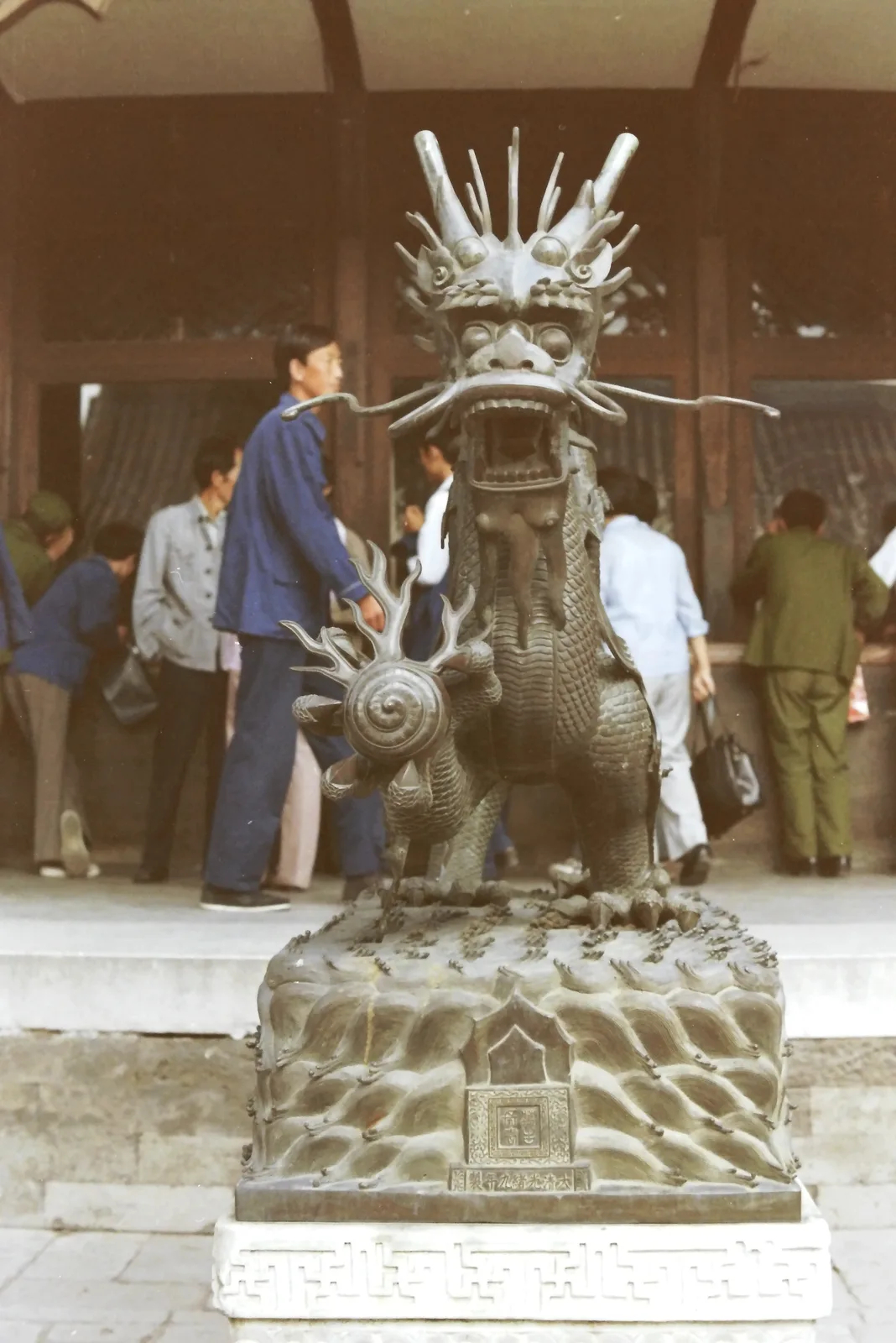
*Gilded bronze dragon in a Forbidden City courtyard, Beijing. Exterior bronze and stone sculpture is normally visible during Palace Museum opening hours, subject to temporary route and conservation restrictions.*
Major Genres and Subjects
Rather than one continuous timeline, most visitors will get more value from thinking about Chinese sculpture by subject, since subjects tend to recur across centuries and materials.
| Genre | What it is | Read more |
|---|---|---|
| Buddhist and religious sculpture | Buddhas, bodhisattvas and guardian figures in stone, gilt bronze, wood and clay | Buddhist Sculpture |
| Tomb and funerary sculpture | Spirit-way animals, stone reliefs, tomb figurines made to guard or serve the dead | Tomb & Funerary Sculpture |
| Guardian lions | Paired stone or bronze lions flanking gates, palaces and tombs | Chinese Guardian Lions |
| Dragons | Imperial dragon motifs in bronze, stone relief and architectural sculpture | Chinese Dragon Sculpture |
| Horses | Han bronze horses and Tang tomb horses, a distinct sculptural genre in their own right | Chinese Horse Sculpture |
| Modern and contemporary works | Early 20th-century academic bronze through today's public monuments and studio sculptors | Modern & Contemporary Sculpture |
Two adjacent DragonTrail guides sit close to sculpture without being sculpture themselves: Chinese Arts & Crafts, the broader crafts hub, and Chinese Architecture, which covers the buildings that sculpture so often decorates—roof ridge animals, carved beams, palace terraces. Chinese Gardens covers the rockery stones that are appreciated as natural sculpture in their own right, and Chinese Porcelain & Ceramics cover ceramic bodies, glazes, kilns and ware traditions—a different subject emphasis from the modeled figural sculpture on this cluster's clay page.
Where to See Chinese Sculpture
Beijing is the practical center of gravity for most visitors, with one important day-trip exception.
In Beijing
The Forbidden City is the most efficient single stop because so much of its sculpture sits outdoors: gilded bronze dragons, bronze lions, sundials and grain-measure sculptures in the palace courtyards are normally visible during Palace Museum opening hours, subject to temporary route and conservation restrictions, independent of which indoor galleries happen to be open on a given day. The Palace Museum's dedicated indoor Sculpture Gallery, which holds imperial and religious statuary, is a separate space with its own opening schedule—when the gallery is open, it adds Buddhist and stone sculpture to the outdoor bronze and stone pieces, but its hours are subject to the museum's current notices, and a standard Forbidden City visit does not automatically include it. Booking a Forbidden City private tour is a practical way to build a route around the exterior sculpture and whichever indoor galleries happen to be accessible that day, rather than assuming any one hall is guaranteed.
The National Museum of China, on the east side of Tiananmen Square, is the other essential stop: its Bronze Age galleries hold major Shang and Zhou ritual bronzes, and its permanent Ancient Chinese Buddhist Sculpture exhibition in Gallery S13 presents more than 200 works (the current official exhibition page lists 236 objects) spanning the 5th century through the Ming dynasty—again, subject to the museum's current exhibition schedule.
The Summer Palace contributes outdoor imperial sculpture in a garden setting: bronze animals, guardian lions, and the 544 individually carved stone lions lining the balustrades of the Seventeen-Arch Bridge. A Summer Palace private tour pairs naturally with a Forbidden City day for visitors who want both palace and garden sculpture.
The Ming Tombs, north of central Beijing, add a different kind of sculpture: the animal- and official-lined Sacred Way approaching the imperial burial mounds, which is a half-day trip in its own right rather than an add-on to a Forbidden City morning.
For a full comparison of these options, routing advice, and the mistakes worth avoiding, see Where to See Chinese Sculpture in Beijing.
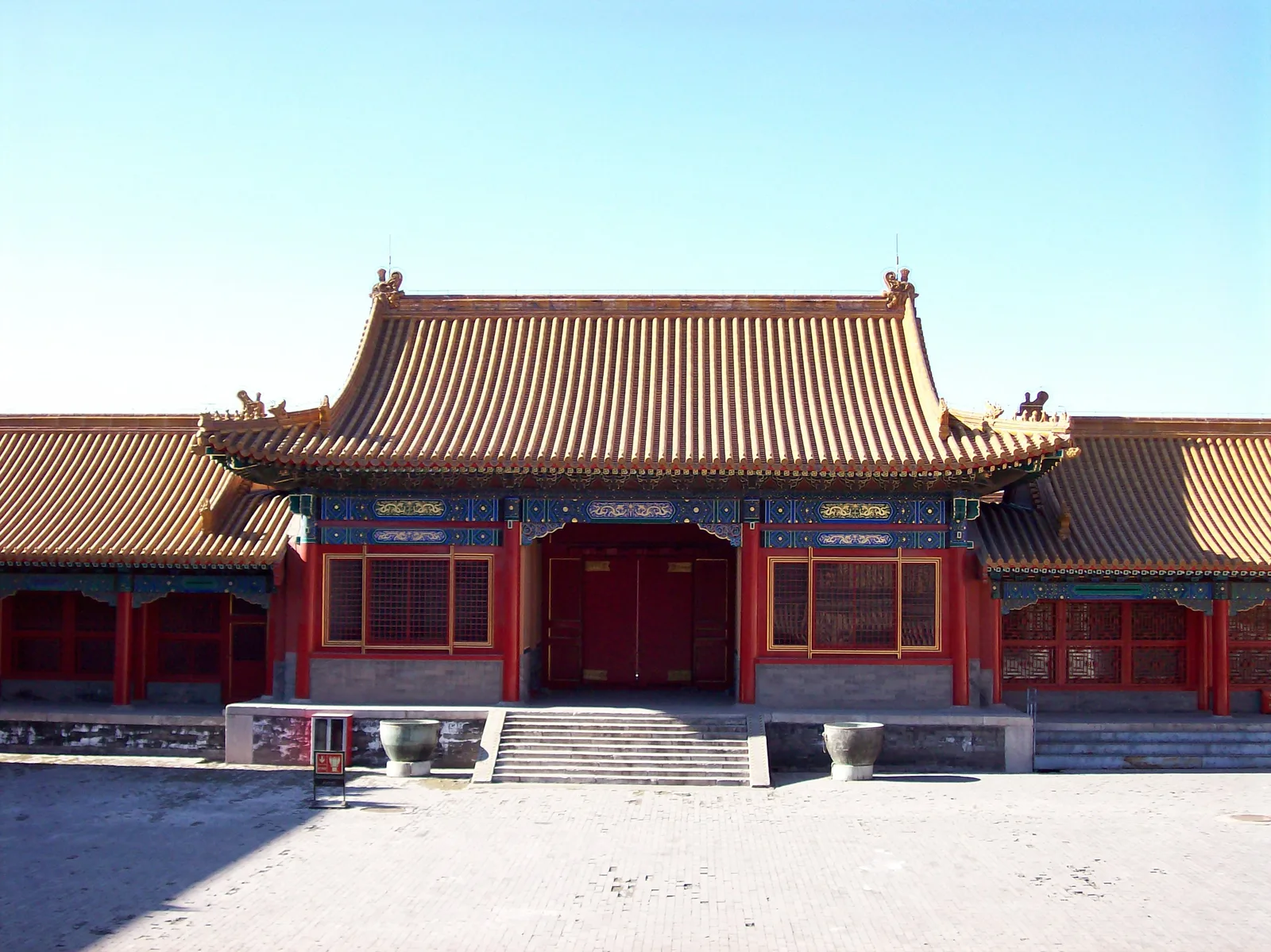
*Forbidden City courtyard, Beijing. Exterior bronze and stone sculpture is normally visible during opening hours, subject to temporary route and conservation restrictions.*
Beyond Beijing: Xi'an and the Terracotta Army
The single most famous work of Chinese sculpture, the Terracotta Army, is not in Beijing. It is near Xi'an, roughly 1,100 kilometers southwest, and seeing it requires a separate flight or high-speed rail trip rather than a day excursion from the capital. Most visitors combine it with other Xi'an sights on a dedicated day; DragonTrail's Xi'an Terracotta Warriors tour is built around exactly that trip. Assuming the Terracotta Army is somehow reachable from Beijing in a day is one of the most common planning mistakes travelers make with this cluster of sights—plan Xi'an as its own leg of the itinerary.
Explore Chinese Sculpture in More Detail
- History of Chinese Sculpture — the full chronology from Neolithic pottery to contemporary public monuments
- Ancient Chinese Sculpture — Neolithic figures, Bronze Age ritual bronzes, the Qin terracotta army, and Han funerary sculpture, before Buddhism reshaped the tradition
- Buddhist Sculpture — cave temples, gilt bronze icons, and wood devotional figures
- Bronze Sculpture — ritual vessels versus free-standing figural bronze, from Shang casting to imperial animals
- Wood Sculpture — polychrome Buddhist figures and the boxwood carving tradition
- Clay & Pottery Sculpture — from Neolithic figures to Tang tomb warriors
- Chinese Dragon Sculpture — the imperial dragon motif in bronze and stone
- Chinese Horse Sculpture — the Flying Horse of Gansu and Tang tomb horses
- Chinese Guardian Lions — paired lions, gender convention, and where the "Foo dog" nickname comes from
- Tomb & Funerary Sculpture — spirit-way animals, stone reliefs, and tomb figurines
- 12 Landmark Works and Traditions in Chinese Sculpture — a curated, non-ranked selection spanning every era in this guide
- Modern & Contemporary Chinese Sculpture — from early 20th-century academic bronze to today's public monuments
- Where to See Chinese Sculpture in Beijing — museum-by-museum routing advice
FAQ
What is the most famous piece of Chinese sculpture?
The Terracotta Army, buried near the tomb of China's first emperor outside Xi'an, is the single most famous work. It is not in Beijing, so seeing it requires a separate trip; see the 12 Landmark Works and Traditions guide for it in context alongside 11 other landmark works and traditions.
Is Chinese sculpture the same as Chinese ceramics or porcelain?
No—they organize the same broader ceramic material history differently. This sculpture cluster's clay page focuses on modeled figures (tomb figures, the terracotta army); the porcelain guides focus primarily on ceramic bodies, glazes, kilns and ware traditions. Ceramic sculpture exists in both directions (including glazed religious figures); see the Chinese Porcelain & Ceramics guide for the ware-focused path.
Are most ancient Chinese bronzes sculptures?
Mostly no. Most surviving Shang and Zhou bronzes are ritual vessels—ding tripods, zun wine containers, gui food vessels—made for ritual and ancestral ceremonies rather than free-standing figural sculpture. Exceptions exist, most strikingly the large bronze human figures and masks from Sanxingdui in Sichuan; see the Bronze Sculpture guide.
Does a Forbidden City ticket include the Sculpture Gallery?
A standard Forbidden City ticket covers the palace grounds, where a great deal of bronze and stone sculpture sits outdoors and is normally visible during opening hours, subject to temporary route and conservation restrictions. The Palace Museum's separate indoor Sculpture Gallery has its own schedule and is not automatically included or guaranteed open; check the current museum notice before planning around it.
Can I see the Terracotta Army as a day trip from Beijing?
No. The Terracotta Army is near Xi'an, roughly 1,100 kilometers from Beijing, and requires its own flight or high-speed rail journey. Plan it as a separate leg of your China itinerary, ideally with a dedicated Xi'an day; see the Xi'an Terracotta Warriors tour.
Why are lions such a common subject in Chinese sculpture if lions aren't native to China?
Lions were never native to China; the guardian lion motif entered Chinese art through cultural and religious contact along trade and Buddhist transmission routes, then became a standard palace, temple and tomb guardian figure. See the Chinese Guardian Lions guide.
What is the difference between Chinese sculpture and Chinese jade carving?
Jade carving is a distinct material tradition focused mostly on smaller ritual and ornamental objects rather than large figural statues, so DragonTrail covers it separately. See Chinese Jade Carvings.
Plan a Visit
Ready to see Chinese sculpture in person? A private guide can route a day around whichever galleries are actually open. Start with a Forbidden City private tour, add a Summer Palace private tour for garden sculpture, or ask for a custom Beijing private tour quote. For the Terracotta Army, see the dedicated Xi'an Terracotta Warriors tour. Questions about routing sculpture into a wider itinerary can go straight to contact us.
Continue Exploring Chinese Arts & Crafts
Sources & Further Reading
- UNESCO World Heritage Centre — Yungang, Longmen and Dazu World Heritage listings
- The Metropolitan Museum of Art — Chinese sculpture across bronze, stone, wood and clay
- National Museum of China — Ancient Chinese Buddhist Sculpture exhibition and Bronze Age galleries
- Palace Museum — Forbidden City collections and current exhibition notices