
| Item | Answer |
|---|---|
| Broad category | Ceramics |
| Major material groups | Earthenware, stoneware and porcelain |
| Porcelain developed in China | By roughly the 6th–7th centuries |
| Major historic production center | Jingdezhen, Jiangxi |
| Famous decoration | Cobalt blue under a clear glaze |
| Major periods | Tang, Song, Yuan, Ming and Qing |
| Important styles | Celadon, white ware, qingbai, blue-and-white, doucai, famille verte and famille rose |
| Beijing viewing connection | Palace Museum / Forbidden City |
Chinese Ceramics and Porcelain at a Glance
Ceramics, pottery and porcelain: what is the difference?
Ceramics is the umbrella category for objects shaped from clay or related mineral materials and permanently transformed by firing. Within that umbrella, travelers looking at museum labels often meet three practical groups:
- Earthenware — lower-fired, porous ceramic bodies (many Neolithic and everyday vessels).
- Stoneware — denser, higher-fired bodies that sit between earthenware and porcelain.
- Porcelain — high-fired, dense and often white or translucent ceramic, frequently glazed.
These modern Western terms are useful for museum visits, but Chinese historical classifications do not map perfectly onto them. A Song celadon jar and a Ming blue-and-white dish may both be porcelain in modern museum language while belonging to different workshop traditions and glaze systems. English speakers also use “china” for porcelain because of China’s historic dominance in the material—another reminder that the object category and the place name are tightly linked in European languages.
What makes Chinese porcelain distinctive?
Chinese porcelain is distinctive less for a single “look” than for a long technical system: refined ceramic bodies, high-temperature kiln firing, controlled glazing, and decoration that can sit under or over the glaze. Form, glaze and painted surface interact—cobalt blue beneath a clear glaze is only one famous solution among many. Chinese ceramics were produced for the imperial court, domestic markets and export, and regional raw materials plus workshop innovation created considerable variety. That court–domestic–export range is why a single dynasty can yield both restrained celadon and densely painted export dishes without contradiction.
From Ancient Pottery to Imperial Porcelain
Chinese ceramic history is far longer than imperial porcelain. The chronology below is a spine for travelers, not a kiln-by-kiln encyclopedia. For the fuller chronology, see History of Chinese Porcelain & Ceramics.
Neolithic and early Chinese pottery
Chinese ceramic history begins long before porcelain. Neolithic communities produced painted earthenware vessels for storage, food preparation, ritual and burial. Highly developed shapes and painted decoration existed thousands of years before Jingdezhen imperial porcelain. Standing in front of a Majiayao painted jar clarifies the distinction between Chinese ceramics (the long ceramic continuum) and Chinese porcelain (a later high-fired subset within it).
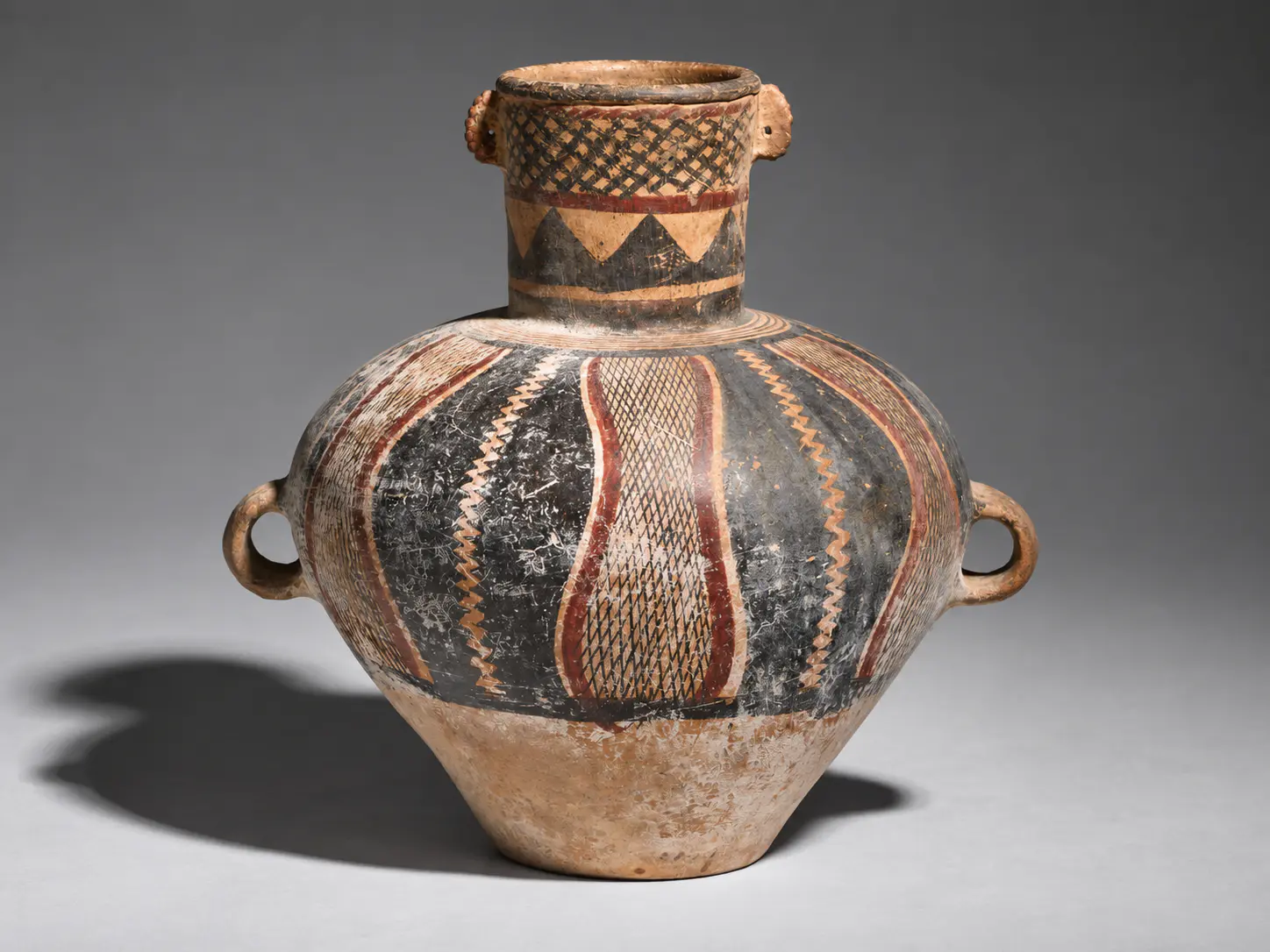
*Painted earthenware jar, Majiayao culture, ca. 2300–2000 BCE. The Metropolitan Museum of Art, Public Domain.*
Tang and Song: new glazes, white wares and celadon
Tang ceramic culture was diverse. Lead-glazed *sancai* (“three-color”) tomb and funerary wares are one representative Tang tradition, not the whole of Tang ceramics. Workshops also developed increasingly refined high-fired wares. Song taste often favored subtle glaze, carefully judged form and surface texture over busy painted decoration. Celadon—stoneware or porcelain with a greenish glaze—became especially associated with Longquan and related southern traditions. White wares and *qingbai* (bluish-white glazed porcelain) show another Song preference for pale bodies and translucent glaze. Longquan celadon is one useful entry point into Song ceramic history, while other major traditions include Ru, Ding, Guan, Jun, Jian, Cizhou and Jingdezhen qingbai.
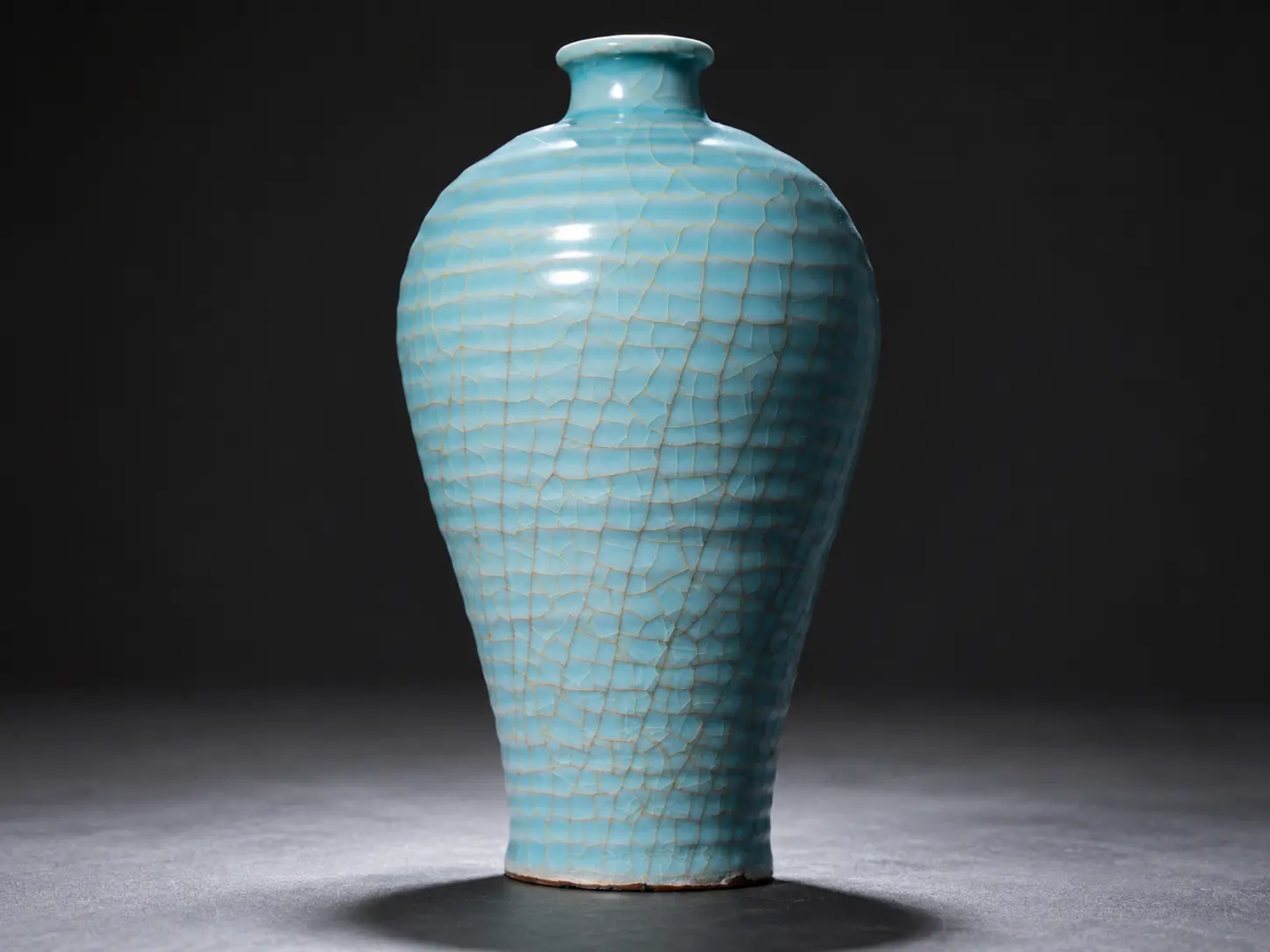
*Longquan celadon meiping vase, Southern Song dynasty, 13th century. Cleveland Museum of Art, Open Access.*
Yuan and Ming: Jingdezhen and blue-and-white porcelain
Jingdezhen, in Jiangxi Province, emerged as an exceptionally important porcelain production center. Earlier blue-and-white precedents existed, but mature Jingdezhen blue-and-white developed during the Yuan period (1271–1368): cobalt pigment painted under a transparent glaze, then fired. That underglaze blue-and-white technique became globally influential. Under Ming imperial and commercial demand, Jingdezhen expanded enormously—supplying court, domestic and overseas markets. Blue-and-white porcelain is therefore not only a decoration style; it is a named entity tying cobalt underglaze, Jingdezhen workshop systems and Yuan–Ming chronology together.
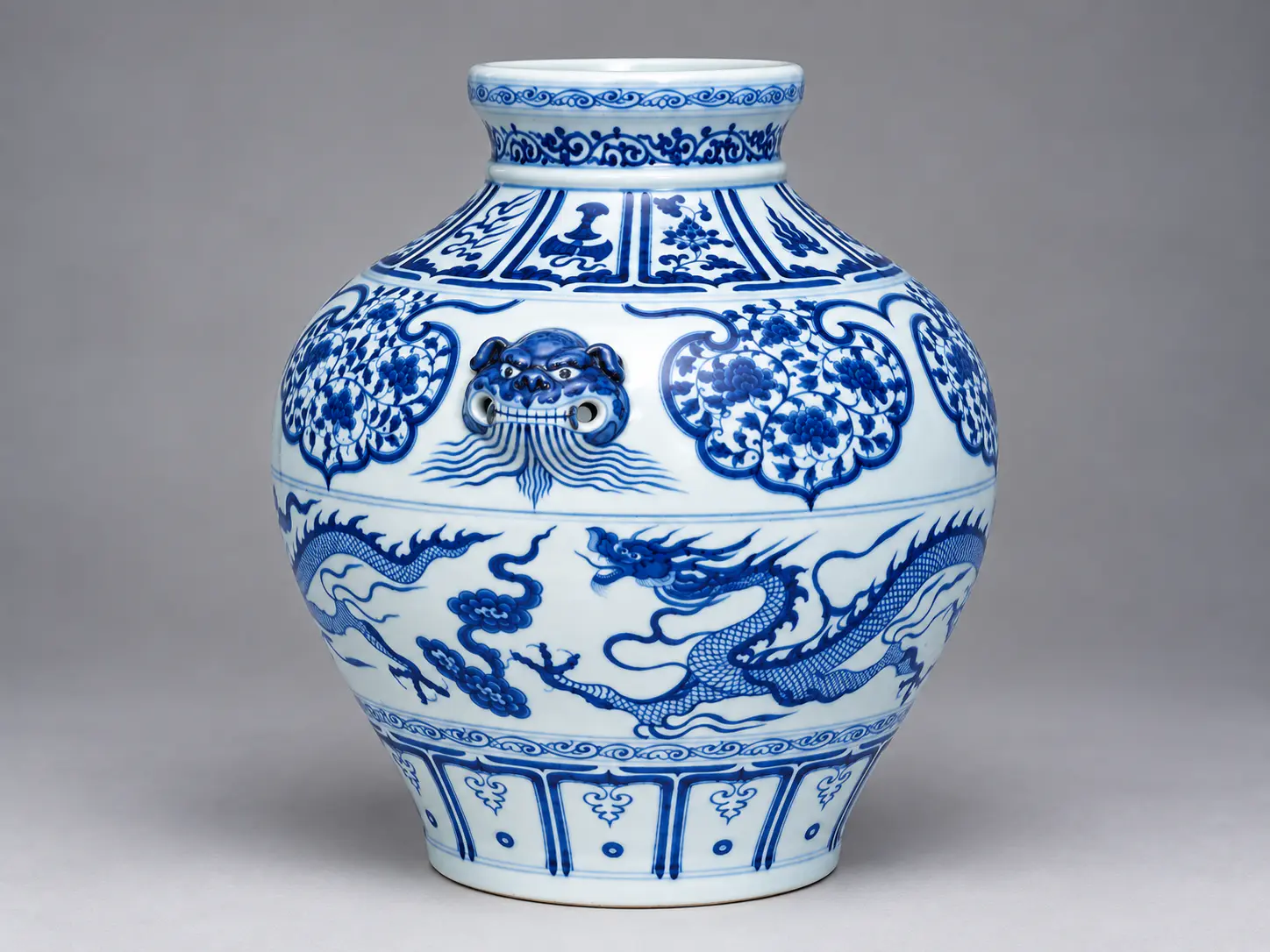
*Blue-and-white porcelain jar with dragon, Jingdezhen, Ming dynasty, Xuande period. The Metropolitan Museum of Art, Public Domain.*
Jingdezhen’s importance came from a production system, not a place name alone: raw materials (including porcelain stone and, later, kaolin combinations), specialist labor, kiln innovation, porcelain made at enormous scale, imperial and civilian kilns, and domestic and international trade networks. In 2026, UNESCO inscribed the Jingdezhen Handicraft Porcelain Industry Sites on the World Heritage List, recognizing a porcelain-production system shaped by raw materials, kiln technology, specialized labor, workshop organization and trade from the 10th to the 19th century. Jingdezhen became one of China’s most influential historic porcelain centers because materials, labor, kilns and markets aligned there for centuries—not because every Chinese ceramic came from Jiangxi.
Chinese porcelain also circulated widely through Asian, Middle Eastern and European trade networks, influencing ceramic production far beyond China.
Qing porcelain: imperial production, enamels and global markets
Qing Jingdezhen continued imperial and commercial production while expanding overglaze enamel palettes. *Famille verte* (green-dominated overglaze enamels) and *famille rose* (pink-dominated overglaze enamels) are two well-known European collector labels for Qing polychrome porcelain; neither defines the whole Qing field. Technically ambitious imperial wares, dense enamel painting and porcelain for domestic and overseas markets coexisted. Qing porcelain remains Jingdezhen-centered for many of the most famous painted pieces, but “Qing style” is not a single look.
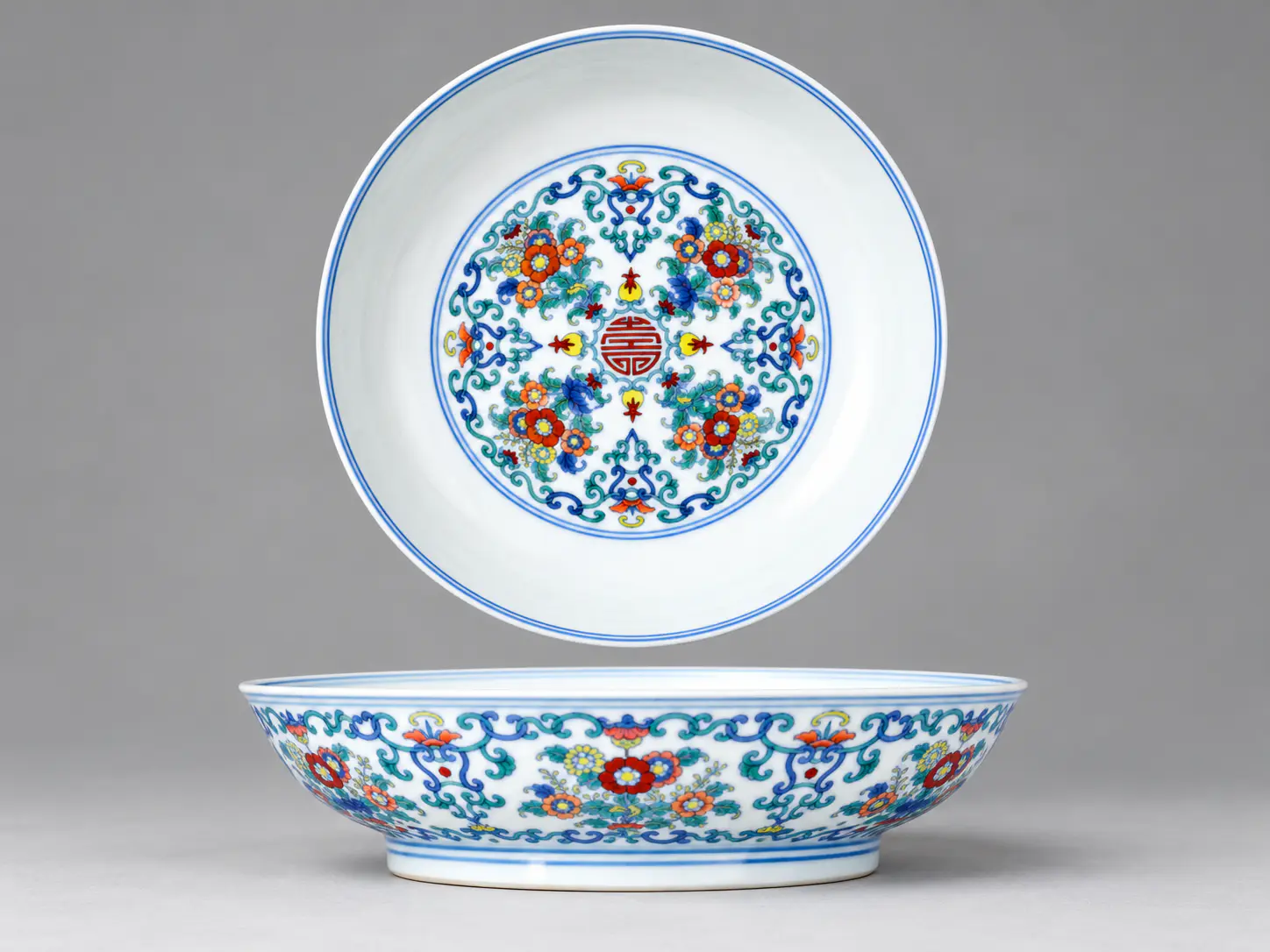
*Jingdezhen porcelain with overglaze polychrome enamels, Qing dynasty, mid-18th century. The Metropolitan Museum of Art, Public Domain.*
Major Types and Styles of Chinese Ceramics
The categories below provide a practical orientation to major ceramic types and decorative traditions travelers commonly encounter in museums.
Earthenware and painted pottery
Ancient Chinese ceramic traditions include Neolithic painted earthenware and later lower-fired vessels. These objects establish the deep timeline of Chinese ceramics before porcelain and help museum visitors read clay body and decoration without expecting translucent white porcelain everywhere.
Celadon
Celadon refers to ceramic wares with a characteristic greenish glaze. Longquan celadon is especially important for Song and later southern production, where form and glaze depth often matter more than painted narrative. Celadon is one of the clearest visual contrasts with later blue-and-white and famille rose porcelain.
White ware and qingbai
White ware emphasizes pale ceramic bodies and restrained glaze. *Qingbai* is a bluish-white glazed porcelain tradition associated with Song southern kilns. Together they show how Chinese workshops pursued translucency and quiet glaze color before cobalt blue painting dominated many export markets.
Blue-and-white porcelain
Blue-and-white porcelain uses cobalt pigment beneath a transparent glaze on a white ceramic body. Blue-and-white became one of the most internationally recognizable forms of Chinese porcelain. Mature Jingdezhen production in the Yuan and Ming periods made this one of the most consequential developments in ceramic history. Technique, chronology and collecting contexts are covered in more depth on the types of Chinese porcelain and ceramics guide.
Doucai and polychrome porcelain
*Doucai* combines underglaze outlines (often cobalt) with overglaze enamel fills—literally “joined colors.” Related polychrome porcelain traditions show how Chinese workshops layered decorative campaigns across more than one firing. The traveler takeaway is technical: underglaze and overglaze can share the same object.
Famille verte and famille rose
These European labels describe Qing overglaze enamel palettes—green-led and pink-led color families among them. They help museum visitors name what they see without implying that Qing porcelain equals only famille rose. Both sit within broader imperial and commercial enamel painting at Jingdezhen and related workshops.
Dehua / Blanc de Chine
Dehua in Fujian produced white porcelain often called *Blanc de Chine* in European collecting language. Figures, cups and other white-glazed forms show a southern porcelain tradition distinct from Jingdezhen blue-and-white. It is included here as a representative white-porcelain counterpart, not as a full Fujian kiln survey.
How Chinese Porcelain Was Made and Identified
Clay, porcelain stone, kaolin and firing
A practical sequence for museum visitors:
- Prepare raw materials (clays, porcelain stone, and—in Jingdezhen contexts—kaolin combinations).
- Form the vessel (throwing, molding or assembling parts).
- Dry the body.
- Decorate where appropriate (for example, underglaze cobalt painting).
- Apply glaze.
- Fire in the kiln; overglaze enamels may require additional lower-temperature firings.
Jingdezhen’s combination of porcelain stone and kaolin is an important technological development in that system. The point for travelers is process literacy: porcelain is engineered through materials and firing schedules, not painted clay that “becomes china” by branding alone.
Underglaze and overglaze decoration
Underglaze decoration applies pigment before the transparent glaze and the main high firing. Blue-and-white porcelain is the clearest example: cobalt sits under the glaze and is sealed by it.
Overglaze enamels are applied on an already glazed body and fixed through additional lower-temperature firings. Famille rose painting is a familiar Qing example. When a dish shows both cobalt outlines and colored enamel washes, you are often looking at a multi-stage decorative campaign.
Reign marks and other porcelain marks
Some imperial porcelains bear reign marks associating the piece with an emperor’s reign title. Marks can indicate intended reign association or workshop traditions. Later pieces may copy older marks. A mark alone does not authenticate a porcelain object, and a reign mark does not automatically equal the vessel’s actual age. Marks are useful museum vocabulary; they are not a DragonTrail authentication service and should not be treated as a checklist for buying antiques.
Where to See and Buy Chinese Porcelain in Beijing
Seeing imperial porcelain in Beijing
The Palace Museum / Forbidden City is the immediate DragonTrail connection for imperial Ming and Qing porcelain in Beijing. Its collections are especially relevant if you want to see court-level Jingdezhen production in the setting of the former palace. For a focused reading guide, see Forbidden City porcelain and the Palace Museum ceramics collection. Visitors planning a guided palace day can also look at the Forbidden City private tour when ceramic collections fit their itinerary.
Other ceramics collections in Beijing
Beijing has important ceramic collections beyond the Forbidden City, but exhibition schedules and gallery access can change, so check current museum information before planning a ceramics-focused visit.
Buying porcelain and ceramics in Beijing
Beijing offers contemporary ceramics, Jingdezhen ware, reproductions, decorative porcelain and antique-market material. Age, authenticity and provenance are specialist questions. DragonTrail does not authenticate, appraise or guarantee antique claims. If buying porcelain, separate contemporary decorative ware from claims about antique age, provenance and authenticity; those claims require specialist expertise.
See Chinese Porcelain in Beijing
A visitor interested in imperial porcelain can incorporate the Palace Museum’s ceramic collections into a Forbidden City visit. Start with the Forbidden City porcelain guide, then decide whether a private guided day helps with timing, tickets and route choices.
Continue Exploring Chinese Arts & Crafts
Sources & Further Reading
- The Metropolitan Museum of Art — Chinese ceramics chronology, Jingdezhen, blue-and-white and Open Access object photography
- British Museum — Chinese ceramics gallery overview (imperial, domestic and export production)
- Victoria and Albert Museum — Chinese blue-and-white ceramics
- UNESCO World Heritage Centre — Jingdezhen handicraft porcelain industry sites