
Modern and contemporary Chinese sculpture is a comparatively short chapter next to the millennia covered elsewhere in this guide, but it is not simply Western sculpture imported into China. Early 20th-century academic training introduced European modeling and bronze techniques; public monuments such as the Monument to the People's Heroes applied those methods to Chinese historical subjects; and contemporary studio practice—including internationally exhibited bronze portrait work—continues alongside ongoing commissions for parks, plazas and campuses. This guide covers that academic shift, the Monument to the People's Heroes, and contemporary sculptor Wu Weishan as traveler-facing touchpoints, without ranking living artists.
| Item | Answer |
|---|---|
| Key shift | Early 20th-century sculptors trained in Western academic bronze and plaster technique |
| Major modern public monument | Monument to the People's Heroes, Tiananmen Square, completed 1958 |
| Monument height | Nearly 38 meters |
| Monument reliefs | 10 marble bas-relief panels depicting Chinese revolutionary history |
| Lead sculptor of the reliefs | Liu Kaiqu |
| Notable contemporary sculptor | Wu Weishan, director of the National Art Museum of China |
| Wu Weishan's best-known works | Bronze portraits of Qi Baishi, Confucius, and other historical and cultural figures |
From Religious and Funerary Carving to Academic Bronze
For most of Chinese history, sculpture served religious, funerary or imperial-decorative functions, and its makers are mostly anonymous craftsmen rather than named individual artists. That changes significantly in the early 20th century, when Chinese sculptors began training in Western academic traditions—life drawing, plaster modeling, bronze casting technique developed in European art schools—and applying those methods to Chinese historical and cultural subjects. This shift produced a new genre largely absent from earlier Chinese sculpture: the individually attributed portrait bust or figure of a specific named person, made by a sculptor whose own name is recorded and celebrated alongside the work.
Monument to the People's Heroes
The clearest large-scale result of this transition is the Monument to the People's Heroes, standing in Tiananmen Square in central Beijing. Construction ran from 1952 to 1958, overseen by a large committee that included figures such as Liang Sicheng, and produced a granite and marble obelisk nearly 38 meters tall—about ten stories—built from roughly 17,000 individual stone blocks quarried from Fangshan, near Beijing, and Qingdao's Laoshan mountain.
The monument's most sculpturally significant feature is its base: ten large white marble bas-relief panels, each around two meters tall and populated with life-size carved figures, depicting eight key episodes in modern Chinese revolutionary history, from the destruction of opium at Humen in 1839 through the mid-20th century. A team of sculptors led by Liu Kaiqu created the reliefs, drawing partly on the study of earlier Chinese relief traditions—including the Buddhist carving at Yungang—combined with the realist academic technique the sculptors had trained in. The result is a public monument that reads as recognizably modern and Western-influenced in technique while consciously referencing much older Chinese carving traditions in its process and ambition.
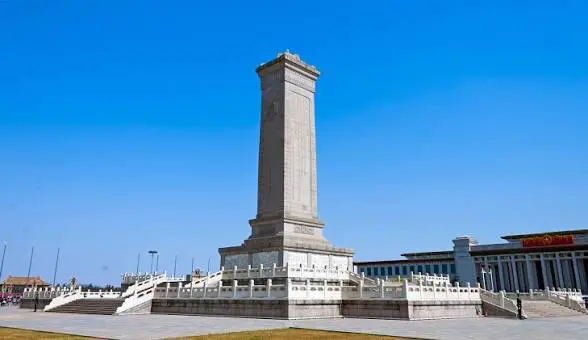
*Monument to the People's Heroes, Tiananmen Square, Beijing, completed 1958. Its ten marble bas-relief panels form a major public sculpture ensemble in modern China.*
The monument sits at the center of Tiananmen Square and is viewable at any time as part of a normal visit to the square, without a separate ticket. It pairs naturally with a Forbidden City visit given the square's location immediately south of the palace's main entrance.
Contemporary Sculpture: Wu Weishan
Among living Chinese sculptors, Wu Weishan is probably the most internationally recognized, known especially for bronze portrait sculptures of major historical and cultural figures. His works include figures of the painter Qi Baishi, the philosopher Confucius, and a range of other Chinese and international cultural and historical figures, exhibited and permanently installed in museums and public spaces across multiple countries, including Italy, Britain, Germany and Brazil. Wu Weishan currently directs the National Art Museum of China and has described his own approach as blending the expressive spirit of traditional Chinese art with figural sculptural technique, rather than treating Western academic bronze training and Chinese subject matter as separate traditions.
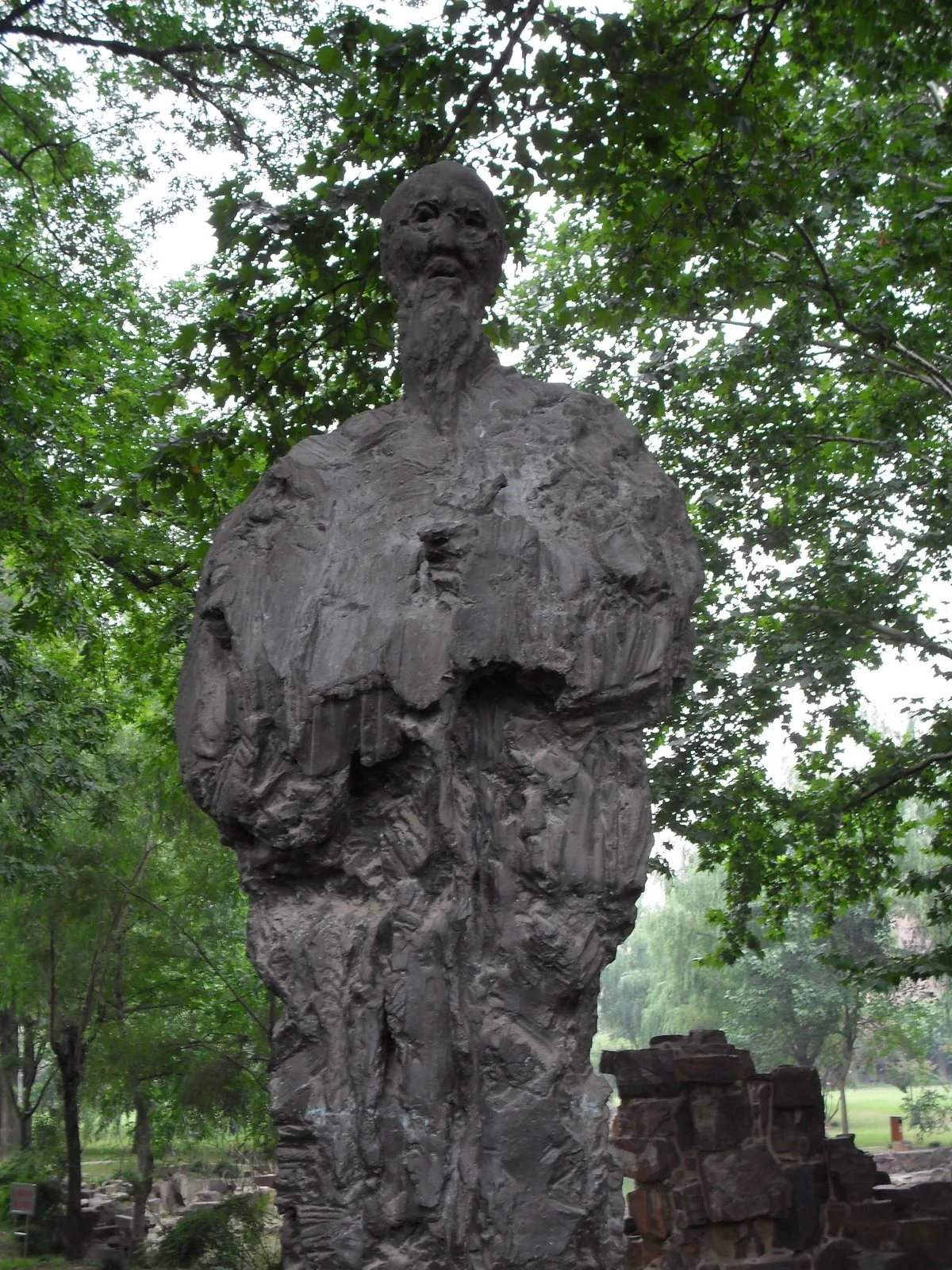
*Two expressive bronze portrait figures.*
Wu Weishan's work is a useful reference point for understanding where Chinese sculpture stands today: continuing a very old material tradition (bronze casting, ultimately traceable back to Shang ritual vessels) while working in a genre—the individually authored portrait figure of a named historical person—that has little precedent before the 20th century.
Public Sculpture Beyond These Two Examples
The Monument to the People's Heroes and Wu Weishan's portrait work are two visible touchpoints for most travelers, but they are part of a much larger contemporary landscape: public parks, museum plazas, urban development projects and university campuses across China commission new figural and abstract sculpture regularly. Bronze and stone remain common materials, even as subject matter and style have shifted toward modern and international sculptural conventions.
Where to See Modern Chinese Sculpture in Beijing
The Monument to the People's Heroes is freely viewable in Tiananmen Square at any time. Wu Weishan's works are more often found abroad or in dedicated museum and gallery contexts rather than concentrated in a single Beijing tourist site. See Where to See Chinese Sculpture in Beijing for how modern sculpture fits alongside the ancient, Buddhist and imperial sculpture covered elsewhere in this guide on a single Beijing itinerary.
FAQ
What is a major work of modern Chinese public sculpture travelers see in Beijing?
The Monument to the People's Heroes in Tiananmen Square, Beijing, completed in 1958, standing nearly 38 meters tall with ten large marble bas-relief panels at its base.
Who designed the Monument to the People's Heroes reliefs?
A team of sculptors led by Liu Kaiqu created the ten marble bas-relief panels, drawing on both Western academic realist technique and the study of earlier Chinese relief traditions, including Buddhist carving at Yungang.
Do I need a ticket to see the Monument to the People's Heroes?
No. It stands in the open public space of Tiananmen Square and is viewable at any time as part of a normal visit to the square.
Who is Wu Weishan?
A contemporary Chinese sculptor known internationally for bronze portrait works of historical and cultural figures, including the painter Qi Baishi and the philosopher Confucius. He currently directs the National Art Museum of China.
How is modern Chinese sculpture different from earlier Chinese sculpture?
Modern sculpture is generally individually attributed to a named sculptor and often depicts specific historical or cultural figures using Western-influenced academic bronze and modeling technique, whereas most earlier Chinese sculpture served religious, funerary or imperial-decorative functions and was made by largely anonymous craftsmen.
Where can I see Wu Weishan's work in person?
His works are installed in museums and public spaces across multiple countries, including Italy, Britain, Germany and Brazil, more often than concentrated in a single Beijing site.
Continue with Chinese Sculpture
- Chinese Sculpture guide
- 12 Landmark Works and Traditions in Chinese Sculpture
- History of Chinese Sculpture
- Chinese Bronze Sculpture
Plan a Visit
Sources & Further Reading
- Tiananmen Square context via Palace Museum / Beijing municipal sources — Monument to the People's Heroes (completed 1958; verify current square access before visiting)
- Royal Society of Sculptors — Wu Weishan biography and works