
Chinese clay sculpture is the modeled figural side of China's much broader ceramic tradition. It includes Neolithic pottery figures, the Qin Terracotta Army and centuries of Han and Tang tomb figurines. This guide focuses on figures modeled in fired clay, while the Chinese Porcelain & Ceramics guides focus primarily on ceramic bodies, glazes, kilns and major ware traditions. The subjects overlap, but they are different ways of organizing the same broader ceramic material history. This guide also points travelers toward Xi'an, where the single most famous work in this whole category is actually located.
| Item | Answer |
|---|---|
| Core distinction | Different subject emphasis: this guide focuses on modeled figures; porcelain guides focus on bodies, glazes, kilns and ware traditions |
| Earliest examples | Occasional Neolithic pottery figures, alongside the far more common painted pottery vessels |
| Pivotal work | Qin terracotta army, 3rd century BCE |
| Han–Tang tradition | Mingqi (tomb figurines): houses, animals, servants, entertainers, warriors, buried with the dead |
| Signature Tang style | Sancai ("three-color") lead-glazed and painted pottery figures |
| Primary viewing location | Xi'an, for the Terracotta Army |
| Related but distinct guide | Chinese Porcelain & Ceramics, for the vessel tradition |
Clay Sculpture vs. Porcelain: Different Subject Emphasis
"Clay" and "porcelain" both start from fired ceramic material, which is why visitors sometimes lump Chinese clay sculpture and Chinese porcelain together. They are different ways of organizing the same broader ceramic material history, not mutually exclusive crafts. Clay sculpture here means modeling a three-dimensional figure—a soldier, a horse, a servant, a house—often left unglazed or given a simple lead glaze or applied paint after firing. Porcelain and related high-fired ceramics can also be sculptural (glazed ceramic religious figures appear in museum Buddhist collections), but DragonTrail's porcelain guides focus primarily on vessel forms, glaze chemistry and kiln technology at centers like Jingdezhen. If you are researching kiln technique, cobalt decoration or celadon glaze, start with the Chinese Porcelain & Ceramics guide; if you are researching modeled figures, this page and the Chinese Sculpture guide are the right starting point.
Neolithic Pottery Figures
Occasional pottery figures appear in Neolithic China, but they are a minor strand within a ceramic culture dominated by painted vessels. Figural pottery sculpture as a major, sustained artistic practice does not really begin until the Qin dynasty, more than a thousand years later.
The Qin Terracotta Army: Mass Production Meets Individual Finishing
The Qin terracotta army, buried to guard the tomb of China's first emperor near modern Xi'an and discovered by farmers in 1974, is the foundational work of Chinese clay sculpture. Its production method is what makes it sculpturally remarkable: workshops mass-produced bodies from molded and coiled component parts on something close to an assembly-line system, then finished heads, hands and armor details by hand, so that faces, hairstyles, mustache styles and rank insignia vary across the roughly 8,000 estimated soldier figures. Higher-ranking figures, such as generals, were made taller and given more elaborate armor than ordinary infantry.
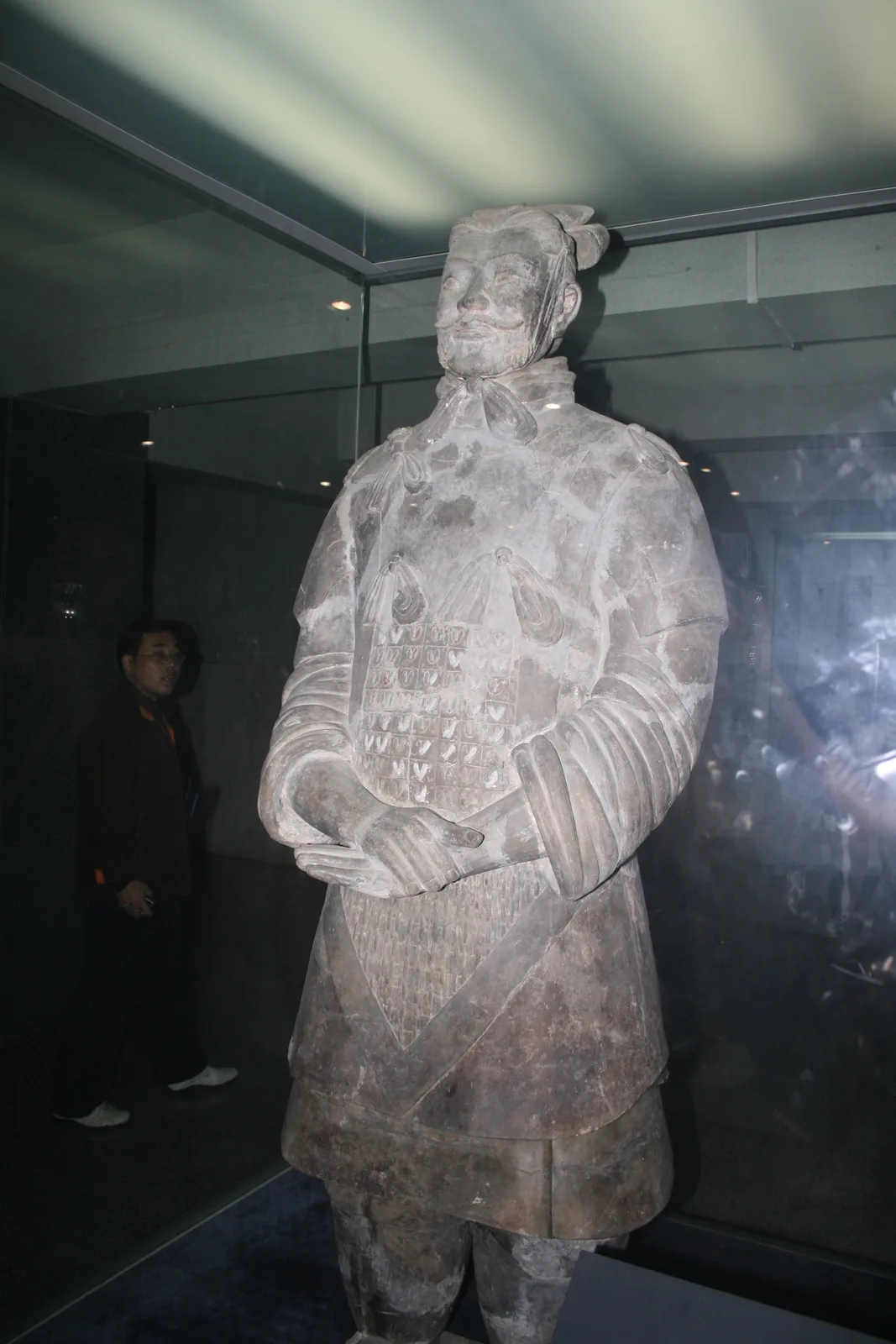
*Qin dynasty terracotta general figure. Officer-rank figures like this were made taller and more elaborately armored than ordinary soldier figures within the same mass-produced army.*
The figures were originally painted in bright pigments, most of which faded within minutes to hours of exposure to air once excavated—a preservation challenge that ongoing excavation still has to manage carefully. The Terracotta Army is covered from a broader funerary angle on the Tomb & Funerary Sculpture guide and profiled as a landmark work on the 12 Famous Chinese Sculptures guide.
Han and Tang Tomb Figurines (Mingqi)
After the Qin dynasty, Chinese tomb sculpture generally moves to a smaller scale. Han and especially Tang tombs were furnished with mingqi—spirit or tomb figurines made to serve or accompany the deceased in the afterlife: model houses and granaries, farm animals, servants, musicians, dancers, camels and, above all, horses. These figures are typically much smaller than the Qin terracotta soldiers—often tens of centimeters rather than life-size—and were produced in large numbers for a broad range of tomb owners, not just emperors.
Tang tomb sculpture reaches its best-known form in sancai ("three-color") ware: lead-glazed pottery figures using green, amber/brown and cream glazes (sometimes with blue), applied over molded and hand-finished clay bodies. Sancai figures include warriors, officials, camels, and the famous Tang tomb horses covered in depth on the Chinese Horse Sculpture guide. Not every Tang tomb figure is sancai-glazed—painted, unglazed earthenware figures are equally common—but sancai remains the style most associated with Tang funerary pottery in museum collections and popular imagination.
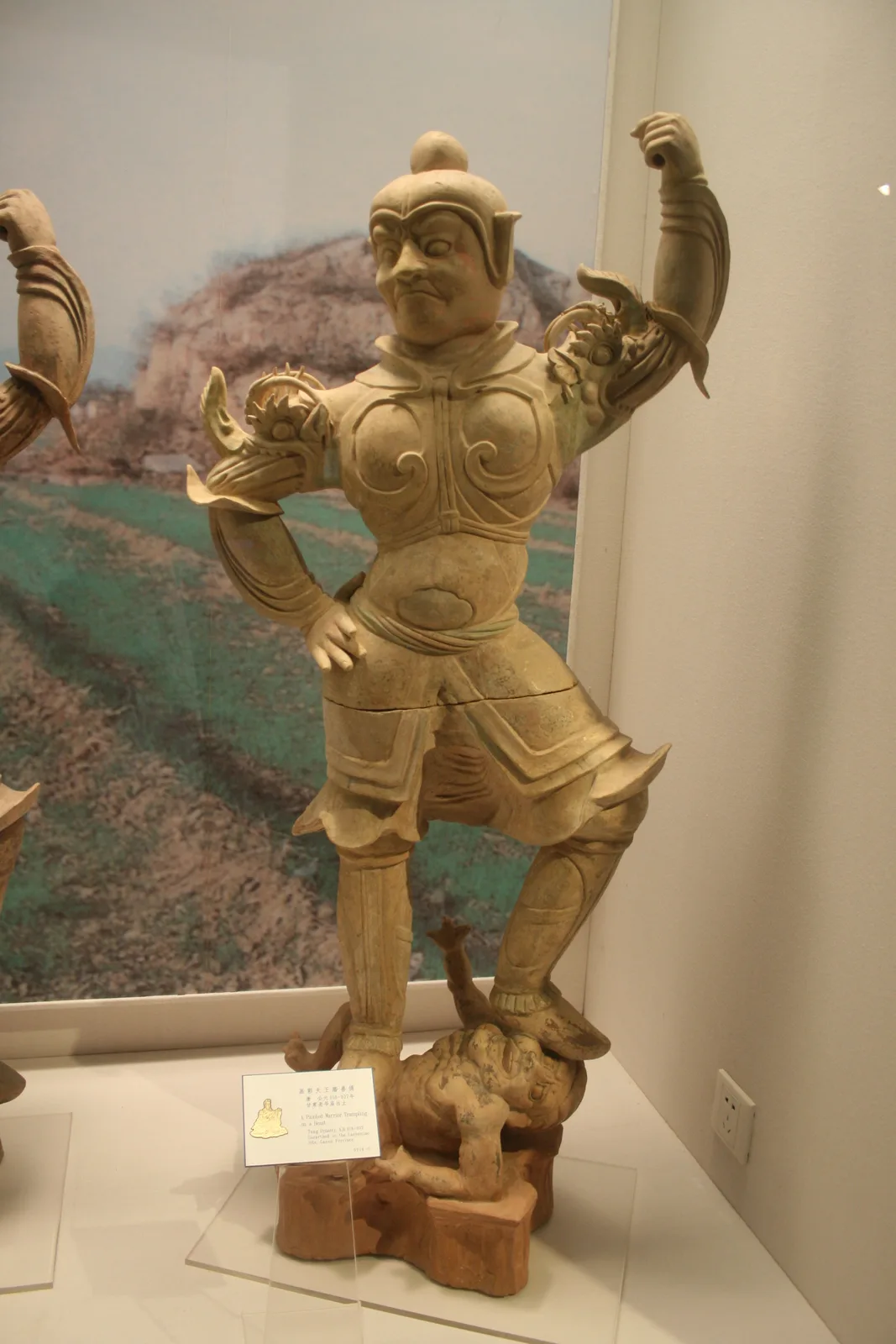
*Tang dynasty painted pottery warrior figure, an example of the mingqi tomb-figurine tradition that flourished alongside Tang Buddhist sculpture.*
Xi'an: The Primary Destination for This Category
Unlike most of the Chinese Sculpture cluster, where Beijing is the practical center of gravity, clay sculpture's single most important site is Xi'an, not Beijing. The Terracotta Army sits within the wider Qin Shi Huang Mausoleum complex near Xi'an, roughly 1,100 kilometers from Beijing, and requires its own dedicated trip by flight or high-speed rail. DragonTrail's Xi'an Terracotta Warriors tour is built specifically around this site. Han and Tang tomb figurines, by contrast, are held across many collections in China and internationally, including in Beijing's National Museum of China; see Where to See Chinese Sculpture in Beijing for that side of the picture.
FAQ
Is clay sculpture the same as Chinese porcelain?
No. Clay sculpture models figures—soldiers, animals, servants—while porcelain and related ceramics are about vessel forms, glaze chemistry and kiln technology. Both use fired clay bodies but serve different purposes and belong to separate guides: this one for figures, Chinese Porcelain & Ceramics for vessels.
How were the Terracotta Army figures made?
Bodies were mass-produced from molded and coiled component parts, then heads, hands and armor details were finished individually by hand, producing variation in faces, hairstyles and rank-specific detail across the estimated 8,000 soldier figures.
What is mingqi?
Mingqi are spirit or tomb figurines—model houses, animals, servants, musicians and similar figures—made to accompany and serve the deceased in the afterlife. They were a standard part of Han and especially Tang burial practice.
What is Tang sancai pottery?
A lead-glazed pottery style using green, amber/brown and cream glazes (sometimes blue), applied to Tang dynasty tomb figures such as warriors, officials, camels and horses. Not all Tang tomb figures use sancai glaze, but it is the style most associated with Tang funerary pottery.
Can I see the Terracotta Army from Beijing in a day?
No. It is near Xi'an, roughly 1,100 kilometers from Beijing, and requires a separate flight or high-speed rail trip. Plan Xi'an as its own leg of your itinerary; see the Xi'an Terracotta Warriors tour.
Were the Terracotta Army figures always gray?
No. They were originally painted in bright colors, most of which faded rapidly once exposed to air during excavation, which is why the great majority of visible figures today show the natural color of fired clay.
Continue with Chinese Sculpture
- Chinese Sculpture guide
- Ancient Chinese Sculpture
- Tomb & Funerary Sculpture
- Chinese Porcelain & Ceramics
Plan a Visit
See the Terracotta Army in context with the Xi'an Terracotta Warriors tour, or contact us to build it into a wider China itinerary.
Sources & Further Reading
- UNESCO World Heritage Centre — Mausoleum of the First Qin Emperor
- The Metropolitan Museum of Art — Tang dynasty sancai tomb figures