
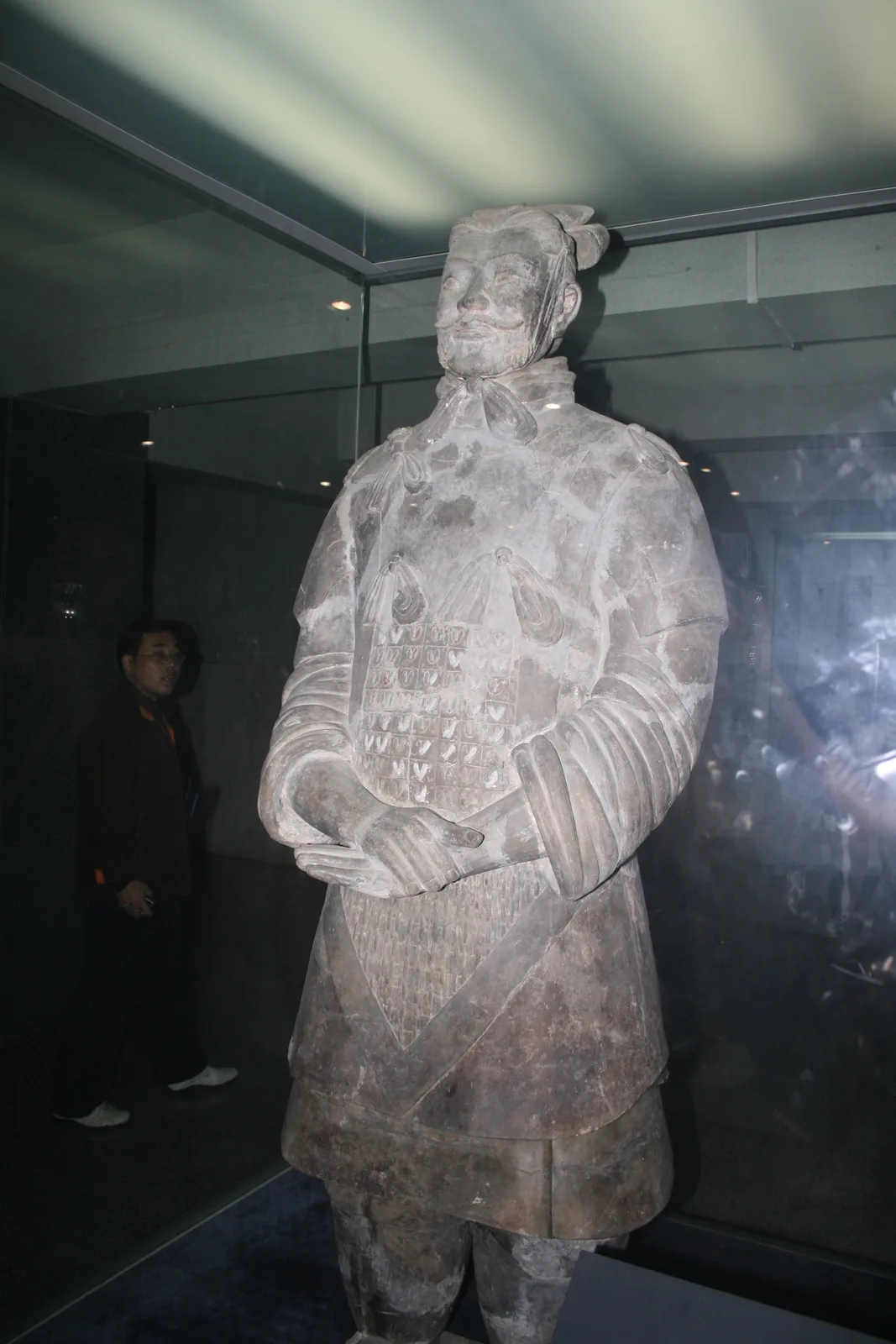
Ancient Chinese sculpture before Buddhist image-making became a major force includes Neolithic pottery figures, Shang and Zhou bronze and wood sculpture, the exceptional monumental bronzes of Sanxingdui, the Qin Terracotta Army and Han funerary art. The Terracotta Army marks the first surviving monumental figural ensemble in China on an unprecedented scale, but it did not emerge from a complete absence of earlier figural traditions. This guide covers Neolithic pottery and jade, Shang and Zhou bronze casting, the Qin terracotta army, and Han funerary sculpture, as the foundation the History of Chinese Sculpture guide builds on. For the religious sculpture that follows this period, see Buddhist Sculpture.
| Item | Answer |
|---|---|
| Period covered | Neolithic through Han dynasty (before c. 220 CE) |
| Dominant Bronze Age output | Ritual vessels (ding, zun, gui), not figural sculpture |
| Notable exception | Sanxingdui bronze figures and masks, Sichuan |
| Pivotal work | Qin terracotta army, 3rd century BCE |
| Estimated terracotta army figures | About 8,000 soldiers plus horses and chariots, across three main pits |
| Discovery | 1974, by farmers digging a well near Xi'an |
| Han contribution | Stone-relief tomb shrines and the Eastern Han bronze "Flying Horse of Gansu" |
Neolithic Pottery and Jade: Before Figural Sculpture
China's earliest three-dimensional art is not figural sculpture in the sense of a carved or cast human or animal form meant to stand on its own. Neolithic communities across different regions of China made painted pottery vessels, and worked jade into small ritual and ornamental objects—discs, tubes, animal-shaped pendants—using abrasive techniques rather than metal tools. Occasional pottery figures exist, but they are the exception rather than the rule; the bulk of Neolithic three-dimensional craft went into vessels and small jade objects, not statues. Jade carving developed into its own long and continuous tradition covered on the Chinese Jade Carvings guide rather than as a chapter of sculpture history here.
Shang and Zhou: Bronze Casting Without Much Figural Sculpture
The Shang (c. 1600–1046 BCE) and Zhou (1046–256 BCE) dynasties are where Chinese bronze casting becomes an extraordinary technical achievement—and where a common visitor misconception needs correcting. Most of what fills a Shang or Zhou bronze gallery is ritual vessels: ding tripods used for cooking and presenting meat offerings, zun and you vessels for wine, gui for grain, all made for ritual and ancestral ceremonies rather than as portraits or statues of anyone. The single most famous Shang bronze, the Houmuwu ding excavated at Anyang in 1939 and now in the National Museum of China, weighs 832.84 kilograms and remains the heaviest bronze vessel known from anywhere in the ancient world—but it is a cooking vessel form, not a figure.
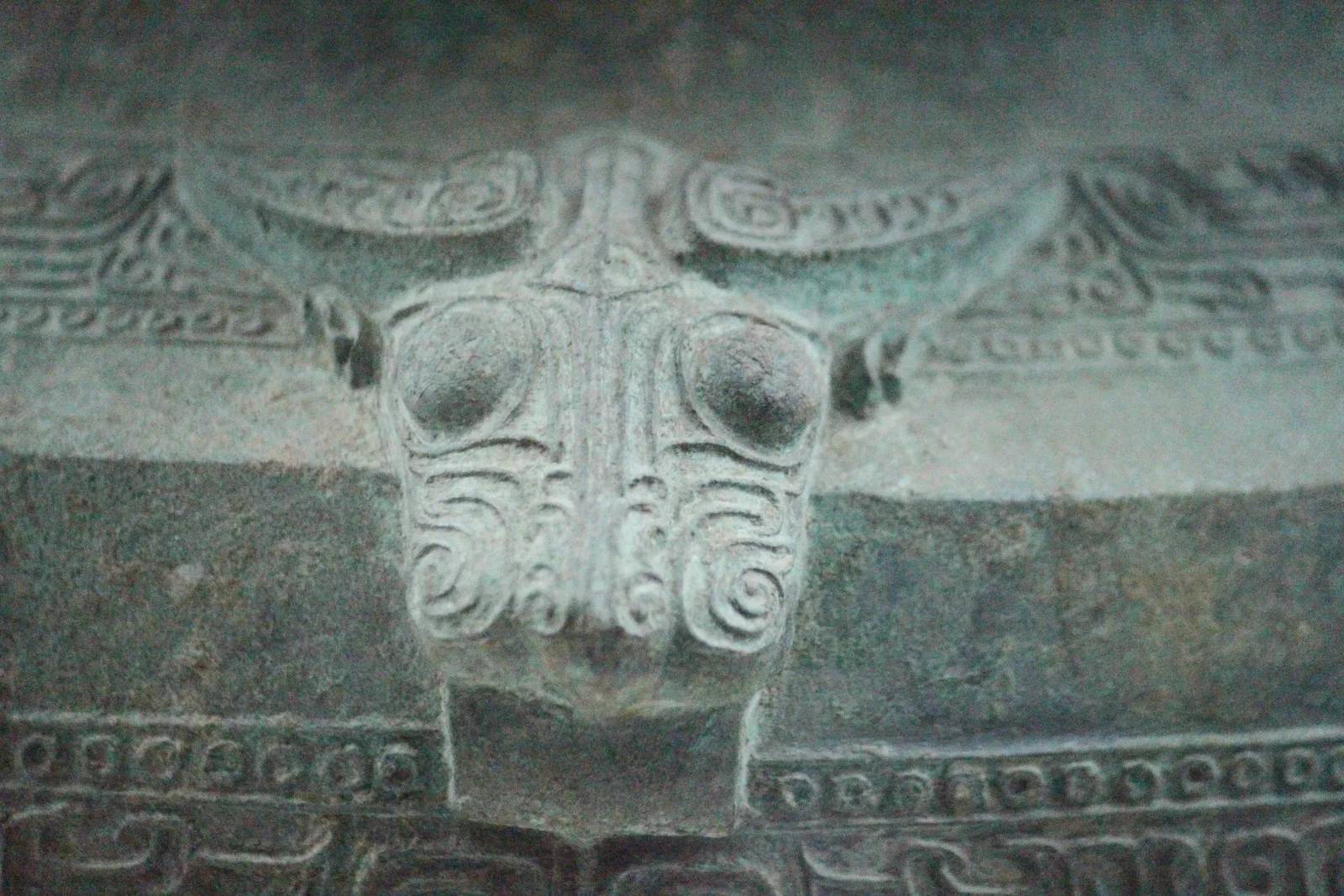
*Shang dynasty bronze zun. Ritual vessels like this dominate the surviving Bronze Age record far more than free-standing figural sculpture does.*
The clearest exception to this pattern comes from outside the traditional Shang-Zhou heartland: the Sanxingdui site in Sichuan, where excavations beginning in 1986 (and continuing with new pits found from 2019 onward) uncovered large free-standing bronze human figures and masks with no real parallel in contemporary Yellow River valley bronzes. The best-known Sanxingdui bronze standing figure, at roughly 2.6 meters including its pedestal, is thought to be the largest bronze human figure from any Bronze Age culture found anywhere in the world. Sanxingdui bronzes were cast to be displayed, worn or mounted—closer to sculpture in the familiar sense than the ritual vessels that otherwise define the period—and are held at the Sanxingdui Museum near Guanghan. The distinction between ritual bronze vessels and free-standing sculptural bronze is developed further on the Chinese Bronze Sculpture guide.
The Qin Terracotta Army: China's First Monumental Figural Sculpture
The Qin dynasty (221–206 BCE) lasted only about fifteen years, but it produced the single most consequential work in the history of Chinese sculpture. China's first emperor, Qin Shi Huang, commissioned an underground army of terracotta soldiers, officers, horses and chariots to guard his mausoleum near modern Xi'an. Farmers digging a well discovered the first fragments in 1974, and archaeologists have since excavated three main pits containing an estimated 8,000 soldier figures along with cavalry horses and chariots.
What makes the terracotta army sculpturally significant, rather than just historically remarkable, is the production method: bodies were mass-produced from molded and coiled component parts, then heads, hands and details were finished individually, so that no two faces are identical—variation runs across hairstyle, facial features, mustache style and rank-specific armor and insignia. Higher-ranking figures such as generals were made taller and given more elaborate armor than ordinary soldiers. The figures were originally painted in bright colors, most of which faded rapidly once exposed to air during excavation. This combination of assembly-line production and individualized finishing has no clear precedent in the earlier Chinese sculptural record, which is one reason the terracotta army reads as a genuine invention rather than an extension of existing bronze or pottery practice. It is covered in more technical depth on the Clay & Pottery Sculpture guide and the Tomb & Funerary Sculpture guide, and profiled as a landmark work on the 12 Famous Chinese Sculptures guide.
Han Sculpture: Stone Reliefs, Tomb Figures and a Famous Bronze Horse
Han dynasty sculpture (206 BCE–220 CE) continues and diversifies what the Qin started, without another single work on the scale of the terracotta army. Two Han traditions matter most for travelers.
Stone-relief tomb shrines. Wealthy Han families built above-ground shrine buildings near their tombs and decorated the interior walls with narrative and mythological scenes carved in low relief. The Wu family shrines in Jiaxiang County, Shandong—built mid-2nd century CE and rediscovered in the 18th century—are the best-documented example, depicting Confucian moral exemplars, historical rulers and myths such as archers shooting down suns. A pair of stone lions kept at the same site is among the earliest confidently dated stone lions in China, an early data point for the guardian-lion tradition covered on the Chinese Guardian Lions guide.
The Flying Horse of Gansu. Han bronze casters also produced one of the most technically admired small bronzes in Chinese art history: a galloping horse balanced on a single hoof resting on a bird in flight, unearthed in 1969 from a tomb at Leitai near Wuwei, Gansu, and dated to the Eastern Han period. Now held at the Gansu Provincial Museum and used since 1983 as China's official tourism emblem, the piece is a rare instance of Han sculpture aiming for pure dynamic effect rather than funerary or ritual function in the narrower sense. See the Chinese Horse Sculpture guide for more.
Both Han traditions are covered together on the Tomb & Funerary Sculpture guide, which extends the same funerary logic through the Tang dynasty and the Ming Tombs Sacred Way.
Where This Fits: What Comes Next
Everything on this page predates Buddhism's major impact on Chinese sculpture, which starts reshaping the tradition from the 5th century CE onward—see Buddhist Sculpture for that turn. For the full chronology connecting ancient sculpture to religious, imperial and modern sculpture, see the History of Chinese Sculpture guide.
See Ancient Chinese Sculpture in Person
The terracotta army is near Xi'an, not Beijing, and needs a dedicated trip—see the Xi'an Terracotta Warriors tour. Shang and Zhou ritual bronzes are best seen at the National Museum of China in Beijing; see Where to See Chinese Sculpture in Beijing for routing between the two cities and the museums within Beijing.
FAQ
Were ancient Chinese bronzes mostly sculptures of people or animals?
No. Most Shang and Zhou bronzes are ritual vessels—ding, zun, gui and similar forms—made for ritual and ancestral ceremonies, not figural statues. Free-standing bronze sculpture is the exception, seen most dramatically at Sanxingdui in Sichuan.
What is the Sanxingdui bronze figure?
A large free-standing bronze human figure, roughly 2.6 meters tall including its pedestal, excavated from a sacrificial pit at the Sanxingdui site in Sichuan starting in 1986. It has no close parallel among contemporary Shang bronzes from the Yellow River valley and is considered one of the largest bronze human figures from any Bronze Age culture worldwide.
How many figures are in the Terracotta Army?
Archaeologists estimate around 8,000 soldier figures across the three main excavated pits, along with cavalry horses and chariots, though not every figure has been fully excavated or restored.
Were the Terracotta Army figures always this color?
No. They were originally painted with bright pigments; most of that paint faded very quickly once the figures were exposed to air during excavation, which is why most visible figures today appear in the natural gray-brown of fired clay.
What is the oldest confidently dated stone lion in China?
A pair of stone lions kept at the Wu family shrine site in Jiaxiang, Shandong, associated with the mid-2nd-century Han dynasty shrine complex, is among the earliest stone lions in China with a confirmed historical date.
What is the Flying Horse of Gansu?
An Eastern Han bronze sculpture of a galloping horse balanced on one hoof atop a bird in flight, unearthed in 1969 near Wuwei, Gansu, and now held at the Gansu Provincial Museum. It has served as China's official tourism symbol since 1983.
Continue with Chinese Sculpture
Sources & Further Reading
- National Museum of China — Houmuwu ding
- Sanxingdui Museum — Sanxingdui bronze figures and masks
- Gansu Provincial Museum — Flying Horse of Gansu (Bronze Running Horse / 铜奔马)
- UNESCO World Heritage Centre — Mausoleum of the First Qin Emperor