
Beijing has four realistic stops for Chinese sculpture—the Forbidden City, the National Museum of China, the Summer Palace, and the Ming Tombs—plus one important exception that is not in Beijing at all: the Terracotta Army, near Xi'an. This guide compares what each Beijing site actually offers, recommends a single best stop if you only have time for one, and flags the routing mistakes that most often waste a traveler's day.
| Site | Sculpture on offer | Indoor/outdoor | Status caveat |
|---|---|---|---|
| Forbidden City | Bronze dragons and lions, stone dragon relief, sundials; indoor Sculpture Gallery | Mostly outdoor; one indoor gallery | Sculpture Gallery is a separate space with its own schedule, currently listed as a temporary closure |
| National Museum of China | Shang/Zhou ritual bronzes; Ancient Chinese Buddhist Sculpture exhibition in Gallery S13 (official page lists 236 objects) | Indoor | Exhibition content subject to current schedule |
| Summer Palace | Bronze animals, stone lions (544 on the Seventeen-Arch Bridge), garden sculpture | Outdoor | Normally visible during normal park opening; check current operational notices |
| Ming Tombs | Sacred Way: 24 stone animals, 12 stone officials | Outdoor | Half-day trip in its own right; located north of central Beijing |
| Xi'an (not Beijing) | Terracotta Army | Outdoor/covered pits | Requires separate flight or high-speed rail trip |
Museum-by-Museum Comparison
Forbidden City
The Forbidden City is the single most efficient stop for most visitors because so much of its sculpture sits outdoors in the palace courtyards: gilded bronze dragons and lions at key gates, the large carved marble dragon relief staircase behind the Hall of Preserving Harmony, sundials and grain-measure sculptures, and dragon-head drainage spouts along the palace terraces. Exterior bronze and stone sculpture is normally visible during Palace Museum opening hours, subject to temporary route and conservation restrictions, and is included in a standard admission ticket without a separate booking.
The Palace Museum's dedicated indoor Sculpture Gallery, which holds imperial and religious statuary, is a different matter. It is a separate space inside the palace with its own opening schedule, and as of this guide's most recent update it is listed as a temporary closure on the Palace Museum's official site. When the gallery is open, it meaningfully adds to a Forbidden City sculpture visit; when it is not, outdoor bronze and stone sculpture is still normally visible during opening hours, subject to temporary route and conservation restrictions. Check the current museum notice before planning around this gallery specifically, and do not assume a standard Forbidden City ticket automatically includes it. See the Forbidden City guide for general visit planning, or book a Forbidden City private tour so a guide can adapt the day's route to whatever is actually open.
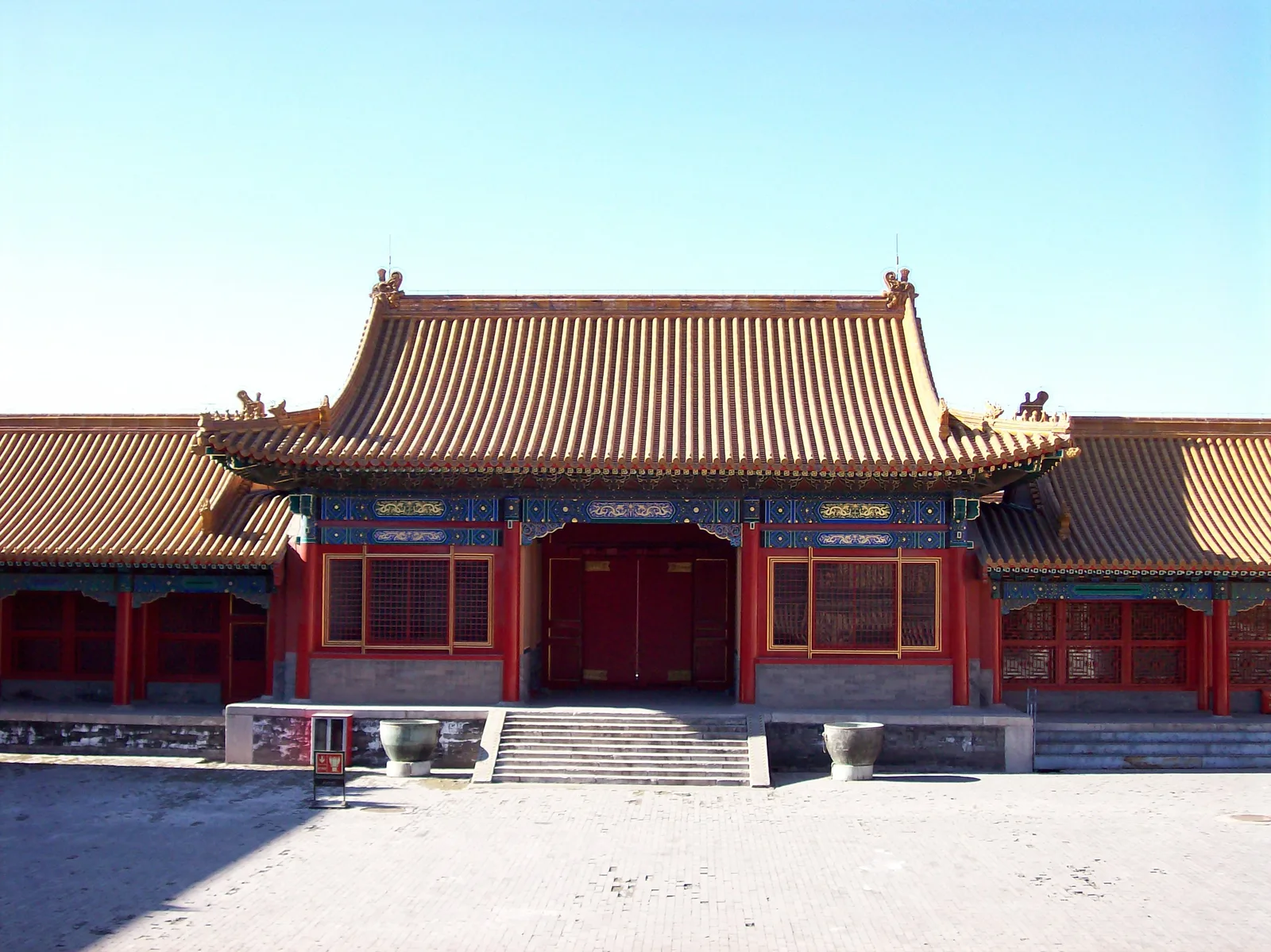
*Forbidden City courtyard, Beijing. Exterior bronze and stone sculpture is normally visible during opening hours, subject to temporary route and conservation restrictions, independent of the indoor Sculpture Gallery schedule.*
National Museum of China
On the east side of Tiananmen Square, the National Museum of China holds two collections that matter for sculpture-focused visitors. Its Bronze Age galleries include major Shang and Zhou ritual bronzes, among them the Houmuwu ding—the heaviest known ancient bronze vessel in the world. Separately, its permanent Ancient Chinese Buddhist Sculpture exhibition in Gallery S13 presents more than 200 works; the current official exhibition page lists 236 objects spanning the 5th century through the Ming dynasty, drawing on styles from Yungang, the Tianlong Mountain grottoes and other major sites. Exact contents and access are subject to the museum's current schedule—check current opening information before your visit. Admission to the National Museum is free but typically requires advance online reservation.
Summer Palace
The Summer Palace offers useful outdoor sculpture without depending on indoor galleries: bronze animals, guardian lions, and above all the 544 individually carved stone lions lining the balustrades of the Seventeen-Arch Bridge are normally visible during normal park opening, with operational checks close to travel. A Summer Palace private tour pairs well with a Forbidden City day, since the two sites cover complementary sculptural material—imperial palace bronze versus garden stone.
Ming Tombs
North of central Beijing, the Ming Tombs preserve the Sacred Way: a ceremonial avenue lined with 24 monumental stone animals (lions, xiezhi, camels, elephants, qilin and horses, each in standing and kneeling pairs) and 12 stone officials, leading toward the imperial burial mounds. This is genuinely different sculptural material from anything in central Beijing—large-scale outdoor stone carving in a landscape setting—but it requires real travel time and is best treated as its own half-day trip rather than an add-on to a Forbidden City morning.
If You Only Have One Stop
If time allows for only a single sculpture-focused stop in Beijing, the Forbidden City's exterior bronze and stone sculpture is the safest choice, because it does not depend on any indoor gallery's schedule. Bronze dragons, bronze lions and the great marble dragon relief are normally visible during opening hours, subject to temporary route and conservation restrictions. If your itinerary allows a second stop and time for advance reservation, add the National Museum of China for Bronze Age ritual bronzes and, status permitting, the Buddhist sculpture display—together these two sites cover ritual bronze, imperial bronze and stone, and Buddhist sculpture in a single day without requiring travel outside central Beijing.
Routing Mistakes to Avoid
Assuming a Forbidden City ticket includes the Sculpture Gallery. It does not automatically, and the gallery is currently listed as a temporary closure regardless. Build your plan around the outdoor bronze and stone sculpture, and treat the indoor gallery as a bonus only if you confirm it is open.
Assuming the Terracotta Army is a Beijing sight. It is near Xi'an, roughly 1,100 kilometers from Beijing, and requires a separate flight or high-speed rail trip—not a day excursion from the capital. See the Xi'an Terracotta Warriors tour and plan it as its own itinerary leg.
Assuming the National Museum's Buddhist sculpture display is always on view exactly as described. Special exhibitions are subject to the museum's current schedule; confirm before building a day around it specifically, especially if a particular gallery or object is the main reason for your visit.
Underestimating Ming Tombs travel time. The Sacred Way is genuinely worth seeing, but it sits well outside central Beijing and does not work as a quick add-on squeezed after a full Forbidden City morning. Give it its own half-day.
Treating the Summer Palace as purely a garden visit and skipping its sculpture. With 544 individually carved stone lions on a single bridge, the Summer Palace is a legitimate sculpture stop in its own right, not just a lake-and-pavilion detour.
Suggested Routing
For a sculpture-focused Beijing day: start at the Forbidden City in the morning for outdoor bronze and stone sculpture (and the indoor Sculpture Gallery, if currently open), then walk south to Tiananmen Square and the National Museum of China in the afternoon for ritual bronzes and Buddhist sculpture. On a second day, add the Summer Palace for garden sculpture, or the Ming Tombs if you have a full day and interest in imperial funerary sculpture specifically. If Xi'an is part of your broader China itinerary, plan the Terracotta Army as a separate multi-day leg rather than trying to fit it around Beijing sightseeing.
A custom Beijing private tour quote is a practical way to get a route built around current gallery status rather than guessing from a generic itinerary template. For questions about combining Beijing sculpture sites with an Xi'an leg, contact us directly.
FAQ
What is the single best place to see Chinese sculpture in Beijing?
The Forbidden City's exterior bronze and stone sculpture is the most reliable single stop: it is outdoors and normally visible during Palace Museum opening hours, subject to temporary route and conservation restrictions. The National Museum of China is the best second stop for ritual bronzes and Buddhist sculpture.
Is the Palace Museum's Sculpture Gallery open?
As of this guide's most recent update, it is listed as a temporary closure on the Palace Museum's official site. Check the current museum notice before visiting, and don't assume a standard Forbidden City ticket includes it.
Can I see the Terracotta Army as part of a Beijing trip?
Not as a day trip. It is near Xi'an, roughly 1,100 kilometers from Beijing, and needs its own flight or high-speed rail journey. See the Xi'an Terracotta Warriors tour.
How many stone lions are at the Summer Palace?
544 individually carved stone lions line the balustrades of the Seventeen-Arch Bridge, in addition to other guardian lions elsewhere in the garden.
Do I need advance tickets for the National Museum of China?
Admission is typically free but requires advance online reservation, similar to most major Beijing museums and attractions.
Is the Ming Tombs Sacred Way worth a special trip?
Yes, if you have interest in imperial funerary sculpture specifically, but it requires real travel time north of central Beijing and works better as its own half-day than as an add-on to another site's itinerary.
What is the biggest mistake travelers make when planning Beijing sculpture sightseeing?
Assuming the Forbidden City ticket automatically includes the Sculpture Gallery, and assuming the Terracotta Army can be reached from Beijing in a single day. Both assumptions lead to disappointment or wasted itinerary time.
Continue with Chinese Sculpture
- Chinese Sculpture guide
- Buddhist Sculpture
- Chinese Guardian Lions
- Tomb & Funerary Sculpture
- Forbidden City guide
- Summer Palace guide
Plan a Visit
- Forbidden City private tour
- Summer Palace private tour
- Custom Beijing private tour quote
- Xi'an Terracotta Warriors tour
- Contact us
Sources & Further Reading
- Palace Museum — Forbidden City collections and current exhibition notices
- National Museum of China — Ancient Chinese Buddhist Sculpture exhibition (Gallery S13; 236 objects)