
Traditional Chinese gardens are not simply collections of flowers or landscaped parks.
They are designed environments combining architecture, water, rocks, plants, paths and views into a sequence of changing scenes.
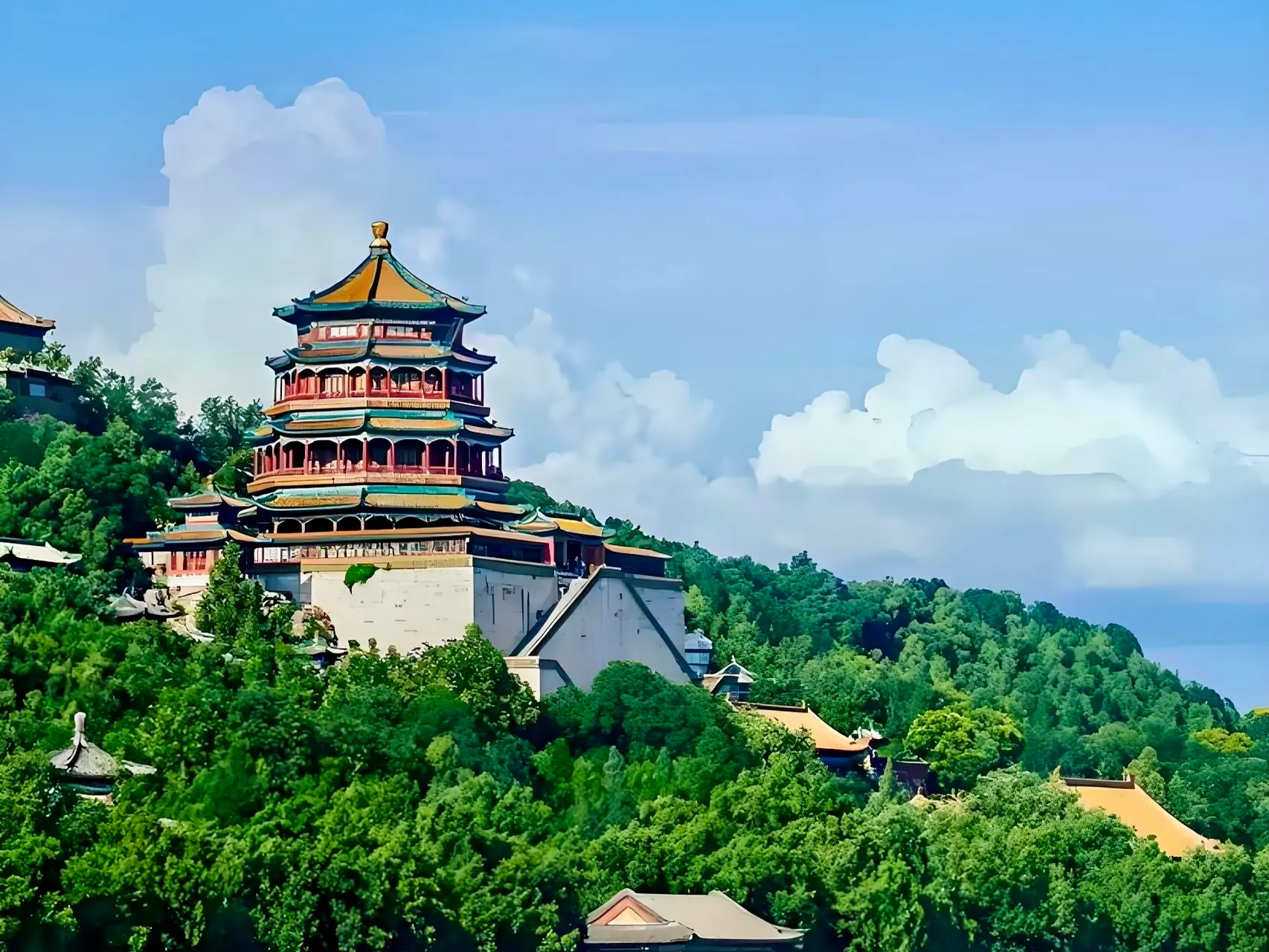
Some Chinese gardens operate at enormous scale. Beijing's Summer Palace combines hills, Kunming Lake, palaces, temples, pavilions, corridors and bridges across an imperial landscape. UNESCO describes it as a masterpiece of Chinese landscape garden design.
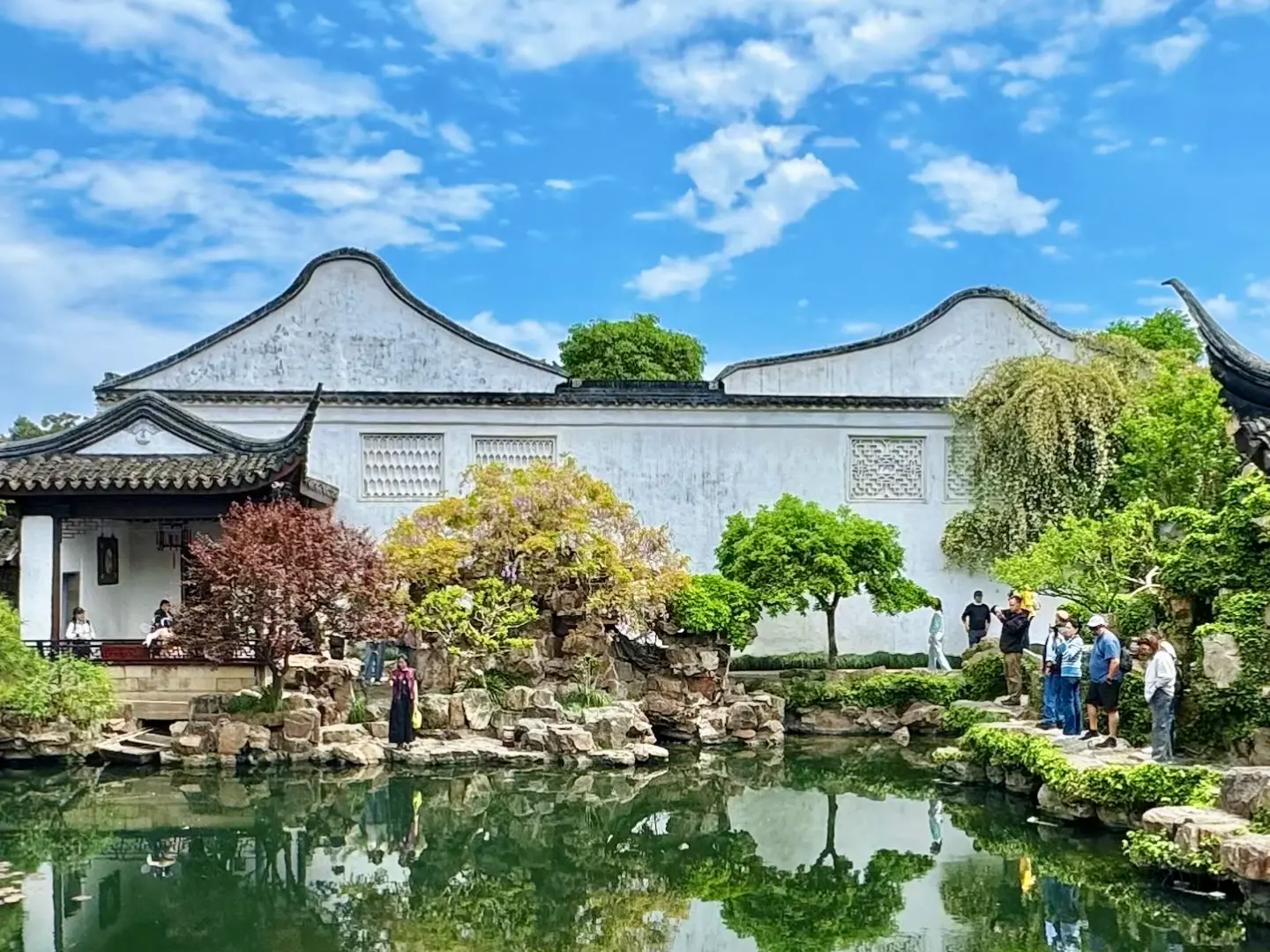
Others are deliberately compact. UNESCO describes the Classical Gardens of Suzhou as miniature representations of natural landscapes created within limited urban residential sites using water, stones, plants and architecture.
These are not simply the same garden enlarged or reduced.
Traditional Chinese garden-making developed through different:
- social settings
- regions
- periods
- landscapes
- architectural traditions
Major examples include:
- imperial gardens such as the Summer Palace and Chengde Mountain Resort
- private and scholar gardens such as the Classical Gardens of Suzhou
- regional Jiangnan gardens such as Yu Garden in Shanghai
- religious and institutional garden traditions
- smaller gardens embedded inside residential or palace compounds
The most useful way to understand a Chinese garden is therefore not to ask:
Which objects does it contain?
but:
How are landscape, architecture and movement composed so that the garden reveals itself gradually?
This page sits beside traditional Chinese architecture, focusing on garden traditions rather than building systems alone.
Chinese Gardens at a Glance
| Tradition | Typical scale | Main context | Strong example |
|---|---|---|---|
| Imperial garden | Large | Emperor / imperial court | Summer Palace |
| Imperial landscape retreat | Very large | Palace + government + retreat | Chengde Mountain Resort |
| Private / scholar garden | Compact | Residence / literati culture | Suzhou classical gardens |
| Jiangnan urban garden | Compact | Dense southern city | Yu Garden |
| Palace garden | Small–medium | Garden inside palace compound | Forbidden City Imperial Garden |
| Regional garden traditions | Varies | Different climates/cultures | Lingnan, Sichuan, northern, Jiangnan |
These categories overlap. A garden can be simultaneously private, residential, Jiangnan and scholar-oriented.
The Core Idea of a Traditional Chinese Garden
Chinese gardens are artificial environments designed to produce an experience of landscape.
Their purpose is not simply geometric order or horticultural display.
A traditional Chinese garden is a deliberately composed landscape in which architecture, water, rocks, plants and paths are arranged to create changing scenes and experiences rather than simply decorate a plot of land. Chinese gardens developed into several traditions, including monumental imperial gardens and smaller private or scholar gardens, with major regional differences across northern China, Jiangnan, Lingnan and Sichuan.
A Landscape Composed Rather Than Copied
Chinese garden designers selected, compressed and recomposed qualities associated with natural landscapes.
UNESCO describes Suzhou garden design as creating miniature natural landscapes rather than reproducing literal wilderness.
This distinction is important.
A rockery does not need to look like one exact mountain.
A pond does not need to reproduce one real lake.
Together they can suggest a larger landscape.
Creating a Larger World Within Limited Space
This idea is especially visible in Suzhou.
UNESCO describes classical Suzhou gardens as creating a microcosm of the natural world within the limited area associated with a residence.
Designers can create spatial complexity by:
- dividing the garden into scenes
- preventing the whole site from being visible at once
- turning routes
- changing elevations
- framing partial views
- combining enclosed and open spaces
Architecture as Part of the Landscape
Buildings in a Chinese garden are not merely shelters added after the landscape is complete.
Garden architecture can include:
- halls
- pavilions
- towers
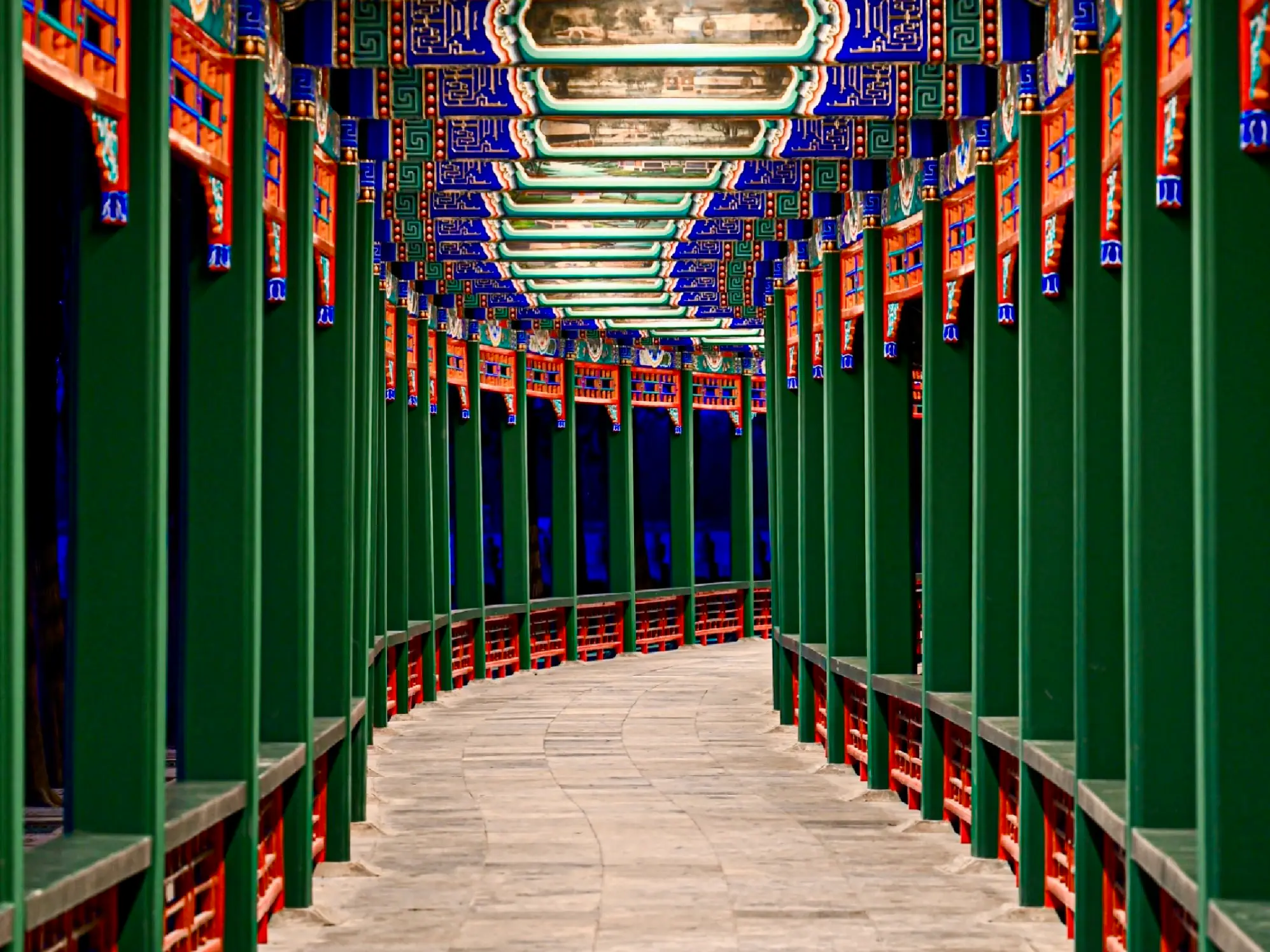
- covered corridors
- bridges
- walls
- gates
These structures determine:
- where visitors walk
- where they stop
- which view they see
- how one scene transitions into another
The Summer Palace demonstrates this relationship at imperial scale: UNESCO specifically describes hills and open water combined with pavilions, halls, palaces, temples and bridges as one ensemble. For Chinese garden architecture in the wider building tradition, see Chinese architecture and famous Chinese architecture.
Movement, Sequence and Changing Views
A garden is experienced over time.
The visitor moves through:
```text entrance → enclosed space → turn → opening → pavilion → water view → corridor → rockery → another scene ```
This sequence is conceptual.
Do not claim every Chinese garden follows this exact order.
A useful principle for travelers is:
Chinese garden design often controls when and how scenes are revealed.
Garden as a Place to Live, Walk and Contemplate
Many historic gardens were connected with actual residences.
They were not only decorative destinations.
UNESCO describes Suzhou's gardens as closely connected with traditional residences and the life and culture of historic intellectuals.
Garden spaces could support:
- walking
- entertaining guests
- reading
- painting
- writing
- viewing scenery
- seasonal appreciation
- domestic life
Not every garden was a place where scholars meditated. Use historically specific language for ownership, use and period.
Major Chinese Garden Traditions
Chinese gardens can be classified in several ways.
One useful functional distinction is between:
- imperial gardens
- private gardens
- temple/religious gardens
- other institutional gardens
Chinese national landscaping terminology separately defines imperial, private and temple gardens as recognized historic types.
Imperial Gardens
Imperial Chinese gardens were created for rulers and imperial households and often operate at landscape scale far beyond an urban private garden.
They could combine:
- residence
- leisure
- political activity
- ritual
- hunting
- scenic viewing
- temples
- administrative functions
They are generally much larger than urban private gardens.
Summer Palace
The Summer Palace is the strongest surviving example for travelers.
UNESCO describes it as a culmination of imperial Chinese garden design combining Kunming Lake and Longevity Hill with extensive built structures.
For dedicated Summer Palace garden reading, see Summer Palace garden design and Chinese garden aesthetics at the Summer Palace.
Chengde Mountain Resort
Built between 1703 and 1792, Chengde combines:
- imperial palace
- gardens
- lakes
- forests
- grassland
- administrative spaces
- temples
UNESCO describes it as an outstanding example of integrating buildings into a natural environment and as a major continuation of China's imperial gardening tradition.
Use Chengde to show that an imperial garden can operate at landscape scale.
Private and Scholar Gardens
Private Chinese gardens were built for individual households rather than the imperial court, and the strongest surviving tradition is associated with Jiangnan cities such as Suzhou.
Private gardens developed in connection with:
- residences
- officials
- scholars/literati
- merchants
- elite families
They generally had far less land than major imperial estates.
This constraint encouraged sophisticated spatial compression.
Classical Gardens of Suzhou
Suzhou provides the strongest surviving group.
UNESCO's World Heritage property includes nine gardens dating from the 11th to 19th centuries.
They combine:
- water
- rocks
- plants
- architecture
- inscriptions
- domestic space
- carefully composed scenes
Suzhou's classical private-garden tradition is strongly associated with literati and scholarly culture.
That does not mean every Suzhou garden can be labeled a “scholar garden” without qualification, or that every owner was literally a professional scholar.
Yu Garden in Shanghai
Yu Garden is useful because it gives Shanghai travelers a surviving Jiangnan private-garden example.
Shanghai's official tourism material describes it as a traditional private garden originating in the Ming dynasty; the garden contains pavilions, rock formations and ponds.
For travelers pairing Yu Garden with Old City routes, see the Shanghai Yu Garden and Old City layover itinerary.
Temple and Institutional Gardens
Chinese historic garden categories also include gardens associated with:
- Buddhist temples
- Daoist institutions
- academies
- memorial sites
- government compounds
This section exists to prevent a false binary:
Chinese gardens = imperial or scholar only.
Garden Within a Residence
Many private gardens cannot be understood separately from the house.
This is particularly important in Suzhou, where UNESCO explicitly links classical gardens with historic residential culture.
For how traditional houses organize courtyards, gates and domestic space, see traditional Chinese house layout and design.
Why the Categories Overlap
A garden can simultaneously be:
- private
- residential
- scholar-oriented
- Jiangnan
- urban
Likewise:
- Summer Palace = imperial + northern + landscape garden
- Suzhou garden = private + Jiangnan + residential + scholar tradition
Avoid presenting categories as mutually exclusive boxes.
Chinese Gardens Through History
Chinese government cultural sources trace Chinese garden-making back more than 3,000 years, with early forms associated with the Yin/Shang and Zhou periods.
That long chronology does not mean today's garden forms have remained unchanged for 3,000 years.
The tradition evolved substantially.
Early Gardens and Royal Parks
Early garden forms included large enclosed areas associated with rulers, hunting, animals, water and constructed landscape.
These were not miniature Suzhou-style gardens.
Early royal parks should therefore not be read as miniature versions of later Jiangnan private gardens.
Qin and Han Palace Gardens
By the Qin and Han periods, large palace-garden complexes combined:
- architecture
- water
- artificial landscape
- imperial leisure
- display
The Chinese Garden Museum identifies Qin-Han palace gardens as an important phase in the formation of classical Chinese garden traditions.
Tang and Song Landscape Culture
Later development increasingly connected garden-making with:
- landscape poetry
- landscape painting
- private residences
- literati culture
Chinese garden-museum and government material identifies Tang-Song landscape culture as a major period in the maturation of garden aesthetics.
The arts developed in close cultural dialogue. Landscape painting did not simply “invent” Chinese gardens.
Ming and Qing Maturity
Government museum sources identify the Ming and Qing periods as a high point of Chinese classical garden development, with both northern imperial and Jiangnan private traditions reaching mature forms.
Major surviving examples from or substantially shaped during these eras include:
- Humble Administrator's Garden
- Lingering Garden
- Yu Garden
- Chengde Mountain Resort
- Summer Palace
Historic gardens were repeatedly modified and restored. Do not imply every surviving component is untouched from its foundation date.
Preservation and Public Gardens Today
Many spaces originally created for:
- emperors
- private families
- officials
- scholars
are now:
- heritage sites
- museums
- public parks
- tourist attractions
This shift affects how modern travelers experience them.
Use historical tense when describing original ownership and use.
Regional Garden Traditions Across China
A Chinese government cultural reference groups major regional traditions into:
- northern
- southern/Jiangnan
- Lingnan
- Sichuan garden traditions
Use this as a broad field guide, not a rigid taxonomy.
Northern Gardens
Northern Chinese garden traditions include many of the country's great imperial landscapes, including the Summer Palace and Chengde Mountain Resort.
Common characteristics in major surviving examples can include:
- larger scale
- lakes
- hills
- palace architecture
- strong ceremonial buildings
- broad vistas
Examples:
- Summer Palace
- Beihai
- Chengde Mountain Resort
Not all northern gardens are imperial.
Jiangnan Gardens
Jiangnan refers broadly to the lower Yangtze region south of the river.
Garden traditions here are strongly associated with:
- Suzhou
- Shanghai
- Wuxi
- Yangzhou
- other historic southern cities
Urban land constraints encouraged sophisticated use of relatively small sites.
Suzhou is the strongest surviving expression.
UNESCO describes these gardens as creating entire miniature landscapes within restricted residential plots.
Lingnan Gardens
Lingnan garden traditions developed in southern China, particularly Guangdong and surrounding areas.
Official Chinese cultural material identifies them as a distinct regional garden tradition and notes the presence of architectural influences arising from southern China's historical connections with outside cultures.
Examples can include:
- Qinghui Garden
- Keyuan Garden
Sichuan Gardens
Official Chinese cultural material also identifies a Sichuan regional tradition, including gardens associated with historic people and cultural sites.
Examples include:
- Du Fu Thatched Cottage
- Wuhou Shrine garden environments
Do not overgeneralize the entire region from two examples.
Regional Categories Are Guidelines, Not Fixed Rules
Gardens influenced one another.
The Qing imperial court incorporated ideas and motifs from Jiangnan.
Beihai itself combines different historical and regional influences over centuries; Beijing's official sources describe it as one of China's oldest and best-preserved imperial gardens.
Therefore avoid treating north and south as fixed, mutually exclusive styles.
Gardens as Architecture, Landscape and Art
Chinese garden-making combines several media into one environment.
This overview focuses on the main design principles rather than cataloguing every individual garden element.
Mountains and Water
The pairing of mountain and water—shanshui (山水)—is fundamental to Chinese landscape culture.
In gardens, mountains may be suggested through:
- natural hills
- artificial rockeries
and water through:
- lakes
- ponds
- streams
This page introduces the pairing without expanding into rock types or pond engineering.
Buildings as Places to View the Garden
A pavilion is not simply an object to photograph.
Its location can create a particular viewpoint.
Likewise:
- halls
- corridors
- bridges
- windows
- gates
can organize perception.
The building is therefore simultaneously:
- architecture
- circulation device
- viewing platform
- frame
Painting, Poetry and Calligraphy
UNESCO specifically notes the connections among Suzhou garden design, traditional landscape painting, literary meaning, plaques, inscriptions and other arts.
Chinese classical gardens often developed in close relationship with painting, poetry, calligraphy and literati culture.
That is stronger and more accurate than calling every Chinese garden a three-dimensional painting.
Concealment, Revelation and Spatial Sequence
Chinese gardens frequently prevent the visitor from seeing the complete landscape immediately.
Walls, corridors, rocks and buildings can:
- hide
- frame
- redirect
- reveal
different scenes.
Natural Appearance Through Deliberate Design
This paradox should be explicit:
A classical Chinese garden may appear informal or naturalistic, but that appearance is usually the result of deliberate composition.
UNESCO describes Suzhou garden masters as carefully adapting and manipulating limited sites to simulate broader natural landscapes.
That is a stronger explanation than saying Chinese gardens simply let nature grow freely.
Famous Chinese Gardens to See
This is a curated representative set, not a long ranking list.
Beijing
Summer Palace
Best for:
- imperial garden scale
- lake + hill composition
- architecture integrated with landscape
- Long Corridor
- pavilions
- temples
- bridges
UNESCO calls it a masterpiece of Chinese landscape garden design.
Continue with:
- Summer Palace guide
- Summer Palace architecture
- Summer Palace garden design
- Chinese garden aesthetics at the Summer Palace
Beihai Park
Best for understanding:
- older imperial garden traditions
- lake-and-island composition
- imperial garden evolution across several dynasties
Beijing's official site identifies Beihai as one of China's oldest and best-preserved imperial gardens and describes its “one lake and three hills” garden system.
Do not claim Beihai's present appearance is unchanged from its earliest period.
Forbidden City Imperial Garden
Best for:
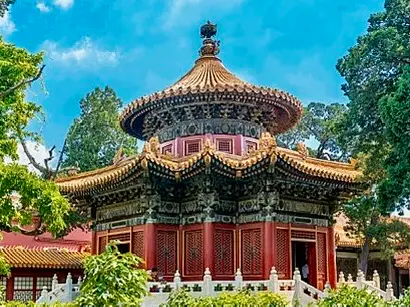
- a compact palace garden
- garden inside a highly formal imperial complex
- contrast between formal palace axis and smaller garden space
See the dedicated Forbidden City Imperial Garden page. This section stays concise because that article already owns the site-level detail.
Chengde
Mountain Resort
Best for:
- large imperial retreat
- topography
- lakes
- woods
- palace and temple landscape
UNESCO describes the Mountain Resort as a major example of Chinese imperial gardening and the integration of buildings with natural surroundings.
Suzhou
Suzhou should be the strongest private-garden cluster.
UNESCO recognizes nine gardens in the World Heritage property.
This overview does not describe all nine individually.
Humble Administrator's Garden
Use as the large, famous Suzhou example.
Best for:
- water-centered composition
- pavilion relationships
- classic Jiangnan private-garden tradition
Lingering Garden
Best for:
- architecture
- spatial sequence
- rock composition
- changing garden rooms
Master-of-Nets Garden
Best for:
- compact scale
- residential/garden integration
- efficient use of limited space
Canglang Pavilion
Use as an important early surviving Suzhou garden example.
UNESCO identifies it as the earliest of the nine World Heritage gardens, originating in the early 11th century on the site of an earlier garden.
Shanghai
Yu Garden
Yu Garden is the strongest DragonTrail bridge in Shanghai.
Shanghai government sources describe it as a Ming-period private garden and a major surviving Jiangnan-style garden using pavilions, rocks and ponds.
For route context with Old City walks, see Shanghai Yu Garden and Old City layover.
Choosing Which Garden Tradition to See
For first-time China visitors based in Beijing → Summer Palace
For imperial garden history → Summer Palace + Beihai + Chengde
For classical private/scholar gardens → Suzhou
For Shanghai travelers → Yu Garden
For comparing palace formality with garden composition → Forbidden City + Summer Palace
This page does not cover ticket prices or booking logistics.
Chinese Gardens FAQ
What is a traditional Chinese garden?
A traditional Chinese garden is a designed landscape that combines elements such as architecture, water, rocks, plants and paths into a sequence of composed scenes.
Rather than reproducing one literal natural place, many classical gardens create a concentrated or idealized landscape experience.
What are the main types of Chinese gardens?
Major historical categories include:
- imperial gardens
- private gardens
- temple/religious gardens
Gardens can also be classified regionally, including northern, Jiangnan/southern, Lingnan and Sichuan traditions.
These categories overlap.
What is a Chinese scholar garden?
A Chinese scholar garden generally refers to a private garden associated with literati or educated elite culture, especially the classical garden tradition of Jiangnan.
Suzhou preserves the strongest surviving examples.
Not every private garden owner was literally a scholar.
What is the difference between an imperial garden and a private garden?
Imperial gardens generally served emperors and the imperial household and could operate at very large scale, combining residence, ceremony, administration and recreation.
Private gardens were generally smaller and closely connected with individual residences or families.
The Summer Palace and Suzhou classical gardens provide the clearest contrast.
Why are rocks and water important in Chinese gardens?
Rocks and water are fundamental components used to suggest larger natural landscapes and create spatial contrast.
Water can create open visual space and reflections, while rocks can suggest mountains, cliffs or changing terrain.
Detailed rockeries, pond design and related techniques are covered in garden design and elements writing rather than this overview.
What are the most famous Chinese gardens?
Important examples include:
- Summer Palace
- Beihai Park
- Chengde Mountain Resort
- Classical Gardens of Suzhou
- Yu Garden
The best choice depends on whether the visitor wants to see imperial, private or regional garden traditions.
Are Chinese gardens supposed to look natural?
Many classical Chinese gardens aim for a naturalistic landscape effect, but they are highly designed.
Rocks, water, architecture, paths and plants are deliberately arranged to create particular scenes and movement.
Therefore:
natural-looking does not mean undesigned.
What is the difference between Chinese and Japanese gardens?
Chinese and Japanese garden traditions share historical East Asian relationships but developed distinct design systems.
For the cross-cultural architecture and garden comparison already owned elsewhere, see Chinese vs Japanese architecture.