
How to read a jade carving
 Click to enlarge
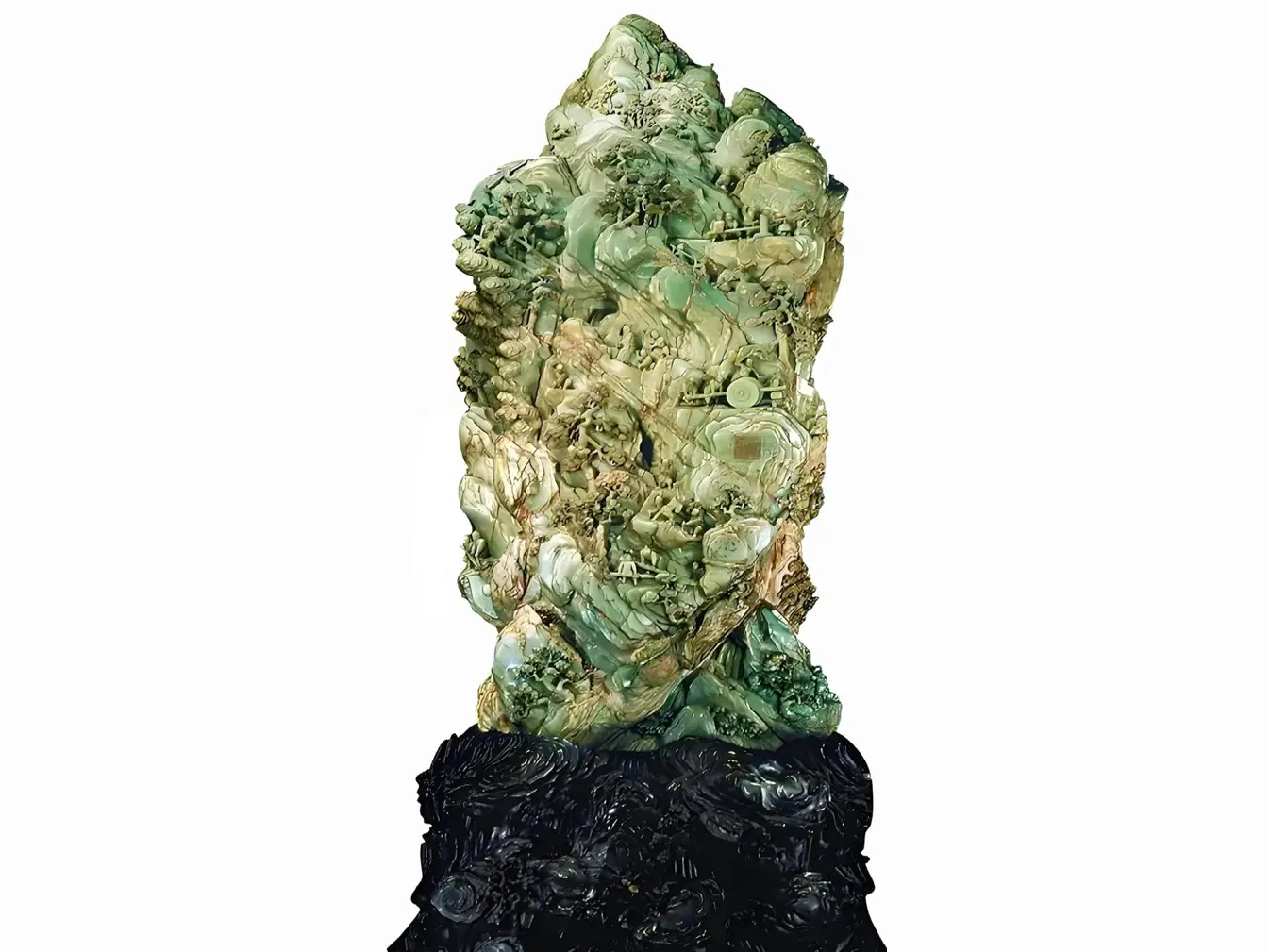
Qing-dynasty nephrite mountain carving illustrating Yu the Great Taming the Floods.
Chinese jade carving is usually better understood as patient material removal than as chisel carving. Artisans cut, drilled, ground, abraded, and polished hard stone using tools and abrasive materials. For travelers, the useful method is to read four layers together: material, form, symbol, and context. First ask whether the object is nephrite, jadeite, or another material. Then look at the form: ritual shape, court vessel, scholar object, pendant, bangle, or souvenir. After that, read the symbols such as dragons, bats, fish, peaches, or ruyi forms. Finally, use the label to understand whether the object belonged to a burial, a scholar's desk, an imperial workshop, or modern gift culture.
Carving categories
| Category | Typical era | What to notice |
|---|---|---|
| Ritual geometry | Neolithic–Zhou | Bi discs, cong tubes, blades, plaques, and other forms where shape and burial context matter more than decoration |
| Animal and mythical beasts | Neolithic–Qing | Pig-dragons, dragons, fish, turtles, and other animals whose meaning changes by period and object type |
| Scholar and literati objects | Ming–Qing | Brush washers, seals, plaques, desk objects, and small carvings tied to refined study culture |
| Imperial narrative boulders | Qing, especially Qianlong | Deep relief landscapes, inscriptions, classical stories, and large nephrite boulder projects |
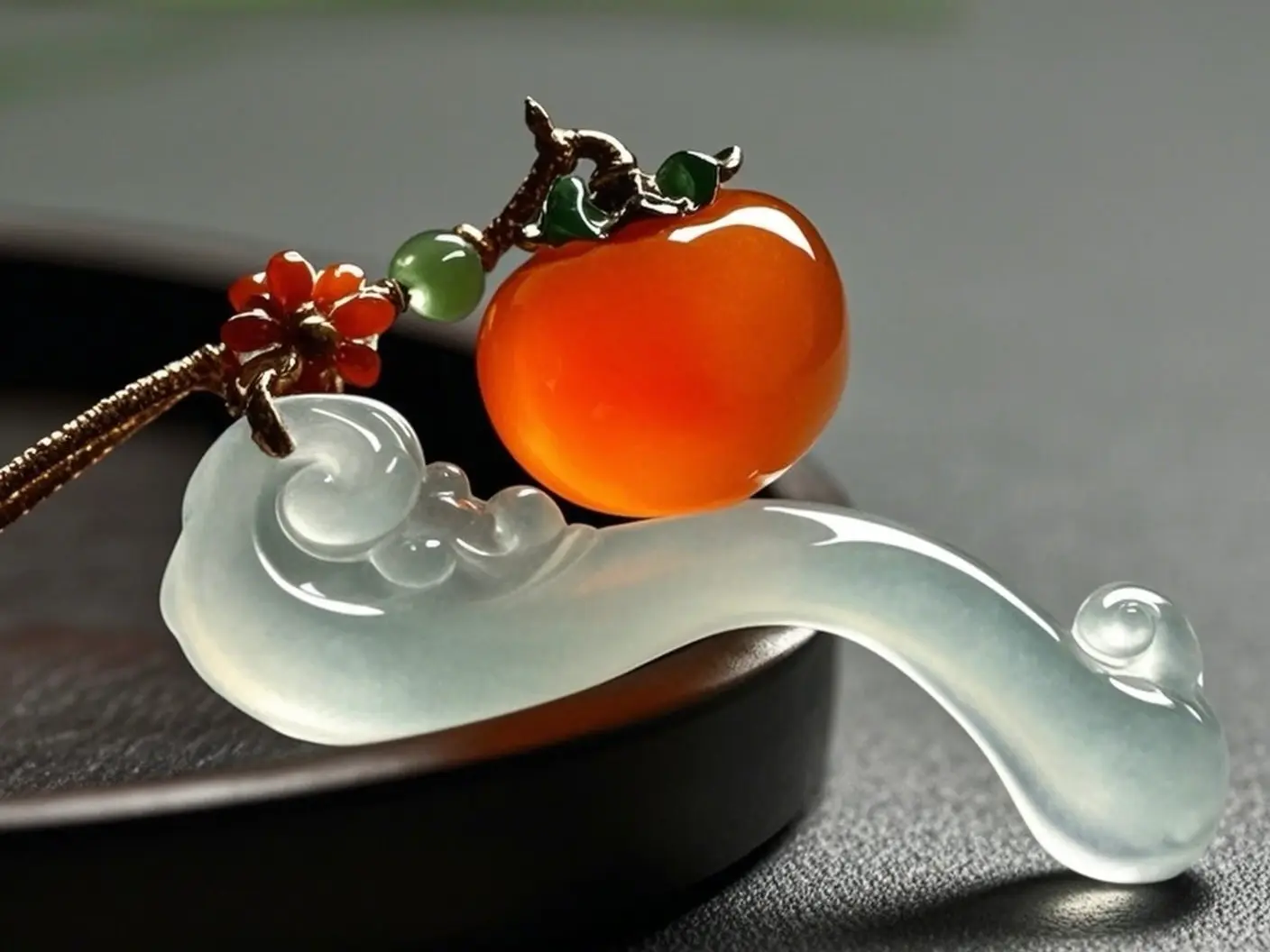
| Souvenir and wearable carvings | Modern | Pendants, bangles, zodiac animals, and gift objects where cultural motif and market value should be treated separately |
Material first: nephrite, jadeite, or imitation
Before interpreting a carving, ask what material the object is. Much ancient and imperial Chinese jade is nephrite, especially Hetian or Khotan material from Xinjiang. Jadeite is also real jade, but it belongs to a different material story and became especially influential later through Myanmar/Burma sources, jewelry taste, and modern market demand. In tourist markets, other stones, glass, treated material, or imitations may also be sold as jade. A museum label is more useful than a quick visual test.
- Use the nephrite vs jadeite guide to separate material from color.
- Read the real vs fake jade guide before taking market labels seriously.
- Do not rely on touch, color, flashlight tests, or seller claims as proof of authenticity.
Form and function: ritual vs daily vs wearable
Shape is often the first clue to function. A bi disc should not be read like a bangle, and a cong tube should not be read like a vase. Some jade forms belonged to ritual and burial settings, others to court display, scholar culture, personal ornament, or modern souvenir design. The same carved animal can mean different things when it appears on a ritual object, an imperial vessel, or a tourist pendant.
- For ritual shapes, read the bi discs and cong guide.
- For court vessels, seals, and scholar objects, continue to the imperial jade objects guide.
- For personal ornaments, use the pendant symbols and bracelet meaning guides.
Symbol layer: animals and auspicious motifs
After material and form, look at the symbols. Dragons can suggest power, authority, or imperial taste, but not every dragon carving is imperial. Bats, fish, peaches, gourds, and ruyi forms often use auspicious puns or blessing language. These motifs are useful for cultural interpretation, but they are not guarantees of age, value, authenticity, luck, or protection. Period, patron, material, and object type still matter.
- Use the jade animals guide for dragons, fish, turtles, and other animal motifs.
- Use the auspicious symbols guide for bats, peaches, gourds, and ruyi forms.
- Read the symbolism overview before treating motifs as simple lucky charms.
Technique: grinding, openwork, and boulder depth
Technique changes across the history of jade carving. Early jade forms often show the power of simple geometry, polishing, drilling, and repeated ritual shapes. Qing workshops pushed carving into more elaborate openwork, deep relief, inscriptions, and large boulder landscapes. The Da Yu Taming the Floods jade mountain is the best-known Beijing example: a massive Qing nephrite carving, about 224 cm high and about 5,000 kg (5 tonnes), turned into a narrative landscape.
- Compare simple ancient forms with Qing openwork and boulder carvings.
- Look for carving depth, surface polish, inscriptions, and retained natural stone skin.
- For the Qing peak, continue to the Qing dynasty jade guide.
What this means for travelers in Beijing
For travelers in Beijing, the best way to train your eye is to start in museums. The National Museum of China is useful for ancient ritual forms and burial context. The Forbidden City Treasure Gallery is strongest for Qing imperial carving, including nephrite vessels, openwork, scholar objects, and the Da Yu jade mountain. The Capital Museum can add a more accessible Beijing-focused layer. After that, market language becomes easier to judge.
- Start with the where to see jade in Beijing guide.
- Use the jade museums guide to compare the National Museum, Palace Museum, and Capital Museum.
- Treat markets as optional shopping, not as your first source of jade education.
Common mistakes: Chinese Jade Carvings
Reading symbols without checking shape
A dragon on a Qing court vessel, a pendant, and a ritual-style disc should not be interpreted in the same way. Shape, period, function, and patronage change the meaning.
Assuming deep relief equals ancient
Elaborate carving is not automatically older. Qing openwork and boulder carvings can be much more visually complex than earlier Neolithic ritual forms.
Buying carved 'antiques' from stalls
Be cautious with any market claim that a carved object is ancient, imperial, or investment-grade. DragonTrail does not appraise jade, certify authenticity, or guarantee market value.
Chinese Jade Carvings FAQ
- Chinese jade was shaped mainly through cutting, drilling, grinding, abrading, and polishing. Tools carried abrasive materials that slowly removed the hard stone rather than carving it like soft wood or marble.
- No. Souvenir carvings can reflect real cultural motifs, but they are not equivalent to documented historical objects. Material, age, treatment, carving quality, provenance, and market value are separate questions.
- Start with the Forbidden City Treasure Gallery for Qing imperial jade carvings, especially nephrite vessels, openwork, scholar objects, and the Da Yu jade mountain. The National Museum of China is better for early ritual forms.
- No. Motifs such as dragons, bats, peaches, fish, and ruyi forms carry cultural symbolism, but they do not guarantee health, luck, protection, authenticity, or market value.
- DragonTrail does not appraise jade, certify authenticity, or guarantee market value. This guide is for cultural and traveler education only.
Explore jade as culture, not commodity
Chinese jade carvings are easiest to understand through museum objects: ancient ritual shapes, animal motifs, Qing court vessels, scholar pieces, openwork carvings, and monumental nephrite boulders.
DragonTrail does not sell jade or offer authentication. For buying questions, read our traveler-education pages and treat any purchase as your own risk.