
Bi Discs & Cong Tubes
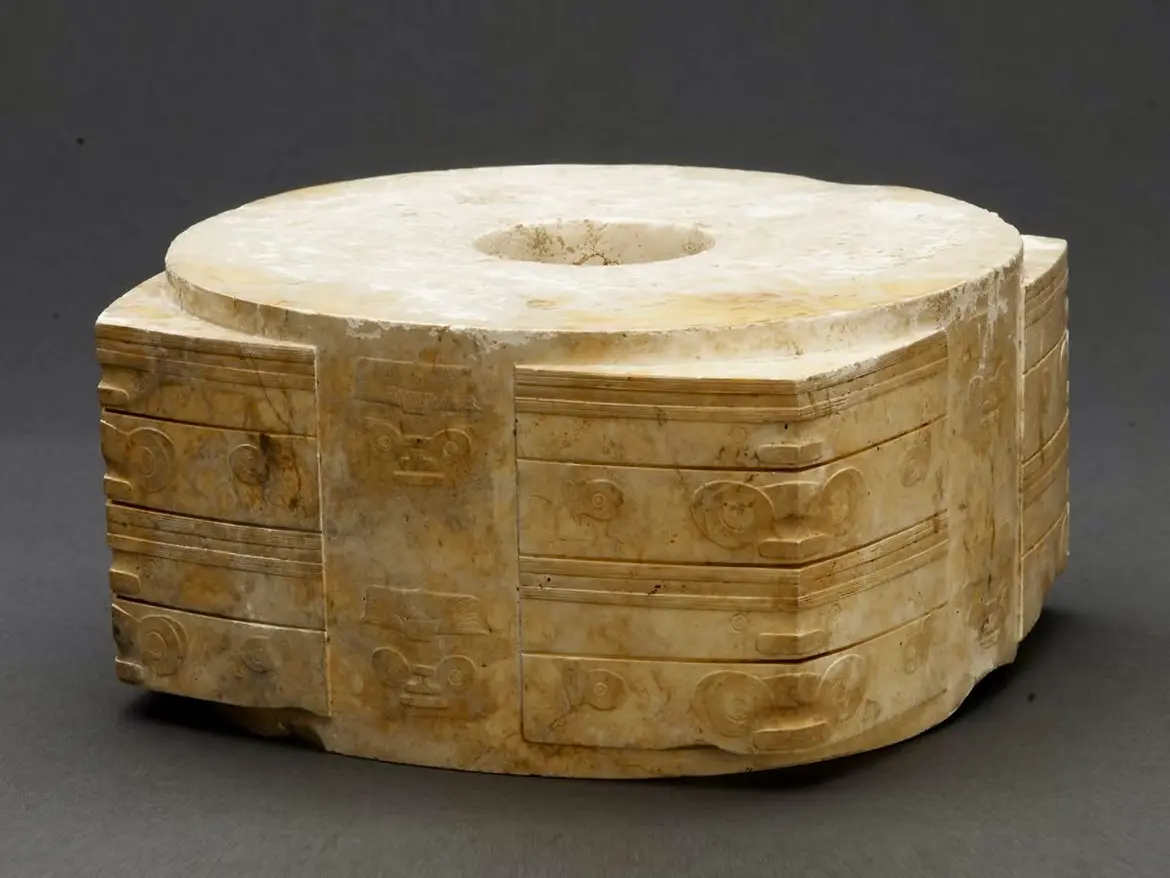 Click to enlarge
A cong tube combines a square outer form with a circular inner bore, one of the classic jade shapes associated with Liangzhu culture.
Bi discs and cong tubes are among the most important early jade forms in Chinese culture. A bi disc is a flat circular jade object with a central hole. A cong tube has a square outer form and a round inner bore. Both are strongly associated with Liangzhu culture and elite Neolithic burial contexts. Later tradition often interpreted the round bi through heaven and the square cong through earth, but their original meaning and function are still debated. For travelers, the best way to understand them is to look at shape, material, burial setting, and museum labels together.
- Reading time: 5-8 min
- Guide type: Cultural background
- Best for: Culture-curious Beijing visitors; Museum-goers before a jade gallery visit
- Less ideal for: Buyers seeking investment or appraisal advice
Bi Discs & Cong Tubes at a glance
| Topic | Traveler takeaway |
|---|---|
| Bi = heaven | A later and common interpretation links the circular bi disc with heaven, but the original Neolithic meaning remains debated |
| Cong = earth | A later interpretation links the square outer form of the cong with earth and ritual order |
| Liangzhu culture | Liangzhu burials provide the strongest early context for bi discs, cong tubes, and elite jade use |
| Museum cases | Read these objects through shape, burial setting, material, workmanship, and label context—not decoration alone |
Bi = heaven
A bi disc is a flat circular jade object with a central hole. In later Chinese interpretation, the round form was often associated with heaven or the sky. That interpretation is useful, but it should not be treated as a complete explanation of every early bi disc. In Liangzhu and later burials, bi discs appear in elite contexts where their meaning likely involved ritual, rank, burial belief, and social power.
- Use "bi = heaven" as a helpful later interpretation, not a guaranteed original meaning.
- Look for the circular shape, central opening, material, size, and burial context.
- For the wider ancient jade background, continue to the ancient Chinese jade guide.
Cong = earth
A cong tube is usually recognized by its square outer form and circular inner bore. Later explanations often connect the square exterior with earth and the round interior with heaven, turning the object into a compact image of ritual order. But, as with bi discs, the original Neolithic meaning is not fully settled. In a museum, a cong should be read through geometry, burial placement, surface carving, and Liangzhu cultural context.
- Use "cong = earth" as a later interpretive shortcut, not a final answer.
- Notice the square outside, round inside, vertical form, and carved mask-like patterns where present.
- Compare cong tubes with bi discs to understand Liangzhu jade geometry.
Liangzhu culture
Liangzhu culture, active in the lower Yangtze region before imperial China, is the key context for understanding bi discs and cong tubes. Elite Liangzhu tombs contained large numbers of jade objects, showing the labor, status, and ritual value placed on worked stone. These objects were not ordinary jewelry. Their importance came from material difficulty, burial setting, repeated shapes, and the social world that produced them.
- Liangzhu jade is one of the foundations of Chinese jade history.
- Bi discs and cong tubes are best understood as elite ritual or burial objects.
- Start with museum context before trying to interpret symbolism from shape alone.
Museum cases
Museum cases are the best place to understand bi discs and cong tubes because they show the objects with period, material, function, and burial context. In Beijing, the National Museum of China is usually the strongest starting point for ancient jade, while the Palace Museum is better for later imperial jade. Seeing early ritual forms first also makes Qing archaistic jade easier to read, because later court objects often looked back to ancient shapes.
- Start with the National Museum of China for ancient jade context.
- Visit the Forbidden City Treasure Gallery afterward for later imperial jade.
- Use the jade museums guide if you want to compare Beijing museum stops.
Common mistakes: Bi Discs & Cong Tubes
Treating heaven and earth as settled fact
The bi/heaven and cong/earth explanation is useful, but the original meaning of these Neolithic forms is still debated. Present it as interpretation, not certainty.
Reading them as decorative objects
Bi discs and cong tubes may look simple, but they were labor-intensive elite jade objects. Their importance comes from shape, material, burial context, and ritual use rather than surface decoration alone.
Ignoring later reuse of ancient forms
Later dynasties, especially the Qing, reused ancient shapes to express learning, legitimacy, and court taste. A Qing archaistic object is not the same thing as a Neolithic burial jade.
Bi Discs & Cong Tubes FAQ
- A bi disc is a flat circular jade object with a central hole. It is one of the classic early Chinese jade forms and is often discussed through later heaven symbolism, burial context, and elite ritual use.
- A cong tube is a jade object with a square outer form and a circular inner bore. It is strongly associated with Liangzhu culture and is often interpreted through later ideas of earth, heaven, and ritual order.
- Later Chinese tradition often connected the circular bi with heaven, but the original Neolithic meaning remains debated. Museum interpretation should present this as one important explanation, not a certainty.
- Later interpretation often links the square outer form of the cong with earth. The idea is useful, but the original Liangzhu meaning and function are still not fully certain.
- Start with the National Museum of China''s ancient galleries for early jade context. Then compare later jade forms at the Forbidden City Treasure Gallery.
- No. They are best understood as ritual or burial jade objects connected with elite Neolithic contexts, not ordinary wearable jewelry.
- DragonTrail does not appraise jade, certify authenticity, or guarantee market value. This guide is for cultural and traveler education only.
Explore jade as culture, not commodity
Bi discs and cong tubes are easiest to understand through ancient jade displays: Liangzhu burial context, ritual geometry, museum labels, and later interpretations of heaven and earth.
DragonTrail does not sell jade or offer authentication. For buying questions, read our traveler-education pages and treat any purchase as your own risk.