
Chinese Jade Animals and Their Meanings
 Click to enlarge
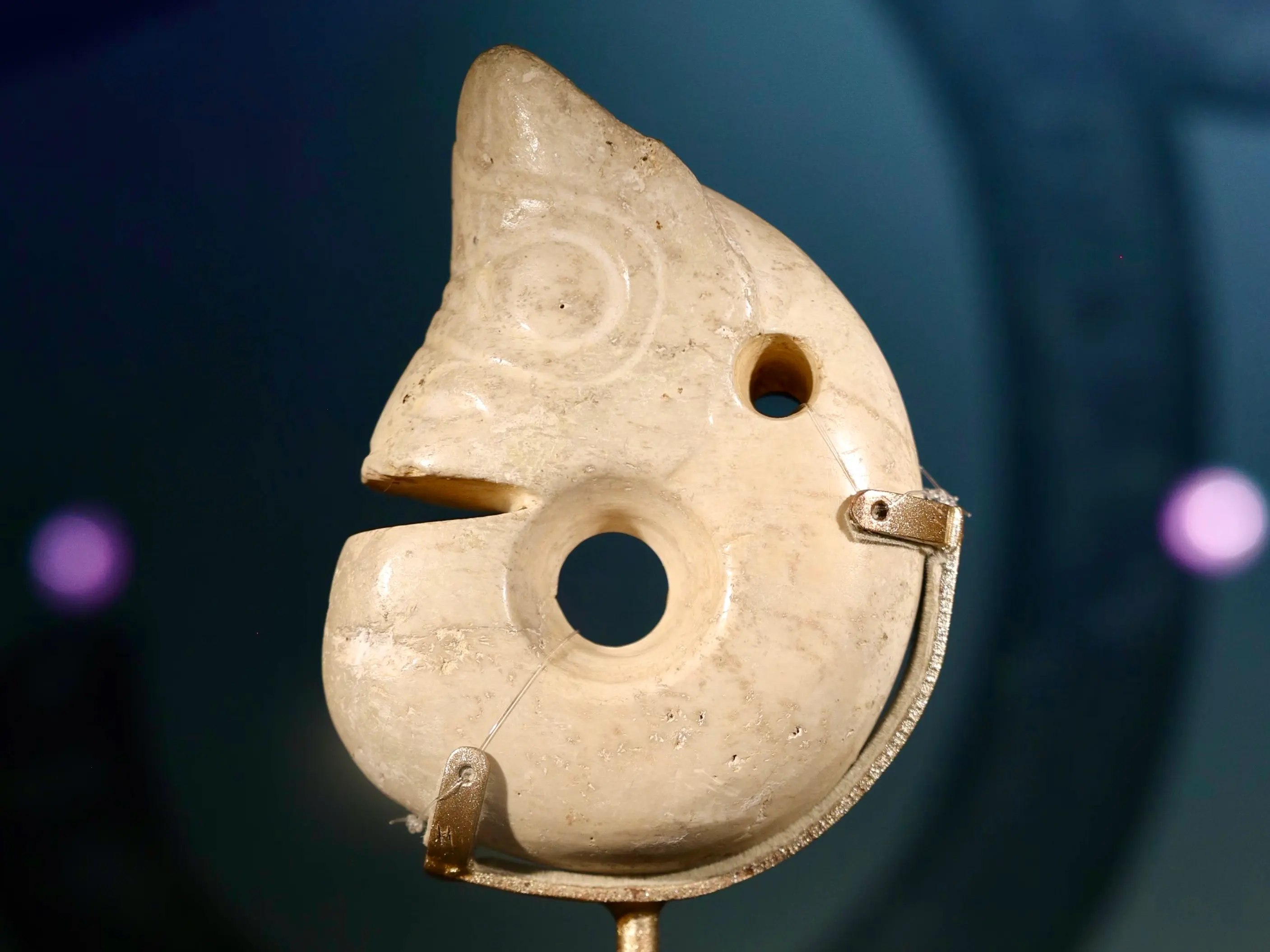
Hongshan-style zoomorphic jade helps show how animal symbolism appeared in Chinese jade long before later imperial dragon imagery.
Chinese jade animals can express mythology, status, rebus puns, longevity wishes, court taste, or burial belief. A Hongshan pig-dragon belongs to a very different world from a Qing dragon vessel, a fish pendant, a bat-and-peach carving, or a modern zodiac souvenir. For travelers, the safest way to read jade animals is to look at the object's period, material, form, and museum label before assigning a simple meaning.
- Reading time: 5-8 min
- Guide type: Cultural background
- Best for: Culture-curious Beijing visitors; Museum-goers before a jade gallery visit
- Less ideal for: Buyers seeking investment or appraisal advice
Chinese Jade Animals and Their Meanings at a glance
| Topic | Traveler takeaway |
|---|---|
| Dragon / phoenix | Dragons can suggest power, authority, transformation, or imperial taste; phoenixes often appear with ideas of harmony, virtue, and courtly refinement |
| Fish | Fish often work as rebus symbols for abundance because yu can echo the sound of surplus or plenty |
| Bat | Bats are common auspicious motifs because fu, "bat," sounds like fu, "blessing" or good fortune |
| Turtle | Turtles can suggest longevity, endurance, divination, or burial context, depending on period and object type |
Dragon
Dragons are the most recognizable jade animal motif, but they should not be read in only one way. Early coiled jade forms from Hongshan culture are often discussed as pig-dragons or early dragon imagery. Later dragon carvings can suggest power, transformation, official authority, or imperial taste, especially in court objects. A dragon on a Qing vessel, a pendant, a ritual-style carving, and a modern souvenir all carry different weight.
- Do not assume every jade dragon is imperial, ancient, or valuable.
- Look at period, form, material, and object type before interpreting the motif.
- When dragons appear with phoenixes, the pair often points to harmony, auspiciousness, or courtly refinement rather than dragon symbolism alone.
Fish
Fish motifs are common in Chinese decorative art because they can carry auspicious sound play. The word for fish, yu, can echo words connected with surplus, abundance, or plenty. In jade, a fish may appear as a pendant, carving, or part of a larger auspicious scene. The meaning is usually decorative and symbolic, not evidence that the object is old, rare, or protective.
- Read fish as a common abundance motif, especially in later decorative and souvenir contexts.
- If paired with lotus, children, or other symbols, the meaning can become more specific.
- Use the auspicious symbols guide for rebus-style motifs.
Bat
Bats are one of the clearest Chinese rebus motifs. The word for bat, fu, sounds like the word for blessing or good fortune. In jade and other decorative arts, bats may appear alone, upside down, or combined with peaches, clouds, coins, or the shou character for longevity. This is symbolic language, not a product guarantee.
- A bat motif usually points to blessing or good fortune through sound play.
- Bats combined with peaches or shou motifs often strengthen the longevity and blessing theme.
- Do not treat bat carvings as proof of luck, age, authenticity, or market value.
Turtle
Turtles can suggest longevity, endurance, and ancient wisdom, but the context matters. In early jade and burial contexts, turtle forms may connect with ritual, divination, or ideas about long life. In later decorative carving, a turtle may become a more general longevity symbol. The same animal can therefore shift meaning between archaeology, court art, and modern gift culture.
- Read turtle motifs through period and context, not only through the word "longevity."
- Ancient turtle-related jade belongs closer to ritual and burial interpretation.
- Later turtle carvings may be decorative, auspicious, or souvenir-oriented.
Common mistakes: Chinese Jade Animals and Their Meanings
Treating every animal as a lucky charm
Animal motifs can carry symbolic meanings, but they do not guarantee luck, protection, health, authenticity, or market value. Museums explain cultural meaning; shops often simplify motifs into sales language.
Ignoring period and object type
A Hongshan pig-dragon, a Han burial animal, a Qing court dragon, and a modern zodiac pendant should not be interpreted in the same way. Period, function, material, and patronage matter.
Assuming animal carving proves age
Animal motifs are still carved today. A dragon, fish, bat, or turtle does not prove that an object is ancient, imperial, natural jade, or worth buying.
Chinese Jade Animals and Their Meanings FAQ
- Jade animals can express mythology, status, blessing, abundance, longevity, court taste, or burial belief. The meaning depends on the animal, period, object type, material, and setting.
- A jade dragon can suggest power, authority, transformation, or imperial taste, but context matters. A Hongshan pig-dragon, a Qing court dragon, and a modern souvenir dragon are not the same kind of object.
- A jade fish often points to abundance or surplus through Chinese sound play. In later decorative art, fish can appear in auspicious scenes with lotus, children, or other blessing motifs.
- A jade bat usually points to blessing or good fortune because the word for bat sounds like the word for blessing. It is a cultural rebus motif, not a guarantee of luck or value.
- A jade turtle can suggest longevity, endurance, ritual context, or burial belief, depending on period and object type. Ancient turtle-related jade should be read through museum context.
- Start with Beijing museum collections. The National Museum of China is useful for ancient jade context, while the Forbidden City Treasure Gallery is stronger for Qing imperial and decorative jade.
- DragonTrail does not appraise jade, certify authenticity, or guarantee market value. This guide is for cultural and traveler education only.
Explore jade as culture, not commodity
Jade animals are easiest to understand through museum objects: Hongshan pig-dragons, early animal forms, Qing dragon carvings, auspicious fish and bat motifs, turtle symbolism, and clearly labeled Beijing collections.
DragonTrail does not sell jade or offer authentication. For buying questions, read our traveler-education pages and treat any purchase as your own risk.