
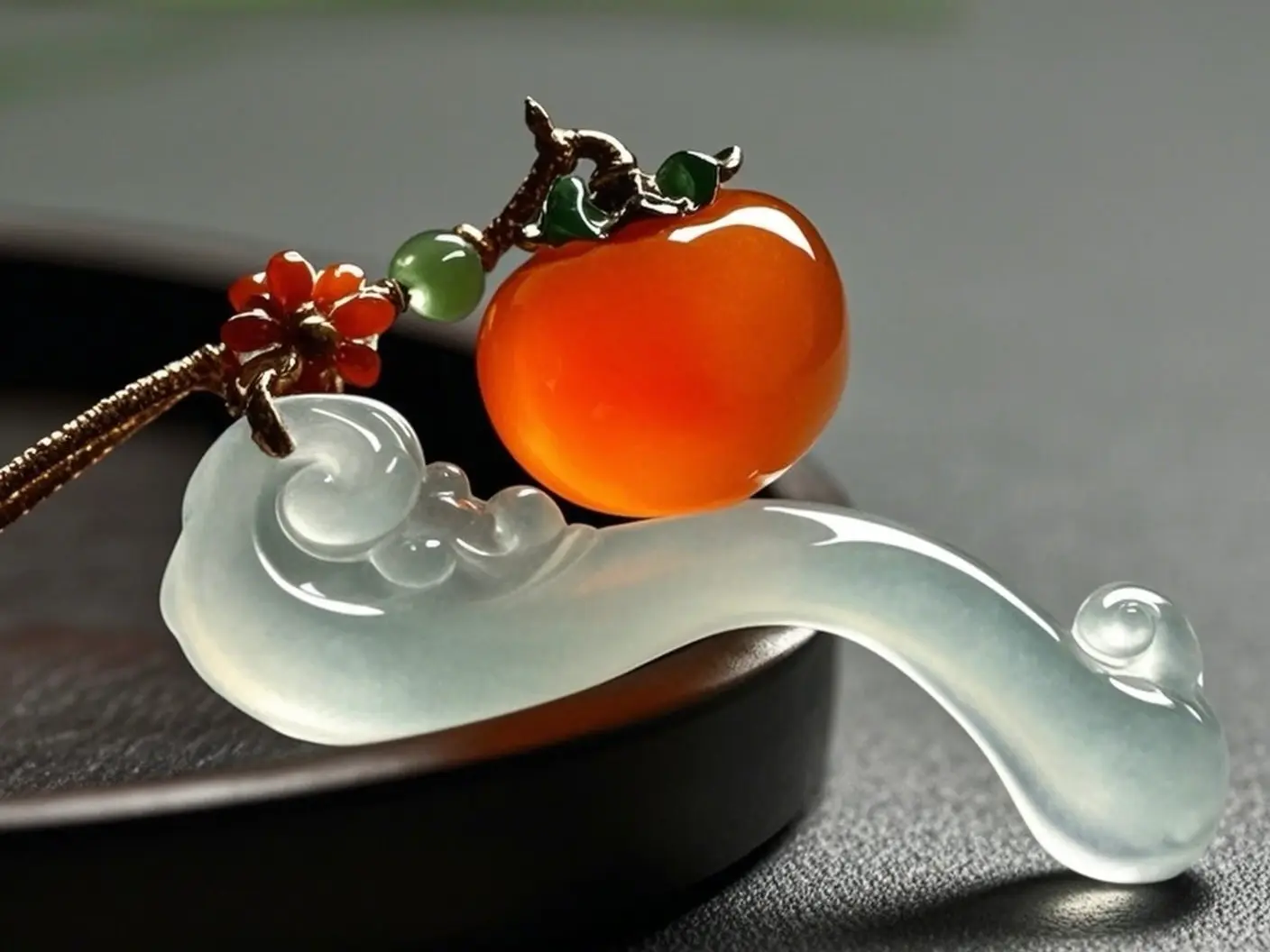
Qing imperial jade at its peak
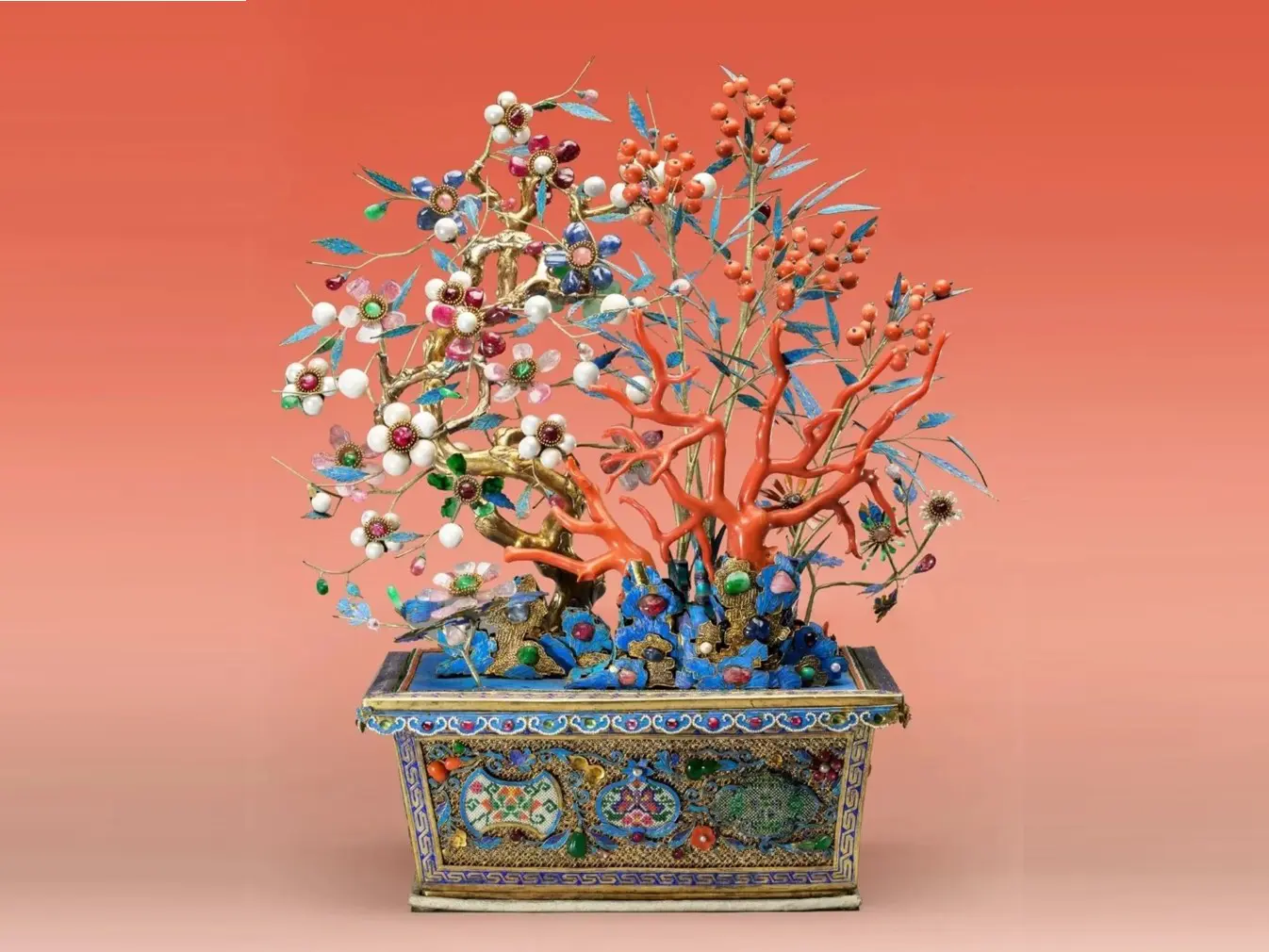 Click to enlarge
[Qing court objects](/travel-guide/chinese-jade/qing-dynasty) often combined [jade](/travel-guide/chinese-jade/meaning), hardstones, metalwork, and [auspicious motifs](/travel-guide/chinese-jade/auspicious-symbols), showing how jade worked inside a broader [imperial display culture](/travel-guide/chinese-jade/imperial-objects).
The Qing dynasty (1644–1911) marks one of the most spectacular periods of Chinese jade carving. Imperial workshops in Beijing, Yangzhou, and other specialist centers turned Khotan and Hetian nephrite into seals, vessels, scholar objects, narrative landscapes, and monumental carvings. The Qianlong Emperor especially valued jade as a material of court taste, classical learning, and imperial authority. The best Beijing example is the Da Yu Taming the Floods carving in the Palace Museum Treasure Gallery: a massive Khotan nephrite boulder, completed in 1787, standing about 2.24 metres tall and weighing about 5,000 kg (5 tonnes). Late Qing court fashion also introduced more vivid green Burmese jadeite, layered onto a much older preference for creamy white nephrite.
Qing jade traits
| Theme | Detail | Where to see it |
|---|---|---|
| Khotan nephrite | Large western boulders were carved into imperial objects after long transport and workshop preparation | Forbidden City Treasure Gallery |
| White jade taste | Creamy white and pale nephrite were prized in court collections | Seals, vessels, cups, plaques, and scholar objects |
| Workshop carving | Beijing and Yangzhou workshops produced refined openwork, inscriptions, and narrative scenes | Palace Museum jade displays |
| Jadeite arrival | Vivid green jadeite became fashionable later, especially in late Qing ornament and jewelry culture | Compare jadeite pieces with older nephrite displays |
Imperial workshops and political craft
Qing jade was not merely decorative. Court workshops carved objects that quoted classical texts, echoed ancient bronze forms, celebrated imperial achievements, and displayed access to rare western materials. Some pieces also carried inscriptions or imperial poems, which help museums explain patronage, date, and meaning. For visitors, the key point is that Qing jade often worked as art, scholarship, and court messaging at the same time.
- Look for archaic bronze-inspired shapes, inscriptions, and landscape scenes.
- For court object types, continue to the imperial jade objects guide.
- In museum cases, read the label before judging only by color or size.
Qianlong and the Khotan boulder projects
Qianlong's reign produced some of the largest and most ambitious jade carvings in Chinese history. The Da Yu Taming the Floods carving, completed in 1787, was made from a massive Khotan nephrite boulder transported from Xinjiang and carved over years. Its subject, Yu the Great controlling the floods, turned a difficult material into a statement about order, rulership, and classical history.
- The Da Yu carving is one of the key reasons jade-focused visitors should add the Treasure Gallery.
- Its material is nephrite, not jadeite.
- For source material and terminology, read the Hetian jade guide.
White jade taste vs later green jadeite
Travelers often expect Chinese jade to be bright green, but Qing imperial taste was strongly shaped by white and pale nephrite. Mutton-fat white jade was admired for its smooth texture, quiet glow, and elite association with Khotan and Hetian material. Vivid green jadeite became fashionable later, especially in late Qing and modern jewelry culture. This is why Treasure Gallery jade may look white, pale green, grey-green, or russet-skinned rather than emerald green.
- Start with the white jade guide if the pale pieces look confusing.
- Use the nephrite vs jadeite guide to separate material from color.
- Read the green jade guide before assuming brighter green means older or better.
Treasure Gallery and rotating displays
The Palace Museum Treasure Gallery, in the northeast section of the Forbidden City, is the most important Beijing stop for Qing jade. It places jade alongside other imperial treasures, so visitors can read the material as part of court life rather than as isolated decoration. Displays may rotate, but the gallery remains the strongest Forbidden City context for Qing jade, especially if your visit includes the Da Yu carving.
- A separate Treasure Gallery ticket is usually required.
- Allow about 60–90 minutes if jade is a real focus.
- For a planned route, use the jade-focused Forbidden City guide.
What this means for travelers in Beijing
If jade is part of your Beijing culture plan, add the Treasure Gallery to your Forbidden City visit. Read the nephrite vs jadeite and Hetian jade guides first so the material, scale, and color of Qing pieces make sense. Museum context should come before market shopping: once you have seen real imperial workmanship, sales language becomes easier to judge.
- Best Beijing stop: Forbidden City Treasure Gallery.
- Best preparation: nephrite vs jadeite, Hetian jade, and white jade.
- DragonTrail does not appraise jade, certify authenticity, or guarantee market value. This guide is for cultural and traveler education only.
Common mistakes: Qing Dynasty Jade
Equating Qing jade with bright green jadeite
Many important Qing imperial pieces are white, pale green, grey-green, or russet-skinned nephrite. Bright green jadeite became fashionable later and should not be treated as the default Qing imperial look.
Missing the Treasure Gallery add-on
A standard Forbidden City route can miss the strongest jade displays. If jade matters to you, plan time and ticketing for the Treasure Gallery rather than treating it as a last-minute extra.
Treating workshop copies as 'fake history'
Qing workshops often revived ancient shapes and bronze-inspired forms on purpose. Archaistic design is part of Qing court taste, not automatically a sign that something is pretending to be ancient.
Qing Dynasty Jade FAQ
- The best-known Qing jade piece for travelers is the Da Yu Taming the Floods carving in the Palace Museum Treasure Gallery. Completed in 1787, it was carved from a massive Khotan nephrite boulder and weighs about 5,000 kg (5 tonnes).
- Qing imperial taste was strongly shaped by nephrite, especially white and pale Khotan or Hetian material. Vivid green jadeite became fashionable later, especially in late Qing ornament and jewelry culture.
- Qing court jade was produced through imperial workshops in Beijing and specialist carving centers such as Yangzhou. Raw nephrite boulders came largely from Xinjiang and were turned into seals, vessels, scholar objects, and monumental carvings.
- For Qianlong, jade combined rare material, classical symbolism, skilled carving, antiquarian taste, and imperial authority. Large jade projects showed both court refinement and access to distant western stone sources.
- Start with the Forbidden City Treasure Gallery. It gives the strongest Beijing context for Qing imperial jade, including monumental carvings, white nephrite taste, and court display.
- Markets may sell "imperial style" carvings, but quality, age, and authenticity vary widely. Treat purchases as decorative souvenirs unless you have independent expert authentication. DragonTrail does not appraise or certify jade.
Explore jade as culture, not commodity
Qing jade is easiest to understand through museum objects: white nephrite vessels, imperial seals, archaistic forms, carved landscapes, jadeite ornaments, and the monumental Da Yu carving.
DragonTrail does not sell jade or offer authentication. For buying questions, read our traveler-education pages and treat any purchase as your own risk.