
Jade in the Shang, Zhou and Han Dynasties
 Click to enlarge
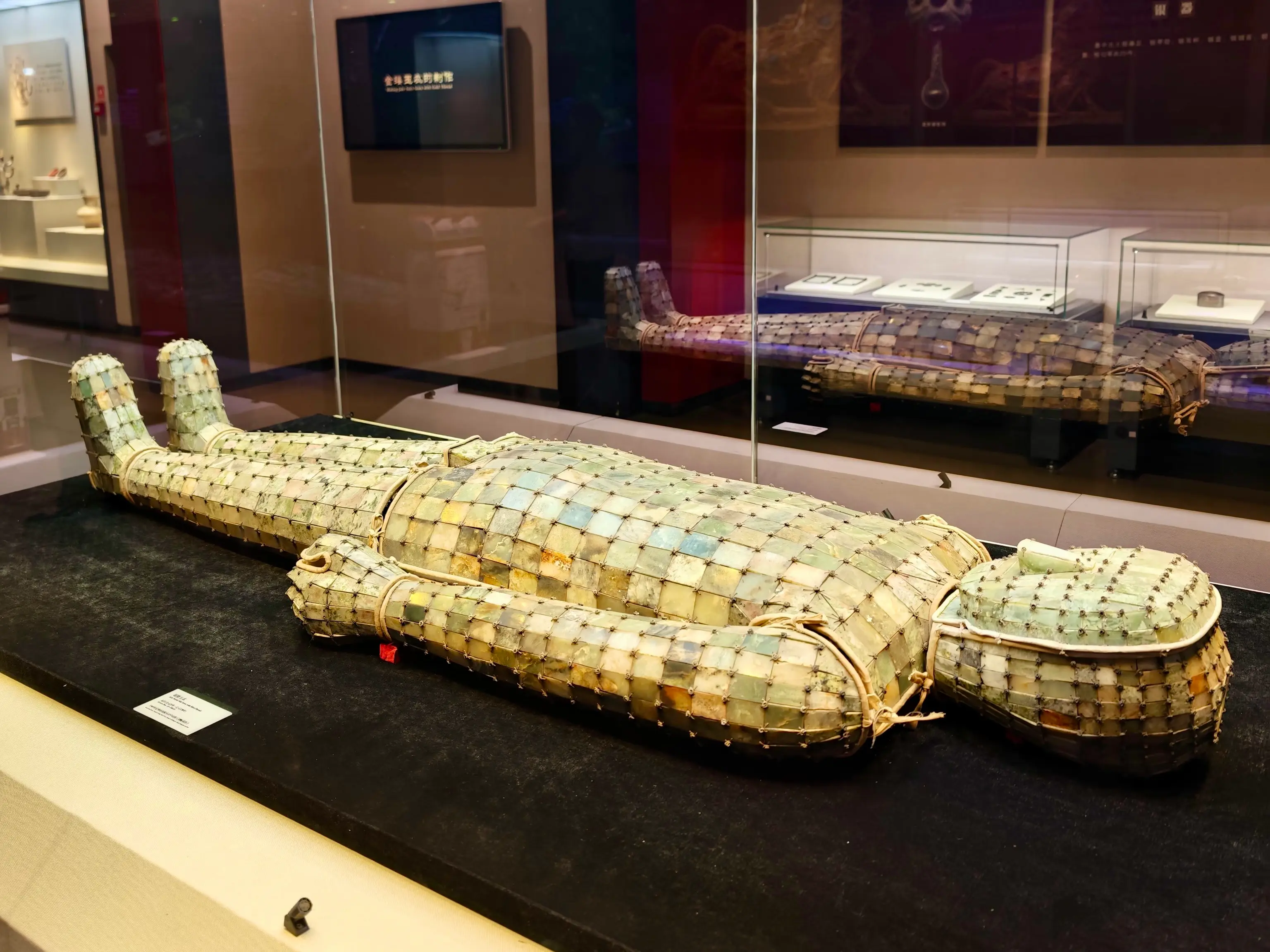
Han dynasty jade burial suit, intricately crafted from jade tiles and metal wires.
During the Shang, Zhou, and Han dynasties, jade became one of the most important materials for ritual, status, and burial belief. Shang jade often appears as blades, ornaments, and animal forms linked with elite power and ancestral ritual. Zhou jade added stronger ideas of rank, order, and ceremonial display. By the Han dynasty, jade entered funerary practice in dramatic forms such as burial plugs, cicada-shaped objects, and full jade burial suits. For travelers, this period is best understood in museum galleries before looking at later imperial carvings.
Jade in the Shang, Zhou and Han Dynasties at a glance
| Topic | Traveler takeaway |
|---|---|
| Shang blades | Look for jade as ritual material connected with power, ancestry, and elite display |
| Zhou ritual order | Jade objects increasingly expressed rank, ceremony, and social order |
| Han burial suits | Han funerary jade shows beliefs about the body, status, and afterlife |
| National Museum | Beijing's ancient galleries are the best starting point before later Palace Museum jade |
Shang blades
In the Shang dynasty, jade was already far more than decoration. Blades, plaques, pendants, animal forms, and ritual objects appeared in elite contexts, often alongside bronze vessels and other signs of power. Many pieces were not practical tools. Their value came from material, workmanship, ritual setting, and association with status and ancestral practice.
- Do not read Shang jade as ordinary jewelry.
- Compare Shang pieces with earlier Neolithic ritual jade to see how forms evolved.
- For animal motifs, continue to the jade animals guide.
Zhou ritual order
In the Zhou period, jade became increasingly tied to rank, order, and ceremonial identity. Pendants, plaques, and ritual forms could signal elite status and social position. This is also the period when jade's relationship with burial practice became more visible, with jade ornaments and plaques placed close to the body in elite tombs.
- Read Zhou jade through rank, ceremony, and burial context.
- Shape and placement can matter as much as decoration.
- For symbolic reading, continue to the jade symbolism guide.
Han burial suits
Han funerary jade is the most visually dramatic part of this story. Elite tombs could contain jade plugs, cicada-shaped objects, plaques, and full burial suits made from many small jade pieces joined with metal wire. These objects reflected beliefs about the body, status, preservation, and the afterlife. Museums present them as historical funerary practice, not as evidence that jade has modern protective power.
- Han jade burial suits are elite funerary objects, not wearable clothing.
- Cicada-shaped jade is often connected with rebirth and transformation in burial context.
- Treat modern protective jade claims as sales language, not museum interpretation.
National Museum
For travelers in Beijing, the National Museum of China is the best place to understand Shang, Zhou, and Han jade in sequence. Its ancient galleries help connect jade with tombs, ritual vessels, bronze culture, social rank, and early imperial belief. After that, the Palace Museum's Qing jade feels less isolated because you can see how later court taste looked back to older ritual forms.
- Start with the National Museum of China for ancient jade context.
- Visit the Palace Museum afterward for later imperial jade.
- Use museum labels before interpreting jade in markets or souvenir shops.
Common mistakes: Jade in the Shang, Zhou and Han Dynasties
Treating early jade as jewelry
Some Shang, Zhou, and Han pieces may look like ornaments, but many belonged to ritual, rank, or burial contexts. A museum object should be read through use, placement, period, and material, not only shape.
Flattening three dynasties into one story
Shang, Zhou, and Han jade are connected, but they are not identical. Shang jade often emphasizes ritual and elite power, Zhou jade is strongly tied to order and rank, and Han jade is especially famous for funerary practice.
Believing market dynasty labels
Be careful with any shop label claiming "Shang," "Zhou," or "Han" jade. Ancient jade requires serious provenance and specialist evaluation. DragonTrail does not authenticate jade or guarantee market value.
Jade in the Shang, Zhou and Han Dynasties FAQ
- They show jade moving through ritual use, elite status, ceremonial order, and burial belief. This period helps explain why jade became more than a decorative stone in Chinese culture.
- Shang jade included blades, plaques, pendants, animal forms, and ritual objects. Many pieces were connected with elite power, ritual setting, and ancestral culture rather than everyday jewelry.
- Zhou jade continued earlier ritual traditions but became more closely linked with rank, ceremony, and social order. Burial use also became increasingly important.
- Han jade burial suits were elite funerary objects made from many small jade plaques joined with metal wire. They reflected beliefs about status, the body, preservation, and the afterlife.
- Start with the National Museum of China's ancient galleries. They provide stronger context for early ritual and burial jade than souvenir shops or markets.
- DragonTrail does not appraise jade, certify authenticity, or guarantee market value. This guide is for cultural and traveler education only.
Explore jade as culture, not commodity
Shang, Zhou, and Han jade is easiest to understand through museum objects: ritual blades, rank ornaments, burial plaques, cicada forms, and Han jade suits.
DragonTrail does not sell jade or offer authentication. For buying questions, read our traveler-education pages and treat any purchase as your own risk.