
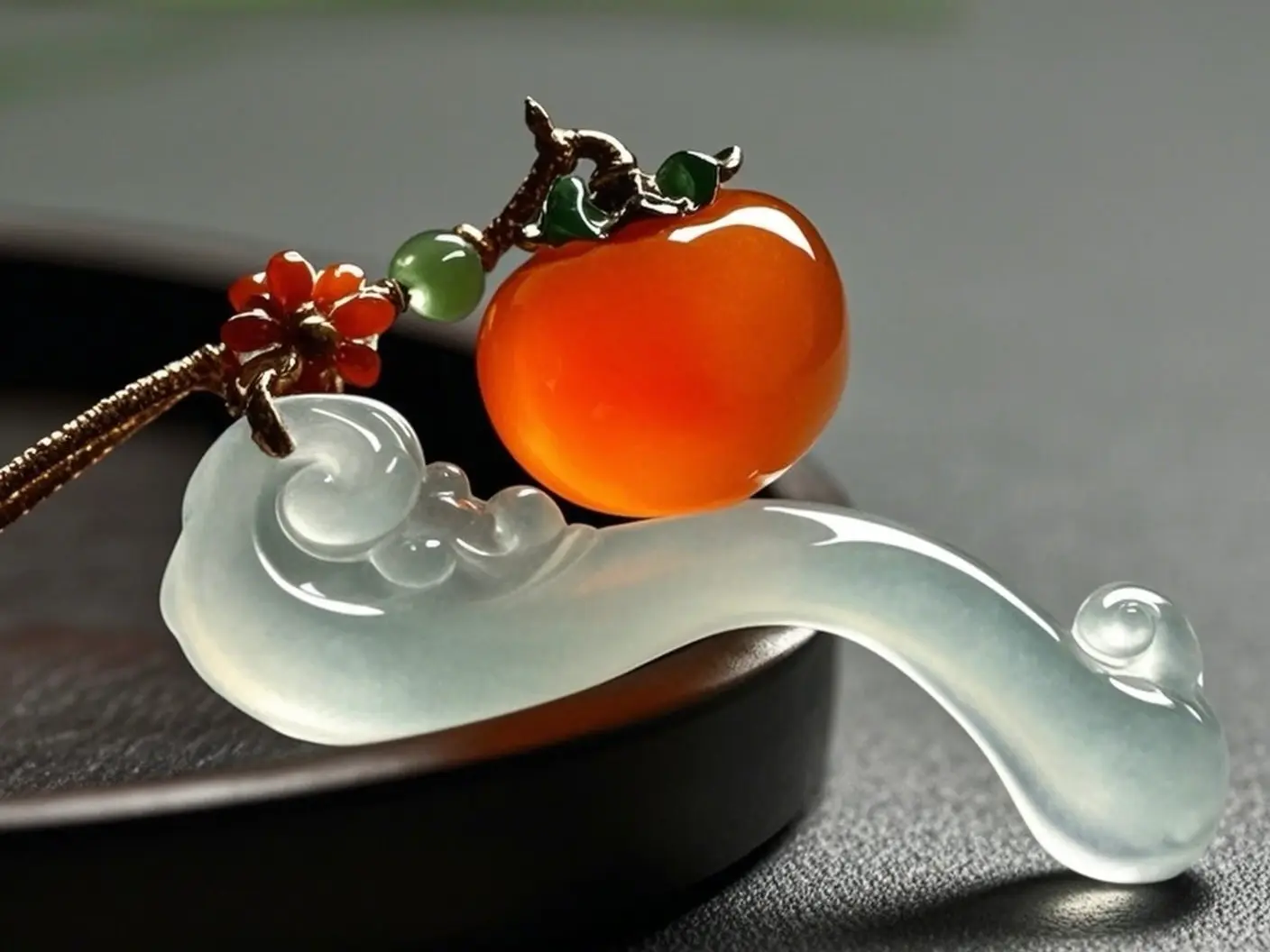
Hetian (Khotan) nephrite
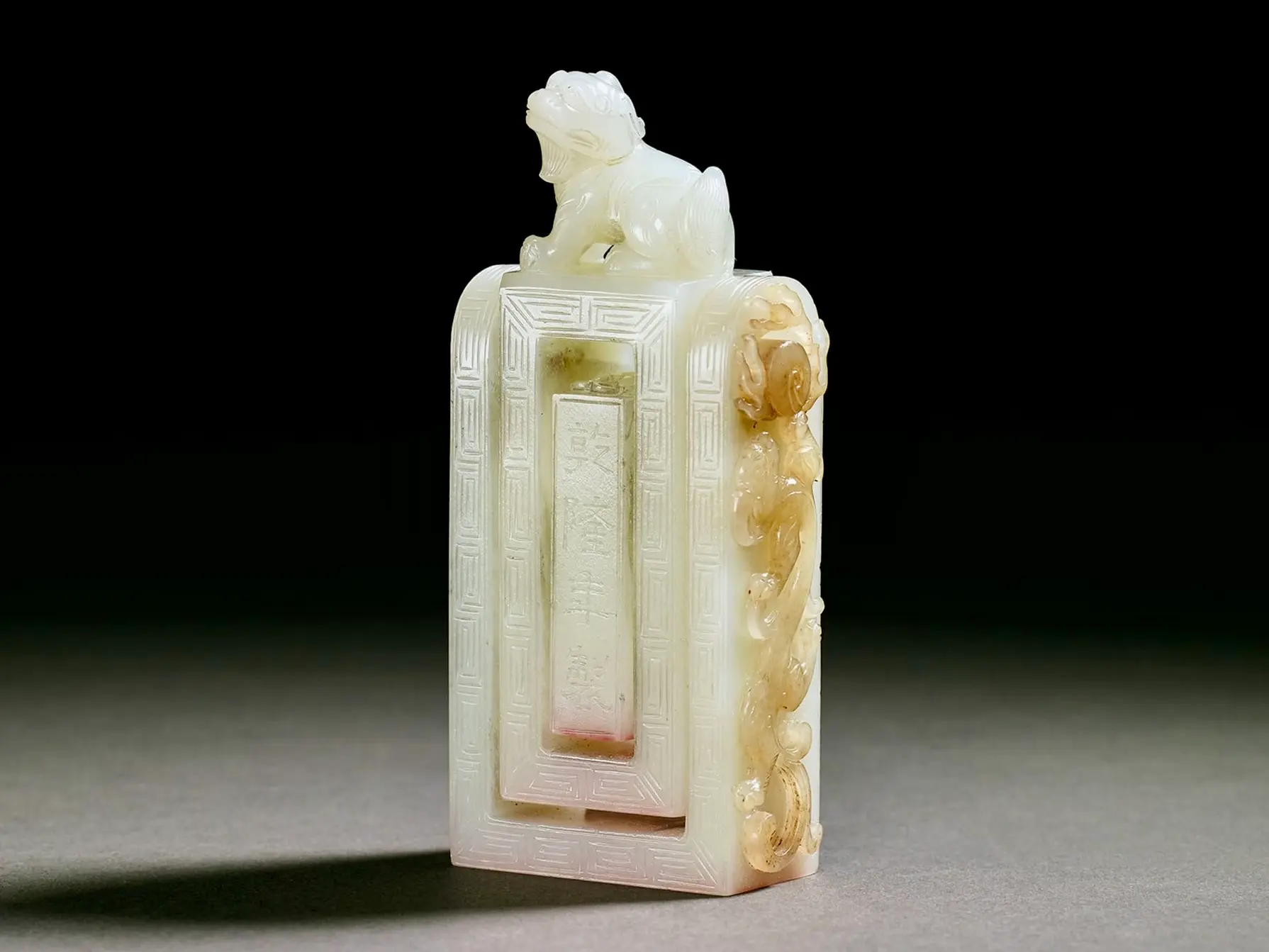 Click to enlarge
Qing white nephrite objects show why pale jade was valued for imperial seals, inscriptions, refined carving, and court display.
Hetian, historically known as Khotan, is an oasis region in southern Xinjiang long associated with high-quality nephrite jade. In Chinese jade history, Khotan and Hetian stone became especially famous for pale green, creamy white, and "mutton-fat" nephrite. Qing emperors prized this material for seals, vessels, scholar objects, and monumental carvings. In Beijing, the best-known museum example is the Da Yu Taming the Floods jade mountain in the Palace Museum Treasure Gallery, carved from Hetian jade and completed during the Qianlong reign.
Hetian jade traits
| Trait | Detail |
|---|---|
| Material | Nephrite, not jadeite |
| Historic name | Khotan is the older Silk Road name; Hetian is the modern pinyin form |
| Famous look | Pale green, creamy white, and "mutton-fat" nephrite, sometimes with russet skin |
| Chinese prestige | Strongly linked with white jade taste, Qing imperial workshops, and court collections |
| Beijing example | Da Yu Taming the Floods in the Palace Museum Treasure Gallery |
| Traveler caution | "Hetian" on a shop label is not proof of origin, quality, age, or value |
Khotan vs Hetian
Khotan and Hetian refer to the same region. "Khotan" is the older name often used in Silk Road history and older English-language sources, while "Hetian" is the modern pinyin spelling used for the city and region in Xinjiang. In jade writing, both names usually point to the same prestige tradition: nephrite associated with the southern edge of the Tarim Basin and the Kunlun Mountains.
Why 'mutton fat'
"Mutton-fat jade" is a descriptive Chinese term for especially fine white nephrite with a soft, creamy, slightly oily-looking texture. It does not mean the jade is related to food, and it should not be treated as a guaranteed certificate of quality. For travelers, the important point is cultural taste: much of Chinese jade appreciation valued quiet white and pale nephrite long before modern tourists learned to associate jade mainly with bright green.
Transport legend
Large Hetian jade boulders were difficult imperial materials. They had to be sourced in Xinjiang, moved across long distances, and then worked by specialist carving centers such as Beijing and Yangzhou. The Da Yu Taming the Floods jade mountain shows this challenge at palace scale: the object is about 224 cm high and weighs about 5,000 kg (5 tonnes). Its importance comes from material, logistics, imperial patronage, and carving skill together.
Not the only source
Hetian is the most famous Chinese prestige name, but it is not the only source of nephrite. White or pale nephrite can come from other deposits, and market labels may use "Hetian" loosely. In a museum, origin may be supported by collection history, object records, and scholarly research. In a shop, origin and quality require independent expert testing and documentation.
Hetian jade mistakes
Assuming every white jade object is Hetian
White nephrite can come from different sources. A pale color alone does not prove Hetian origin, age, quality, or value.
Treating "mutton-fat" as a certificate
"Mutton-fat" is often used as a prestige description, but shop usage can be loose. It should not replace material testing, provenance, or expert evaluation.
Reading museum prestige into market objects
The fact that Qing emperors valued Hetian nephrite does not mean a modern shop item with a Hetian label is imperial, old, rare, or investment-grade.
Hetian jade FAQ
- Yes. Khotan is the older Silk Road name often used in historical writing, while Hetian is the modern pinyin spelling for the same region in southern Xinjiang.
- Hetian and Khotan nephrite became important because of its texture, color, prestige, and connection with imperial collections. Qing emperors especially valued large Xinjiang nephrite boulders for seals, vessels, scholar objects, and monumental carvings.
- Mutton-fat jade is a descriptive term for especially fine white nephrite with a creamy, soft, slightly oily-looking texture. It is a cultural and quality description, not proof by itself.
- No. White nephrite can come from different sources. Hetian origin, quality, and age require expert evaluation and reliable documentation.
- The best Beijing example is the Da Yu Taming the Floods jade mountain in the Forbidden City Treasure Gallery. It is a Qing imperial carving made from Hetian jade.
- DragonTrail does not appraise jade, certify authenticity, or guarantee market value. This guide is for cultural and traveler education only.
Explore jade as culture, not commodity
Hetian jade is easiest to understand through museum objects: white nephrite seals, Qing court vessels, scholar pieces, monumental boulder carvings, and the Da Yu jade mountain in the Forbidden City.
DragonTrail does not sell jade or offer authentication. For buying questions, read our traveler-education pages and treat any purchase as your own risk.