
Beijing jade for museum travelers
 Click to enlarge
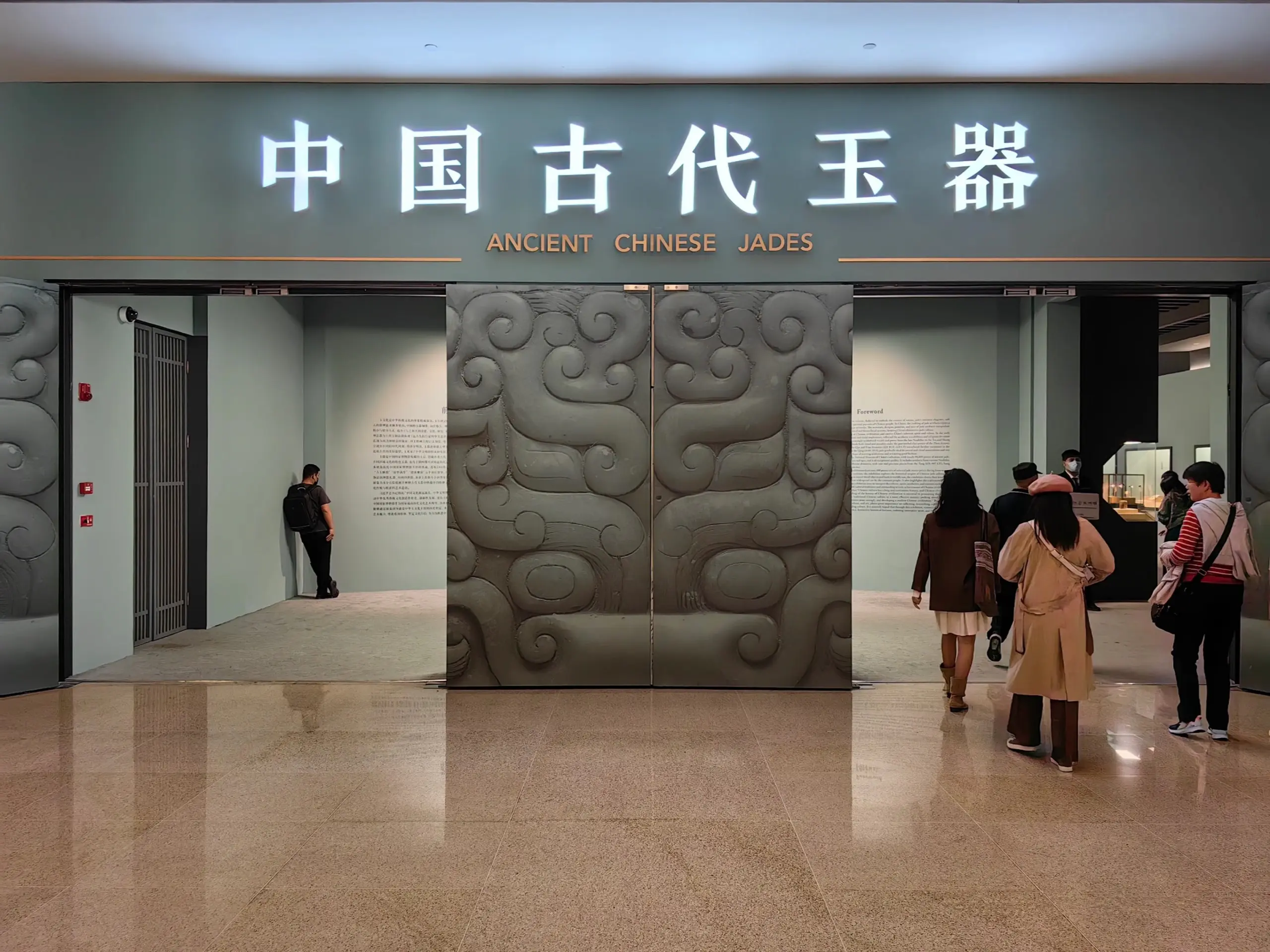
Entrance to the Ancient Chinese Jades exhibition at the National Museum of China.
The best way to understand jade in Beijing is to start in museums, not markets. The Forbidden City Treasure Gallery is the strongest stop for Qing imperial jade, including the Da Yu Taming the Floods jade mountain, seals, vessels, scholar objects, and court ornaments. The National Museum of China is better for ancient jade, including Neolithic ritual forms, bi discs, cong tubes, burial objects, and the long development of Chinese jade culture. The Capital Museum offers a quieter Beijing-focused option with jade, seals, and archaeological context. Plan 60–90 minutes for a focused jade stop, or half a day if you want to compare two museums.
- Visit style: On-site: 60–90 min per museum jade stop
- Guide type: Cultural background
- Best for: Forbidden City visitors adding Treasure Gallery; Rainy-day museum blocks; First jade exposure before symbolism reading
- Less ideal for: Buyers seeking investment or appraisal advice
Beijing jade stops
| Venue | Jade highlight | Time |
|---|---|---|
| Forbidden City Treasure Gallery | Da Yu jade mountain, Qing nephrite, seals, vessels, scholar objects, and court ornaments | 60–90 min inside a Forbidden City visit |
| National Museum of China | Ancient Chinese Jade, Neolithic ritual forms, bi discs, cong tubes, burial jade, and long chronology | 90 min for jade-focused ancient galleries |
| Capital Museum | Beijing-focused archaeology, jade displays, seals, and quieter museum context | 60–90 min |
| Panjiayuan market | Optional browsing after museum context; not an authentication stop | Optional, usually better as a separate market visit |
If you only have one stop
Choose the Forbidden City Treasure Gallery if you want the most memorable single jade stop in Beijing. Its Qing court context gives travelers a clear view of imperial jade: Hetian-style nephrite, carved vessels, seals, scholar objects, court ornaments, and the Da Yu Taming the Floods jade mountain. Because it sits inside the Forbidden City, it works best as part of a Palace Museum visit rather than as a standalone stop. Check current ticket and gallery-entry rules before planning the day.
For ancient ritual jade
Choose the National Museum of China if your interest is early jade and long chronology. This is the better stop for Neolithic ritual forms, bi discs, cong tubes, burial jade, Han-period jade, and the shift from ritual object to court and decorative use. It is also useful before visiting the Forbidden City, because ancient shapes help explain why later Qing court jade sometimes looked back to earlier forms.
To avoid crowds
Choose the Capital Museum if you want a calmer jade-related stop with a Beijing focus. It is not as iconic as the Forbidden City and not as comprehensive as the National Museum of China, but it can be easier to read at a slower pace. Use it for Beijing-region archaeology, jade displays, seals, and a less crowded museum hour, especially if your itinerary already includes other Xicheng or western Beijing stops.
Markets?
Panjiayuan can be interesting as a Beijing market experience, but it should come after museum context, not before it. Treat jade there as browsing, souvenir shopping, and sales language—not as authentication. If a seller uses terms such as "Hetian," "old jade," "imperial," "Grade A," or "natural jadeite," those are claims that require documentation and independent testing before you treat them seriously. DragonTrail does not appraise jade, certify authenticity, inspect purchases, or guarantee market value. This guide is for cultural and traveler education only.
Beijing jade routing mistakes
Adding Treasure Gallery too casually
The Treasure Gallery is a separate jade-focused highlight inside a larger Forbidden City visit. Check current ticket and entry rules before planning, and allow enough time for the gallery rather than treating it as a quick afterthought.
Shopping before museum context
Markets and shops use simplified jade language. Seeing museum labels first helps travelers separate material, period, function, and cultural meaning from sales claims.
Stacking too many jade stops in one day
Do not force the Forbidden City, National Museum, Capital Museum, and Panjiayuan into one day. A better plan is one major museum stop, or two carefully paired stops, with enough time to read labels.
Where to see jade in Beijing FAQ
- For most travelers, the best single stop is the Forbidden City Treasure Gallery because it combines Qing imperial jade, Hetian-style nephrite, court objects, and the Da Yu Taming the Floods jade mountain.
- Go to the National Museum of China. It is the better Beijing stop for ancient jade, Neolithic ritual forms, bi discs, cong tubes, burial jade, and long chronological context.
- Yes, as a quieter supporting stop. The Capital Museum is useful for Beijing-focused archaeology, jade displays, seals, and a slower museum hour, but it is not as iconic as the Forbidden City or as comprehensive as the National Museum.
- Yes. For a half day, choose either the Forbidden City Treasure Gallery inside a Palace Museum visit, or the National Museum of China for ancient jade. Do not add markets unless you have extra time and accept that they are shopping stops, not museum stops.
- Panjiayuan can be interesting for market atmosphere and souvenir browsing, but it should not be treated as an authentication stop. Visit museums first if you want to understand jade.
- No. DragonTrail does not sell jade, appraise jade, certify authenticity, inspect purchases, or guarantee market value. We can help with cultural museum routing only.
- Start with the Chinese Jade Guide, then read the Forbidden City jade guide, jade museums guide, and nephrite vs jadeite guide if you want stronger context before visiting.
Explore jade as culture, not commodity
For a strong Beijing jade route, start with museum context: Qing imperial jade in the Forbidden City, ancient jade at the National Museum, and quieter Beijing-focused displays at the Capital Museum.
DragonTrail does not sell jade or offer authentication. For buying questions, read our traveler-education pages and treat any purchase as your own risk.