
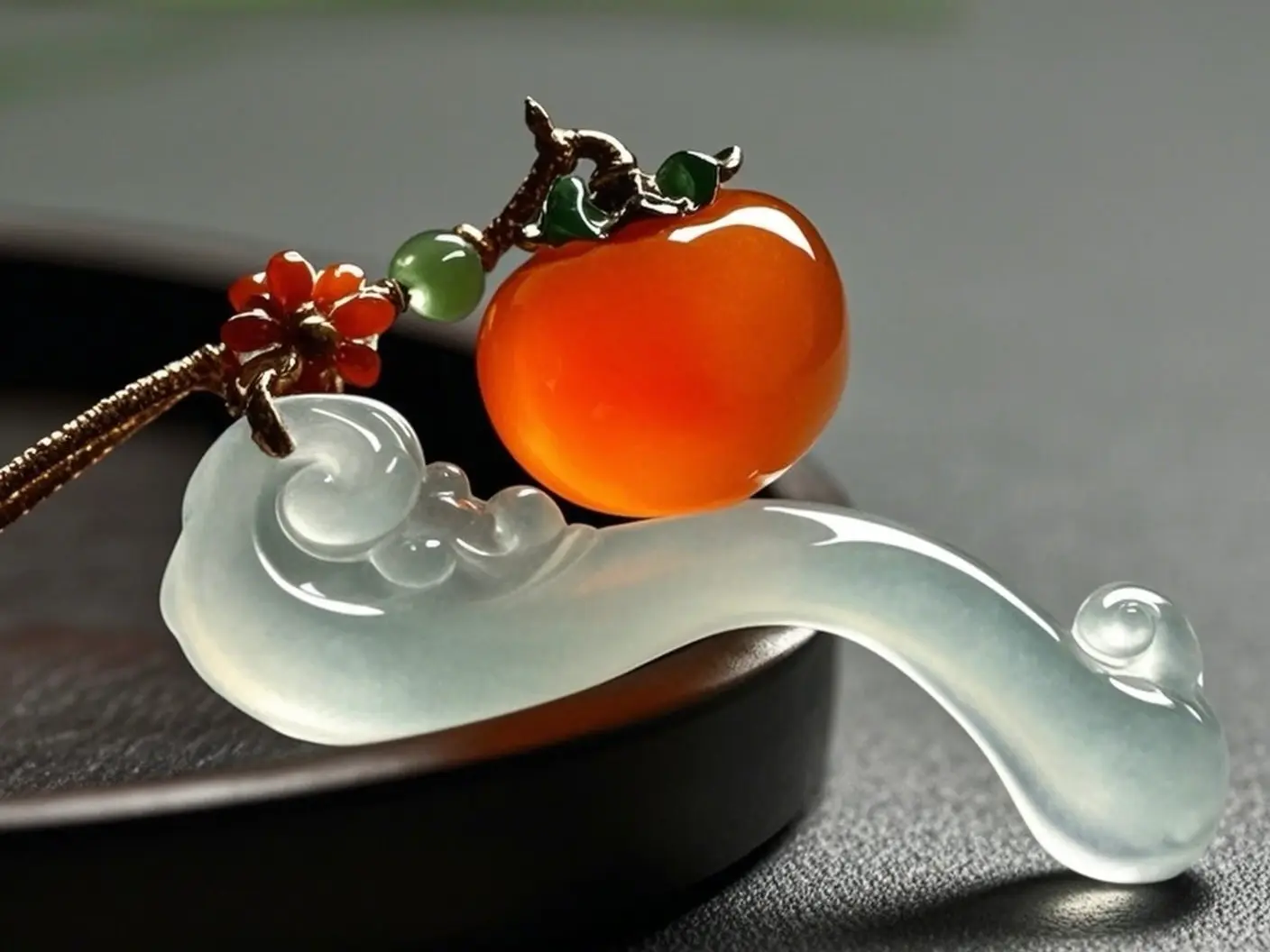
Chinese Jade Pendant Symbols
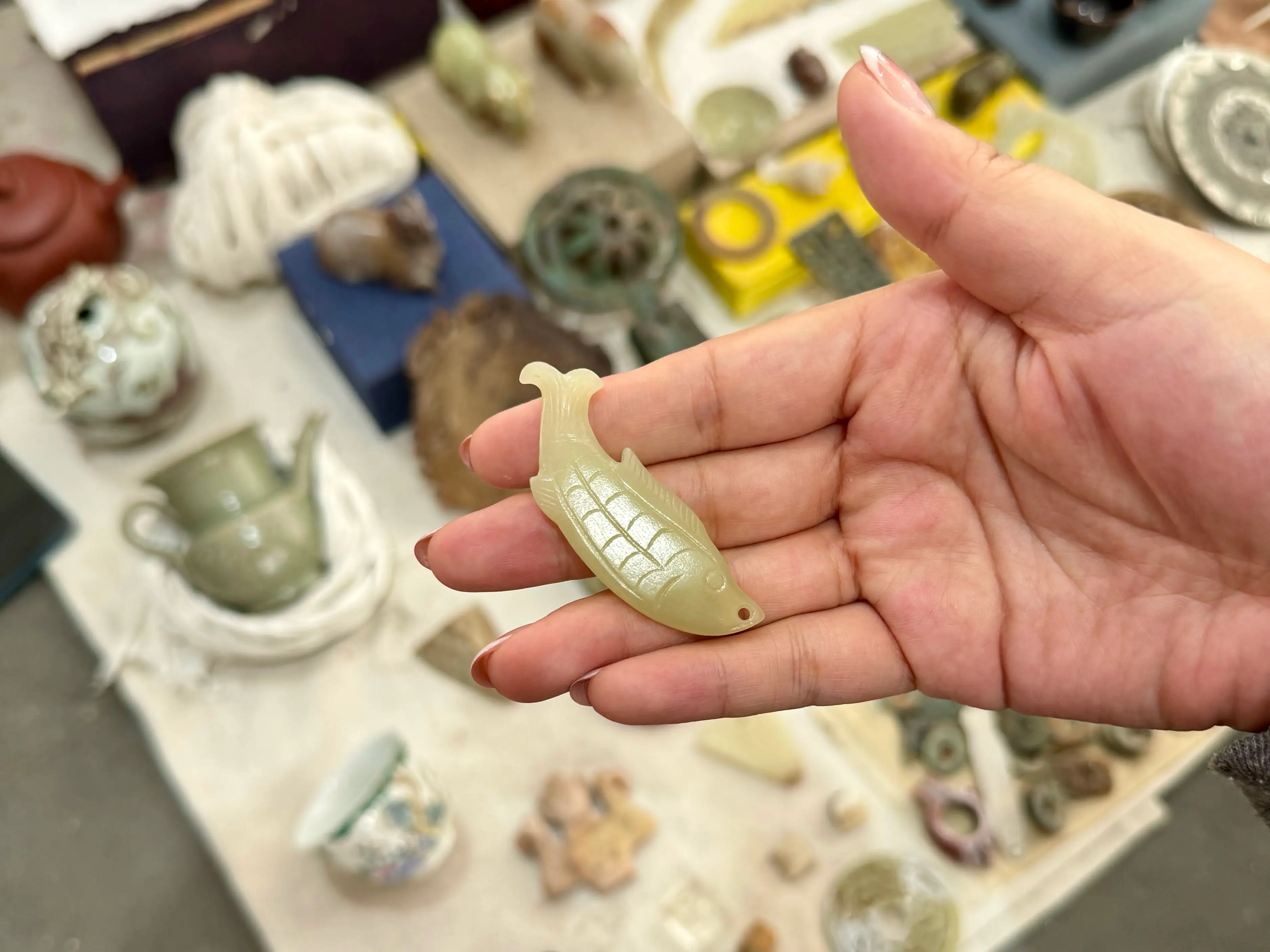 Click to enlarge
A [fish-shaped jade pendant](/travel-guide/chinese-jade/animals) can suggest abundance through [cultural wordplay](/travel-guide/chinese-jade/auspicious-symbols), but [material](/travel-guide/chinese-jade/nephrite-vs-jadeite), [treatment](/travel-guide/chinese-jade/real-vs-fake), and [seller claims](/travel-guide/beijing-city-guide/buying-jade-in-beijing) still need separate caution.
Jade pendants are one of the easiest ways travelers encounter Chinese jade symbolism. A pendant may show a dragon, ruyi form, fish, bat, safety lock, plain disc, gourd, lotus, zodiac animal, or Buddhist-inspired motif. These designs can express wishes for blessing, continuity, harmony, longevity, safety, or family affection in cultural language. But a symbol is not proof of material, age, authenticity, or value. Read jade pendants through three layers: the motif, the object type, and the material. DragonTrail does not appraise jade, certify authenticity, inspect purchases, or guarantee market value. This guide is for cultural and traveler education only.
- Reading time: 5-8 min
- Guide type: Cultural background
- Best for: Culture-curious Beijing visitors; Museum-goers before a jade gallery visit
- Less ideal for: Buyers seeking investment or appraisal advice
Chinese Jade Pendant Symbols at a glance
| Topic | Traveler takeaway |
|---|---|
| Dragon pendant | Dragons can suggest power, vitality, transformation, authority, or auspicious taste, but a dragon does not prove age or imperial status |
| Ruyi | Ruyi means "as one wishes" and is often used for wish-fulfillment, blessing, and refined decorative taste |
| Safety lock | Lock-shaped pendants express a traditional wish for safety, longevity, or family protection language, especially for children |
| Plain disk | A round plain disc or ping'an-style pendant is usually read through peace, completeness, smoothness, and wearable simplicity |
Dragon pendant
A dragon pendant is one of the most recognizable jade wearable forms. In Chinese culture, dragons can suggest power, vitality, transformation, rain, authority, or auspicious energy. But dragon meaning depends on period, form, material, and setting. A Warring States or Han-style dragon pendant, a Qing court dragon, a modern zodiac pendant, and a tourist souvenir should not be interpreted in the same way.
- Do not assume every jade dragon pendant is ancient, imperial, or valuable.
- Look at material, carving style, period claim, seller documentation, and object type.
- For animal symbolism, continue to the jade animals guide.
Ruyi
Ruyi means "as one wishes," which makes it a common auspicious form in Chinese decorative art. On pendants, the ruyi may appear as a full curved form, a cloud-like head, a border motif, or part of a larger blessing design. It can suggest wish-fulfillment, smooth progress, blessing, or refined taste. The meaning is cultural and decorative; it does not make the pendant lucky, protective, authentic, old, or valuable by itself.
- Ruyi is useful for explaining wish-fulfillment language in jade design.
- Ruyi motifs often overlap with clouds, lingzhi-shaped forms, bats, peaches, and other auspicious symbols.
- Read ruyi pendants together with the full design, material, and label.
Safety lock
A safety-lock pendant uses the image of a lock as cultural wish language. Traditionally, lock-shaped pendants could suggest keeping a child safe, "locking in" life, longevity, family blessing, or protection language. In modern jade jewelry, the safety-lock form may appear as a child gift, family gift, fashion pendant, or souvenir. Treat the meaning as tradition and gift language, not as a literal promise of safety or protection.
- Safety-lock pendants are best explained as symbolic family-wish objects.
- They may be meaningful as gifts, but the symbol does not prove jade quality or authenticity.
- For buying questions, separate cultural meaning from material, treatment, price, and documentation.
Plain disk
A plain round jade disc or ping'an-style pendant is usually read through smoothness, simplicity, completeness, peace, and everyday wearability. It may remind travelers of ancient bi discs because both use a round form with an opening, but they are not the same thing. A Neolithic bi disc is a ritual or burial object, while a modern plain disc pendant is usually wearable jewelry or a souvenir. Shape resemblance does not prove antiquity.
- Do not confuse a modern plain disc pendant with an ancient bi disc.
- Round forms can suggest peace, completeness, and smoothness in modern gift language.
- Use museum context before reading too much into shape alone.
Common mistakes: Chinese Jade Pendant Symbols
Treating symbols as guarantees
A dragon, ruyi, fish, bat, safety lock, or plain disc can express cultural wishes, but it does not guarantee luck, safety, health, protection, authenticity, age, or market value.
Confusing pendant form with ancient ritual jade
A modern round pendant may echo the visual language of ancient bi discs, but it is not automatically ancient, ritual, or museum-quality. Shape alone is not proof.
Buying meaning instead of material
A pendant can have a meaningful motif and still be glass, dyed stone, treated jadeite, low-quality jade, or overpriced souvenir material. Material, treatment, and documentation remain separate questions.
Chinese Jade Pendant Symbols FAQ
- Chinese jade pendants use wearable symbols such as dragons, ruyi forms, fish, bats, safety locks, plain discs, gourds, lotus, and zodiac animals. They express cultural wishes such as blessing, harmony, abundance, longevity, safety, or family affection.
- A jade dragon pendant can suggest power, vitality, transformation, authority, or auspicious taste. The meaning depends on period, form, material, and setting. A modern dragon pendant should not be treated as automatically ancient or imperial.
- Ruyi means "as one wishes." A ruyi jade pendant can suggest wish-fulfillment, blessing, smooth progress, or refined decorative taste.
- A safety-lock pendant expresses a traditional wish for safety, longevity, or family protection language, especially for children. This is cultural symbolism, not a literal product guarantee.
- A plain round jade pendant is often read through peace, completeness, smoothness, and simple everyday wear. It may visually echo ancient bi discs, but a modern pendant is not the same as a Neolithic ritual object.
- No. A symbol does not prove material, treatment, age, authenticity, or value. A meaningful pendant can still be treated jadeite, dyed stone, glass, or another material sold as jade.
- Start with Beijing museum collections before shopping. The National Museum of China gives ancient jade context, while the Forbidden City Treasure Gallery is stronger for Qing imperial jade and decorative motifs.
- DragonTrail does not appraise jade, certify authenticity, inspect purchases, recommend investment pieces, or guarantee market value. This guide is for cultural and traveler education only.
Explore jade as culture, not commodity
Jade pendant symbols are easiest to understand after separating cultural meaning from buying risk: learn the motif language, compare museum objects, then treat market pendants as souvenir-risk purchases unless independently documented.
DragonTrail does not sell jade or offer authentication. For buying questions, read our traveler-education pages and treat any purchase as your own risk.