
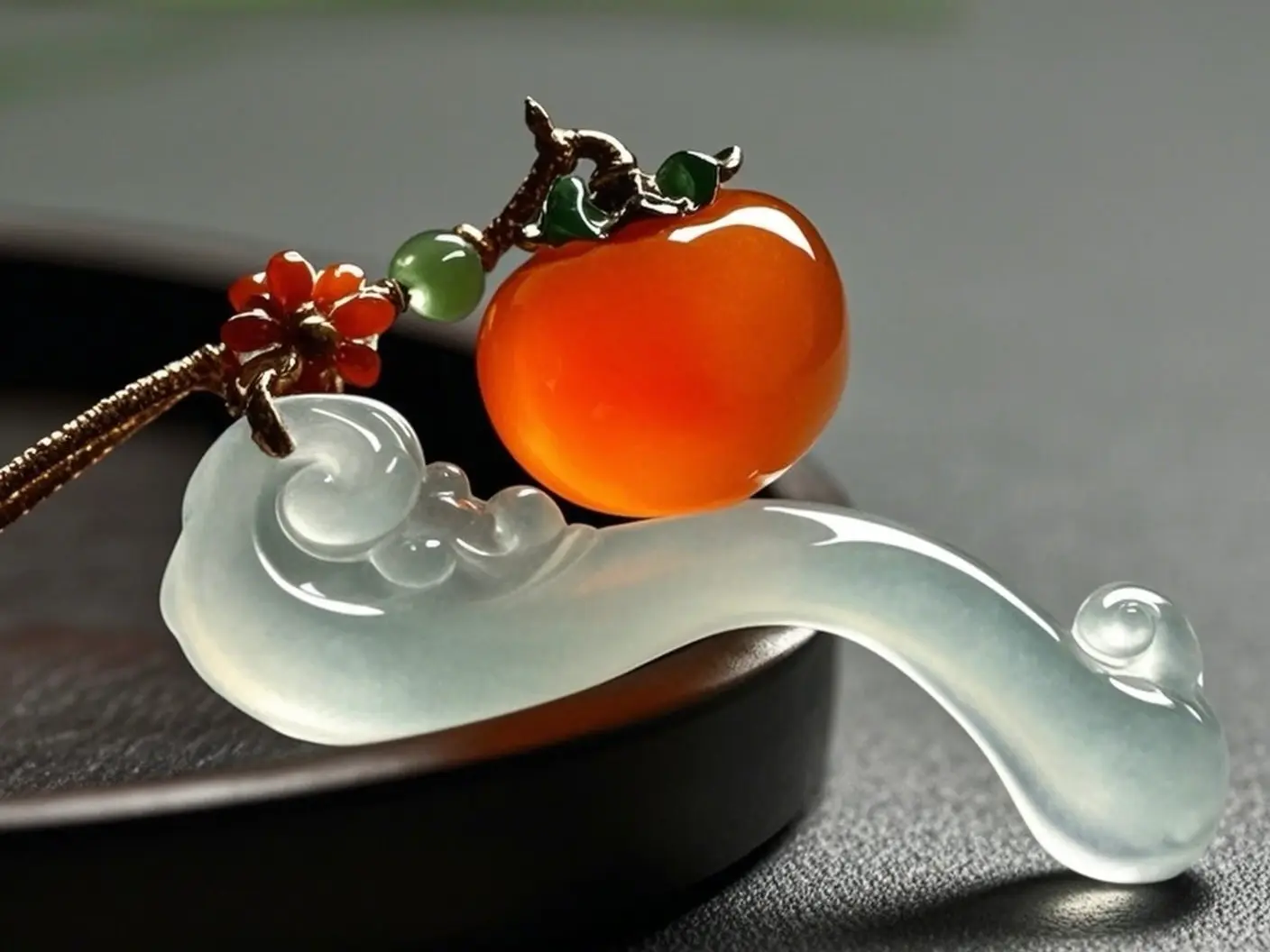
Jade souvenirs: risk tiers
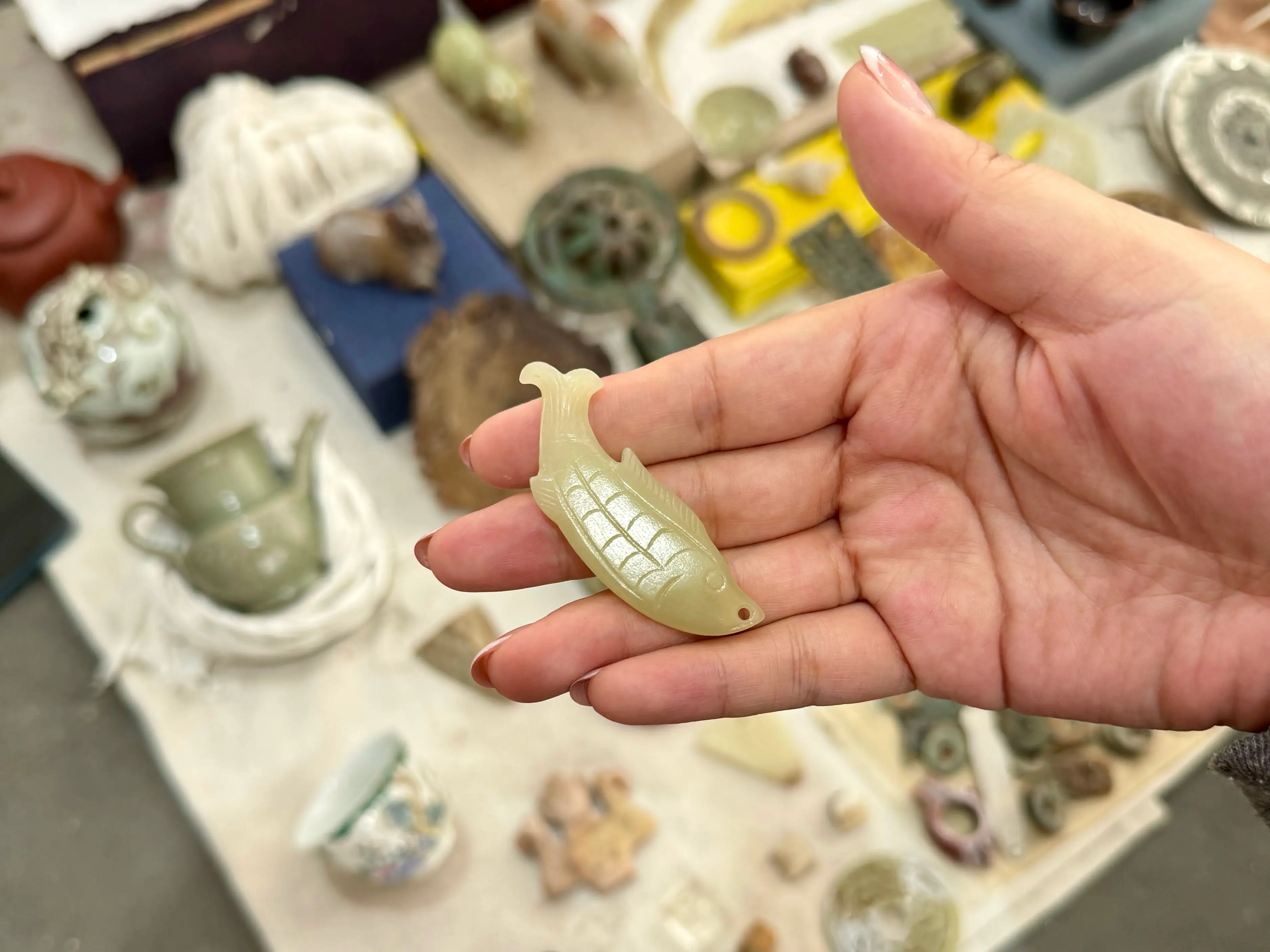 Click to enlarge
A [fish-shaped jade pendant](/travel-guide/chinese-jade/animals) can suggest abundance through [cultural wordplay](/travel-guide/chinese-jade/auspicious-symbols), but [material](/travel-guide/chinese-jade/nephrite-vs-jadeite), [treatment](/travel-guide/chinese-jade/real-vs-fake), and [seller claims](/travel-guide/beijing-city-guide/buying-jade-in-beijing) still need separate caution.
Jade souvenirs in Beijing range from simple jade-themed gifts to expensive jewelry and carved objects. For most travelers, the safest mindset is to separate cultural memory from authentication. A small pendant, bead bracelet, zodiac animal, fish carving, or ruyi motif can work as a personal memento if the price matches your comfort level and you do not treat it as an investment. Higher-risk purchases include bangles, large carvings, "old jade," "imperial style" pieces, "Grade A jadeite" claims, and items sold with unclear certificates or return terms. DragonTrail does not appraise jade, certify authenticity, inspect purchases, recommend vendors, or guarantee market value. This guide is for cultural and traveler education only.
- Reading time: 5-8 min
- Guide type: Cultural background
- Best for: Culture-curious Beijing visitors; Travelers considering a modest jade memento after museum visits
- Less ideal for: Buyers seeking investment or appraisal advice
Risk tiers
| Souvenir type | Typical risk | Traveler stance |
|---|---|---|
| Small pendant or charm | Lower financial risk if the price is modest and expectations are decorative | Good as a cultural memento when material claims are not the main reason for buying |
| Symbolic animal or auspicious carving | Motif may be meaningful, but material and treatment can still be unclear | Choose for design and memory, not as proof of rare jade |
| Museum shop item | Usually clearer retail setting, but still not automatically collectible or authenticated | Treat as licensed or curated retail unless documentation says otherwise |
| Bangle, large carving, or "investment" jade | Higher risk because material, treatment, fit, certificate, price, and return terms matter more | Avoid serious spending unless documentation and independent testing are arranged before purchase |
Low-risk souvenir mindset
A lower-risk jade souvenir is one you buy for memory, design, or cultural meaning rather than resale value. A small pendant, bead bracelet, fish, bat, zodiac animal, ruyi form, or plain disc can remind you of a museum visit or a Beijing trip without requiring the object to be rare or investment-grade. The key is to set your budget before browsing and keep seller claims separate from personal meaning.
- Choose motif and memory before rarity claims.
- Keep the budget at a level you are comfortable treating as souvenir spending.
- Use the pendant symbols and auspicious symbols guides to understand common motifs.
High-risk items to treat skeptically
Some jade purchases carry more risk because more money, more claims, and more technical judgment are involved. Be especially careful with rigid bangles, large carvings, "old jade," "imperial style" objects, "Hetian" claims, "Grade A jadeite" claims, and certificates that cannot be verified. These items are not automatically bad, but they should not be treated as casual souvenirs unless you are prepared to verify material, treatment, documentation, fit, price, and return terms.
- Bangles require fit, material, treatment, and documentation checks.
- "Old," "imperial," "Hetian," and "Grade A" are claims, not proof.
- Expensive jade should be tested before purchase, not after departure.
Museum gift shops vs street markets
Museum gift shops and street markets should be read differently. A museum shop may be useful for convenient gifts, books, reproductions, and jade-themed merchandise, but it is still a retail setting unless it provides clear material and treatment documentation. Panjiayuan and other market settings can be interesting for browsing, bargaining, and souvenir atmosphere, but they are not authentication environments. In both cases, the safest approach is to treat the purchase as retail or souvenir shopping unless independent gemological testing is arranged.
- Museum shops can be convenient for gifts, but a museum location does not automatically prove material, age, or collectible value.
- Street markets are best treated as browsing and souvenir shopping, not authentication.
- For serious purchases, written documentation and independent testing matter more than the sales setting.
Symbol souvenirs that teach culture
Symbolic souvenirs can be useful because they connect a small object to something you learned. A fish can suggest abundance through wordplay, a bat can suggest blessing, a ruyi form can mean "as you wish," a dragon can point to power or auspicious taste, and a plain disc can suggest peace or completeness in modern gift language. The symbol can make the souvenir meaningful even when the material is modest. Just do not confuse motif meaning with proof of jade quality, age, authenticity, or value.
- Choose symbols that connect to your museum visit or personal memory.
- Read motifs as cultural language, not as proof of material.
- Use the jade animals, auspicious symbols, and pendant symbols guides before shopping.
What this means for travelers in Beijing
For most travelers, the best order is museum first, souvenir second. Visit jade displays at the Forbidden City Treasure Gallery, National Museum of China, or Capital Museum before shopping. If you later buy a jade-themed item, buy it as a personal memento, not as proof that you own rare jade. If the object is expensive, pause and ask whether you have enough written information, testing time, and return protection to make the purchase responsibly.
- Start with the where to see jade in Beijing guide.
- Treat souvenirs as optional, not required for a complete jade experience.
- DragonTrail can explain culture and museum context, but we do not inspect, authenticate, price, or certify jade.
Common mistakes: Chinese Jade Souvenirs in Beijing
Buying a souvenir as an investment
A jade-themed souvenir can be personally meaningful without being financially important. Treat most travel purchases as gifts or mementos, not investments. DragonTrail does not recommend investment pieces or guarantee value.
Leaving no time to verify
Last-day purchases are risky when the seller makes material, treatment, age, or value claims. If the item is expensive, you need time for written confirmation, certificate verification, independent testing, and return decisions.
Equating retail setting with museum authority
A gift shop, museum shop, mall counter, or market stall is still a retail setting. It does not automatically prove that an item is natural jade, untreated, old, collectible, or correctly priced.
Chinese Jade Souvenirs in Beijing FAQ
- A good jade souvenir is usually a modestly priced object you buy for memory, motif, or design rather than resale value. Small pendants, bead bracelets, fish, bats, ruyi forms, zodiac animals, and plain discs can work if expectations are decorative and personal.
- Not always, and the answer depends on the item. Museum shops may sell real jade, jade-themed merchandise, reproductions, books, or other materials. Treat them as retail items unless material, treatment, and documentation are clearly provided.
- Only with a souvenir mindset. Panjiayuan can be interesting for browsing and bargaining, but it should not be treated as an authentication environment for expensive jade.
- Motif-based souvenirs can work well. Fish can suggest abundance, bats can suggest blessing, ruyi forms can suggest "as you wish," dragons can suggest power or auspicious taste, and plain discs can suggest peace or completeness in modern gift language.
- Jade bangles are higher-risk souvenirs because fit, material, treatment, price, certificates, and return terms all matter. Do not buy an expensive bangle casually or at the end of a trip without verification time.
- Ask what the material is, whether it is nephrite or jadeite, whether it has been treated, what the price and return terms are, and whether any certificate can be independently verified.
- No. DragonTrail does not recommend jade vendors, appraise jade, certify authenticity, inspect purchases, recommend investment pieces, or guarantee market value. This guide is for cultural and traveler education only.
- Yes. For most travelers, museums are the best jade experience in Beijing. The Forbidden City Treasure Gallery, National Museum of China, and Capital Museum can give cultural context without any shopping pressure.
Explore jade as culture, not commodity
Jade souvenirs are easiest to approach after separating cultural meaning from buying risk: learn the motif language, visit museum collections first, and treat shopping as optional.
DragonTrail does not sell jade or offer authentication. For buying questions, read our traveler-education pages and treat any purchase as your own risk.