
Jade Museums in Beijing
 Click to enlarge
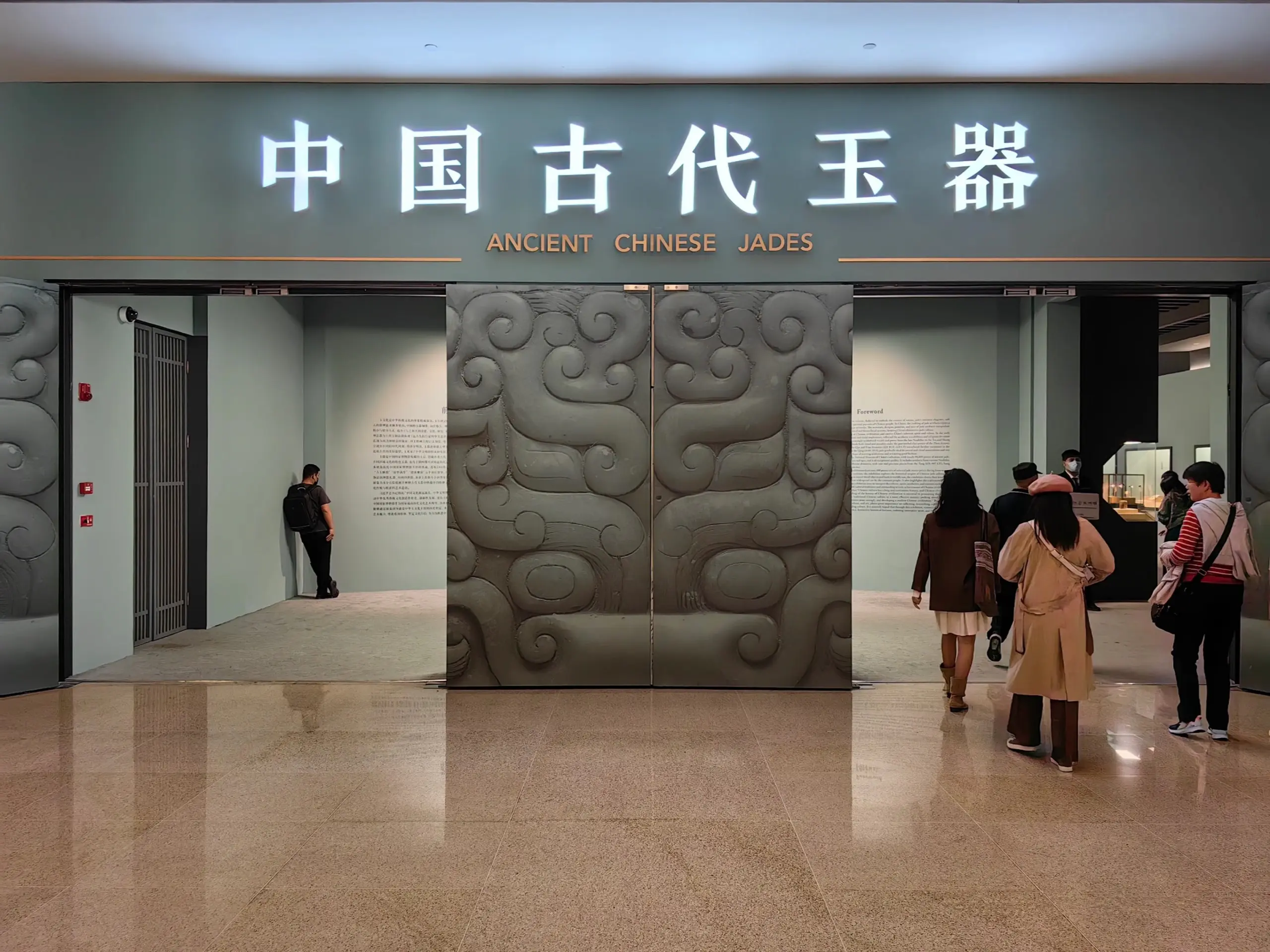
Entrance to the Ancient Chinese Jades exhibition at the National Museum of China.
Beijing's strongest jade viewing is inside museums, not markets. The Forbidden City Treasure Gallery is the main stop for Qing imperial jade, including the Da Yu Taming the Floods jade mountain, seals, vessels, scholar objects, and court ornaments. The National Museum of China is better for ancient jade and long chronology, including Neolithic ritual forms, bi discs, cong tubes, burial jade, and the Ancient Chinese Jade exhibition in Gallery N19. The Capital Museum is a quieter supporting stop for Beijing-focused archaeology, jade displays, and seals. Use this page to choose the right museum stop for your time, interest, and route.
- Reading time: 5-8 min
- Guide type: Cultural background
- Best for: Culture-curious Beijing visitors; Museum-goers before a jade gallery visit
- Less ideal for: Buyers seeking investment or appraisal advice
Jade Museums in Beijing at a glance
| Topic | Traveler takeaway |
|---|---|
| Palace Museum | Best for Qing imperial jade, the Forbidden City Treasure Gallery, Hetian-style nephrite, court objects, and the Da Yu jade mountain |
| National Museum | Best for ancient jade chronology, Neolithic ritual forms, bi discs, cong tubes, burial jade, and the Ancient Chinese Jade exhibition |
| Capital Museum | Best as a quieter Beijing-focused stop for jade displays, seals, archaeology, and slower label reading |
| Timing tips | Choose one major jade stop for a short visit, or pair two museums carefully; do not force every jade stop into one day |
Palace Museum
The Palace Museum is the strongest jade stop for travelers who want Qing imperial context. The main jade focus is the Forbidden City Treasure Gallery, where you can see court objects such as nephrite vessels, seals, scholar pieces, ornaments, and the Da Yu Taming the Floods jade mountain. This is the best Beijing museum stop for understanding how Qing emperors used jade to express authority, collecting taste, workshop skill, and access to Hetian/Khotan nephrite.
- Best for Qing imperial jade, court objects, white nephrite, and monumental carving.
- Works best inside a Forbidden City visit, not as an isolated stop.
- Check current Palace Museum and Treasure Gallery ticket rules before planning.
- Use the Forbidden City jade guide for object-level context.
National Museum
The National Museum of China is the best Beijing stop for ancient jade and long chronology. Its Ancient Chinese Jade exhibition in Gallery N19 gives travelers a clearer view of jade before imperial court collecting: Neolithic forms, ritual objects, bi discs, cong tubes, burial jade, Han jade, and later changes in function and taste. Visit this museum first if you want to understand why later Qing court jade often referred back to ancient forms.
- Best for ancient jade, Neolithic ritual forms, bi discs, cong tubes, and burial context.
- Useful before the Forbidden City if you want to understand archaistic Qing designs.
- Allow enough time to read labels rather than treating the jade galleries as a quick pass-through.
- Use the ancient Chinese jade and bi discs/cong guides before or after your visit.
Capital Museum
The Capital Museum is a quieter supporting stop rather than the main jade destination. It is useful for travelers who want Beijing-focused archaeology, jade displays, seals, and a slower museum hour away from the busiest Palace Museum route. It does not replace the Forbidden City Treasure Gallery for Qing imperial jade or the National Museum of China for ancient jade chronology, but it can work well if your day already includes Xicheng or western Beijing.
- Best for a calmer Beijing-focused jade stop.
- Useful for jade displays, seals, and archaeology rather than one single iconic jade object.
- Works well when paired with other Xicheng or western Beijing plans.
- Use it as a supporting museum, not as the only jade context for the whole cluster.
Timing tips
Do not try to turn every jade stop into one day. For a focused half day, choose either the Forbidden City Treasure Gallery inside a Palace Museum visit or the National Museum of China for ancient jade. For a longer culture day, pair the National Museum with the Forbidden City only if your timing, tickets, and walking pace are realistic. Add the Capital Museum when you want a quieter Beijing-focused stop, not when the day is already full.
- Short visit: choose one jade museum stop.
- Half day: Palace Museum with Treasure Gallery, or National Museum ancient galleries.
- Longer culture day: pair two museums only with realistic ticketing and walking time.
- Keep Panjiayuan separate from museum routing; it is shopping and browsing, not museum interpretation.
Common mistakes: Jade Museums in Beijing
Treating all museum stops as the same
The Forbidden City Treasure Gallery is strongest for Qing imperial jade. The National Museum is stronger for ancient jade chronology. The Capital Museum is better as a quieter Beijing-focused supporting stop.
Skipping ancient jade context
Seeing bi discs, cong tubes, burial jade, and Neolithic forms first makes later Qing archaistic jade easier to understand. Without ancient context, court objects can look like decorative carving only.
Mixing museum learning with shopping decisions
Museums are for cultural context. Markets and shops are commercial settings. Do not treat museum knowledge as authentication ability, and do not treat market claims as museum labels.
Jade Museums in Beijing FAQ
- For most travelers, the Forbidden City Treasure Gallery is the best single jade stop because it shows Qing imperial jade, Hetian-style nephrite, court objects, and the Da Yu Taming the Floods jade mountain.
- The National Museum of China is the best choice for ancient jade, Neolithic ritual forms, bi discs, cong tubes, burial jade, Han jade, and long chronological context.
- Yes, but as a supporting stop. The Capital Museum is useful for Beijing-focused archaeology, jade displays, seals, and a quieter museum hour, not as the main replacement for the Forbidden City or National Museum.
- Yes, but choose carefully. For a half day, choose either the Forbidden City Treasure Gallery inside a Palace Museum visit or the National Museum of China for ancient jade. Do not add markets unless you have extra time.
- Usually no. Panjiayuan is a market and shopping stop, not a museum. Add it only if you specifically want market browsing after museum context.
- No. DragonTrail does not appraise jade, certify authenticity, inspect purchases, recommend investment pieces, or guarantee market value. This guide is for cultural and traveler education only.
Explore jade as culture, not commodity
Beijing jade museums are easiest to use when each stop has a clear purpose: Forbidden City for Qing imperial jade, National Museum for ancient jade chronology, and Capital Museum for a quieter Beijing-focused layer.
DragonTrail does not sell jade or offer authentication. For buying questions, read our traveler-education pages and treat any purchase as your own risk.