
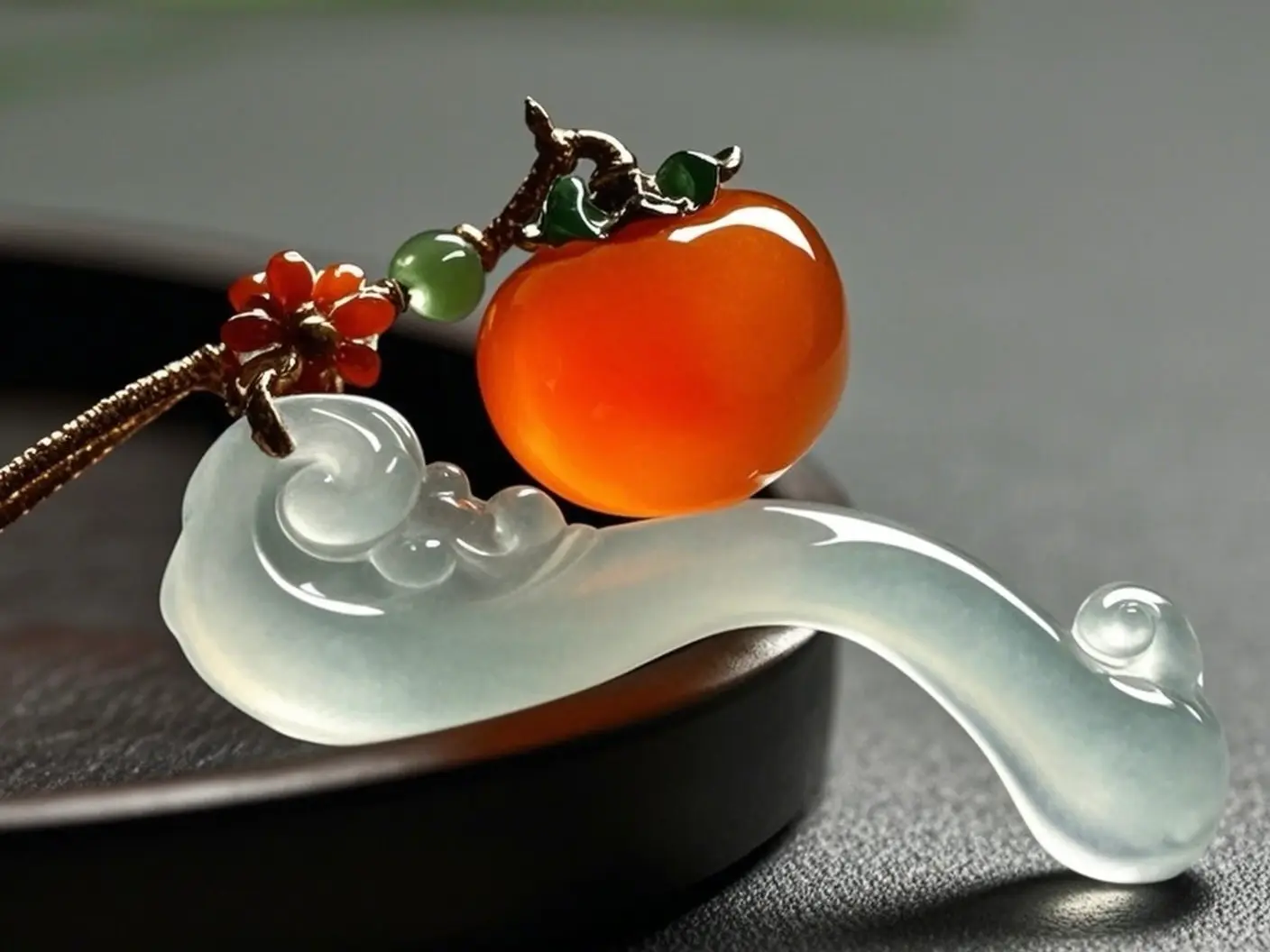
Real vs fake for travelers
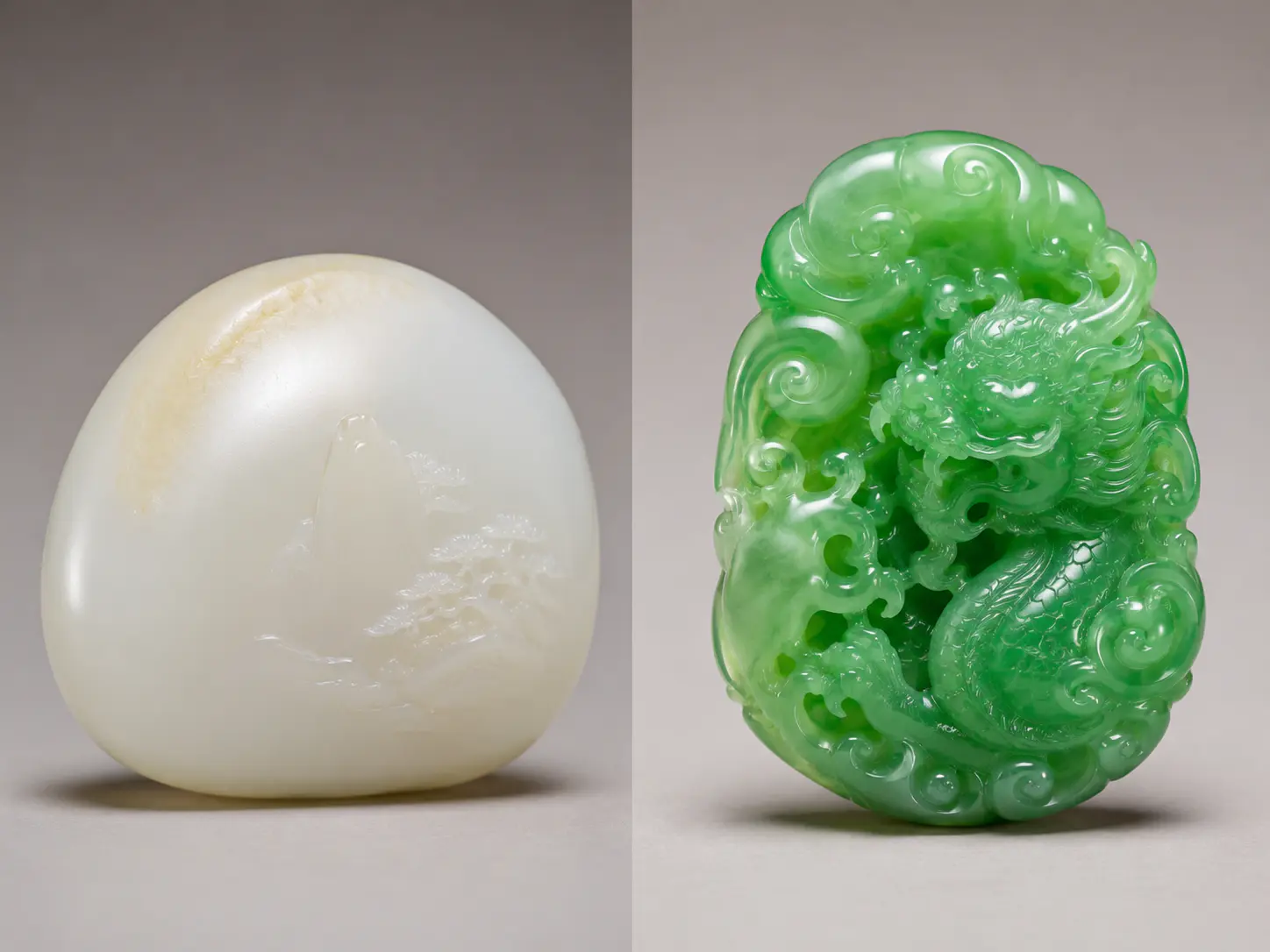 Click to enlarge
Nephrite and jadeite are both real jade, but color alone cannot prove material, treatment, origin, age, or value.
Travelers often hear the question “Is this jade real?” but the answer is rarely simple. Real jade can be nephrite or jadeite. Jadeite may also be natural, dyed, bleached, polymer-impregnated, or otherwise treated. Some objects sold as jade may be glass, dyed quartz, serpentine, or another stone entirely. Without independent gemological testing, visual checks are only clues, not proof. DragonTrail does not appraise jade, certify authenticity, or guarantee market value. This guide is for cultural and traveler education only.
- Reading time: 5-8 min
- Guide type: Cultural background
- Best for: Culture-curious Beijing visitors; Museum-goers before a jade gallery visit
- Less ideal for: Anyone wanting a purchase guarantee or investment advice
Common imitations
| Material | Common claim or clue | Traveler reality |
|---|---|---|
| Glass | May be sold as bright, uniform green "jade" | Glass is a simulant, not nephrite or jadeite; bubbles or overly uniform color can be clues, not proof |
| Dyed quartz or other dyed stone | Color may collect in cracks or surface areas | Dye can imitate attractive jade colors, but visual inspection alone is not reliable |
| Treated jadeite | May be described with A/B/C treatment language | A jadeite is natural or wax-polished only; B is acid-bleached and polymer-impregnated; C is dyed |
| Serpentine or regional "jade" | May be sold under local or commercial jade names | Some Chinese yu names are culturally accepted but not always gemological nephrite or jadeite |
| Natural nephrite or jadeite | May look plain, pale, muted, or vivid green | Real jade can still be low quality, treated, overpriced, or lacking documentation |
Scratch tests
Do not use scratch tests. They can damage the object, offend the seller, and still fail to prove what the material is. Hardness alone cannot separate natural jadeite, nephrite, treated jadeite, or all possible simulants in a reliable traveler setting. If authenticity matters, use an independent gemological lab instead of a destructive street test.
UV torches
A UV torch may sometimes reveal fluorescence linked with certain treatments or materials, but it is not a complete authentication tool. A lack of fluorescence does not prove that jade is natural, untreated, valuable, or correctly labeled. Travelers should treat UV reactions as one possible clue, not a decision rule.
Price as signal
Price can be a warning sign, but it cannot authenticate jade. A very cheap "imperial jade," "old jade," or "Grade A jadeite" claim should be treated carefully, especially in a tourist market. At the same time, a high price does not prove authenticity, treatment status, origin, or value. Documentation and independent testing matter more than sales language.
Museum baseline
Museums are the best starting point because they teach material, period, function, and context without a sales pitch. In Beijing, compare ancient ritual jade at the National Museum of China with Qing imperial jade in the Forbidden City Treasure Gallery. This does not make you an appraiser, but it helps you recognize when market language is too simple.
DragonTrail stance
DragonTrail can explain jade as culture, history, and museum context. We do not appraise jade, certify authenticity, inspect purchases, recommend investment pieces, or guarantee market value. If you want to buy expensive jade, arrange independent gemological testing before purchase and make sure return terms are clear in writing.
Authentication mistakes
Trusting verbal guarantees
A seller’s verbal claim is not the same as a lab report, provenance record, or written return policy. Treat words such as “natural,” “imperial,” “Hetian,” “old,” and “Grade A” as claims that need documentation.
Using street tests as proof
Scratch tests, touch tests, flashlight checks, and quick UV reactions are not reliable authentication methods for travelers. They can mislead you or damage the object.
Buying before you can verify
Avoid buying expensive jade at the end of a trip when there is no time for independent testing, written confirmation, or returns. Treat any purchase without verification as a souvenir-risk decision.
Real vs fake jade FAQ
- No. DragonTrail does not appraise jade, certify authenticity, inspect purchases, or guarantee market value. This guide is for cultural and traveler education only.
- Yes. Nephrite and jadeite are both real jade, but they are different minerals. Chinese imperial jade is strongly associated with nephrite, while vivid green jadeite became especially influential later.
- In commercial jadeite language, A jadeite is natural or wax-polished only. B jadeite is acid-bleached and polymer-impregnated. C jadeite is dyed. These are treatment terms, not museum period labels.
- No. Low price is a warning sign, not proof. A cheap green item may be glass, dyed stone, treated jadeite, low-quality natural jade, or simply a souvenir. Testing is required for certainty.
- No. Scratch tests can damage the object and are not reliable authentication methods for travelers. Use an independent gemological lab for expensive pieces.
- No. UV reactions may offer clues about some treatments or materials, but they do not prove that jade is natural, untreated, valuable, or correctly labeled.
- Museum shops vary. Treat them as retail unless they provide clear material information, treatment disclosure, documentation, and return terms. A museum location does not automatically prove collectible value.
- Buy only within a budget you can treat as souvenir spending, or arrange independent gemological testing before purchase. Get material, treatment, price, and return terms in writing.
Explore jade as culture, not commodity
Real vs fake jade questions are easiest to handle with a clear boundary: use museums for cultural education, use independent labs for authentication, and treat market purchases as separate buying decisions.
DragonTrail does not sell jade or offer authentication. For buying questions, read our traveler-education pages and treat any purchase as your own risk.