
What jade meant in China
 Click to enlarge
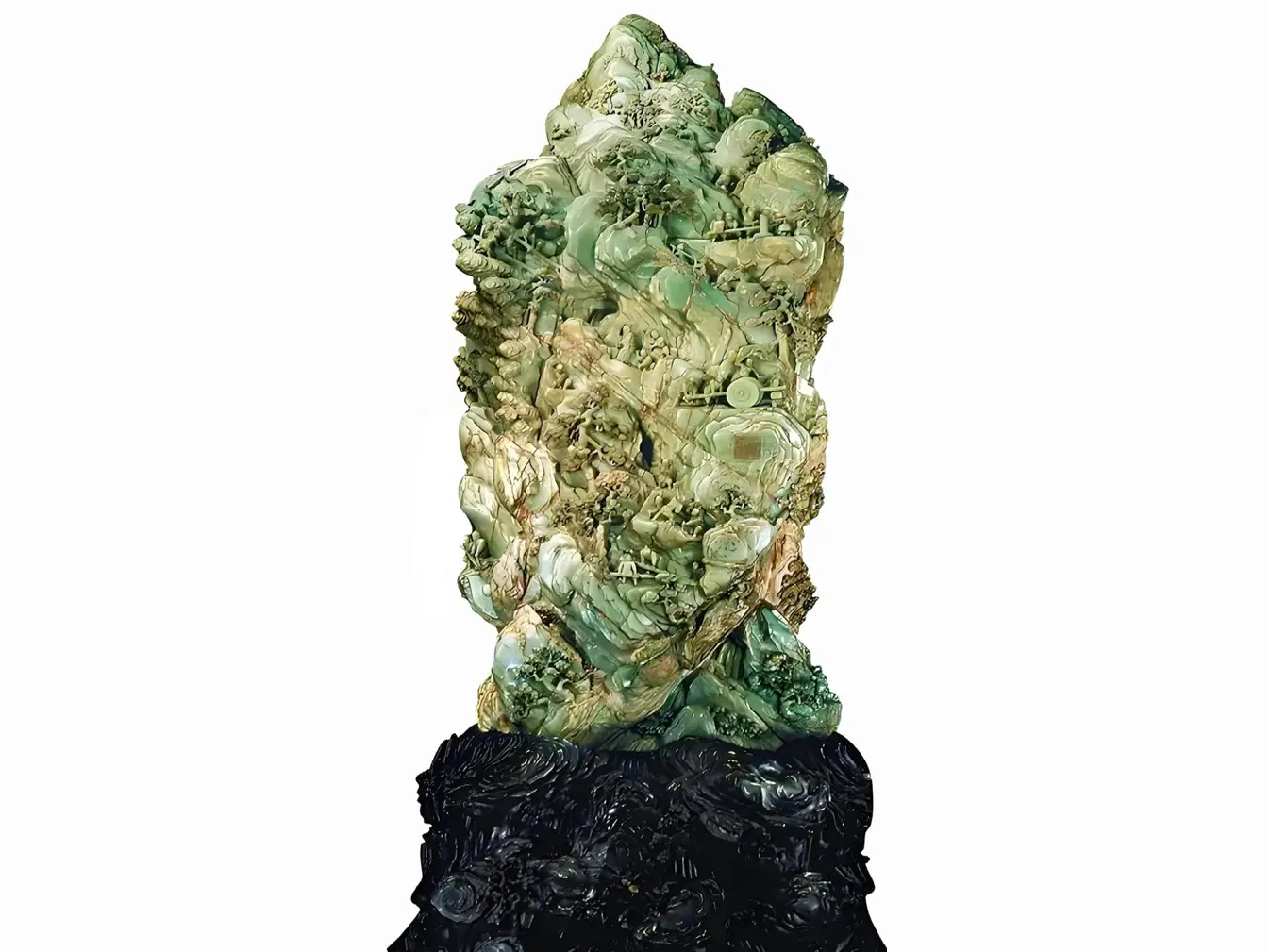
Qing-dynasty nephrite mountain carving illustrating Yu the Great Taming the Floods.
In classical Chinese thought, yu (玉) was more than a beautiful stone. Its hardness, smooth surface, and quiet luster made it a metaphor for refined character, benevolence, and integrity. That moral language sat beside older ritual uses, including bi discs and cong tubes from elite burial contexts, forms that later Chinese tradition associated with heaven and earth. Later, jade also became part of imperial display, especially in Qing court collections. For travelers, this meaning is easiest to understand in museums before looking at jade in markets.
Layers of jade meaning
| Layer | Example | Where travelers see it |
|---|---|---|
| Moral metaphor | Confucian virtue language | Gallery text on scholar objects |
| Ritual cosmology | Bi + cong in burials | National Museum neolithic rooms |
| Imperial status | Qing boulder carvings | Palace Museum Treasure Gallery |
| Modern commerce | Market 'lucky' pitches | Panjiayuan—treat as separate world |
Yu vs generic 'jade'
Yu traditionally referred to refined worked stone, especially nephrite, rather than every green bead or souvenir sold as "jade" today. This is why museum labels and market language can feel different: museums usually describe material, period, function, and excavation context, while shops often simplify jade into color, luck, or price.
- For material differences, start with the nephrite vs jadeite guide.
- For regional names such as Hetian, Xiuyan, and Lantian, use the types of Chinese jade guide.
Virtue metaphors
Confucian writers compared jade's physical qualities to human virtues: firm but not harsh, bright but not loud, polished but not fragile. Read this as cultural and literary language, not as a promise that a jade object carries automatic protection, luck, or moral power.
- Best read as cultural poetry and moral metaphor.
- For a fuller explanation, continue to the Confucian virtue guide.
Ritual meaning
Early jade meaning was strongly connected to ritual and burial practice. Bi discs and cong tubes appear in elite tomb contexts from the Liangzhu culture onward, where their shapes were later interpreted through ideas of heaven, earth, order, and status. This is one reason ancient jade can feel abstract in a museum case: many pieces were not made as decoration, but as ritual objects.
- For the object shapes, read the bi discs and cong guide.
- In Beijing, look first at ancient jade displays before comparing later imperial carvings.
Imperial meaning
By the Qing dynasty, jade also became a language of imperial scale and authority. Large Khotan nephrite boulders, scholar objects, seals, and court carvings showed access to rare western materials, elite workshops, and symbolic storytelling. The Forbidden City's jade displays are useful because they show jade not as ordinary jewelry, but as court culture, politics, and craftsmanship.
- The Da Yu carving is one of the key Forbidden City examples.
- For court objects, continue to the imperial jade objects guide.
What it does not mean today
Modern shops may describe jade as lucky, protective, healthy, or investment-grade. Treat that as sales language unless it is supported by proper documentation from a qualified source. Museum interpretation explains historical symbolism; it does not guarantee authenticity, market value, or personal outcomes.
- DragonTrail does not appraise jade, certify authenticity, or guarantee market value. This guide is for cultural and traveler education only.
- Before buying, read the real vs fake jade guide and the buying jade in Beijing guide.
Meaning mistakes
Reading shop slogans as tradition
A shop may use traditional words like luck, protection, blessing, or prosperity, but that does not mean the object has historical value. Museum captions and sales language are built for different purposes.
Ignoring burial context
Much early jade meaning is funerary and ritual, not decorative. Bi discs, cong tubes, and burial jades were often connected to elite status, cosmology, and the afterlife rather than everyday jewelry.
Meaning of jade FAQ
- Traditionally: virtue, ritual order, and imperial authority—expressed through objects like bi discs, cong tubes, and court carvings. See symbolism page for motifs.
- It carried ritual and cosmological roles in burials and ceremonies; treat claims as historical belief, not universal fact.
- Jade combined rare material, skilled carving, ritual symbolism, and imperial taste. In the Qing dynasty especially, large Khotan jade carvings helped project court authority and cultural refinement.
- Folk and sales traditions say so; museums document cultural symbolism instead of guaranteeing outcomes.
- For early ritual meaning, start with ancient jade displays at the National Museum of China. For imperial jade, the Forbidden City Treasure Gallery is usually the stronger Beijing stop.
Explore jade as culture, not commodity
These guides explain what jade meant in Chinese history and where travelers can see fine pieces in Beijing museums.
DragonTrail does not sell jade or offer authentication. For buying questions, read our traveler-education pages and treat any purchase as your own risk.