
| Item | Answer |
|---|---|
| Chinese term | 茶 (chá) — tea |
| UNESCO six categories | Green (绿茶), yellow (黄茶), dark (黑茶), white (白茶), oolong (乌龙茶), black (红茶) |
| Reprocessed teas | Flower-scented and other scented teas (e.g. 茉莉花茶 jasmine tea) |
| Key terminology trap | English "black tea" = Chinese 红茶 (hóngchá, "red tea"); 黑茶 (hēichá) = dark tea—a different category |
| Main brewing styles | Western-style mug/pot steeping; gaiwan or small-pot gongfu-style with multiple infusions |
| Core teaware | Gaiwan (盖碗), Yixing/zisha teapot (紫砂壶), fairness pitcher, small cups, tea tray |
| Best Beijing entry points | Private tea ceremony; Maliandao Tea Market; teahouse visit |
| Heritage status | Traditional tea-processing techniques inscribed on UNESCO Intangible Cultural Heritage list, 2022 |
What "Chinese Tea" Means
In everyday English, "Chinese tea" can mean anything from a supermarket teabag to a formal gongfu session. In China, tea is simultaneously an agricultural product, a processed commodity with distinct categories, a social habit, and a craft with regional schools. The same leaf from *Camellia sinensis* becomes a different tea depending on cultivar, harvest season, and processing steps—withering, fixation (kill-green), rolling, oxidation, fermentation, drying, and sometimes scenting or aging.
UNESCO's 2022 inscription of traditional tea-processing techniques describes tea as embedded in daily social life and ceremonies, with techniques varying by natural conditions and local customs. That variation matters for travelers: there is no single "correct" Chinese tea experience, only different contexts—home hospitality, restaurant service, teahouse socializing, market tasting, or a guided ceremony.
The Six Main Tea Categories
Chinese tea classification follows processing tradition rather than color alone. The six UNESCO categories are:
| Category | Chinese | Processing tendency | Child guide |
|---|---|---|---|
| Green tea | 绿茶 (lǜchá) | Minimal oxidation; fixation early | Chinese Green Tea |
| Yellow tea | 黄茶 (huángchá) | Rare; slight post-fixation "smothering" | Covered on Types of Chinese Tea—no separate page |
| Dark tea | 黑茶 (hēichá) | Post-fermentation; includes Pu-erh | Pu-erh & Chinese Dark Tea |
| White tea | 白茶 (báichá) | Minimal processing; withering and drying | Chinese White Tea |
| Oolong tea | 乌龙茶 (wūlóngchá) | Partial oxidation; wide style range | Chinese Oolong Tea |
| Black tea | 红茶 (hóngchá) | Full oxidation; English "black tea" | Chinese Black Tea |
Reprocessed teas such as jasmine-scented tea (茉莉花茶) are made by scenting a base tea—often green—with flowers; they sit alongside the six base categories rather than replacing them. See Types of Chinese Tea for the full classification framework.
How Chinese Tea Developed
Tea use in China has a long documented history, from early references and Tang-dynasty codification through Song whisked tea, Ming loose-leaf steeping, Qing regional trade, and modern industrial and specialty production. Lu Yu's *Cha Jing* (茶经, *The Classic of Tea*, 8th century) is the foundational text travelers often encounter in museums and tea-house displays. The 2022 UNESCO inscription recognizes living craft traditions, not just ancient history.
For the full chronology—from legendary attributions through Lu Yu, Song culture, Ming vessel changes, and today's heritage status—see History of Tea in China.
How Tea Is Processed and Prepared
At a high level, tea processing controls oxidation and moisture to create category-defining character. Preparation is a separate layer: the same Longjing can be brewed in a glass with lower-temperature water or in a gaiwan with short, repeated infusions. Travelers most often encounter:
- Everyday steeping — large cup or pot, one or two infusions, common in homes and restaurants.
- Gongfu-style preparation — small vessel, higher leaf ratio, multiple short infusions; associated with oolong, Pu-erh and formal hospitality in southern traditions, but not universal nationwide.
See How to Brew Chinese Tea for technique and Chinese Tea Ceremony for what "ceremony" means across different settings.
Tea Culture and Everyday Social Life
Tea accompanies hospitality, business meetings, restaurant meals, park teahouses, and family visits. Customs around pouring, receiving, and refilling vary by region, relationship, and venue—see Chinese Tea Culture & Etiquette rather than assuming one national rulebook. Tea often sits alongside but distinct from Chinese food culture; meals and tea each have their own regional traditions and material culture.
Famous Teas and Regions
China's famous teas map to specific provinces and processing schools: Longjing in Zhejiang, Wuyi and Tieguanyin in Fujian, Qimen in Anhui, Dianhong and Pu-erh in Yunnan, Fuding white tea in Fujian, and many others. DragonTrail organizes these by region rather than a fake universal "Top 10" ranking—see Famous Chinese Teas & Tea Regions.
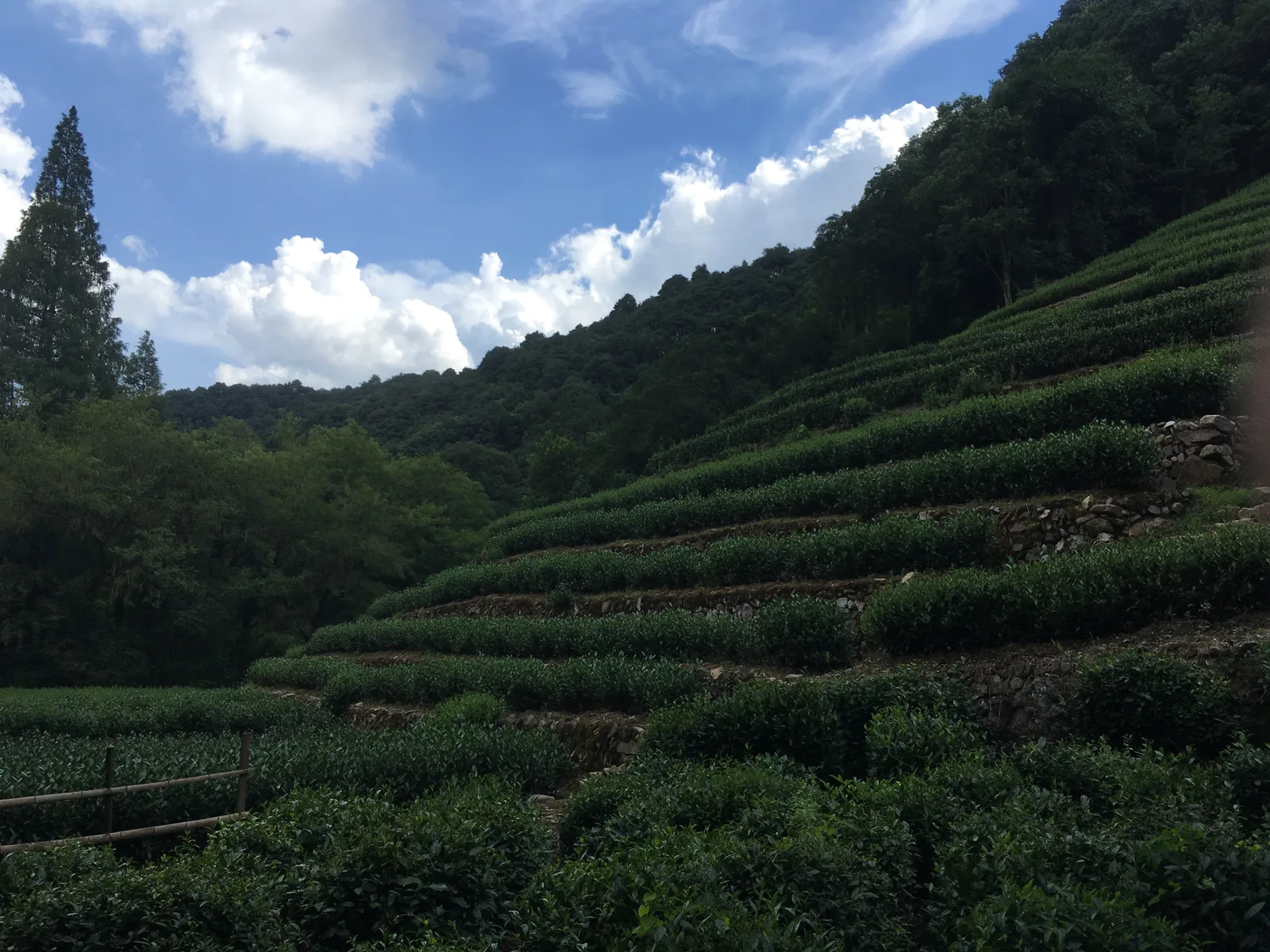
*Tea fields in the Longjing tea-growing area of Hangzhou.*
Chinese Tea Sets and Brewing Vessels
Chinese tea service revolves around vessels matched to brewing style: gaiwan, Yixing or porcelain teapots, fairness pitchers (chá hǎi 茶海), small tasting cups, tea trays, and optional tea pets. Porcelain links tea to the broader Chinese Porcelain tradition; stoneware links to Chinese Arts & Crafts material culture.
- Chinese Tea Sets & Teaware — the full object system.
- Chinese Teapots & Brewing Vessels — choosing gaiwan vs Yixing vs porcelain.
How to Experience Chinese Tea in China
Most international visitors experience tea through one of four formats:
| Format | What it is | Best for |
|---|---|---|
| Private tea ceremony / tasting | Seated, guided introduction to categories and brewing | Learning context without market pressure |
| Tea market visit | Walking shops, informal tastings, optional buying | Comparing styles and teaware |
| Teahouse visit | Social venue; tea with snacks or performance | Atmosphere and local life |
| Museum / plantation side trip | History and origin context | Deeper regional travel |
Beijing is the practical hub for many short-stay travelers. See Chinese Tea in Beijing and Maliandao Tea Market Guide. For multi-city routing, China Tour Planning helps place tea regions in a wider itinerary.
Chinese Tea in Beijing
Beijing is not a major tea-growing region, but it is where many visitors first taste gongfu-style service, jasmine tea, and market shopping. Compare a private Chinese tea ceremony with a Maliandao tea market tasting—different pacing, different shopping pressure, different learning curve. Pair either with central sights via separate bookings: a morning Forbidden City private tour and an afternoon tea session, or Temple of Heaven plus tea, work as separate add-ons unless an itinerary explicitly combines them.
Common Misconceptions
- "The Chinese tea ceremony" is one fixed ritual. Gongfu-style preparation is important and visible, especially to travelers, but methods vary by region, tea type, and host. See Tea Ceremony guide.
- Black tea and dark tea are the same. English "black tea" is 红茶 (hóngchá). 黑茶 (hēichá) is dark tea, including Pu-erh—see Black Tea and Pu-erh & Dark Tea.
- All green tea tastes identical. Processing, cultivar, and origin produce wide variation; Longjing is one famous style among many.
- Tea health claims are a reason to visit. Tea is a cultural and culinary subject here; DragonTrail does not treat it as medical advice.
Explore Chinese Tea in More Detail
- Types of Chinese Tea
- History of Tea in China
- Chinese Tea Culture & Etiquette
- Chinese Tea Ceremony
- How to Brew Chinese Tea
- Chinese Green Tea
- Chinese Black Tea
- Chinese Oolong Tea
- Chinese White Tea
- Pu-erh & Chinese Dark Tea
- Chinese Jasmine Tea
- Famous Chinese Teas & Tea Regions
- Chinese Tea Sets & Teaware
- Chinese Teapots & Brewing Vessels
- Chinese Tea in Beijing
- Maliandao Tea Market Guide
FAQ
What are the main types of Chinese tea?
UNESCO's framework lists six traditional categories: green, yellow, dark, white, oolong and black tea, plus reprocessed teas such as flower-scented jasmine. See Types of Chinese Tea.
Is Chinese black tea the same as dark tea?
No. English "black tea" corresponds to Chinese 红茶 (hóngchá, literally "red tea"). 黑茶 (hēichá) is dark tea—a separate category that includes Pu-erh. See Chinese Black Tea and Pu-erh & Dark Tea.
What is the difference between a tea ceremony and everyday tea?
Everyday tea is often one-pot or one-cup service in homes and restaurants. A "tea ceremony" in English usually refers to a more formal, educational session—often gongfu-style with multiple infusions—but practices vary by region and host. See Chinese Tea Ceremony.
Where can I experience Chinese tea in Beijing?
Private ceremonies, market tastings, and teahouse visits are the main options. Start with Chinese Tea in Beijing and compare tea ceremony vs Maliandao market tasting formats.
Do I need special equipment to brew Chinese tea?
For travel learning, a gaiwan or small teapot and tasting cups are enough for gongfu-style brewing; everyday steeping can use a mug or glass. See Tea Sets & Teaware and How to Brew.
How does Chinese tea relate to Chinese food?
Tea often accompanies meals and hospitality but has its own production regions, processing traditions, and teaware culture. See Chinese Food for meal culture and this guide cluster for tea specifically.
What is gongfu tea?
Gongfu (功夫/工夫) tea preparation uses a small vessel, relatively high leaf ratio, and multiple short infusions to explore how flavor changes across steeps. It is associated especially with oolong and some southern traditions but is not the only way Chinese people drink tea. See Tea Ceremony.
Experience Chinese Tea in Beijing
Compare a seated private Chinese tea ceremony with a guided Maliandao tea market tasting. For routing tea into a wider trip, see China Tour Planning or contact us.
Continue Exploring
- Chinese Food
- Chinese Alcohol & Wine
- Chinese Festivals
- Chinese Kung Fu
- Chinese Porcelain
- Chinese Arts & Crafts
- Beijing Experiences
Sources & Review
- UNESCO — Traditional tea-processing techniques and associated social practices in China — six-category framework; 2022 inscription
- China National Tea Museum / Hangzhou government overview — museum and tea culture context
- Chinese characters verified against standard reference forms
- Author: Chuan Shi
- Last reviewed: August 2026