
Chinese Festivals at a Glance
| Festival | Chinese | Calendar rule | 2026 date | National public holiday? | Core themes | Guide |
|---|---|---|---|---|---|---|
| Spring Festival / Chinese New Year | 春节 | 1st day, 1st Chinese-calendar month | 17 Feb 2026 | Yes — holiday 15–23 Feb 2026 | Reunion, greetings, decorations | Chinese New Year |
| Lantern Festival | 元宵节 | 15th day, 1st Chinese-calendar month | 3 Mar 2026 | No (nationwide statutory) | Lanterns, riddles, yuanxiao/tangyuan | Lantern Festival |
| Qingming | 清明节 | Qingming solar term (early April) | 5 Apr 2026 | Yes — holiday 4–6 Apr 2026 | Ancestors, spring outings | Qingming Festival |
| Dragon Boat Festival | 端午节 | 5th day, 5th Chinese-calendar month | 19 Jun 2026 | Yes — holiday 19–21 Jun 2026 | Dragon boats, zongzi, seasonal customs | Dragon Boat Festival |
| Qixi | 七夕节 | 7th day, 7th Chinese-calendar month | 19 Aug 2026 | No | Legend of Niulang & Zhinü; skill-seeking history | Qixi Festival |
| Hungry Ghost / Zhongyuan | 中元节 | Often 15th day, 7th Chinese-calendar month | 27 Aug 2026 | No | Offerings, ancestor/spirit traditions | Hungry Ghost Festival |
| Mid-Autumn Festival | 中秋节 | 15th day, 8th Chinese-calendar month | 25 Sep 2026 | Yes — holiday 25–27 Sep 2026 | Moon, reunion, mooncakes | Mid-Autumn Festival |
Festival dates and official public-holiday windows are different concepts. Holiday windows for 2026 come from the State Council notice (国办发明电〔2025〕7号). Dates are labeled 2026 only and should be re-verified each year.
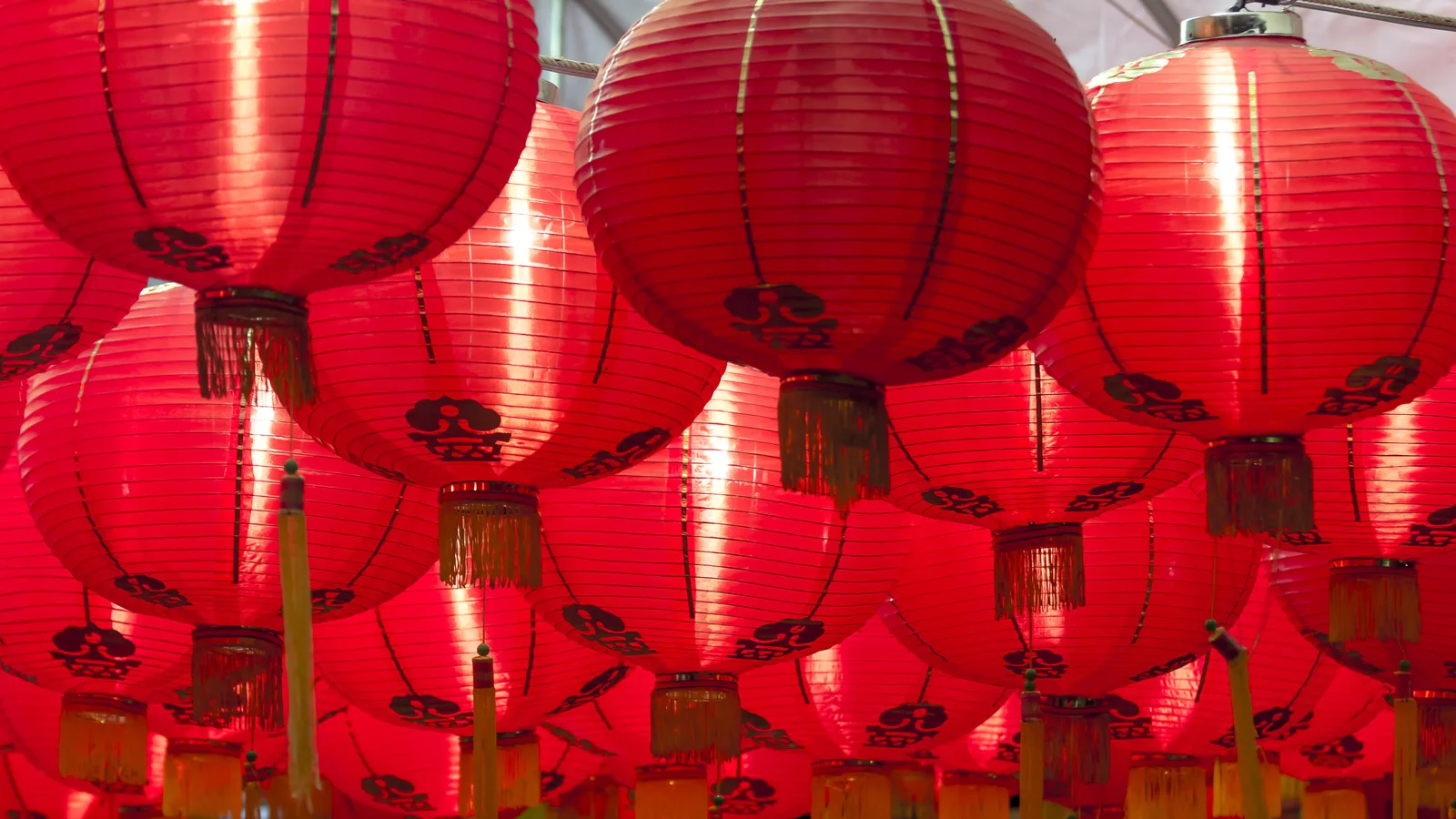
*Red lanterns brighten a street during a winter festival season.*
What Counts as a Traditional Chinese Festival?
There is no single immutable official list. Travelers usually meet a core set of nationwide traditions, but China also has regional festivals, ethnic-minority festivals, statutory public holidays, and modern commercial events. This guide focuses on major traditional festivals travelers are likely to encounter in China, while regional festivals and modern commercial events vary widely by place and year.
How the Chinese Festival Calendar Works
Many festivals follow the Chinese lunisolar calendar (often loosely called “the lunar calendar”), with numbered months and days such as the first day of the first month. Others follow solar terms—seasonal markers in the traditional Chinese calendar system. Qingming is the clearest traveler example of a solar-term festival. Gregorian dates therefore shift each year for lunisolar festivals, while solar-term festivals stay near fixed early-April dates.
Not every festival is “lunar-only,” and a festival date is not the same as the length of a public holiday.
Traditional Festivals vs Public Holidays
Cultural significance ≠ statutory holiday status.
Spring Festival, Qingming, Dragon Boat and Mid-Autumn have nationwide statutory holiday arrangements in current State Council schedules. Lantern Festival, Qixi and Hungry Ghost / Zhongyuan remain culturally important for many communities without being standalone nationwide statutory holidays in the 2026 notice. Always check the current year’s official holiday announcement for travel planning.
Chinese New Year / Spring Festival
Spring Festival (春节, Chūnjié) is the principal traditional New Year celebration in China. In English it is commonly called Chinese New Year. Reunion dinners, greetings, decorations and red envelopes are widespread themes; practices vary by region and household. Full guide: Chinese New Year.
Lantern Festival
Lantern Festival (元宵节, Yuánxiāo Jié) falls on the fifteenth day of the first Chinese-calendar month and traditionally closes the main Spring Festival sequence. Lantern viewing, lantern riddles and round glutinous-rice foods are closely associated customs. Full guide: Lantern Festival.
Qingming Festival
Qingming Festival (清明节, Qīngmíng Jié) is both a solar term and a traditional observance for ancestor remembrance and spring outings. It is not fixed by a numbered lunar month/day in the same way as Spring Festival. Full guide: Qingming Festival.
Dragon Boat Festival
Dragon Boat Festival (端午节, Duānwǔ Jié) is observed on the fifth day of the fifth Chinese-calendar month. Dragon-boat racing and zongzi are widely recognized symbols. Qu Yuan appears in widely told traditions, but regional commemorations and seasonal customs are more diverse than one origin story. Full guide: Dragon Boat Festival.
Mid-Autumn Festival
Mid-Autumn Festival (中秋节, Zhōngqiū Jié) falls on the fifteenth day of the eighth Chinese-calendar month. In English it is also commonly called the Moon Festival or Mooncake Festival; Mid-Autumn Festival is the more precise name for the broader celebration. Full guide: Mid-Autumn Festival.
Qixi Festival
Qixi Festival (七夕节, Qīxī Jié) falls on the seventh day of the seventh Chinese-calendar month. Contemporary English often calls it “Chinese Valentine’s Day,” but that is shorthand for only part of the festival’s history—legend, skill-seeking customs and modern dating culture all sit in the same calendar slot. Full guide: Qixi Festival.
Hungry Ghost / Zhongyuan Festival
Zhongyuan Festival (中元节, Zhōngyuán Jié) and English labels such as Hungry Ghost Festival or Ghost Festival overlap in English usage, with offerings and ancestor/spirit traditions appearing across folk, Taoist and Buddhist contexts. Practices vary; they should not be flattened into one universal custom or treated as “Chinese Halloween.” Full guide: Hungry Ghost Festival.
Other Festivals Worth Knowing
- Double Ninth Festival (重阳节) — ninth day of the ninth Chinese-calendar month; autumn / elder-respect themes in many communities.
- Laba Festival (腊八节) — eighth day of the twelfth Chinese-calendar month; often associated with Laba porridge traditions.
- Selected regional and ethnic-minority festivals — important locally; confirm current public access before planning a trip around them.
Festival Foods
Food is central to many festivals. For dumplings, tangyuan, zongzi, mooncakes and other seasonal dishes, see our guide to festival foods.
This festivals guide focuses on dates, meaning, traditions and travel impact rather than recipes.
Traveling in China during Festivals
Public holidays can raise demand for trains, flights and hotels; attractions and city centers may be busier; some businesses change hours; temporary lantern shows, temple fairs or races may appear—and schedules change year to year. Not every attraction closes, and not every city hosts the same public spectacle, so check current transport, hotel and attraction notices for your dates.
2026 Public-Holiday Planning
2026 only (State Council notice):
| Holiday | Official rest window (2026) |
|---|---|
| Spring Festival | 15–23 February (work 14 Feb, 28 Feb) |
| Qingming | 4–6 April |
| Dragon Boat | 19–21 June |
| Mid-Autumn | 25–27 September |
Other national holiday periods, including Labor Day and National Day, also affect travel demand even though they are not traditional festivals.
Common Misconceptions
- Chinese New Year and the broader term Lunar New Year are not perfectly interchangeable in every cultural context.
- Not every Chinese festival is a statutory public holiday.
- Lantern Festival is not simply any event with Chinese lanterns.
- Qingming is not purely a “Chinese Memorial Day.”
- Dragon Boat Festival is not explained only by one Qu Yuan story.
- Qixi is more than “Chinese Valentine’s Day.”
- Hungry Ghost Festival is not Chinese Halloween.
Explore Chinese Festivals in More Detail
- Chinese New Year
- Lantern Festival
- Qingming Festival
- Dragon Boat Festival
- Mid-Autumn Festival
- Qixi Festival
- Hungry Ghost Festival
FAQ
What are the most important traditional Chinese festivals?
For most travelers, Spring Festival, Lantern Festival, Qingming, Dragon Boat, Mid-Autumn, Qixi and Hungry Ghost / Zhongyuan form a practical core—alongside regional festivals that may matter on a specific itinerary.
When is Chinese New Year in 2026?
The first day of Spring Festival is 17 February 2026. The official 2026 holiday window is 15–23 February.
Are Chinese festivals based on the lunar calendar?
Many follow the Chinese lunisolar calendar. Qingming follows a solar term. “Lunar calendar” alone is an incomplete description of the whole system.
Which Chinese festivals are public holidays?
In the 2026 State Council schedule, Spring Festival, Qingming, Dragon Boat and Mid-Autumn have dedicated nationwide holiday windows. Lantern Festival, Qixi and Hungry Ghost / Zhongyuan do not appear as standalone statutory holidays in that notice.
What is the Chinese Moon Festival?
Usually Mid-Autumn Festival. See Mid-Autumn Festival.
What is the difference between Qingming and Hungry Ghost Festival?
Different timing, contexts and practice patterns. Compare Qingming and Hungry Ghost Festival.
Is Qixi the same as Chinese Valentine’s Day?
“Chinese Valentine’s Day” is contemporary shorthand. Qixi’s history is broader. See Qixi Festival.
Is Lantern Festival part of Chinese New Year?
It traditionally marks the final major occasion of the Spring Festival period, on the fifteenth day of the first Chinese-calendar month—not the same day as New Year’s Day itself.
Continue Exploring
Sources & Review
- State Council General Office notice on 2026 public holidays (国办发明电〔2025〕7号), gov.cn.
- UNESCO listing materials for Spring Festival social practices and Dragon Boat Festival (contextual cultural authority; not a substitute for current holiday notices).
- Chinese lunisolar calendar conversions for non-holiday festival dates (Lantern, Qixi, Zhongyuan).
Last reviewed: August 2026