
| Term | Meaning for travelers |
|---|---|
| Chinese tea ceremony (English) | Broad label for formal/shared tea preparation |
| Gongfu cha (工夫茶) | Skillful small-vessel preparation; multiple infusions |
| Tea art (茶艺) | Performance or demonstration of brewing aesthetics |
| Tea tasting | Focus on comparing flavors; may be less ritualized |
| Everyday tea | Pot or cup service without ceremony framing |
What People Mean by "Chinese Tea Ceremony"
International visitors often search "Chinese tea ceremony" expecting something comparable to Japanese chanoyu—a fixed script with defined roles. Chinese contexts are more varied: a Fujian oolong session, a Chaozhou gongfu table, a Beijing studio tasting, and a Maliandao shop sampling are all "ceremonies" to some English speakers but feel different on the ground.
DragonTrail uses ceremony for structured, educational sessions and everyday tea for restaurant or home service. See Culture & Etiquette for social settings.
Gongfu Tea / Gongfu Cha
Gongfu here means skillful, attentive preparation—not martial arts. Typical elements:
- Small gaiwan or teapot (often 80–150 ml)
- High leaf-to-water ratio
- Multiple very short infusions (seconds to a minute early steeps)
- Fairness pitcher (茶海) to equalize liquor before serving small cups
- Optional tea tray for spill management
Oolong, Pu-erh, and some black teas suit this method well; delicate green tea may use lower temperatures and shorter sessions. Terminology 工夫茶 vs 功夫茶 appears in different regions and sources; both refer to skilled tea preparation in common usage—verify host preference rather than debating characters at the table.
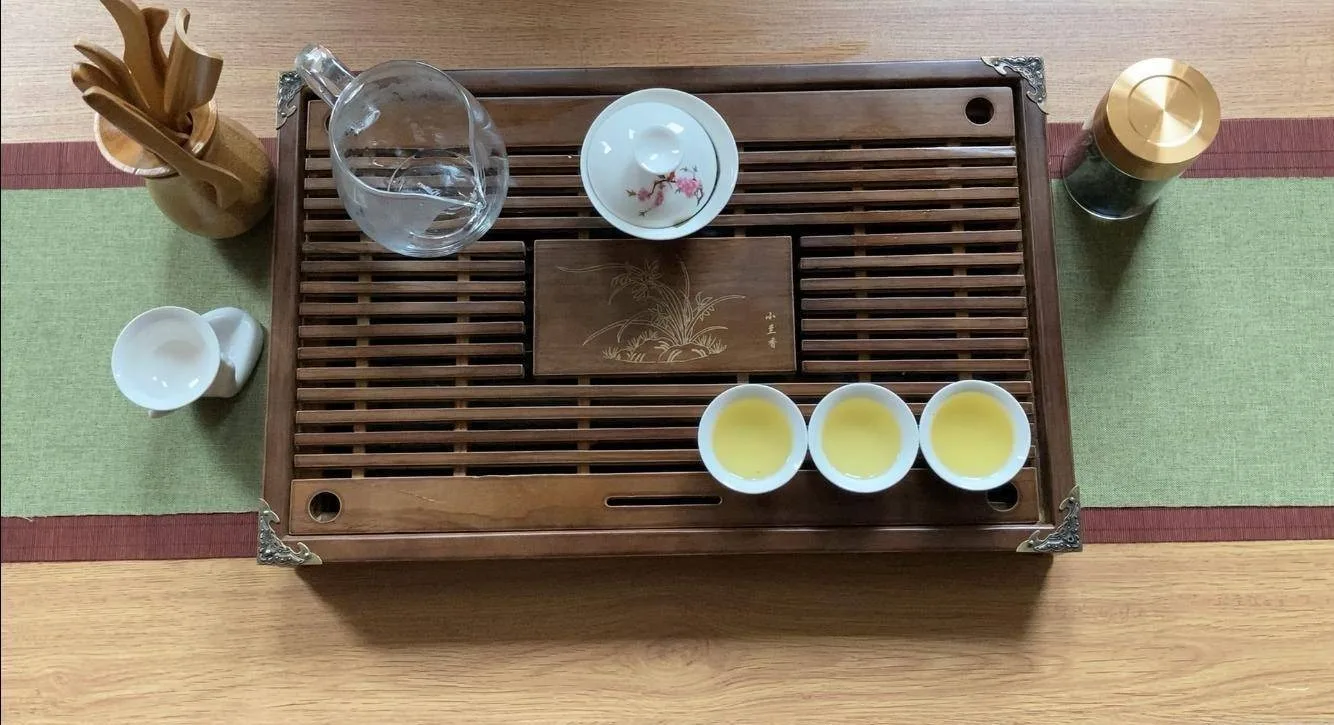
*Chinese tea service arranged with gaiwan, pitchers and tasting cups.*
Tea Art, Hospitality and Formal Contexts
Tea art (茶艺) demonstrations appear in teahouses, cultural parks, and training schools—sometimes choreographed for visual effect. Business hospitality may use premium leaf and careful pouring without calling it "ceremony." Home visits can include gongfu service when the host is an enthusiast.
None of these replace the others as the "real" Chinese ceremony.
Core Equipment
| Item | Role |
|---|---|
| Gaiwan (盖碗) | Lid-bowl combo for brewing and decanting |
| Small teapot | Alternative brewing vessel; Yixing for some teas |
| Fairness pitcher | Holds brewed liquor before cup service |
| Tasting cups | Small; multiple sips per steep |
| Tea tray | Catches water; supports ritual flow |
| Kettle | Off-table heating; pour timing matters |
Detail: Tea Sets & Teaware and Teapots & Brewing Vessels.
A Typical Gongfu-Style Sequence — Example Only
The following is one common teaching sequence, not universal law:
- Warm and rinse vessels with hot water.
- Add leaf to gaiwan or pot; optional quick rinse steep discarded (especially for oolong/Pu-erh).
- First proper steep: pour out quickly into fairness pitcher, then cups.
- Repeat with gradually lengthening steeps; notice aroma and flavor shift.
- Host explains tea origin and processing between steeps.
Your host may omit rinsing, use a pot instead of gaiwan, or serve only two steeps in a short tourist session. Follow their lead.
Tea Ceremony vs Tea Tasting
Tasting emphasizes comparing categories or grades—sometimes with less ritual focus. Ceremony emphasizes preparation method and hospitality pacing. Commercial Beijing products may blend both: education plus seated service. Compare private tea ceremony with Maliandao market tasting.
Tea Ceremony vs Everyday Tea Drinking
Restaurant jasmine tea in a glass pot is everyday. A 45-minute gongfu session with oolong is structured. Neither is more "authentic"—they serve different social functions.
Etiquette for Visitors
- Wait for the host to explain before filming.
- Accept cups with thanks; small sips are fine.
- Do not treat folklore gestures as exam questions—ask when curious.
- Shopping pressure should be absent in a properly booked educational session; if a "free ceremony" ends in hard sales, leave. See Chinese Tea in Beijing.
What to Expect at a Beijing Tea Experience
Beijing sessions are usually indoor and seated, with translation available on private bookings. You will typically taste several categories at a high level (green, oolong, black/hóngchá, perhaps Pu-erh or jasmine)—exact teas depend on host supply. Duration and group size follow the booked product; check availability rather than assuming a fixed timetable.
Allow roughly 1.5–3 hours for a thorough private session including questions; short tastings can be shorter. Confirm when booking.
How Long to Allow
| Format | Rough time band | Notes |
|---|---|---|
| Private ceremony | 1.5–3 hours | Seated; multiple teas |
| Shop tasting | 20–60 minutes per shop | Variable; walking in markets |
| Teahouse with show | Evening block | Performance schedules vary |
Tourist-Trap and Compulsory-Shopping Warning
Low-cost group tours sometimes stop at commission tea shops with high-pressure sales disguised as "culture demonstrations." Warning signs:
- "Free" ceremony only after sightseeing captivity
- Aggressive pricing with unclear weight units
- Claims of exclusive "imperial" tea unavailable elsewhere
- Guilt tactics if you do not buy
Book through transparent operators or DragonTrail inquiry flows; Maliandao guide covers market-specific pressure tactics.
FAQ
Is there one official Chinese tea ceremony?
No. Gongfu-style preparation is important in several regions, but practices vary by tea type, venue, and host. The English phrase "Chinese tea ceremony" oversimplifies that variety.
What is gongfu tea ceremony?
Gongfu cha uses a small vessel, relatively high leaf amount, and multiple short infusions to explore how tea changes across steeps—common with oolong and Pu-erh.
Do I need to know special hand gestures?
No single gesture set applies nationwide. Politeness and following your host matter more than memorizing finger tapping.
How is Chinese tea ceremony different from Japanese tea ceremony?
Japanese chanoyu follows a codified school tradition; Chinese contexts are more diverse regionally, with gongfu preparation being one major visible form rather than one national school.
Can I book a tea ceremony in English in Beijing?
DragonTrail's private Chinese tea ceremony uses inquiry/availability workflow—confirm language support when booking.
What should I wear to a tea ceremony?
Comfortable casual clothing is fine; you will mostly sit. Avoid heavy perfume that competes with tea aroma.
Is a tea ceremony the same as visiting Maliandao market?
No. Ceremony is seated learning; Maliandao is a market district with walking and optional shopping—see comparison in Beijing guide.
Book a Beijing Tea Ceremony
Continue with Chinese Tea
Sources & Review
- UNESCO — Traditional tea-processing techniques in China
- Regional gongfu traditions — museum and specialist publications
- Chinese characters verified
- Author: Chuan Shi
- Last reviewed: August 2026