
| Region / province | Representative tea | Category | Child guide |
|---|---|---|---|
| Zhejiang | Longjing (Dragon Well) | Green | Green Tea |
| Fujian | Tieguanyin, Wuyi yancha, white teas | Oolong / white | Oolong, White Tea |
| Anhui | Qimen (Keemun), Huangshan Maofeng | Black / green | Black Tea, Green Tea |
| Yunnan | Pu-erh, Dianhong | Dark / black | Pu-erh & Dark Tea, Black Tea |
| Guangdong | Fenghuang Dancong | Oolong | Oolong Tea |
| Hunan | Anhua dark tea; Junshan Yinzhen (yellow) | Dark / yellow | Pu-erh & Dark Tea, Types |
| Sichuan | Mengding Ganlu; teahouse culture | Green / culture | Culture & Etiquette |
| Jiangsu | Biluochun | Green | Green Tea |
How to Use This Page
Each row answers: where, what name, which UNESCO category, what a traveler should notice, and which DragonTrail guide goes deeper. DragonTrail does not imply every region has a bookable tour—use China Tour Planning for custom routing to tea origins.
Zhejiang
Hangzhou and surrounding hills produce Longjing, China's most exported green name. Visitors combine West Lake scenery with plantation walks and the China National Tea Museum. Beijing tastings often include Longjing for comparison even though Beijing is not a growing region.
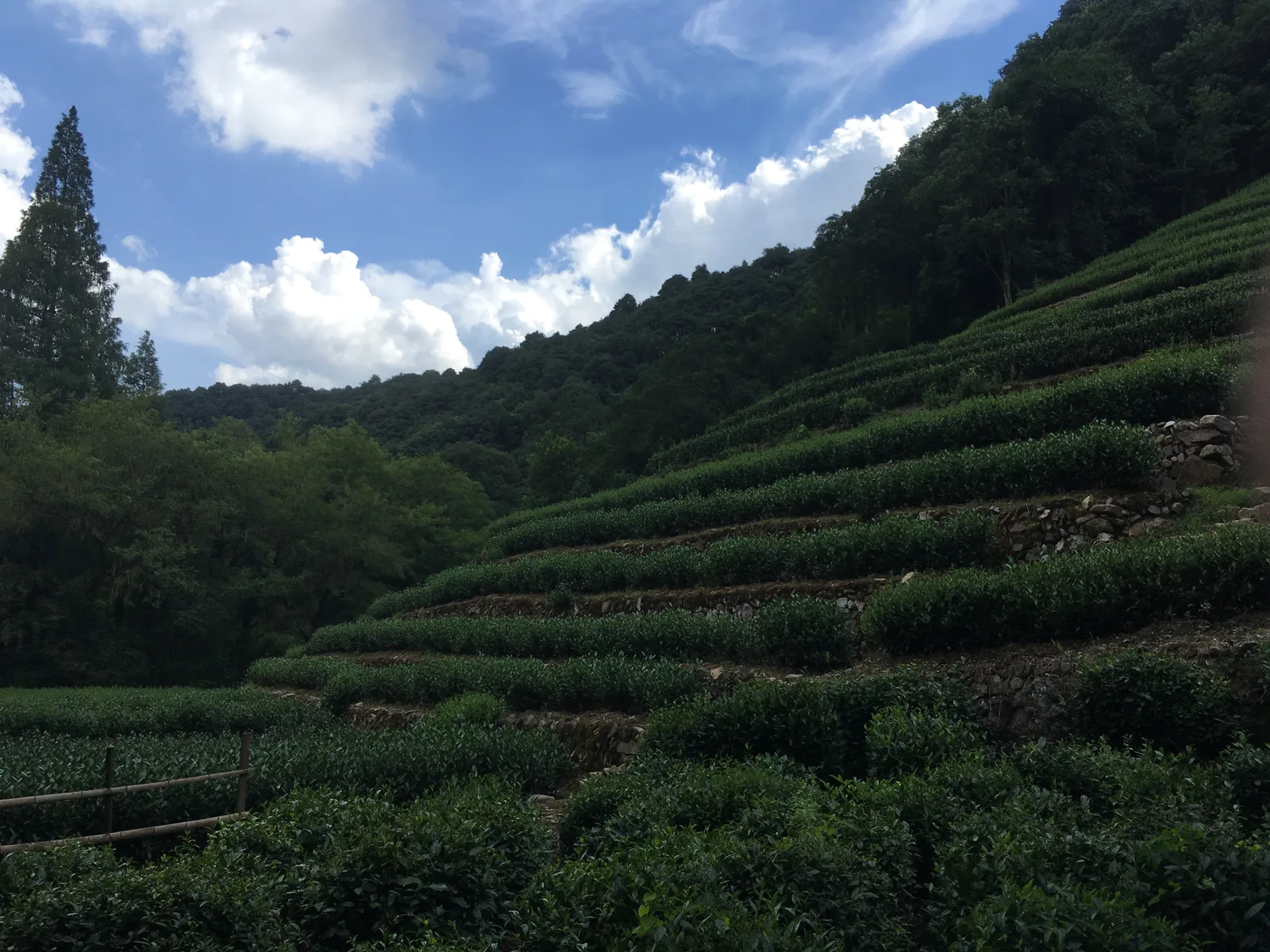
*Tea fields in the Longjing tea-growing area of Hangzhou.*
Fujian
Fujian spans Tieguanyin oolong, Wuyi rock tea, and Fuding white tea—three categories from one coastal province. Wuyi's scenic area and tea shops are pilgrimage points for oolong enthusiasts; white tea fans visit Fuding and surrounding markets.
Anhui
Qimen black (hóngchá) and Huangshan Maofeng green share Anhui's tea reputation. Keemun historically shaped export blends; Maofeng offers classic downy green tips from the Yellow Mountain area.
Yunnan
Pu-erh dark tea and Dianhong black tea both come from Yunnan's large-leaf tea trees—same province, different categories. Travelers to Kunming or Xishuangbanna can visit markets and plantations; verify origin labels when buying cakes.
Guangdong
Phoenix Dancong oolongs emphasize aromatic cultivars from Chao'an / Fenghuang area. Less ubiquitous in Beijing shops than Fujian oolong but worth asking for at specialist vendors.
Hunan and Other Dark-Tea Areas
Anhua produces brick dark tea with long history. Junshan Yinzhen on Junshan Island in Dongting Lake is a rare yellow tea name—specialist rather than mass market.
Sichuan and Historically Relevant Areas
Sichuan grows greens such as Mengding Ganlu and is famous for everyday teahouse culture (Chengdu parks) rather than one export flagship. Tea travel here can mean social experience as much as origin pilgrimage—see Culture & Etiquette.
Where Tea Regions Fit in a China Itinerary
| Traveler pattern | Realistic tea-region access |
|---|---|
| Beijing-only short stay | Market/ceremony tasting, not plantations |
| Shanghai + Hangzhou | Longjing day trips feasible |
| Fujian loop | Oolong and white origins |
| Yunnan loop | Pu-erh and Dianhong markets |
| Multi-city custom | China Tour Planning |
DragonTrail does not sell every regional tea tour; Beijing handoffs: Chinese Tea in Beijing, Maliandao.
Museums, Gardens, and Markets
- China National Tea Museum (Hangzhou) — processing and utensils
- Regional scenic areas (Wuyi, West Lake) — landscape context
- Wholesale markets (Maliandao in Beijing; regional markets in origin cities) — comparative tasting
FAQ
What is the most famous Chinese tea?
Longjing green tea is the most recognized name abroad; domestically Tieguanyin oolong and jasmine-scented tea are also ubiquitous.
Can I visit tea plantations from Beijing?
Not as a same-day trip to Longjing or Wuyi—those require separate travel legs. Beijing offers market and ceremony tasting instead.
How many famous Chinese teas are there?
Dozens of protected-origin names exist; this guide organizes by region rather than ranking all names.
Where is Pu-erh tea from?
Yunnan Province, southwestern China—see Pu-erh guide.
Where is Tieguanyin from?
Fujian Province, especially Anxi area—see Oolong guide.
Is there a tea region near Shanghai?
Hangzhou / Longjing is the classic side trip from Shanghai.
How do I plan tea regions into a trip?
Use China Tour Planning for multi-city routing; use Beijing guides for capital-based tasting.
Continue with Chinese Tea
Experience Tea in Beijing
Sources & Review
- UNESCO — Traditional tea-processing techniques in China
- China National Tea Museum context
- Chinese characters verified
- Author: Chuan Shi
- Last reviewed: August 2026