
| Vessel | Material | Typical volume | Best known for |
|---|---|---|---|
| Gaiwan | Porcelain or stoneware | 80–150 ml | Versatile; evaluation brewing |
| Yixing pot | Zisha stoneware | 100–200 ml | Oolong, Pu-erh; aroma seasoning |
| Porcelain pot | Porcelain | Varies | Neutral flavor; all teas |
| Glass pot / cup | Glass | Varies | Green tea leaf display |
Main Brewing Vessels at a Glance
Gaiwan — fastest learning curve, easy to clean, shows leaf honestly.
Small teapot — comfortable pour rhythm for long sessions; Yixing adds tradition and seasoning lore.
Glass — aesthetic for greens; no seasoning concerns.
Choose vessel before obsessing over rare clay—technique and leaf matter more for beginners.
Gaiwan
Gaiwan (盖碗, lid-bowl-saucer) is the standard professional tasting vessel in China. Hold saucer and rim, tilt lid to strain, pour to pitcher. Porcelain gaiwan is neutral; thin walls cool quickly—good for adjusting temperature by waiting.
Safety: practice with cooler water; use fairness pitcher to avoid overfilling cups. How to Brew
Yixing / Zisha Teapots
Yixing (宜兴) zisha (紫砂) stoneware is porous unglazed clay valued for heat retention and gradual seasoning from tea oils. Collectors may dedicate one pot to one tea type; travelers can use one small pot generically while learning.
Authenticity caution: Market stalls sell "Yixing-style" clay of varying quality; high prices require credible provenance. Machine-made pots are fine for practice—not fraud if priced honestly.
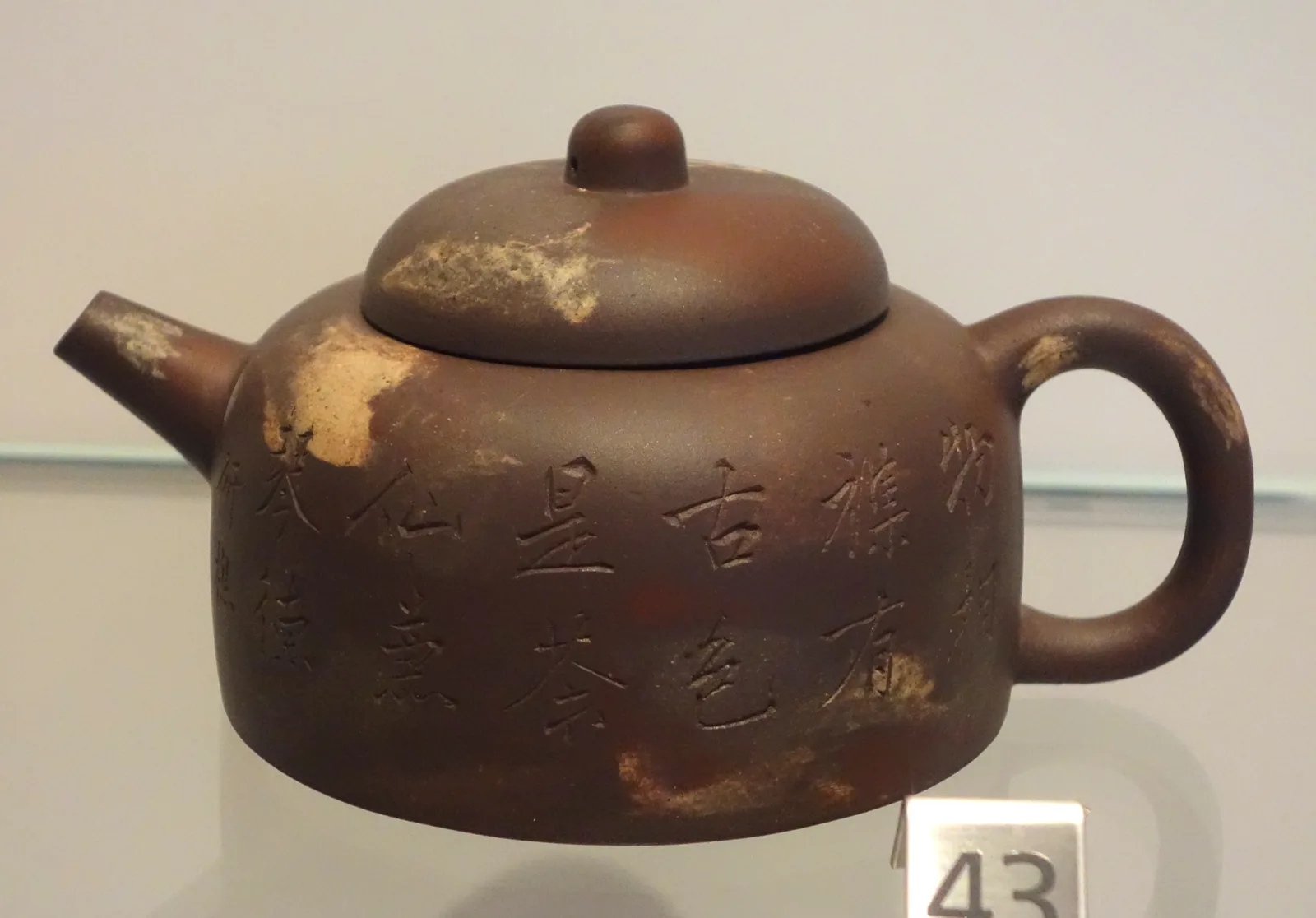
*Clay teapot resting in a porcelain bowl during tea preparation.*
Porcelain Teapots
Porcelain pots—often from Jingdezhen traditions—offer neutral taste and elegant form. Glazed interiors do not absorb aroma; one pot can brew many teas without cross-flavor. Links to Chinese Porcelain history.
Glass Vessels
Glass teapots and cups showcase leaf unfurling—popular for Longjing and jasmine viewing. No seasoning; breaks easily in luggage—pack carefully.
Kettles and Water Vessels
Kettles (electric or stovetop) matter for stable heat. Traditional charcoal kettles appear in ceremony photos; hotels use electric kettles—both work if water is fresh and appropriately hot.
Fairness Pitcher as Supporting Vessel
Not a brewer but essential to gongfu equity—always pair small brewer with pitcher when serving guests.
Why Material and Size Matter
| Factor | Effect |
|---|---|
| Volume | Small = high leaf ratio gongfu; large = Western steep |
| Wall thickness | Thin cools fast; thick retains heat |
| Porosity (Yixing) | May round and deepen repeat brews |
| Glaze (porcelain) | Neutral, easy switch between teas |
Dedicated vs Multi-Tea Vessel Claims
Purists season one Yixing for one tea; beginners one porcelain gaiwan for everything is sensible. Avoid dogma fights—match tool to your seriousness and budget.
Yixing Authenticity and Market Caution
- Cheap "Yixing" may be non-Yixing clay or chemical-colored.
- Collector pots cite artist, mine, and firing—verify if price exceeds a few hundred USD equivalent.
- Functional practice pots need not be antique.
Buy with tasting assistance: Maliandao guide | Private tasting
What a Traveler Should Buy, If Anything
Buy if you will brew at home after the trip—a porcelain gaiwan travels better than seasoned Yixing.
Skip if you only wanted cultural exposure—ceremony needs no purchase.
Ship carefully—porcelain breaks in checked luggage; hand-carry small sets.
FAQ
Gaiwan or teapot for beginners?
Gaiwan—easier to clean, neutral, standard for learning.
What is a Yixing teapot?
Unglazed stoneware teapot from Yixing, Jiangsu, valued for heat and seasoning.
Can one teapot brew all teas?
Porcelain or glass: yes easily. Yixing: purists prefer dedication; one pot still works for travel learning.
How big should a gongfu teapot be?
Often 100–150 ml for 2–4 people sharing; smaller for solo practice.
Is expensive Yixing worth it for tourists?
Not required—a modest porcelain set teaches brewing equally well.
Where to buy gaiwan in Beijing?
How does gaiwan relate to tea ceremony?
Gaiwan is common equipment in gongfu-style sessions—see Tea Ceremony.
Continue with Chinese Tea
Experience Tea in Beijing
Sources & Review
- UNESCO — Traditional tea-processing techniques in China
- Yixing pottery museum and ceramic reference collections
- Chinese characters verified
- Author: Chuan Shi
- Last reviewed: August 2026