
| Term | Chinese | Category |
|---|---|---|
| Dark tea | 黑茶 (hēichá) | Post-fermented teas (UNESCO category) |
| Pu-erh | 普洱茶 (pǔ'ěr chá) | Dark tea style linked to Yunnan |
| Raw / sheng | 生茶 | Naturally aged over time |
| Ripe / shou | 熟茶 | Wo-dui accelerated fermentation |
What Chinese Dark Tea Is
Dark tea undergoes processing that allows microbial fermentation and aging after initial manufacture, producing earthy, smooth, or woody profiles distinct from fully oxidized hóngchá. UNESCO lists dark tea as one of six traditional categories. Anhua dark tea (湖南安化) and Liubao from Guangxi are examples beyond Pu-erh—mention them as context, not as Pu-erh substitutes.
What Pu-erh Is
Pu-erh traditionally refers to tea from Yunnan large-leaf cultivars processed in styles suitable for aging and compression. Modern trade uses "Pu-erh" broadly; serious buyers look at origin, factory, harvest year, and storage.
Do not call Pu-erh simply "Chinese black tea"—black in English means hóngchá. See Chinese Black Tea.
Sheng (Raw) and Shou (Ripe)
Sheng Pu-erh (生茶) is processed then aged naturally; young sheng can be bright, bitter, and astringent; older stored sheng mellows.
Shou Pu-erh (熟茶) undergoes wo-dui (渥堆) pile fermentation to simulate aged character in weeks/months rather than decades. Liquor is often dark, smooth, and earthy immediately.
Both are dark tea; neither is hóngchá.
Compression into Cakes and Bricks
Pu-erh is sold loose or compressed into cakes (饼), bricks (砖), tuo bowls (沱), and other shapes for transport and aging. Break chunks carefully with a pick; uneven chunks steep unevenly.
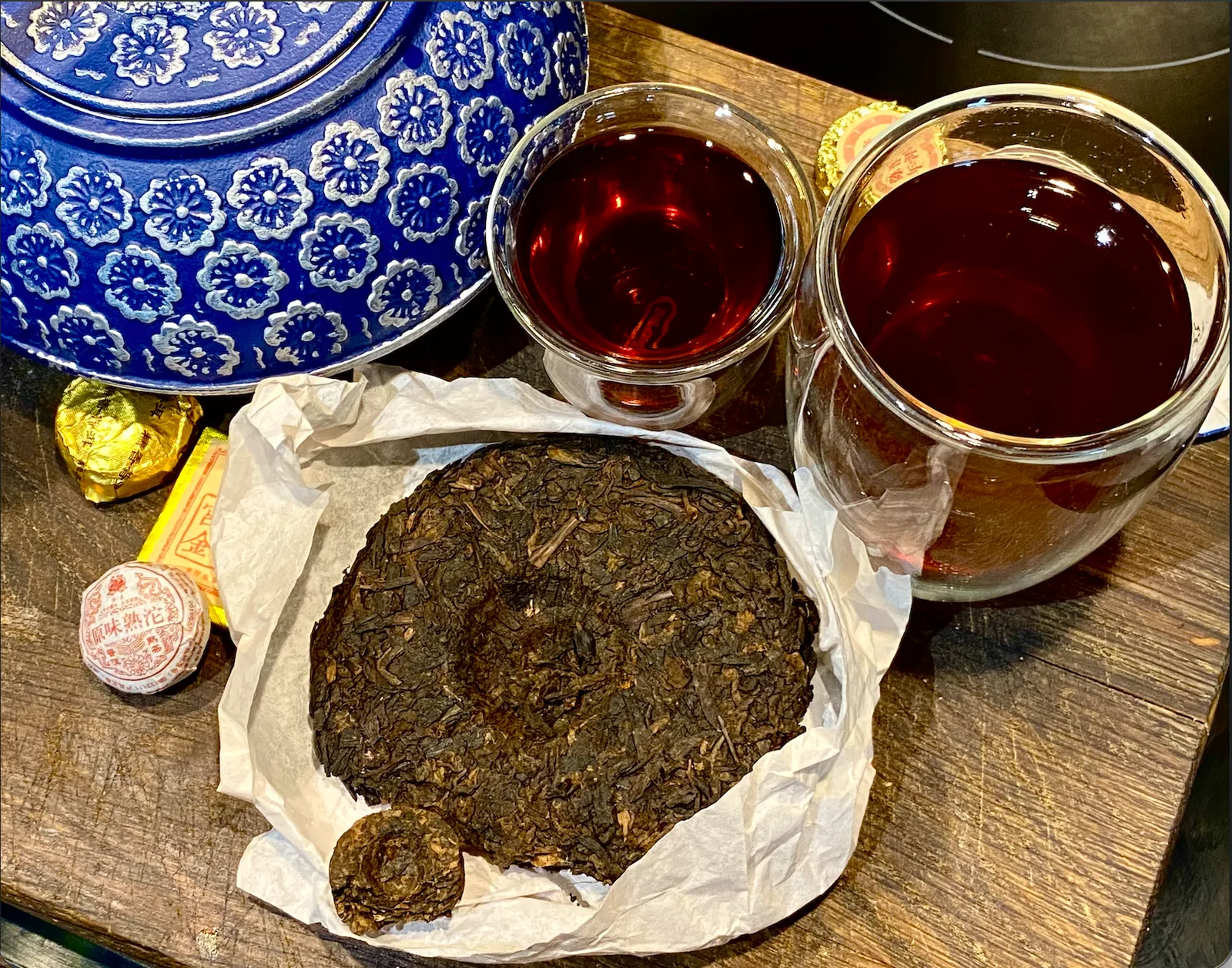
*Pu-erh tea being poured, with loose dark tea leaves beside the cup.*
Aging and Storage (High Level)
Aging changes sheng and some dark teas through time, humidity, and airflow—controversial among collectors. "Dry storage" vs "wet storage" (traditionally associated with different regional climates) affects flavor radically. Travelers buying cakes for home should research home-climate suitability; do not assume all Pu-erh improves forever.
Other Dark Teas (Short Context)
| Tea | Region | Note |
|---|---|---|
| Anhua dark tea | Hunan | Brick and basket forms |
| Liubao | Guangxi | Heavily fermented; historic export |
| Tibetan border teas | Southwest | Brick tea for frontier trade history |
Brewing
- Rinse quick steep often used to open compressed leaf.
- Gongfu with near-boiling water; short steeps, many infusions.
- Young sheng: watch bitterness—shorten steeps.
How to Brew Chinese Tea | Tea Ceremony
Common Misconceptions
- Pu-erh = black tea: Wrong in Chinese taxonomy.
- Older always better: Depends on starting quality and storage.
- All cakes are investment grade: Most are everyday drinkers.
- Health/detox claims: Not part of this guide—see no-health-claims policy in cluster.
Buying and Storage Caution
Beijing markets—including Maliandao—stock wide Pu-erh ranges. Taste before bulk purchase; verify whether sheng or shou; ask storage history for expensive aged claims. Weight pricing (per gram) requires calculator clarity—500 g cake vs 357 g standard cake confusion happens.
Private Maliandao tasting helps navigate categories with assistance.
FAQ
Is Pu-erh the same as black tea?
No. Pu-erh is dark tea (黑茶). English "black tea" is hóngchá (红茶)—fully oxidized, different process.
What is the difference between sheng and shou Pu-erh?
Sheng is raw, aged naturally over time; shou is pile-fermented for earthy smooth character sooner.
Why is Pu-erh pressed into cakes?
Tradition, transport, and aging—compressed form slows oxidation edges and simplifies storage.
Can beginners drink Pu-erh?
Yes—shou Pu-erh is often gentler immediately; start with guided tasting rather than random cheap cake.
Where is Pu-erh from?
Associated with Yunnan Province; other provinces make dark tea under different names.
How do I brew compressed Pu-erh?
Break off chunks, rinse briefly, gongfu steep with hot water, multiple short infusions.
Where to taste Pu-erh in Beijing?
Maliandao market or private ceremony.
Continue with Chinese Tea
Experience Tea in Beijing
Sources & Review
- UNESCO — Traditional tea-processing techniques in China
- Yunnan Pu-erh geographical indication references (domestic standards)
- Chinese characters verified
- Author: Chuan Shi
- Last reviewed: August 2026