
The history of tea in China spans documented use from early texts through Tang-dynasty systematization, Song whisked-tea culture, Ming loose-leaf steeping, Qing regional trade, and the 2022 UNESCO inscription of traditional tea-processing techniques. This page is the chronological spine for the Chinese Tea guide; legendary attributions are noted as tradition, not archaeology.
| Period | Approximate date | Tea milestone |
|---|---|---|
| Early references | Han dynasty and before | Tea documented as beverage and medicine in early sources; archaeological certainty for "first cup" remains limited |
| Tang | 618–907 | Lu Yu's *Cha Jing* codifies cultivation, processing, and utensils |
| Song | 960–1279 | Whipped powdered tea; refined teaware; tea as elite social art |
| Ming | 1368–1644 | Shift toward loose-leaf steeping; teapot culture expands |
| Qing | 1644–1912 | Regional famous teas; trade routes; export black (hóngchá) growth |
| Modern | 1912–present | Industrial production, specialty revival, heritage recognition |
| UNESCO | 2022 | Traditional tea-processing techniques inscribed as Intangible Cultural Heritage |
What We Can Say Confidently About Early Tea Use
Tea (*Camellia sinensis*) is native to China and neighboring regions. Written references to tea as a drink appear by the Han dynasty; Tang sources treat it as an established cultivated crop. Shen Nong (神农) tasting wild plants—including tea—is traditional legend, not a dated historical event travelers should treat as fact.
Archaeology continues to refine early dates; museum displays often combine textual tradition with botanical evidence. For category development after harvest, see Types of Chinese Tea.
Tang Dynasty and Lu Yu
The Tang dynasty (618–907) is the pivot when tea becomes a documented national culture with named utensils and processing steps. Lu Yu (陆羽, c. 733–804), often called the Sage of Tea, compiled the *Cha Jing* (茶经, *The Classic of Tea*)—the first comprehensive treatise on tea cultivation, manufacture, utensils, and preparation. Tang tea was typically processed into cakes or bricks, broken and boiled or processed further before drinking.
Lu Yu's work remains the reference point in tea museums, including displays near Longjing in Hangzhou. Travelers recognize Tang tea history through Lu Yu statues, *Cha Jing* quotations, and recreated Tang-style utensils in museum cases—not through Tang-era liquid tea served in modern teahouses.
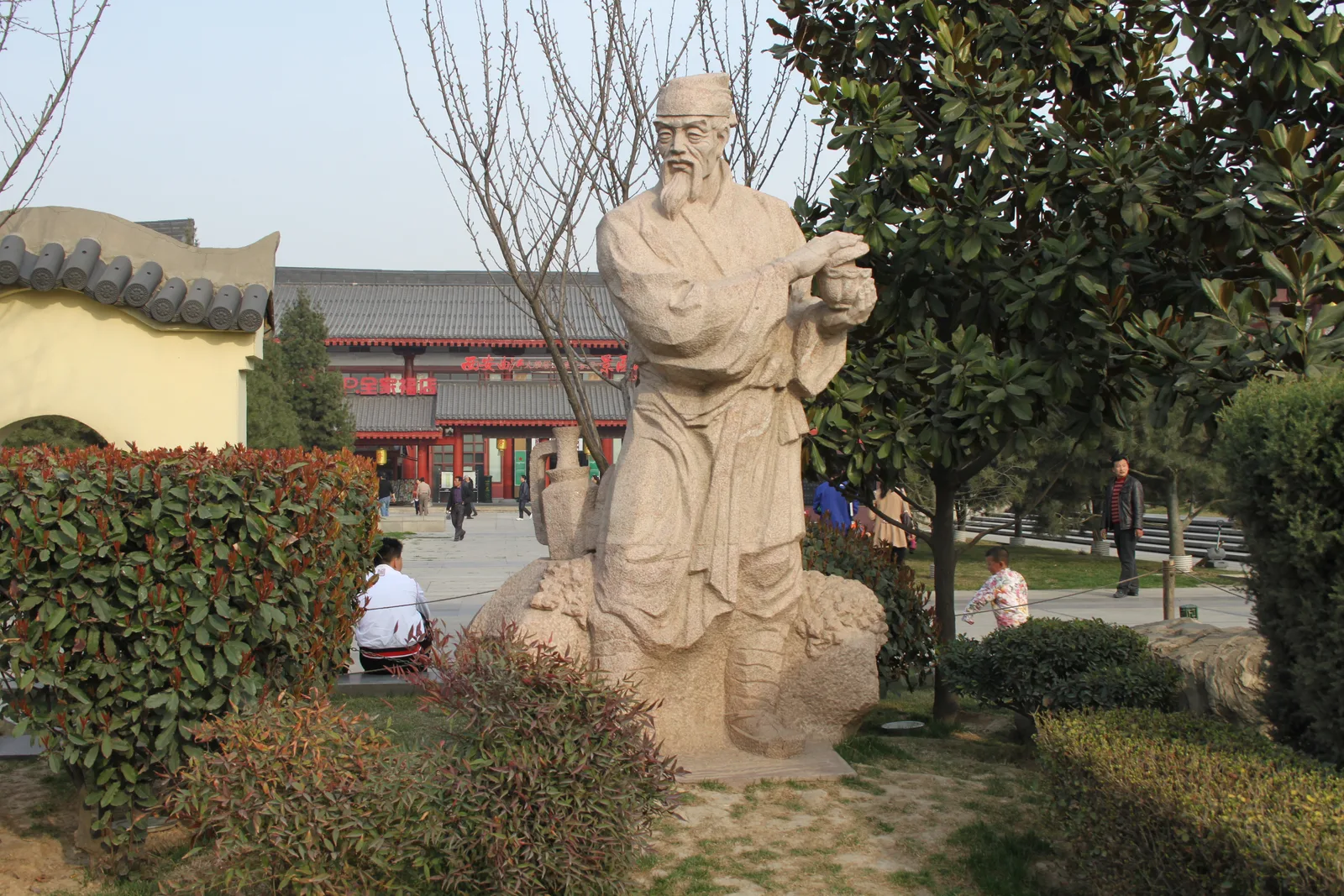
*Lu Yu, the Tang-dynasty writer traditionally known as the Tea Sage.*
Song Tea Culture and Preparation
Song-dynasty (960–1279) elite culture elevated whisked powdered tea—tea ground fine, placed in a bowl, and whipped with hot water. This is the world of Song painting and poetry, and it differs sharply from today's loose-leaf gaiwan service. Utensils included specialized bowls, whisks, and water vessels; competition over foam texture and whisking technique appears in historical accounts.
Song tea culture connects to broader material culture: fine ceramics mattered as much as the leaf. Cross-link Chinese Porcelain for kiln traditions that overlapped tea-bowl production.
Ming Transition Toward Loose-Leaf Steeping
The Ming dynasty (1368–1644) famously moved court taste toward loose-leaf tea steeped in vessels rather than whipped powder—simpler for household use and closer to what most Chinese drinkers know today. The teapot as a dedicated brewing vessel gains prominence; Yixing stoneware develops its reputation in this period though styles continue evolving under the Qing.
This transition explains why travelers see loose leaves in shops but read about powdered tea in Song history sections of the same museum.
Qing Period, Regional Production and Trade
Qing-dynasty (1644–1912) production organized many regionally famous teas still sold today: Longjing, Tieguanyin, Qimen, Pu-erh trade routes, and export-oriented black (hóngchá) for foreign markets. Coastal and inland trade networks moved both leaf and teaware; see Famous Chinese Teas & Regions.
Teaware export porcelain for European markets is a parallel story—tea caddies and pots shipped abroad appear in museum collections worldwide and link to Chinese Porcelain export history.
Tea in Modern China
Twentieth-century China industrialized tea production while retaining specialty famous-tea regions and craft workshops. Museums, heritage sites, and living masters now present both mass-market and artisan contexts. Domestic consumption spans everyday restaurant service, gift tea, and enthusiast gongfu culture—often in the same city on the same day.
2022 UNESCO Intangible Heritage Inscription
In 2022, UNESCO inscribed traditional tea-processing techniques and associated social practices in China on the Representative List of the Intangible Cultural Heritage of Humanity. The listing describes six traditional tea categories (green, yellow, dark, white, oolong, black), reprocessed teas including flower-scented tea, and social practices from cultivation through drinking and sharing.
Dark tea (黑茶) and black tea / red tea (红茶, hóngchá) are separate categories in UNESCO’s tea framework. See Types of Chinese Tea.
What Changed: Production, Forms, Vessels, Drinking
Across this timeline, four layers shift together:
- Leaf form — compressed cakes → powdered whisking → loose leaf (dominant today).
- Processing schools — six-category craft traditions codified regionally.
- Vessels — Tang bowls → Song whisking sets → Ming/Qing gaiwan and teapot culture. See Tea Sets & Teaware.
- Social setting — court ritual, literati tasting, teahouse social life, market commerce, home hospitality. See Culture & Etiquette.
Where Travelers Can See Tea History Today
| Setting | What you see | Practical note |
|---|---|---|
| China National Tea Museum (Hangzhou) | Processing, utensils, regional teas | Requires Hangzhou travel |
| Regional plantations (e.g. Longjing area) | Landscape + origin story | Seasonal harvest interest |
| Beijing tea ceremony / market | Living practice, not archaeology | Chinese Tea in Beijing |
| Porcelain museums | Tea bowls, export pots | Chinese Porcelain |
Short-stay Beijing visitors usually experience living tea culture rather than plantation archaeology—pair reading this history with a private tea ceremony or Maliandao visit.
FAQ
Who is Lu Yu and why does he matter?
Lu Yu (陆羽) wrote the *Cha Jing* (*Classic of Tea*) in the Tang dynasty—the first systematic Chinese text on tea production, utensils, and preparation. He is honored as the Sage of Tea in museums and monuments, not as a literal inventor of the beverage.
Did ancient Chinese drink tea the way it is served today?
No. Tang tea used compressed forms; Song elite culture favored whisked powder; Ming onward moved toward loose-leaf steeping in gaiwan or teapot—closer to modern practice but still varying by region.
Is the Shen Nong tea legend historically proven?
Shen Nong discovering tea is traditional attribution, not an archaeologically dated event. Early tea use is documented in later texts and ongoing research.
When was Chinese tea processing recognized by UNESCO?
Traditional tea-processing techniques and associated social practices were inscribed in 2022, describing six categories and reprocessed teas including flower-scented tea.
Where can I see tea history without leaving Beijing?
Museums elsewhere hold deeper collections, but Beijing offers living context through ceremonies, markets, and teahouses—see Chinese Tea in Beijing.
How does tea history connect to teaware history?
Vessel forms followed preparation fashion: Song bowls for whisking, later gaiwan and teapots for loose leaf. See Tea Sets & Teaware and Teapots & Brewing Vessels.
Continue with Chinese Tea
Plan a Visit
Sources & Review
- UNESCO — Traditional tea-processing techniques in China
- Lu Yu, *Cha Jing* — standard reference editions and museum interpretive panels
- China National Tea Museum context
- Chinese characters verified
- Author: Chuan Shi
- Last reviewed: August 2026