
| Item | Detail |
|---|---|
| Chinese | 绿茶 (lǜchá) |
| Processing | Withering → fixation (kill-green) → shaping/drying; minimal oxidation |
| Famous examples | Longjing, Biluochun, Huangshan Maofeng, Lu'an Guapian |
| Major regions | Zhejiang, Jiangsu, Anhui, Henan |
| Liquor color | Pale green to yellow-green |
| Brewing tendency | Cooler water; shorter steeps than oolong |
What Chinese Green Tea Is
Green tea is the largest production category in China by volume and the style many visitors first taste in restaurants (often alongside jasmine, which is scented green). UNESCO lists green tea as one of six traditional processed categories. Within green tea, shape (flat, needle, curl, pellet) and fixation method (pan-fried vs steamed-influenced traditions) strongly affect cup character.
Processing at a Traveler-Understandable Level
After picking, leaves are fixed (heated) to stop enzymatic oxidation, then rolled or pressed into shape and dried. Early spring pre-Qingming harvests command higher prices for tenderness—not a guarantee every traveler can taste the difference without side-by-side comparison.
Early fixation distinguishes green from oolong (partial oxidation) and black/hóngchá (full oxidation). See Types of Chinese Tea.
Appearance and Broad Flavor Tendencies
Green teas range from sweet and chestnut-like (some Longjing) to grassy and marine (some coastal styles) to bold and smoky (rare green variants). Do not claim all green tea tastes the same—origin and batch matter more than the English word "green."
Longjing / Dragon Well
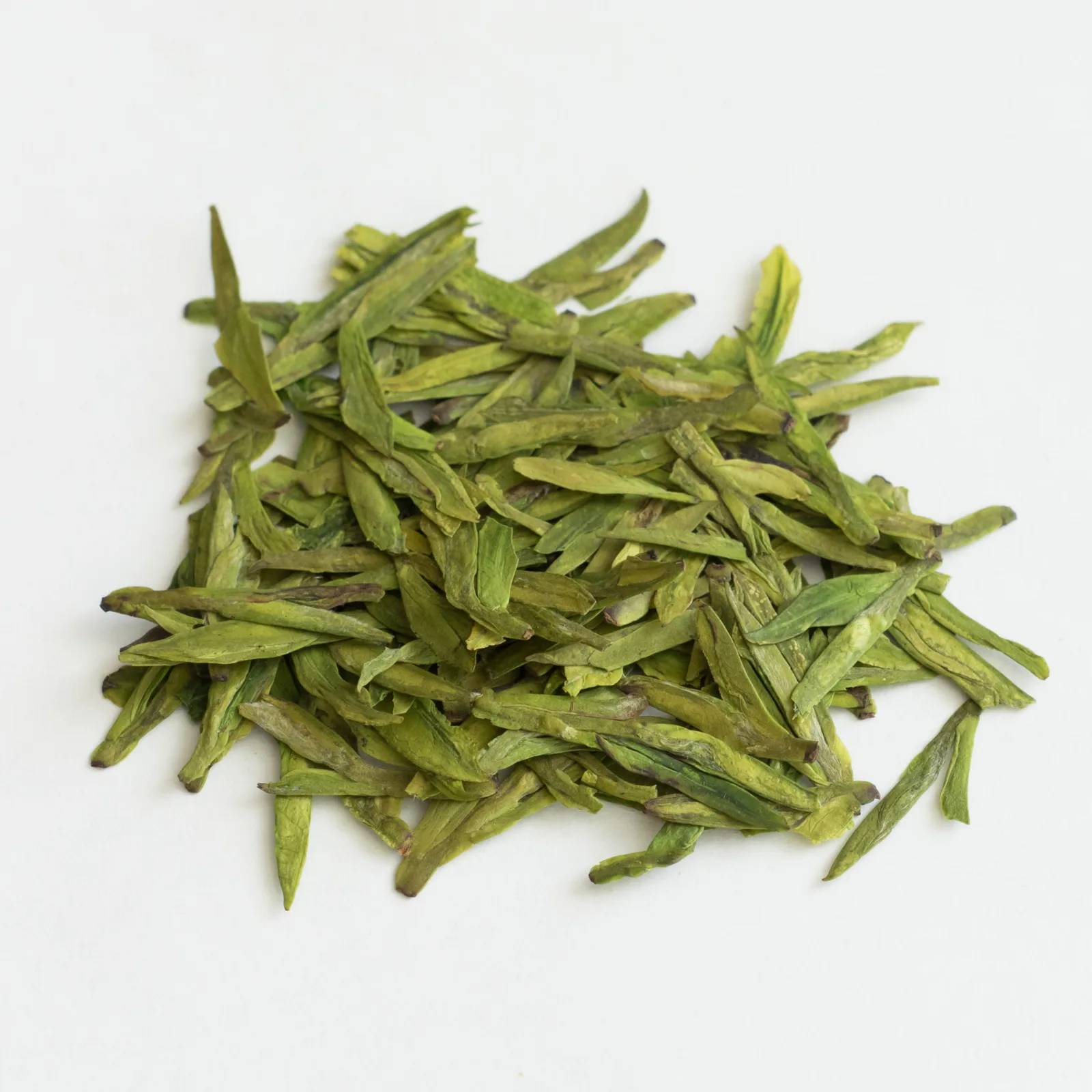
Longjing (龙井) from West Lake and surrounding hills near Hangzhou, Zhejiang, is China's best-known green tea export name. Authentic Longjing is flat, smooth leaves with a pale green liquor and nutty-sweet profile when well-made. Market shelves—including Beijing—carry many "Longjing-style" teas; origin labeling and price vary widely.
Travelers in Hangzhou visit plantations and the China National Tea Museum; Beijing visitors taste Longjing in ceremonies and at Maliandao.
*Fresh Longjing green tea leaves collected in woven baskets.*
Other Representative Chinese Green Teas
| Tea | Region | Recognition cue |
|---|---|---|
| Biluochun | Jiangsu | Tight spiral curls; fruity notes |
| Huangshan Maofeng | Anhui | Downy tips; mountain aroma |
| Lu'an Guapian | Anhui | Leaf without stem/bud; distinctive shape |
| Enshi Yulu | Hubei | Steamed-influenced green |
DragonTrail lists only well-documented names; regional shops may offer local greens not on this table.
Major Growing Regions
Zhejiang dominates famous green exports; Jiangsu and Anhui add classic styles; Henan and Sichuan produce significant domestic greens. See Famous Teas & Regions for map-level context.
How to Brew
- Glass or gaiwan: ~2–3 g per 150–200 ml; water ~80°C; 1–3 minutes first steep.
- Gongfu (premium): higher leaf, 15–30 second steeps, cooler water.
- Avoid rolling boil directly on tender spring leaf.
Full technique: How to Brew Chinese Tea.
How Green Tea Differs from Oolong and Black Tea
| Green | Oolong | Black (hóngchá) | |
|---|---|---|---|
| Oxidation | Minimal | Partial | Full |
| Typical aroma | Fresh, vegetal | Floral to roasted | Malty, fruity, smoky |
| Common method | Glass, pot | Gongfu | Pot, gongfu |
Black tea here means 红茶 (hóngchá), not dark tea (黑茶). See Black Tea and Oolong.
What Travelers May See or Taste in China
- Restaurant pot of green or jasmine-scented green
- Gift boxes labeled Longjing for festivals
- Gongfu comparison including a green alongside oolong
- Hangzhou plantation tours (if itinerary includes Zhejiang)
Beijing: private ceremony or Maliandao tasting.
Buying Without Overclaiming Grades
Grade names (特级, numbered grades) lack one national standard across all producers. Smell and taste beat label poetry. Buy small quantities first; avoid claims of "imperial tribute" tea unless you understand vendor context. Market guidance: Maliandao guide.
FAQ
What is the most famous Chinese green tea?
Longjing (Dragon Well) from Zhejiang is the best-known internationally; Biluochun and Huangshan Maofeng are other classic names.
Is jasmine tea green tea?
Jasmine tea is usually scented green tea as base—it is a reprocessed tea, not a separate sixth category. See Jasmine Tea.
Should green tea be brewed with boiling water?
Usually no for delicate styles—roughly 75–85°C reduces bitterness. Robust greens may tolerate hotter water.
Can I buy Longjing in Beijing?
Yes, at markets such as Maliandao and tea shops citywide; verify origin claims and taste before bulk purchase.
How does Chinese green tea differ from Japanese green tea?
Both are minimally oxidized, but cultivars, fixation style, and shaping differ—Chinese greens include many pan-fired flat styles unlike typical Japanese sencha.
Where is Longjing grown?
Primarily around Hangzhou, Zhejiang; the Longjing name is geographically protected in China though market misuse exists.
Is green tea the same as matcha?
Matcha is powdered Japanese green tea whisked into suspension; Chinese green tea is normally steeped as loose leaf—different traditions.
Continue with Chinese Tea
Experience Tea in Beijing
Sources & Review
- UNESCO — Traditional tea-processing techniques in China
- China National Tea Museum context
- Chinese characters verified
- Author: Chuan Shi
- Last reviewed: August 2026