
Brewing Chinese tea depends more on tea type, vessel and taste than on one universal recipe. Green and white teas generally suit gentler water and longer everyday steeps, while oolong, black tea and Pu-erh are often prepared in a gaiwan or small pot with repeated short infusions. Start with the tea producer's guidance when available, then adjust water temperature, leaf quantity and steeping time to taste rather than treating any chart as a fixed rule.
| Style | Vessel | Leaf ratio | Steeps | Best for |
|---|---|---|---|---|
| Western / mug | Mug, glass, or large pot | Moderate | 1–2 | Green, jasmine, everyday black |
| Gongfu | Gaiwan or small teapot | High | Many short | Oolong, Pu-erh, premium black |
| Grandpa style | Glass with leaves in cup | Informal | Continuous top-up | Casual green in offices |
Short Answer
Start with good water (filtered if local tap tastes strong), appropriate temperature (cooler for green, boiling for many black and shou Pu-erh), and proportional leam. Increase leaf and shorten steeps for gongfu; decrease leaf and lengthen one steep for Western pots. Taste and adjust—Chinese brewing is iterative.
Western-Style vs Gongfu-Style
Western-style brewing uses roughly 2–3 grams of leaf per 200–250 ml water, one steep of 2–4 minutes (varies by tea), sometimes a second weaker steep. Familiar from office mugs and restaurant pots.
Gongfu-style uses a small gaiwan or teapot, fills roughly one-third to half with dry leaf for some oolongs, and steeps 10–30 seconds early infusions, lengthening later. Decant fully each time; do not leave liquor sitting on leaves between steeps.
See Chinese Tea Ceremony for social context; this page is technique.
Basic Equipment
Minimum for gongfu learning:
- Gaiwan or 100–150 ml teapot
- Fairness pitcher (optional but helpful)
- Three to six small cups
- Kettle and hot water source
- Tea tray or shallow bowl to catch spills
Tea Sets & Teaware | Teapots & Brewing Vessels
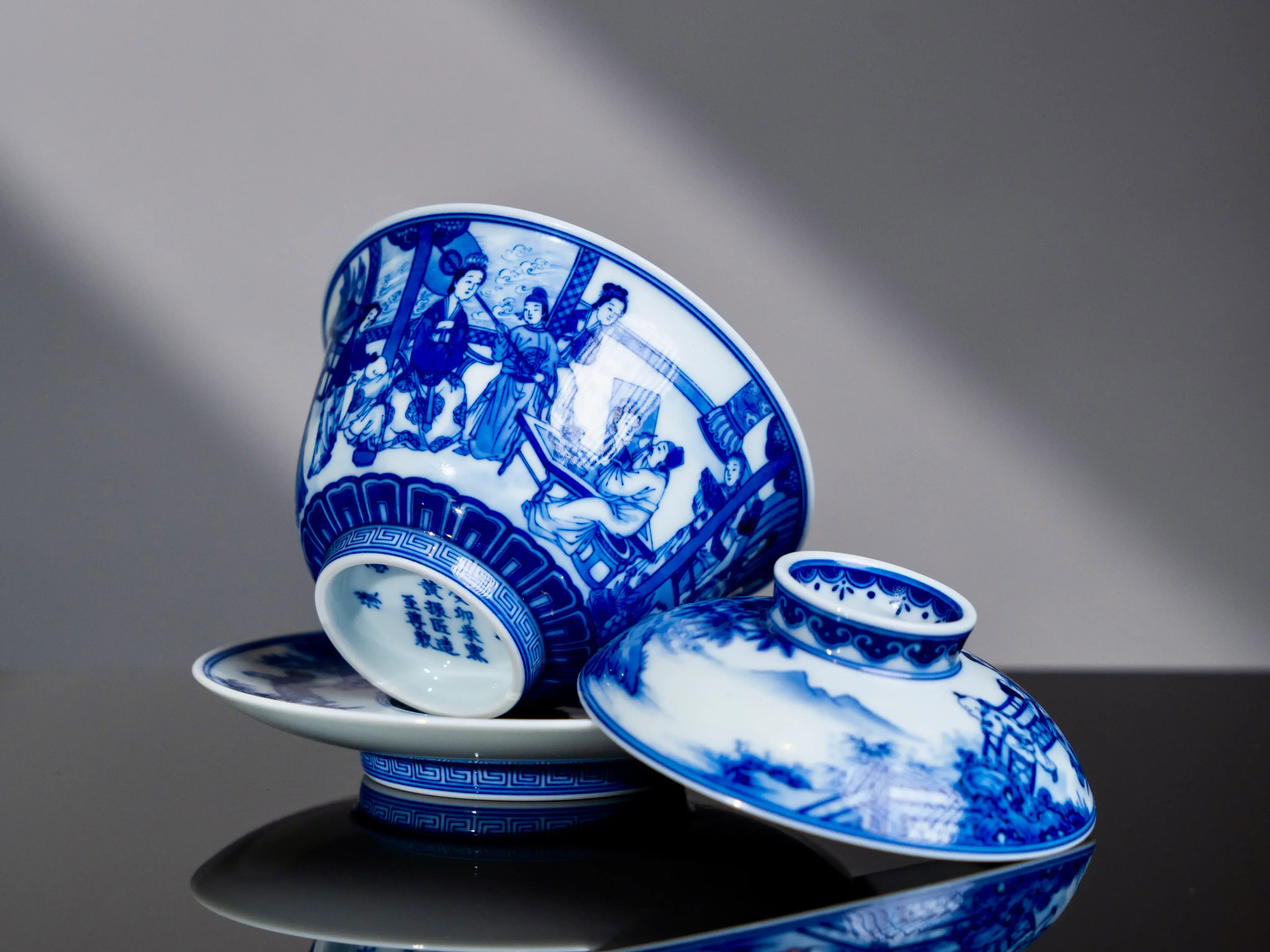
*A blue-and-white porcelain gaiwan set used for brewing Chinese tea.*
Water
Tea is mostly water. Soft, neutral water shows nuance; hard chlorinated tap water flattens fine green and oolong. When traveling, bottled water or hotel kettle water is often acceptable. Avoid re-boiling the same kettle water endlessly—fresh heat helps brightness.
Leaf Quantity
There is no one gram count for all teas. Rules of thumb:
- Delicate green: less leaf; cooler water; shorter steep.
- Oolong / Pu-erh gongfu: more leaf; quick steeps.
- Black (hóngchá): moderate leaf; near-boiling water; 30 seconds to 3 minutes depending on cut and style.
Weigh leaf if learning; eyeball once familiar with a specific tea.
Temperature: Varies by Tea
| Tea type | Typical temperature range | Note |
|---|---|---|
| Green | ~75–85°C | Hotter water can bitter delicate styles |
| White | ~80–90°C | Young Silver Needle gentler than aged white |
| Oolong | ~90–100°C | Lighter oolongs cooler; roasted yancha hotter |
| Black (hóngchá) | ~95–100°C | Qimen, Dianhong |
| Dark / shou Pu-erh | ~95–100°C | Rinse often used |
| Jasmine | ~85–90°C | Scent fades with overheating |
Let boiled water sit 30–60 seconds in an open pitcher to drop temperature when you lack a thermometer.
Steeping Time
Western pot: 2–4 minutes first steep for many whole-leaf teas—taste at 2 minutes.
Gongfu: 10–20 seconds first infusions, adding 5–15 seconds per round until flavor fades.
Multiple Infusions
Whole-leaf Chinese teas—especially oolong and Pu-erh—often improve across many steeps. Stop when flavor weakens or becomes flat. This is a feature, not a sign of weak tea.
Brewing Green Tea
Use cooler water, lower leaf in large vessels, or gongfu with very short steeps for premium Longjing. Glass cups show leaf dance—common in Jiangsu and Zhejiang service.
Deep dive: Chinese Green Tea.
Brewing Oolong
Rinse optional; high leam; quick steeps; notice roast vs floral evolution. Roasted Wuyi yancha tolerates hotter, longer early steeps than light Tieguanyin.
Deep dive: Chinese Oolong Tea.
Brewing Black (Hóngchá) Tea
Fully oxidized 红茶 takes hot water. Whole-leaf Qimen may need less time than broken grades. Do not confuse with dark tea (黑茶)—different processing and often different steep rhythm.
Deep dive: Chinese Black Tea.
Brewing White Tea
Silver Needle: gentle water, longer steep acceptable in Western style. Aged white tea may take hotter water and longer time—ask vendor if buying aged cakes.
Deep dive: Chinese White Tea.
Brewing Pu-erh and Dark Tea
Rinse (quick discard steep) common for compressed tea and ripe Pu-erh. Break chunks evenly; avoid boiling forever on fragile sheng young raw Pu-erh if bitterness appears—shorten steeps.
Deep dive: Pu-erh & Dark Tea.
Common Brewing Mistakes
- Boiling water on all greens regardless of style
- Leaving gongfu liquor on leaves between steeps
- Too little leam in a large pot, then blaming "weak Chinese tea"
- Confusing black (hóngchá) and dark (hēichá) steep expectations
- Over-steeping jasmine until scent dies
Gaiwan Safety and Handling
Hold gaiwan lid slightly ajar to decant; use rim or lid knob, not bare fingers on hot porcelain. Practice with cooler water first. Tea trays exist because spills are normal while learning.
FAQ
What is the best way to brew Chinese tea for beginners?
Start Western-style with a glass or small pot: moderate leaf, 2–3 minutes, taste, adjust. Move to gaiwan gongfu when you want multiple infusions—especially for oolong.
Do I need a gaiwan to brew Chinese tea?
No. Many Chinese people brew in glasses, mugs, or large pots. Gaiwan suits learning gongfu technique.
What water temperature for Longjing green tea?
Roughly 75–85°C—cooler than boiling—helps avoid bitterness; exact preference varies by harvest and personal taste.
How many times can I steep oolong?
Quality whole-leaf oolong often yields six to ten or more gongfu steeps; stop when flavor fades.
Is a rinse necessary?
Common for compressed Pu-erh and some oolong; optional for many greens and blacks. Hosts teach preference in ceremonies.
Can I learn brewing on a Beijing tea experience?
Yes—a private tea ceremony demonstrates gongfu basics with host guidance.
What is the difference between brewing and tea ceremony?
Brewing is technique; ceremony adds hospitality framing and pacing. See Tea Ceremony.
Continue with Chinese Tea
Experience Tea in Beijing
Sources & Review
- UNESCO — Traditional tea-processing techniques in China
- Specialist brewing references and museum demonstration standards
- Author: Chuan Shi
- Last reviewed: August 2026