
Chinese Jade Timeline
 Click to enlarge
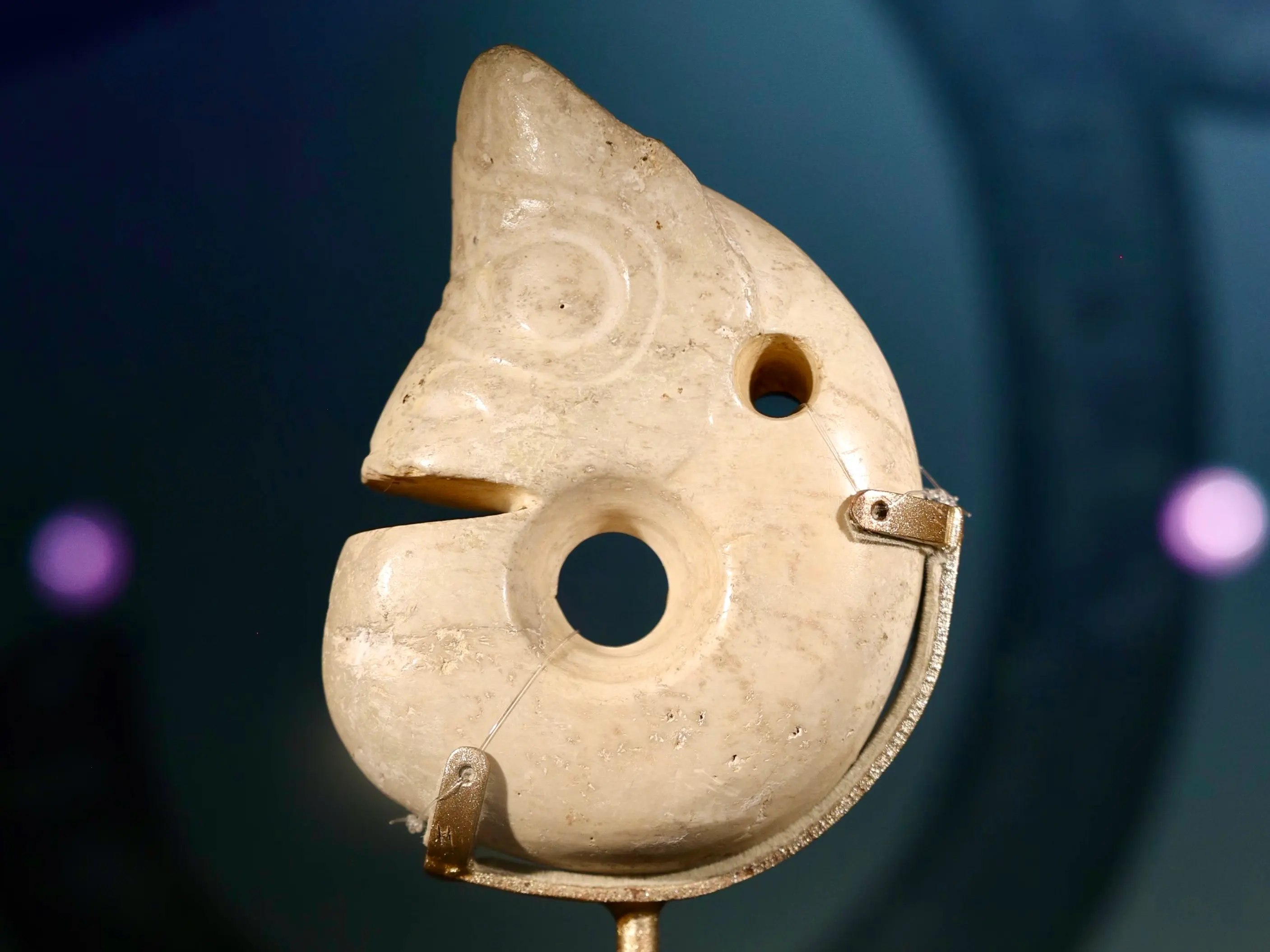
Hongshan-style zoomorphic jade helps show how animal symbolism appeared in Chinese jade long before later imperial dragon imagery.
Chinese jade history begins long before imperial China. Neolithic cultures such as Liangzhu and Hongshan used jade for ritual, burial, and symbolic objects. Shang and Zhou elites continued to use jade for rank, ceremony, and ancestral culture. By the Han dynasty, jade became closely connected with funerary belief through objects such as burial plugs, cicadas, plaques, and jade suits. The Qing dynasty later turned nephrite into imperial seals, vessels, scholar objects, and monumental carvings. For modern travelers, the safest way to understand this timeline is through museums before markets.
Chinese Jade Timeline at a glance
| Topic | Traveler takeaway |
|---|---|
| Neolithic | Liangzhu bi discs and cong tubes, plus Hongshan animal forms, show jade as ritual and burial material before imperial China |
| Han burial | Han jade suits, plugs, cicadas, and plaques show jade's connection with body, status, tombs, and afterlife belief |
| Qing court | Qing emperors used Khotan and Hetian nephrite for seals, vessels, scholar objects, and monumental imperial carvings |
| Modern market | Museum labels explain material, period, and context; market language often simplifies jade into color, luck, and price |
Neolithic
The earliest major chapters of Chinese jade history are Neolithic, not imperial. Liangzhu culture in the Yangtze Delta is famous for bi discs and cong tubes, while Hongshan culture in northeast China is known for coiled animal forms, especially pig-dragon jade. These pieces are usually understood through ritual, burial, shape, and elite context rather than decoration alone. In Beijing, ancient jade displays help visitors see why jade mattered before emperors and palaces.
- Liangzhu jade is strongly associated with bi discs and cong tubes.
- Hongshan jade is known for early animal and pig-dragon forms.
- For Beijing viewing, start with ancient jade displays before moving to Qing court jade.
Han burial
By the Han dynasty, jade became deeply connected with elite burial practice. Tombs could include jade plugs, cicada-shaped pieces, plaques, and full jade burial suits made from many small jade tiles. These objects show jade as a funerary and status material, not as ordinary jewelry. This period is important because it explains why jade was linked with the body, rank, preservation, and afterlife belief.
- Han jade burial suits are elite funerary objects, not wearable clothing.
- Cicada-shaped jade is often discussed through rebirth and transformation in burial context.
- For the full early-dynasty sequence, read the Shang, Zhou, and Han jade guide.
Qing court
The Qing dynasty represents one of the most visible periods of Chinese jade for travelers because many major objects survive in palace collections. Qing emperors, especially Qianlong, valued Khotan and Hetian nephrite for seals, vessels, scholar objects, archaistic forms, and monumental carvings. The Forbidden City Treasure Gallery is the strongest Beijing stop for this chapter because it places jade inside court life, imperial taste, and workshop culture.
- Qing jade is often white, pale green, grey-green, or russet-skinned nephrite, not only bright green jadeite.
- The Da Yu carving is one of the key Forbidden City examples.
- For this period, read the Qing dynasty jade guide and the Forbidden City jade guide.
Modern market
Modern jade language can be confusing because museum interpretation and market selling use different logic. Museums usually explain date, material, function, excavation context, workshop, and symbolism. Markets often simplify jade into color, luck, health, investment, or "imperial style." For travelers, the practical timeline is simple: see museum jade first, learn the difference between nephrite and jadeite, then treat any shopping decision as separate from cultural history.
- Visit museums before considering jade markets.
- Read the nephrite vs jadeite and real vs fake jade guides before shopping.
- DragonTrail does not appraise jade, certify authenticity, or guarantee market value. This guide is for cultural and traveler education only.
Common mistakes: Chinese Jade Timeline
Treating jade history as one single story
Chinese jade changed across time. Neolithic ritual objects, Han burial jade, Qing court carvings, and modern souvenirs should not be read in the same way.
Starting with markets instead of museums
Markets usually simplify jade into color, luck, and price. Museums give the timeline first: material, period, shape, function, and context.
Chinese Jade Timeline FAQ
- A simple timeline starts with Neolithic ritual jade, continues through Shang and Zhou rank and ceremonial jade, develops into Han burial jade, reaches a major imperial peak in the Qing dynasty, and then becomes part of modern museum, souvenir, and market culture.
- Han jade is important because it shows jade's connection with elite burial practice. Jade plugs, cicadas, plaques, and burial suits linked the material with status, the body, and afterlife belief.
- Qing jade is highly visible in Beijing because the Forbidden City Treasure Gallery preserves major imperial jade objects, including white nephrite vessels, seals, scholar objects, and monumental carvings.
- Start with the National Museum of China for ancient jade context, then visit the Forbidden City Treasure Gallery for Qing imperial jade. The Capital Museum can add a Beijing-focused layer.
- No. Visit museums first. Museum labels explain material, period, function, and symbolism before you hear simplified sales language in markets.
- DragonTrail does not appraise jade, certify authenticity, or guarantee market value. This guide is for cultural and traveler education only.
Explore jade as culture, not commodity
Chinese jade history is easiest to understand in order: Neolithic ritual forms, Shang and Zhou ceremonial jade, Han burial objects, Qing imperial carvings, and modern market language.
DragonTrail does not sell jade or offer authentication. For buying questions, read our traveler-education pages and treat any purchase as your own risk.