
Chinese Literature at a Glance
| Topic | Orientation |
|---|---|
| Chinese term | 中国文学 / 中國文學 |
| Broad span | Early texts → classical genres → vernacular fiction → modern literature |
| Major premodern forms | Poetry, prose, history writing, philosophical texts, drama, fiction |
| Fiction milestone | Ming–Qing vernacular novels |
| Four Great Classical Novels | *Three Kingdoms*, *Water Margin*, *Journey to the West*, *Dream of the Red Chamber* |
| Modern turning point | Late Qing reform culture and May Fourth vernacular writing |
| Cross-links | Philosophy, mythology, religion, calligraphy, characters, opera |
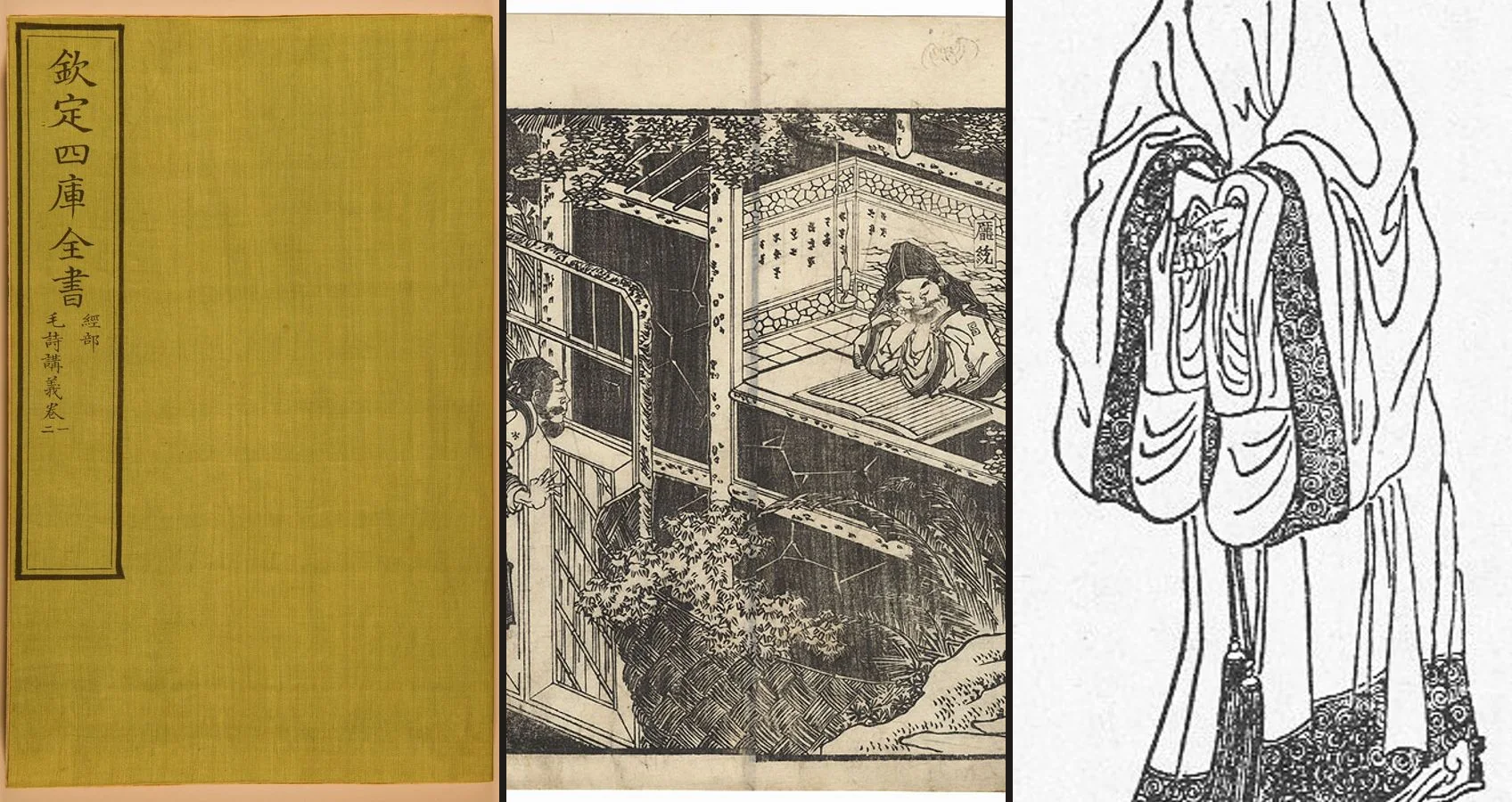
*Montage from open-license sources: Siku Quanshu page (Public Domain), Hokusai Three Kingdoms illustration (Public Domain), and Lu Xun portrait (Public Domain). Assembled and resized by DragonTrail; non-generative. Representative figures and texts—not a ranking of “greatest” works.*
What Does "Chinese Literature" Include?
Chinese literature is not one genre. Travelers and readers usually meet it as overlapping corpora:
- Classical literary Chinese writing and the older canon
- Poetry and prose across dynastic periods
- Historical narrative and biographical prose
- Philosophical and religious texts that also circulate as literature
- Drama and later performance adaptations
- Vernacular fiction, especially Ming–Qing novels
- Modern and contemporary literature in vernacular Chinese
Confucian classics belong culturally to both literature and philosophy. These guides explain their textual role and hand deeper Confucian doctrine to Chinese Philosophy and Confucianism.
A Short History of Chinese Literature
A traveler chronology (approximate, not a syllabus):
| Phase | What to remember |
|---|---|
| Early / pre-imperial | Songs, speeches, early poetic and documentary traditions |
| Han | Historical prose expands; literary culture professionalizes |
| Medieval (Six Dynasties–Tang) | Poetry prestige peaks; regulated verse and major poets |
| Song–Yuan | Ci poetry, drama, and expanding vernacular storytelling |
| Ming–Qing | Long vernacular novels reshape popular literary memory |
| Late Qing–Republic | Reform, translation, May Fourth vernacular modern literature |
| Mid–late 20th century | Varied modern and contemporary trajectories |
Dedicated chronology: History of Chinese Literature.
Classical Chinese Literature and the Ancient Canon
Classical Chinese literature covers the premodern literary system built around literary Chinese, genre training and a shared textual canon. It overlaps with “ancient books” but is not identical: classical literature is a cultural-literary category; ancient books also include material book culture (bamboo, silk, paper, printing).
Guides: Classical Chinese Literature and Ancient Chinese Books.
Poetry, Prose, History and Philosophy
Poetry is central to Chinese literary prestige and appears throughout classical literature and history guides. Historical prose (for example Sima Qian’s tradition) and philosophical writing also circulate as literary models.
Philosophy handoff: Ancient Chinese Philosophy. Myth and legend contexts: Chinese Mythology.
The Rise of Drama and Vernacular Fiction
From Song–Yuan drama into Ming–Qing novels, storytelling moves toward longer vernacular narratives that later dominate popular memory of “Chinese classics.” Opera and fiction share story cycles without being the same medium. See Chinese Opera and Chinese Performing Arts.
The Four Great Classical Novels
The Four Great Classical Novels are a later critical grouping of four long vernacular works:
They are not “the four oldest Chinese books.” Overview: Four Great Classical Novels. Wider fiction context: Chinese Novels.
Modern and Contemporary Chinese Literature
Modern Chinese literature is commonly associated with late Qing reform writing and especially the May Fourth turn toward written vernacular Chinese, new genres and social critique. Lu Xun is a central reference point, not the only modern writer. Guide: Modern Chinese Literature.
Famous Chinese Authors and Writers
Authors range from early poets and historians to novelists and modern essayists. Avoid turning authorship disputes into false certainty. Orientation: Famous Chinese Authors and Writers.
How Literature Connects to Philosophy, Religion and Mythology
Canonical and narrative texts feed moral philosophy, religious imagination and mythic storytelling. Literature pages explain textual culture; doctrine and belief systems live in:
How Literature Connects to Calligraphy, Characters and Book Culture
Written Chinese is inseparable from Chinese Characters and Chinese Calligraphy. Book transmission involves manuscripts and print culture—covered traveler-side under Ancient Chinese Books.
Optional hands-on framing (not a literature class): Beijing hutong calligraphy & dumpling experience.
From Page to Stage: Literature and Chinese Opera
Story cycles migrate into opera and later screen adaptations. A current Peking Opera programme should not be assumed to feature a specific novel. If you book a show, check the repertoire for that date: Peking Opera show + private transfer.
How Travelers Can Encounter Literary Culture in China
Typical encounters include museum book exhibitions, memorial halls for writers, temple and garden sites linked to literary memory, and performance adaptations. Literary tourism is uneven: some novels have strong place associations; others are mainly textual. City and museum guides are usually more reliable than invented “literature tours.”
Explore Chinese Literature in More Detail
- Classical Chinese Literature
- Chinese Novels
- Four Great Classical Novels
- Journey to the West
- Dream of the Red Chamber
- Romance of the Three Kingdoms
- Water Margin
- History of Chinese Literature
- Modern Chinese Literature
- Chinese Authors & Writers
- Ancient Chinese Books
Chinese Literature FAQ
What is Chinese literature?
It is China’s written literary tradition across poetry, prose, history writing, drama and fiction, from early texts through classical genres to modern vernacular literature.
What are the most famous works of Chinese literature?
Answers vary by period. For fiction, many readers start with the Four Great Classical Novels. For poetry and prose, Tang poets and earlier canonical texts dominate school and museum introductions.
What are the Four Great Classical Novels?
A later grouping of four long vernacular novels: *Romance of the Three Kingdoms*, *Water Margin*, *Journey to the West* and *Dream of the Red Chamber*.
Is Confucius considered Chinese literature?
Confucian texts are central to China’s textual culture and are often taught alongside literature, but doctrinal interpretation belongs primarily with philosophy. See Confucianism.
What is the difference between classical and modern Chinese literature?
Classical literature is rooted in premodern literary Chinese genres and canons. Modern literature is associated especially with late Qing–May Fourth vernacular writing and new forms.
What is the oldest Chinese literature?
There is no single “oldest book” slogan that fits scholarly caution. Early songs, speeches and transmitted corpora predate later novels by many centuries.
What Chinese books are good starting points in English?
Many readers begin with a Four Great Novel in translation or a modern short-story selection. Choose a reputable translation and a short introduction rather than hunting a mythical “best” English edition.
Is Chinese poetry part of Chinese literature?
Yes. Poetry is one of the central forms of classical Chinese literature, with major traditions including shi and ci poetry. Tang poets such as Li Bai and Du Fu are among the names travelers most often encounter in museums, school texts and cultural references.
Reading Order for Travelers
If you want a practical sequence:
- This hub for scope
- Classical Chinese Literature for genres
- One Four Great novel
- Modern Chinese Literature for the vernacular turn
- Authors & Writers to place names
That path covers canon, fiction and modernity without requiring a university syllabus.
Sources and Review
These guides paraphrase institutional and scholarly overviews of Chinese literary history, vernacular fiction and modern literature for travelers. Authorship of major novels is stated cautiously. Image credits appear under figures. Last updated: 2026-08-30.