
At a Glance
| Topic | Orientation |
|---|---|
| Chinese title | 水浒传 / 水滸傳 |
| Also called | Outlaws of the Marsh |
| Attribution | Complex; often linked to storytelling traditions and later editors/commentators |
| Core idea | Outlaw fellowship, injustice, loyalty and violence |
| Parents | Four Great · Novels |
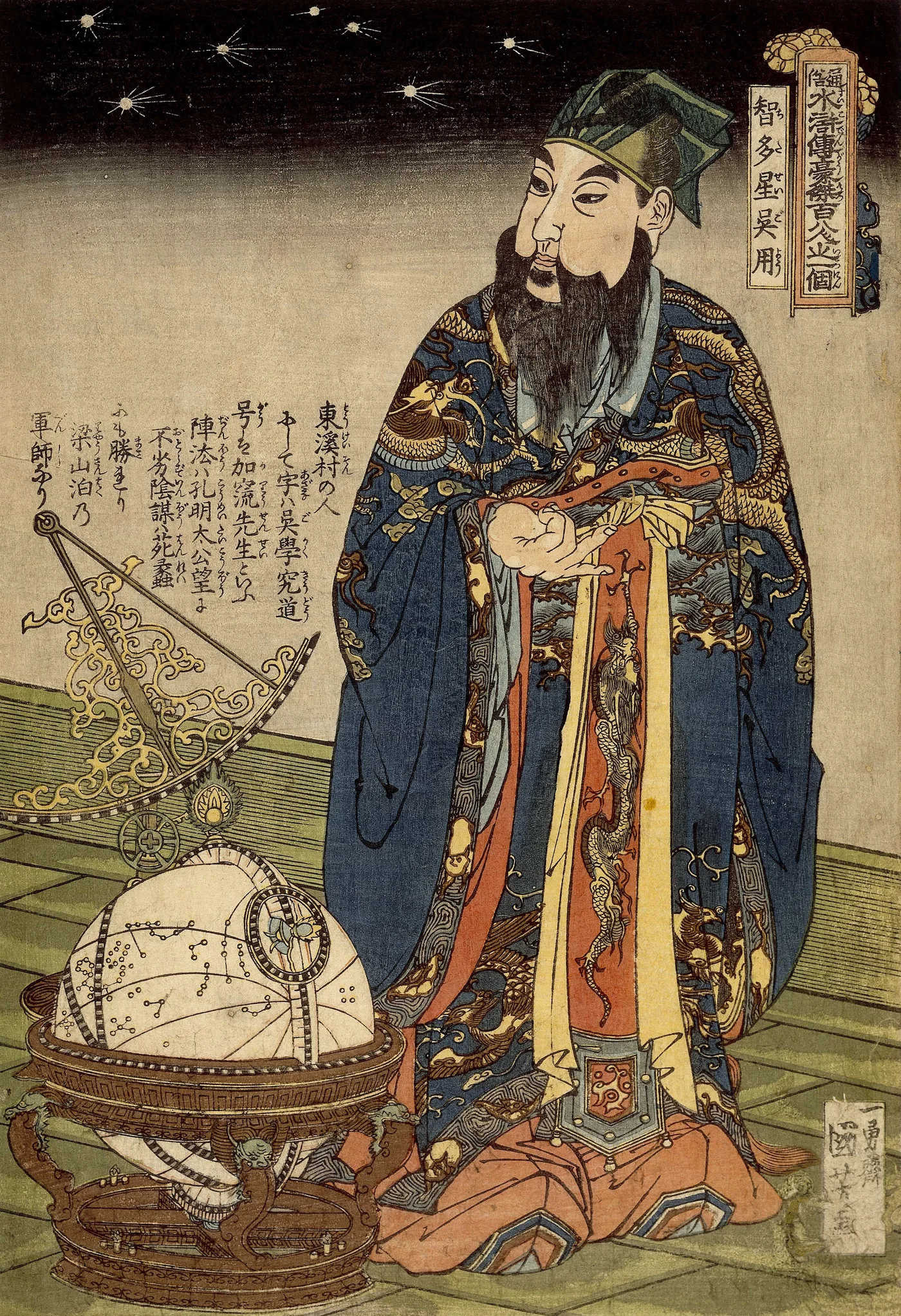
*Print from the 108 Heroes of the Water Margin tradition (British Museum source on Commons). Public Domain / Public Domain Mark via Wikimedia Commons. Resized by DragonTrail; non-generative.*
What the Novel Is
A large cast narrative of men (and some women in the wider tradition) driven into outlaw life, gathering around Liangshan and negotiating loyalty, revenge and state power.
Authorship and Editions
Textual history is famously complicated, including later critical editions. Avoid single-year invention myths; describe a received tradition.
Themes
Justice and injustice, sworn brotherhood, righteous violence and the ambiguity of outlaw ethics.
Later Cultural Life
Hero prints, opera and screen serials. Programme caution for opera bookings remains.
Common Misconceptions
- Treating every hero episode as historical reportage
- Ignoring edition differences
FAQ
Is Water Margin the same as Outlaws of the Marsh?
Yes—common alternate English title.
How many heroes?
Popular tradition speaks of 108; treat that as the famous set motif, with edition variation in presentation.
Brotherhood, Violence and Moral Ambiguity
The outlaw ethic is double-edged: loyalty and courage sit beside brutality. Read it as a literary exploration of justice under pressure, not a tourism slogan about “hero hills.”
Sources and Review
Literary orientation; hero-print credit above. 2026-08-30.