
Chinese Legends at a Glance
| Topic | Orientation |
|---|---|
| Vs myth | More story-cycle / hero-romance; less cosmogony |
| Vs folktale | Often famous named cycles with literary/opera afterlives |
| Signature examples | White Snake; Butterfly Lovers; others |
| Performance | Peking opera and regional theatre — performing arts |
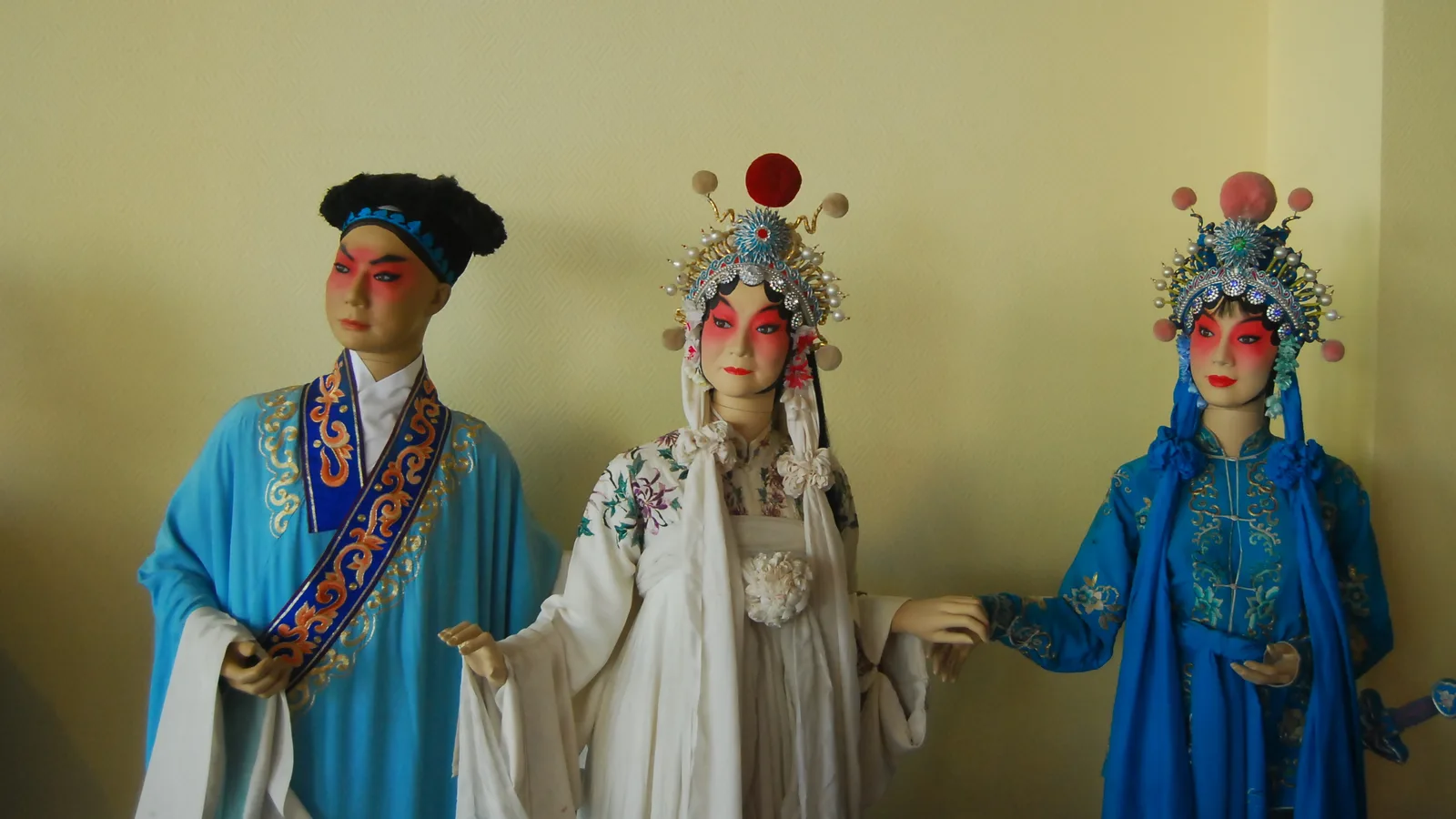
*Legend of the White Snake performed in Beijing opera. Photo via Wikimedia Commons — CC BY 3.0. Cropped/resized; non-generative. Opera is a major transmission channel for legends.*
What Counts as a Legend Here
Narratives with recognizable protagonists and plot arcs, retold across media. Historical kernels may exist for some cycles; many are literary-marvel traditions.
White Snake
Madame White Snake story cycles—love, prohibition, Buddhist/Daoist agents depending on version—widely known via opera and screen. Performance culture: Chinese Performing Arts.
Other Famous Cycles
Butterfly Lovers and additional regional legends. Other Chinese narratives may fit better under folktales, mythology or folklore depending on their transmission and cultural role.
Legends vs Folktales vs Folklore
- Legends: named famous cycles (this page)
- Folktales: broader tale transmission, including wonder tales — folktales
- Folklore: customary belief motifs — folklore
Common Misconceptions
- Opera versions ≠ the only “original.”
- Legend ≠ automatically ancient myth.
- Film adaptations rewrite freely.
Chinese Legends FAQ
What is the Legend of the White Snake?
A famous Chinese story cycle about a snake-spirit heroine and her human lover, widely retold in opera and media.
Are Chinese legends true history?
Usually literary/cultural narrative; some attach to places or motifs, but “true/false” is the wrong primary lens.
Where can travelers see legends performed?
Opera houses and festival performances—check current programs.
Related Pages
Sources
- Literary and performance contexts for major cycles: Chinese Performing Arts and related novel guides under Chinese Literature.