
At a Glance
| Topic | Orientation |
|---|---|
| Chinese title | 西游记 / 西遊記 |
| Period | Ming vernacular novel (received text tradition) |
| Attribution | Traditionally associated with Wu Cheng’en; textual history is complex |
| Core figures | Tang Monk, Sun Wukong, Zhu Bajie, Sha Wujing |
| Parents | Four Great · Novels |
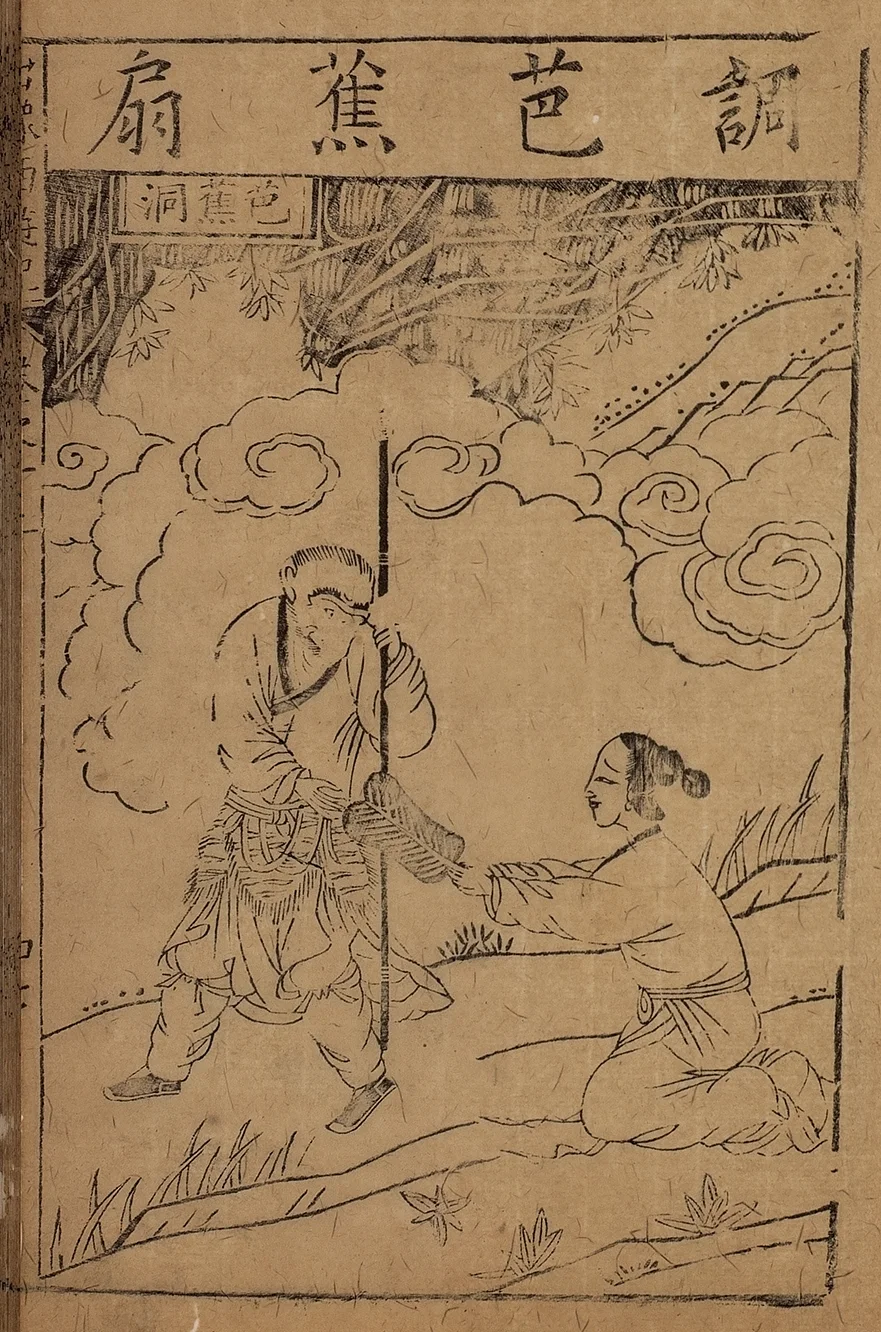
*Illustration from a 1592 Journey to the West edition (Shidetang). Public Domain Mark / public-domain reproduction via Wikimedia Commons. Resized by DragonTrail; non-generative.*
What the Novel Is
A long episodic narrative in which a monk’s westward pilgrimage becomes a vehicle for adventure, satire, religious imagery and popular mythic invention. Sun Wukong (the Monkey King) often dominates later popular memory.
Authorship and Textual History
Say traditionally attributed / commonly associated—not a hard single-author fact that can be stated without qualification. The received novel developed through earlier story cycles and print culture.
Premise and Themes
Pilgrimage, discipline, temptation, comic violence and spiritual progress intertwine. Buddhist imagery appears inside a fictional entertainment structure; doctrine belongs with Buddhism in China and mythic creatures with Chinese Mythology.
Major Characters (Concise)
| Figure | Role |
|---|---|
| Xuanzang / Tang Monk | Pilgrim monk frame |
| Sun Wukong | Monkey disciple; popular icon |
| Zhu Bajie | Comic, appetitive disciple |
| Sha Wujing | Steadier disciple companion |
Later Cultural Life
Opera, animation, film and television recycle episodes. Do not assume a booked opera stages *Journey to the West*.
Common Misconceptions
- Treating the novel as Xuanzang’s real diary
- Reducing the book to Monkey alone
- Ignoring Ming print/story-cycle history
FAQ
Is Journey to the West true history?
No. It is a novel using a pilgrimage frame and mythic invention.
Why is Monkey so famous?
Later adaptations amplify Sun Wukong’s charisma beyond the pilgrimage frame.
Religious Imagery Without Doctrine Overclaim
Buddhist names and quest imagery saturate the novel’s entertainment structure. For living religion and history of Buddhism in China, use Buddhism in China rather than treating tha novel as scripture.
Sources and Review
Literary-history caution on attribution; 1592 illustration credit above. 2026-08-30.