
At a Glance
| Topic | Orientation |
|---|---|
| Chinese title | 三国演义 / 三國演義 |
| Setting frame | End of Han / Three Kingdoms conflicts |
| Attribution | Traditionally associated with Luo Guanzhong; complex textual history |
| Mode | Historical novel with dramatized strategy and loyalty themes |
| Parents | Four Great · Novels |
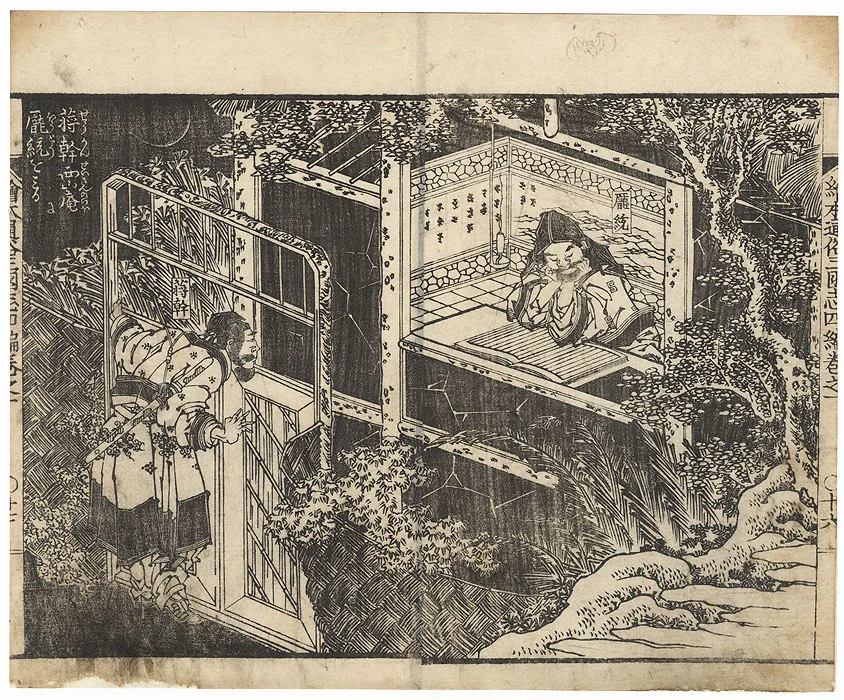
*Romance of the Three Kingdoms illustration by Katsushika Hokusai. Public Domain artwork via Wikimedia Commons. Resized by DragonTrail; non-generative.*
Fiction Built on Historical Memory
The novel popularizes heroes, stratagems and factional drama. Treat battlefield “facts” in the novel as literary shaping of received history.
Authorship Caution
Traditionally associated with Luo Guanzhong; print and storytelling lineages are layered. Prefer “traditionally attributed / commonly associated.”
Themes and Figures
Loyalty, brotherhood, ambition and the cost of chaos. Cao Cao, Liu Bei, Zhuge Liang and others function as literary figures as much as historical names.
Later Cultural Life
Games, television and opera keep the cycle alive. Check actual repertoire before assuming a Peking Opera night is Three Kingdoms.
Common Misconceptions
- Quoting the novel as primary history
- Ignoring earlier chronicle and tale traditions
FAQ
Is Romance of the Three Kingdoms accurate history?
It is a novel informed by historical tradition, not a documentary.
Why is it so popular outside China?
Strategy, character archetypes and adaptations travel well across media.
Strategy Culture and Popular Memory
The novel feeds proverb culture and strategy talk far beyond literary classrooms. That popularity is cultural fact; it still does not convert novel episodes into primary-source history.
Sources and Review
Literary-history framing; Hokusai illustration credit above. 2026-08-30.