
At a Glance
| Layer | Example names travelers meet |
|---|---|
| Early / classical | Qu Yuan, Sima Qian (as historical-prose model) |
| Tang poetry | Li Bai, Du Fu |
| Fiction | Authors traditionally linked to the Four Great Novels |
| Modern | Lu Xun and other May Fourth-era writers |
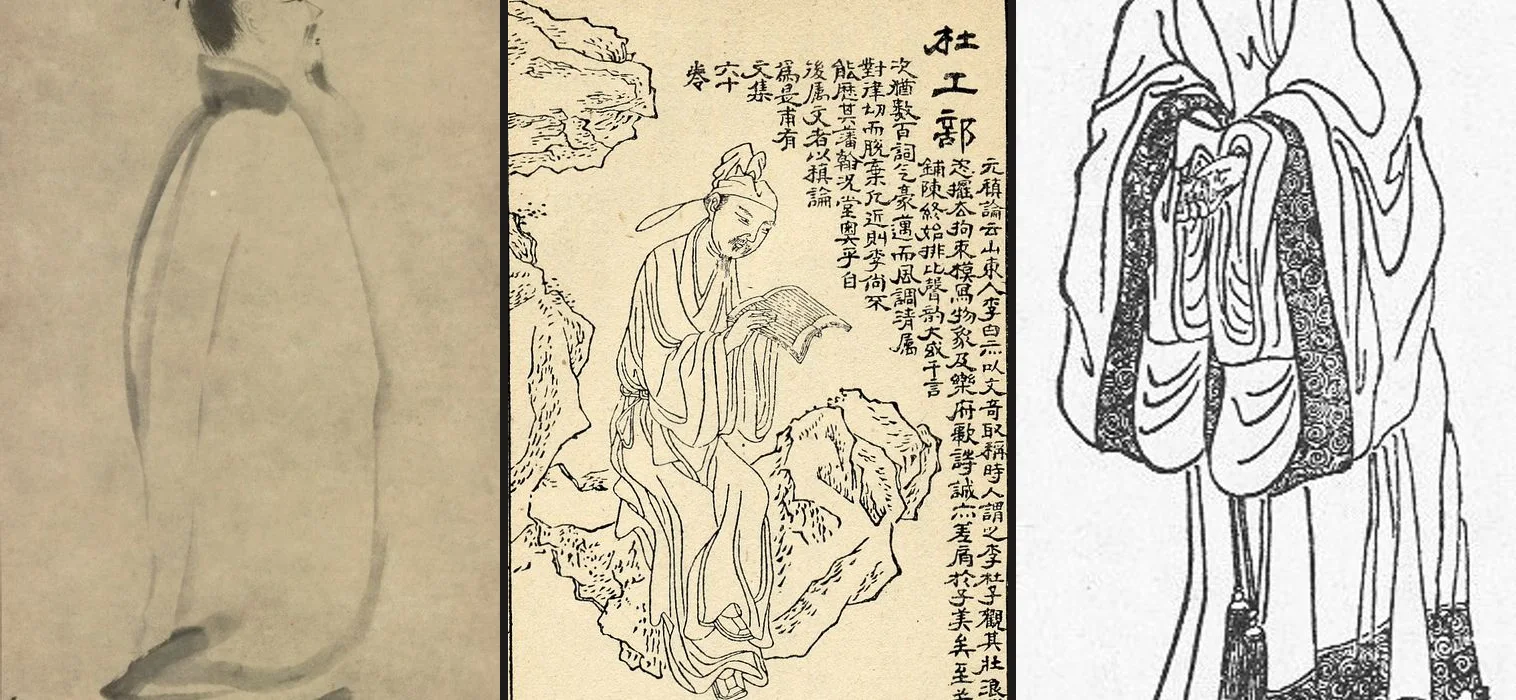
*Representative portraits of Li Bai, Du Fu and Lu Xun (Public Domain via Wikimedia Commons). Montage by DragonTrail; non-generative. These are illustrative figures across periods—not a claim they are the three greatest Chinese writers.*
How to Read Author Lists
Names function as entry points. Authorship of major novels is often traditional or debated; poets may have contested corpora; modern writers have denser documentation.
Classical Poets and Prose Models
Li Bai and Du Fu dominate Tang introductions. Historical prose models such as Sima Qian shape narrative taste that later fiction inherits.
Novelists and the Four Great
See novel entity pages for attribution language rather than repeating disputed biographies here.
Modern Writers
Lu Xun anchors many English syllabi; modern literature is broader—Modern Chinese Literature.
Women Writers and Coverage Limits
This orientation page cannot inventory every important writer. Absence is not a judgment.
FAQ
Who is the most famous Chinese writer?
Depends on period and audience. Tang poets, Four Great novel traditions and Lu Xun are common starting answers—not a universal ranking.
Why are Li Bai and Du Fu so often mentioned together?
They are the Tang poets most frequently introduced to travelers and students as paired representatives of High Tang poetry—different styles, shared period prestige—not a claim that they are the only important poets.
Authors Versus Characters
Sun Wukong is a character, not an author. Zhuge Liang in *Three Kingdoms* is a literary figure built on historical memory. Keep those categories separate when searching English web results.
Sources and Review
Portrait credits in the montage caption; literary-history caution on attribution. 2026-08-30.