
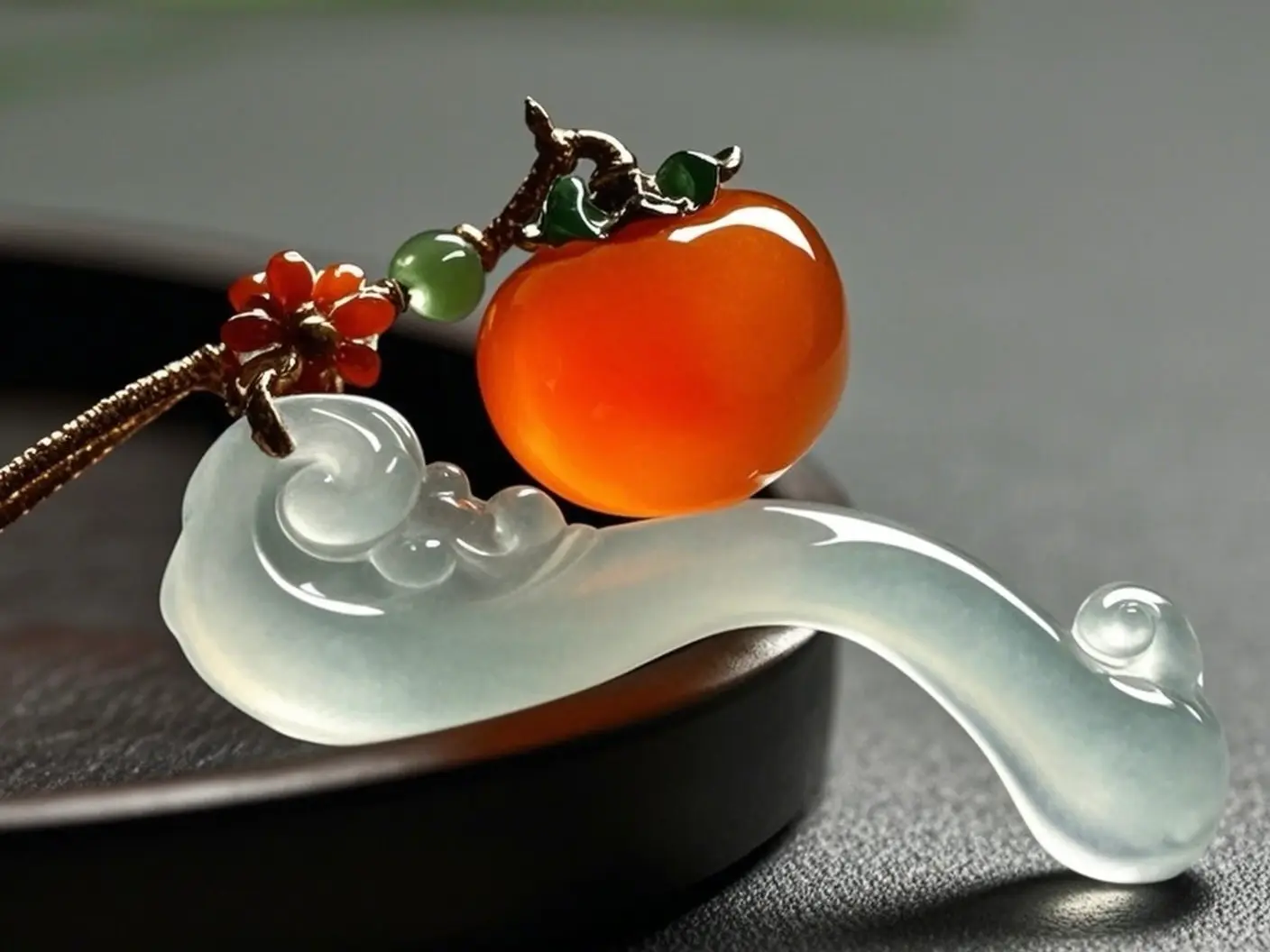
Types of Chinese Jade
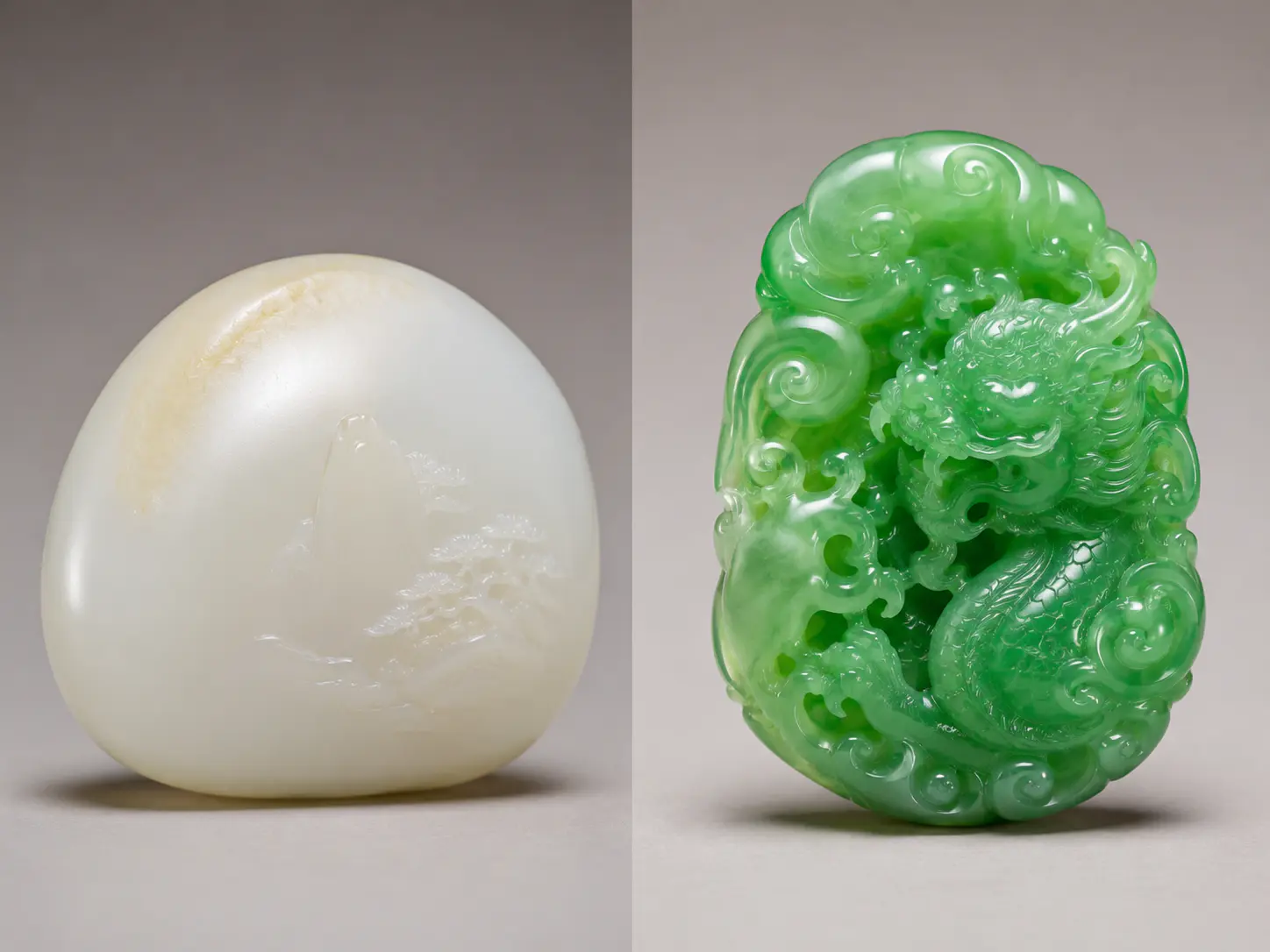 Click to enlarge
Nephrite and jadeite are both real jade, but color alone cannot prove material, treatment, origin, age, or value.
Chinese jade names can be confusing because they do not all mean the same kind of thing. In English, "jade" usually refers to nephrite or jadeite. In Chinese culture, yu (玉) is a broader cultural word that may include nephrite, jadeite, serpentine, bowenite, and other fine worked stones in historical or commercial usage. Hetian usually points to prestige nephrite from Xinjiang, Fei Cui usually points to jadeite-dominant jade, while Xiuyan, Lantian, and Nanyang/Dushan are regional jade names with different mineral backgrounds. For travelers, the safest rule is simple: read museum labels carefully and do not treat shop names as proof of material, source, age, or value.
- Reading time: 5-8 min
- Guide type: Cultural background
- Best for: Culture-curious Beijing visitors; Museum-goers before a jade gallery visit
- Less ideal for: Buyers seeking investment or appraisal advice
Types of Chinese Jade at a glance
| Topic | Traveler takeaway |
|---|---|
| Hetian | Prestige nephrite from Xinjiang; central to white jade taste and Qing imperial collections |
| Xiuyan | A northeastern Chinese jade name often associated with serpentine or mixed material, not automatically Hetian nephrite |
| Fei Cui | Commonly associated with jadeite-rich jade; modern lab terminology can also include related pyroxene materials such as omphacite and kosmochlor |
| Modern gemology | Centers on nephrite and jadeite, although laboratories may also recognize certain green omphacite material as jade |
| Label caution | Regional or commercial names do not prove material, origin, treatment, age, authenticity, or value |
Hetian
Hetian, historically known as Khotan, is the most important prestige name for Chinese nephrite. It refers to the southern Xinjiang jade tradition associated with pale green, creamy white, and "mutton-fat" nephrite. Qing imperial collections made this material especially famous through seals, vessels, scholar objects, and monumental carvings. For travelers, Hetian is best understood through museum objects first, not through market labels.
- Hetian jade is nephrite, not jadeite.
- Khotan is the older historical name; Hetian is the modern pinyin form.
- The Da Yu Taming the Floods jade mountain in the Forbidden City is the strongest Beijing example.
- For more detail, continue to the Hetian jade guide.
Xiuyan
Xiuyan is a famous jade name from Liaoning in northeast China. Unlike Hetian, it should not be treated as a simple synonym for nephrite. Xiuyan jade is often associated with serpentine or mixed materials, and its meaning can vary depending on historical, regional, and commercial context. It is important for understanding the broader Chinese use of yu (玉), but travelers should not assume that "Xiuyan jade" has the same material status, market value, or imperial prestige as Hetian nephrite.
- Xiuyan is a regional jade name, not a guarantee of nephrite.
- It helps show why Chinese yu can be broader than the English gemological word "jade."
- Use museum or specialist labels before making material assumptions.
Fei Cui
Fei Cui is commonly associated with jadeite-rich material, especially the vivid green jade linked with Myanmar/Burma sources. Modern laboratory terminology can also include related pyroxene materials such as omphacite and kosmochlor. Fei Cui became highly influential in later Chinese jewelry and market taste, which is one reason many travelers imagine jade as emerald green—but it belongs to a different material story from ancient nephrite, Hetian white jade, and many Qing imperial carvings.
- Fei Cui is usually linked with jadeite-dominant jade.
- Vivid green Fei Cui helped change modern expectations of jade color.
- Do not assume brighter green means older, more traditional, or more valuable.
- For the material difference, read the nephrite vs jadeite guide.
Label caution
Labels such as Hetian, Xiuyan, Lantian, Nanyang, Dushan, Fei Cui, "old jade," or "imperial jade" can be useful starting points, but they are not proof by themselves. Some names describe regions, some describe materials, some describe commercial traditions, and some are used loosely in shops. A museum label may explain material, date, function, and provenance; a shop label may be written mainly to sell.
- Lantian and Nanyang/Dushan are regional jade names, not automatic quality grades.
- Fei Cui is commonly associated with jadeite-rich material, but modern laboratory terminology can also include related pyroxene materials such as omphacite and kosmochlor.
- "Hetian" on a shop label does not prove origin or value.
- "Fei Cui" does not prove that a piece is untreated or high quality.
- DragonTrail does not appraise jade, certify authenticity, or guarantee market value. This guide is for cultural and traveler education only.
Common mistakes: Types of Chinese Jade
Treating all jade names as gemological categories
Some Chinese jade names describe minerals, while others describe regions, traditions, colors, or commercial categories. Hetian, Xiuyan, Lantian, Nanyang/Dushan, and Fei Cui should not be treated as interchangeable.
Assuming regional names prove origin
A regional name on a shop label does not prove that the stone came from that place. Origin, treatment, and quality require specialist testing and reliable documentation.
Equating jade type with market value
A jade name alone does not determine value. Material quality, texture, color, carving, treatment, provenance, age, documentation, and market fashion all matter.
Types of Chinese Jade FAQ
- For travelers, the most useful names are Hetian or Khotan nephrite, Fei Cui or jadeite-dominant jade, Xiuyan jade, Lantian jade, and Nanyang or Dushan jade. These names are not all the same kind of category.
- No. Ancient and imperial Chinese jade is strongly associated with nephrite, especially Hetian/Khotan material, but Chinese yu (玉) can be broader in cultural and commercial use.
- Fei Cui is the Chinese name commonly used for jadeite-dominant jade, especially vivid green material associated with Myanmar/Burma sources. It became especially important in later jewelry and market taste.
- It depends on how the word "jade" is being used. In Chinese cultural usage, Xiuyan can be called jade, but gemologically it may not be the same as nephrite or jadeite. Travelers should rely on specialist labels rather than name alone.
- Yes, they are important regional jade names in Chinese tradition. But they should not be treated as automatic proof of nephrite, jadeite, quality, age, or value.
- Start with Beijing museum collections before markets. Museum labels help separate material, period, function, region, and cultural meaning.
- DragonTrail does not appraise jade, certify authenticity, or guarantee market value. This guide is for cultural and traveler education only.
Explore jade as culture, not commodity
Chinese jade types are easiest to understand through museum labels and material context: Hetian nephrite, Fei Cui jadeite, regional jade names, Qing imperial objects, and clearly explained Beijing collections.
DragonTrail does not sell jade or offer authentication. For buying questions, read our traveler-education pages and treat any purchase as your own risk.