
| Term | Chinese / Arabic | Meaning | Traveler note |
|---|---|---|---|
| Halal (general) | 清真 (qīngzhēn) | Muslim-permitted food framing | Shop signage; standards vary |
| Hui people | 回族 (Huízú) | Chinese-speaking Muslim ethnic group | Wide geographic spread |
| Uyghur | 维吾尔族 (Wéiwú'ěrzú) | Turkic Muslim culture in Xinjiang | Distinct from Hui cuisine |
| Lanzhou beef noodles | 兰州牛肉面 | Hand-pulled noodles; often halal shops | Brand ≠ automatic certification |
| Lamb skewers | 羊肉串 | Cumin grilled lamb | Night-market staple in northwest |
| Big plate chicken | 大盘鸡 | Chicken–potato stew | Xinjiang sharing dish |
| Naan / bread | 馕 (náng) | Tandoor-style bread | Xinjiang and Silk Road cities |
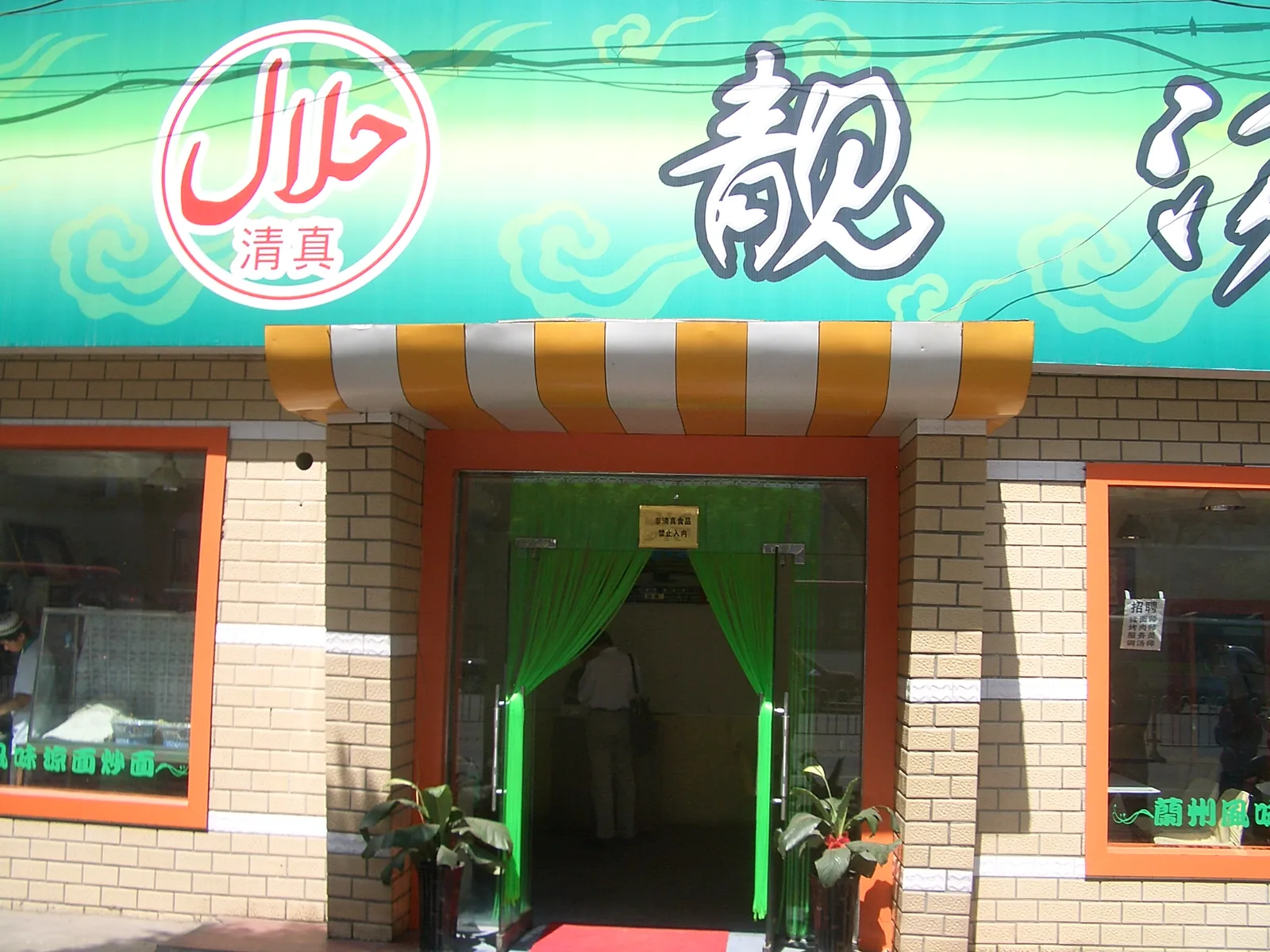
*A halal Lanzhou noodle restaurant identified by the Chinese characters 清真.*
What 清真 (Qīngzhēn) Signals
清真 appears on restaurant fronts, packaged foods and canteens serving Muslim communities. In China it generally indicates pork avoidance and Muslim slaughter practices in intention—but enforcement, certification bodies and traveller expectations differ from Malaysia, Gulf states or Western halal boards.
Treat qīngzhēn as strong orientation, not a guarantee you can audit from outside the kitchen. When observance is essential, ask how the venue sources meat and whether alcohol is served on the same premises.
Hui vs Uyghur: Not One Cuisine
| Hui (回族) | Uyghur / Xinjiang | |
|---|---|---|
| Geography | Nationwide cities; historic trade corridors | Xinjiang and Silk Road hubs |
| Language | Primarily Mandarin with Arabic script signage | Uyghur Turkic; Mandarin in cities |
| Staples | Wheat noodles, lamb, beef; Chinese-style stir-fries | Lamb, bread (馕), rice pilaf (抓饭), laghman noodles |
| Spices | Cumin, chilli in northwest Hui shops | Cumin, pepper, Central Asian profile |
| Restaurant feel | Often Chinese noodle-shop format | Central Asian grill and tea house |
Hui hotpot, Hui stir-fries and Lanzhou beef noodle chains illustrate Hui visibility. Polo (pilaf), laghman and samsa illustrate Uyghur formats—see Xinjiang & Northwest Food.
Do not collapse “Muslim food in China” into a single flavour or menu.
Where Travelers Encounter Halal Food
- City Muslim quarters (回民街等) in Xi’an, Beijing Niujie, Shanghai, Guangzhou—concentrated halal signage.
- Airport and highway halal noodle chains.
- Night markets with lamb skewers in northern and northwest cities.
- University canteens with halal windows in diverse campuses.
Major tourist cores may have fewer obvious qīngzhēn options than residential Muslim neighbourhoods—plan ahead for long sightseeing days.
Signature Dishes (Orientation)
- Lanzhou beef noodles (兰州牛肉面)—clear broth, hand-pulled wheat; many shops are Hui-operated.
- Lamb skewers (羊肉串)—cumin, chilli; street and grill contexts.
- Big plate chicken (大盘鸡)—sharing stew, often with belt noodles.
- Hand-torn lamb (手抓羊肉)—northwest banquet and family plates.
- Beef or lamb baozi—halal breakfast shops in some cities.
Named-dish context: Famous Chinese Dishes. Noodle technique: Chinese Noodles.
Halal vs Vegetarian
Halal food includes meat (typically lamb and beef) slaughtered under Muslim rules— it is not a vegetarian system. Vegetarian travelers should not assume qīngzhēn restaurants offer plant-based menus—see Vegetarian & Vegan Food in China.
Conversely, vegetable dishes at non-halal restaurants may use pork lard—halal observers should stay within qīngzhēn venues or verified hotel kitchens.
Alcohol, Pork Cross-Contamination and Kitchen Reality
Many general Chinese restaurants use shared woks, pork lard and Shaoxing wine in marinades. Halal shops usually avoid pork—but cross-contact standards vary. Alcohol may be absent in dedicated halal canteens yet present in the same hotel building elsewhere.
DragonTrail does not certify halal compliance. Travellers with strict requirements should use community referrals, mosque-adjacent districts or hotel brands experienced with halal tour groups.
Regional Guides
- Xinjiang & Northwest Food — Uyghur and Silk Road tables
- Shaanxi Cuisine — Xi’an Muslim quarter context
- Beijing food — Niujie ( Ox Street ) halal neighbourhood
- Sichuan Cuisine — occasional halal Sichuan-style; not default for province
Breakfast and Street Context
Halal mornings may include beef soup, tea, flatbread and lamian shops opening early—overlap with Chinese Breakfast. Street skewer hygiene varies—busy turnover is a practical signal, not a guarantee.
Ingredients Overlap
Cumin, chilli, wheat flour and lamb anchor many northwest pantries—Ingredients, Sauces & Flavours. Sichuan pepper appears in some Muslim-operated noodle shops but is not defining for all halal food in China.
Practical Tips for Visitors
- Learn to recognise 清真 signage on shop fronts and packaging.
- Carry a Chinese explanation of your dietary requirement if you do not speak Mandarin.
- Visit Muslim quarters early in multi-day city stays—not only tourist districts.
- Do not assume every “beef noodle” shop is halal—look for qīngzhēn or confirm.
- Separate halal from “no pork”—non-pork kitchens may still use non-halal slaughter or alcohol.
Xi'an, Beijing Niujie and Silk Road Cities
For a city-level visit plan, see the Muslim Quarter & Great Mosque guide and Xi'an food
Xi'an Muslim Quarter (回民街) concentrates skewers, bread, lamb soup and souvenir snacks—high visitor traffic means quality varies by stall; follow busy local queues rather than front-street displays alone.
Beijing Niujie (牛街) serves Hui communities year-round—not only during tourism peaks. It pairs with the wider Beijing food guide for non-halal Beijing specialities elsewhere in the city.
Urumqi, Kashgar, Lanzhou on northwest itineraries expose Uyghur and Hui formats side by side—language, signage and spice profiles differ; use Xinjiang & Northwest Food before treating “northwest China” as one menu.
Certification and Packaging
Packaged foods may show halal certification marks from domestic bodies—standards differ from halal boards in Southeast Asia or the Gulf. Imported snacks in Chinese supermarkets may carry dual labels; read Chinese ingredient lists when English is absent.
Restaurants rarely display foreign halal certificates unless targeting international tour groups—qīngzhēn signage remains the visible local signal.
Travel During Ramadan and Holidays
Muslim communities observe Ramadan and Eid with changed shop hours and festival foods—some daytime closures at halal canteens; evening markets busier. Non-Muslim-majority cities show lighter observance. DragonTrail does not publish prayer timetables—use local community resources when scheduling meals.
Mixed-Group Travel
Tour groups with mixed halal and non-halal diners should split meals explicitly—one qīngzhēn restaurant meal and one general restaurant meal often works better than asking a single pork-heavy kitchen to accommodate everyone. Communicate with your operator before day-long rural drives where halal signage thins out.
Language and Signage Tips
Useful visible characters:
- 清真 — halal shop framing.
- 回族 — Hui context on signage or museum labels.
- 新疆 — Xinjiang regional food (often lamb, bread, cumin)—not automatically halal without qīngzhēn.
Pinyin alone may not appear on older shop fronts—recognise Arabic-script halal marks on some packaging alongside Chinese.
Train and airport Muslim meal options on Chinese domestic carriers vary by route and booking class—pre-order when available and confirm content at pickup; do not assume every flight offers halal trays.
Lamb, Beef and Noodle Shop Etiquette
Busy lamian shops may ask you to pay first, collect a ticket, then wait at a counter—halal signage does not always mean English menu support. Pointing at neighbouring bowls remains a practical ordering strategy; confirm no pork toppings on shared condiment stations.
What This Page Does Not Claim
- No universal halal certification standard across all of China.
- No religious authority—for fiqh questions, consult qualified scholars.
- Not a restaurant directory—DragonTrail does not rank halal venues nationally.
For broth and ingredient checks at the table, see Halal Hot Pot in China and the Chinese Hot Pot hub.
FAQ
What does 清真 (qīngzhēn) mean on a restaurant?
It indicates Muslim-operated or Muslim-permitted food framing—typically no pork; details vary by venue and region.
Is all Lanzhou beef noodle halal?
Many shops are Hui Muslim-operated, but branding alone is not proof—look for qīngzhēn signage or confirm slaughter practice.
How is Uyghur food different from Hui food?
Uyghur Xinjiang cuisine reflects Central Asian bread, pilaf and laghman traditions; Hui food often integrates Chinese noodle-shop and stir-fry formats—both can be halal.
Is halal food available in Beijing?
Yes—Niujie and scattered qīngzhēn restaurants; tourist-core density is lower than in Muslim quarter neighbourhoods.
Does halal mean vegetarian?
No—halal meals commonly include lamb and beef; vegetarian needs are a separate guide.
Can I trust halal labels on packaged snacks?
Standards vary; read ingredients and look for recognised certification marks when critical.
Where does halal food fit in Chinese food overall?
One important thread among many regional and ethnic cuisines on the Chinese Food hub—not a separate “national cuisine” replacing others.
Continue with Chinese Food
- Chinese Food guide
- Xinjiang & Northwest Food
- Vegetarian & Vegan Food in China
- Chinese Noodles
- Chinese Breakfast
Regional cuisine guides
- Shaanxi Cuisine
- Sichuan Cuisine
- Cantonese Cuisine
Experience food in Beijing
Sources & Review
- State ethnic affairs and cultural tourism materials on Hui and Xinjiang food traditions
- UNESCO — Chinese cuisine nomination (2026 evaluation cycle)
- Chinese characters verified
- Author: DragonTrail editorial
- Last reviewed: August 2026