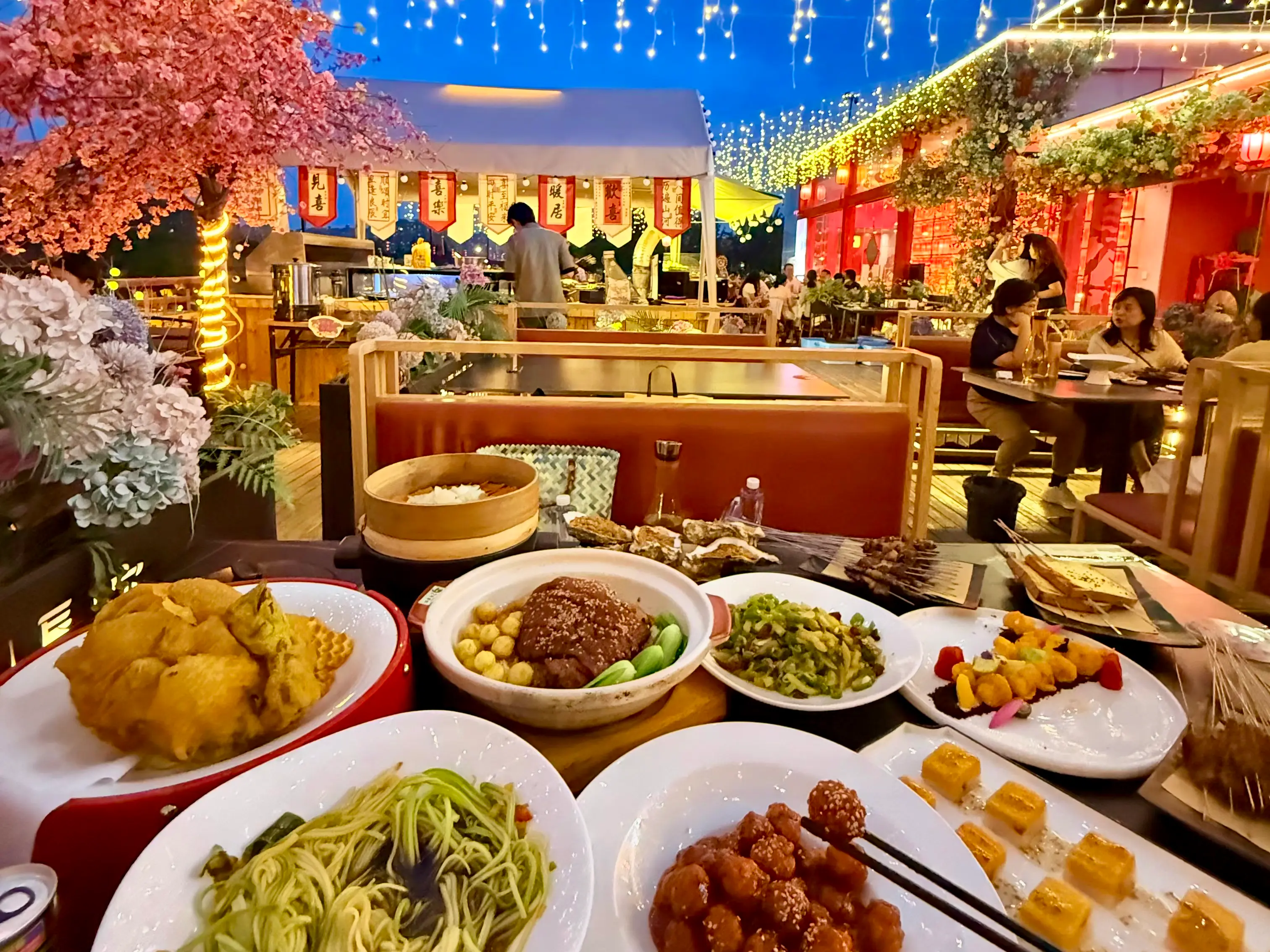
- Signature dish: Yangrou paomo (羊肉泡馍, Yángròu Pàomó) — bread soaked in lamb broth
- Famous sandwich: Roujiamo (肉夹馍, Ròujiāmó) — meat stuffed into a flatbread
- Famous noodle: Biangbiang noodles (biángbiángmiàn) — wide, hand-pulled wheat noodles
- Cold noodle dish: Liangpi (凉皮, Liángpí) — can be made from wheat- or rice-derived starch depending on style; sauces and garnishes vary
- Where to find Hui Muslim food: The Muslim Quarter is the main visitor concentration for Hui Muslim food, not the only place to eat Xi'an food
- Dietary note: Classic Shaanxi roujiamo often uses pork; choose an explicitly Muslim/halal vendor if that matters
What is Xi'an actually famous for eating?
Two overlapping food traditions matter in Xi'an: Hui Muslim cooking (especially beef and mutton in the Muslim Quarter) and broader Shaanxi wheat-based cooking (noodles, flatbreads and classic pork roujiamo). They share streets and menus, but they are not identical — and not every vendor in the Muslim Quarter represents every form of Xi'an cuisine.
Broader Xi'an / Shaanxi food culture
Includes pork roujiamo, biangbiang noodles, liangpi, wheat noodles, flatbreads and other Shaanxi noodle and bread traditions. These are not inherently Hui or halal — preparation depends on the restaurant or vendor.
Yangrou paomo
Yangrou paomo / niurou paomo is particularly associated with Xi'an's Hui Muslim food tradition and is commonly prepared with mutton or beef broth. Do not treat pork paomo as part of the Muslim Quarter tradition.
Roujiamo
Classic Shaanxi roujiamo commonly uses slow-braised pork, while halal versions in Xi'an's Hui Muslim food areas use beef or mutton. If halal preparation matters, choose a Muslim restaurant or vendor rather than assuming every roujiamo is halal.
Biangbiang noodles and liangpi
Keep these as broader Shaanxi / Xi'an foods. They are not inherently labeled as halal — if halal status matters, choose an explicitly halal Muslim restaurant.
Xi'an's signature dishes compared
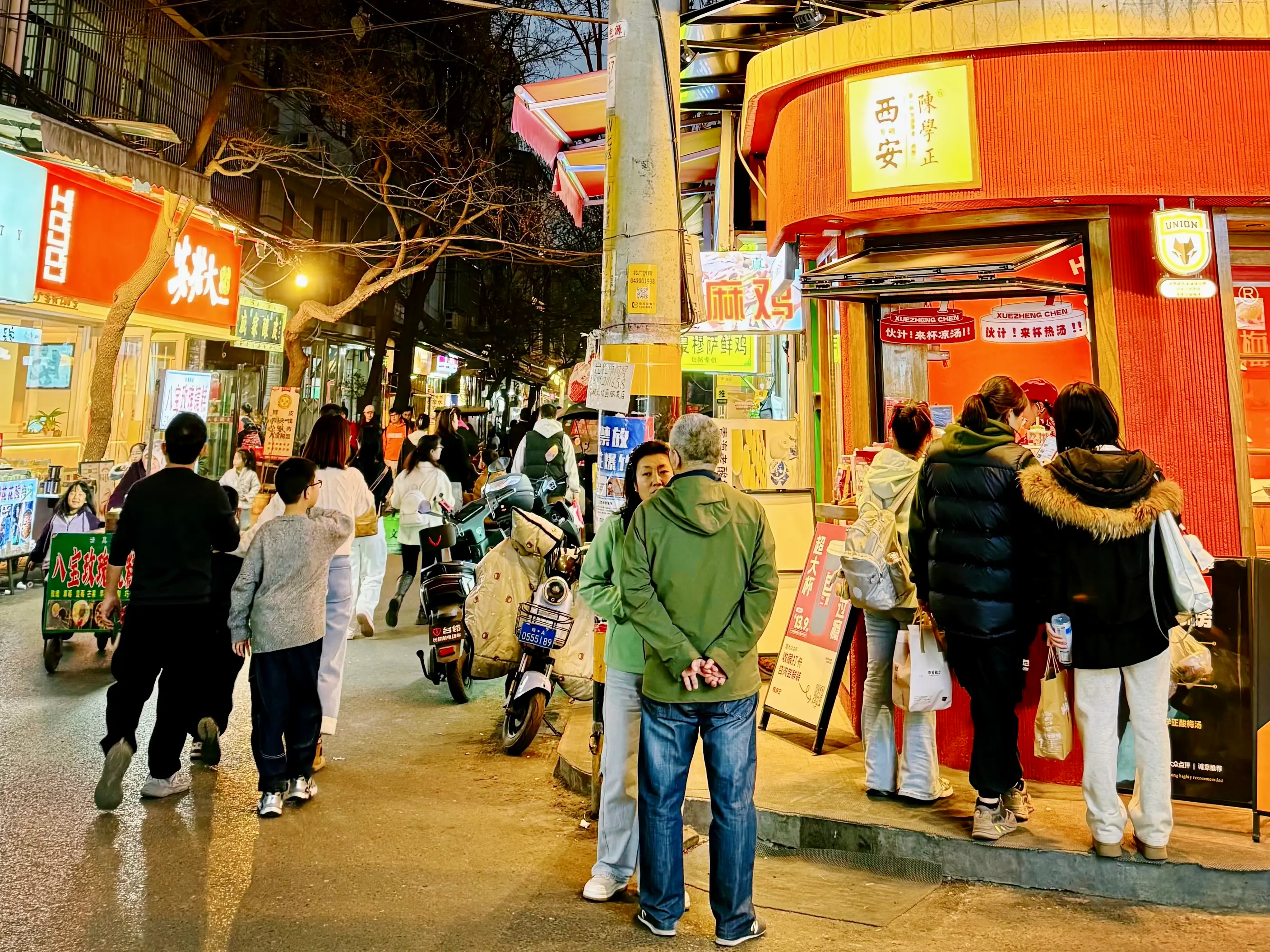
The Muslim Quarter's Beiyuanmen Muslim Street is where you'll find the widest concentration of Hui Muslim vendors for paomo and halal beef/mutton dishes. Broader Shaanxi staples such as pork roujiamo, biangbiang noodles and liangpi appear across the city, not only there.
| Dish | Chinese | What it is | Typical protein |
|---|---|---|---|
| Yangrou paomo | 羊肉泡馍 | Bread soaked in mutton or beef broth; Hui Muslim Xi'an tradition | Mutton or beef |
| Roujiamo | 肉夹馍 | Meat stuffed into flatbread | Classic Shaanxi: slow-braised pork; Hui/halal versions: beef or mutton |
| Biangbiang noodles | biángbiángmiàn | Wide hand-pulled wheat noodles (broader Shaanxi/Xi'an; not inherently halal) | Varies — often a light meat or vegetable topping |
| Liangpi | 凉皮 | Cold wheat or rice noodles in savory sauce (broader Shaanxi/Xi'an; not inherently halal) | Usually vegetarian-friendly, though sauces vary |
Halal and dietary questions
Many Muslim Quarter vendors follow halal preparation for lamb and beef dishes, but this isn't automatically true of every stall, every dish, or every Xi'an restaurant outside the quarter. Ask directly if dietary rules matter rather than assuming from the neighborhood or dish name alone.
Common Xi'an food mistakes
Assuming every Muslim Quarter stall is identical
Quality, recipe and even how a dish is described in English vary a lot between vendors on the same street. Don't judge the whole neighborhood by one stall.
Assuming every Xi'an dish is Hui Muslim or halal
The Muslim Quarter is important to Xi'an food culture, but classic pork roujiamo, biangbiang noodles and liangpi belong to a wider Shaanxi wheat tradition — treat them separately unless the vendor is explicitly Muslim/halal.
Ordering yangrou paomo without knowing what you're getting
It's a bread-and-broth dish you often assemble or season yourself at the table — ask if you're unsure what to do with it.
Overlooking liangpi as 'just a side dish'
It's a standalone dish in its own right, not a minor side, and a good lighter option if you've already had something heavier.
Xi'an food FAQ
- Yangrou paomo, roujiamo, biangbiang noodles and liangpi are the dishes most consistently associated with the city. Paomo and many Muslim Quarter specialties belong to Hui Muslim food culture; pork roujiamo, biangbiang noodles and liangpi sit in the broader Shaanxi wheat tradition.
- Yangrou paomo / niurou paomo is particularly associated with Xi'an's Hui Muslim food tradition: unleavened bread soaked in mutton or beef broth, often seasoned at the table with chili paste and pickled garlic.
- Roujiamo is meat stuffed into a flatbread — classic Shaanxi versions commonly use slow-braised pork, while halal Muslim Quarter versions use beef or mutton. Biangbiang noodles are wide, hand-pulled wheat noodles usually served with chili oil and a simple topping; they are a broader Shaanxi staple, not inherently halal.
- The Muslim Quarter has a strong halal food tradition for beef and mutton dishes, but not every Xi'an dish or vendor is halal — classic pork roujiamo is a clear example. Ask directly if this matters to you.
- Beiyuanmen Muslim Street in the Muslim Quarter has the widest concentration of Hui Muslim vendors for paomo and related dishes, though good Shaanxi noodle and bread food exists elsewhere in the city too.
- A cold noodle dish made from wheat or rice starch, served in a savory, vinegar-forward sauce — often eaten as a lighter dish alongside heavier lamb or meat dishes.
- Liangpi and some noodle dishes can work for vegetarians, but sauces and broths vary by vendor — ask about ingredients rather than assuming from the dish name alone.
Plan a Xi'an visit
Use this guide with the Muslim Quarter page and the city itinerary so meals fit the same geographic blocks as your sightseeing.
City overview Muslim Quarter & Great Mosque Want a custom day that includes food stops?
Explore Xi'an food while planning your city routePlan a custom Xi'an day