
| Category | Chinese examples | Role on the plate | Traveler note |
|---|---|---|---|
| Light soy sauce | 生抽 (shēngchōu) | Salty seasoning, colour | Not “low sodium”—different from dark soy |
| Dark soy sauce | 老抽 (lǎochōu) | Colour, mild sweetness | Used in red braising |
| Zhenjiang / Shanxi vinegar | 镇江醋 / 山西醋 | Sour backbone | Black vinegar dips for dumplings |
| Shaoxing rice wine | 绍兴酒 | Aroma, deglazing | Cooking wine vs drinking grade |
| Oyster sauce | 蚝油 (háoyóu) | Umami glaze | Cantonese stir-fries; contains shellfish |
| Hoisin-style sweet paste | 海鲜酱 / 甜面酱 variants | Sweet-savoury roast and wrap sauces | Names vary by brand and region |
| Doubanjiang | 豆瓣酱 | Sichuan chilli–broad-bean paste | Mapo tofu, twice-cooked pork base |
| Douchi | 豆豉 | Fermented black bean | Fish-fragrant sauces |
| Chilli oil | 辣椒油 / 红油 | Heat and aroma | Table condiment and finishing oil |
| Sichuan pepper | 花椒 (huājiāo) | Numbing citrus note (má) | One spice in Sichuan systems—not “the” defining spice of all Chinese food |
| Star anise, cassia | 八角, 桂皮 | Warm braising spice | Five-spice profile |
| Five-spice powder | 五香粉 | Mixed warm spice | Roasts and marinades |
| White pepper | 白胡椒 | Sharp heat in soups | Cantonese fish soups |
| Sesame paste / oil | 芝麻酱 / 芝麻油 | Nutty finish | Noodles and cold dishes |
| MSG / guanylate seasonings | 味精 / 呈味核苷酸 | Umami amplification | Common in restaurants; ask if avoiding |
| Stock powders / concentrates | 鸡精 / 高汤料 | Quick broth base | May contain chicken or pork |
| Fermented tofu | 腐乳 | Strong umami spread | Breakfast and hotpot dips |
| Preserved mustard greens | 酸菜 / 冬菜 | Sour-salty accent | Hotpot and fish dishes |
| Ginger, scallion, garlic | 姜葱蒜 | Aromatic base | “Holy trinity” of many stir-fries |
Flavour systems differ by region—Sichuan Cuisine layers má–là; Cantonese Cuisine often prioritises ingredient clarity with lighter seasoning.
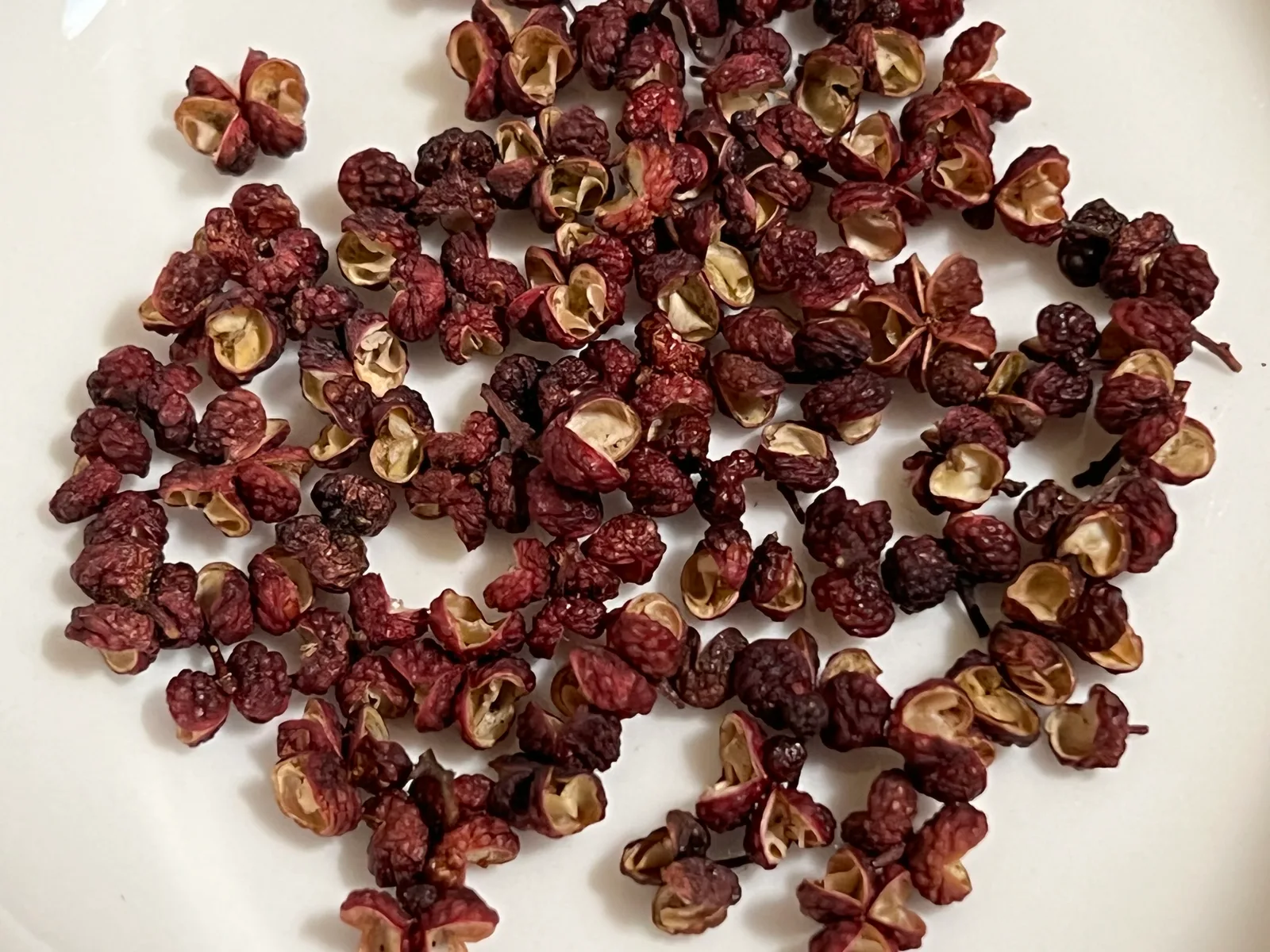
*Sichuan pepper produces the numbing ma sensation central to many Sichuan and Chongqing dishes.*
Soy Sauces and Salty Seasoning
Light soy (生抽) seasons and salts; dark soy (老抽) adds colour and rounded sweetness in braises. Sweet soy and thick soy pastes appear in southern roasts and Taiwanese-influenced shops.
Travelers comparing dishes across cities should expect different soy brands and salt levels—not one national soy profile.
Vinegars and Sour
Black vinegar (陈醋) from Shanxi or Zhenjiang accompanies dumplings and cold noodles. Rice vinegar (米醋) pickles vegetables and dresses salads. Sweet-sour restaurant sauces combine vinegar with sugar and sometimes ketchup in diaspora adaptations—mainland versions may taste sharper or less sweet.
Fermented Pastes and Beans
Doubanjiang (豆瓣酱)—broad-bean paste with chilli—is the backbone of many Sichuan sauces. Douchi (豆豉) ferments black beans for fish-fragrant (鱼香) profiles. Yellow bean paste (黄豆酱) anchors northern dips and braises.
Fermentation depth explains why two “chilli bean” dishes taste unrelated—paste brand and age matter.
Oils, Aromatics and Finishing
Chilli oil (辣椒油) may be table-side or wok-finished. Sichuan peppercorn oil (花椒油) adds má without whole peppercorns. Sesame oil (芝麻油) is often a finishing oil—too much heat destroys aroma.
Scallion, ginger and garlic (葱姜蒜) start countless stir-fries; white part of scallion versus green timing changes flavour.
Regional Flavour Labels
Menus—especially Sichuan—use compound flavour names:
| Label | Chinese | Typical impression |
|---|---|---|
| Málà | 麻辣 | Chilli heat + huājiāo numbing |
| Yúxiāng | 鱼香 | Garlic–ginger–chilli–sweet-sour (often no fish) |
| Guànlì | 怪味 | “Strange flavour”—multi-note sweet, sour, nutty |
| Suanlà | 酸辣 | Hot and sour soup profile |
| Wēilà | 微辣 | Mild chilli—useful order keyword |
Hunan Cuisine more often emphasises fresh chilli and smoke than huājiāo numbing—do not collapse “spicy Chinese” into one sensation.
Umami Beyond Soy
Oyster sauce, mushroom powder, dried shrimp, stock reductions and MSG (味精) amplify savoury depth. Chicken stock (鸡汤) or pork bone stock (骨汤) underpins soups and hotpot—vegetable-named dishes may still use meat stock.
Staples: Wheat, Rice and Starches
Ingredients layer includes wheat flour (面, 饺子皮), rice (米), glutinous rice (糯米), mung bean starch (粉丝), tapioca in pearls and cornstarch (生粉) for velveting meat. Staple geography context on the Chinese Food hub—not a strict north–south rule for every meal.
Related: Chinese Noodles · Chinese Breakfast.
Hidden Animal Ingredients (Orientation Only)
Vegetarian and vegan travelers often encounter non-obvious animal products. Common examples—not an exhaustive allergen list:
- Stock: “Vegetable” soups may use chicken or pork stock.
- Oyster sauce and dried seafood in otherwise vegetable stir-fries.
- Lard (猪油) in pastry, buns or wok seasoning.
- Shrimp paste or fish sauce in chilli pastes and curry bases.
- Eggs in noodles, fried rice or marinating washes.
- Meat floss (肉松) on congee and pastries.
Buddhist vegetarian restaurants (斋菜) aim to avoid these—still confirm kitchen practice. Full dietary context: Vegetarian & Vegan Food in China.
Halal and Muslim Pantry Context
Halal (清真, qīngzhēn) food avoids pork and requires slaughter compliance in Muslim tradition—Hui and Uyghur cuisines differ in spice and format despite shared halal framing. Lamb, cumin and wheat noodles dominate many northwest pantries; Cantonese halal roast shops exist in some cities.
Do not assume every noodle shop without pork is certified halal—see Halal & Muslim Food in China.
Sauces at the Table
Restaurants may provide soy, vinegar, chilli oil, garlic paste, sesame paste and coriander–scallion mixes. Hotpot stations add sesame paste, oyster sauce, fermented tofu and custom oil blends—composition varies by region.
How Ingredients Link to Techniques
Sauce timing depends on technique—Chinese Cooking Techniques:
- Stir-fry: aromatics first, paste mid-heat, thin sauce to reduce.
- Red braise: dark soy early, sugar caramelisation, long simmer.
- Steam: light soy and oil after cooking.
Shopping and Labels for Travelers
Markets sell bulk spices, pickles and pastes—hygiene and labelling vary. Packaged souvenirs may list Chinese only or incomplete allergen English. Smell and colour help recognise Sichuan pepper versus black peppercorn, but purchase decisions should not rely on this page as safety guidance.
Regional Pantry Sketches
| Region guide | Pantry tendencies |
|---|---|
| Sichuan | Doubanjiang, huājiāo, chilli, pickled greens |
| Cantonese | Light/dark soy, oyster sauce, rice wine, ginger-scallion |
| Hunan | Fresh chilli, smoked meat, fermented black beans |
| Shandong | Vinegar, scallion, clear stock, wheat foods |
| Xinjiang & Northwest | Cumin, lamb fat, wheat noodles, chilli flake |
These are orientation sketches—border cities and migration blend pantries.
Sweetness, Oil and “Heavy” Perception
Travelers sometimes describe mainland food as oily or sweet compared with diaspora takeaway. Causes include:
- Restaurant portioning for shared tables—more sauce per plate.
- Sugar in braises (especially eastern and export-influenced shops).
- Chilli oil volume in Sichuan and Hunan service.
- MSG and stock concentrates amplifying savoury depth.
Asking for less oil (少油) or mild chilli (微辣) is possible in many venues—polite clarification beats assumptions.
Cold Dishes and Salads
Liángcài (凉菜)—cold starters—use vinegar, sesame paste, chilli oil and garlic. They appear before hot mains in many restaurants. Salad-style raw vegetables are less central than in Western diets; blanched or pickled formats dominate.
Dipping Sauces and Table Mixing
Hotpot and lamb shops invite custom dip construction—sesame paste thinned with broth, vinegar spike, raw garlic, coriander. The same ingredient base tastes different by table mixing habit—observe locals before copying.
Sugar, Salt and Restaurant Defaults
Restaurant kitchens often season heavier than home cooks for shared plates and rice pairing. Sugar appears in eastern braises and some export-influenced stir-fries; salt arrives via soy, pickles and stock concentrates—not only the salt shaker. Tasting before adding soy at the table prevents double-salting steamed fish and poached seafood.
When shopping for souvenirs, whole spices (star anise, cassia, Sichuan pepper) travel well; open pastes (doubanjiang, oyster sauce) need refrigeration and may not clear customs—check baggage rules before buying jars.
Linking Pantry to Famous Plates
| Dish (see Famous Dishes guide) | Pantry signals |
|---|---|
| Mapo tofu | Doubanjiang, huājiāo, douchi |
| Char siu | Hoisin-style sweet paste, maltose glaze |
| Red-braised pork | Dark soy, rock sugar, ginger |
| Lanzhou beef noodles | Clear beef stock, chilli oil, white radish |
| West Lake vinegar fish | Zhejiang vinegar, sugar balance |
Named-dish list: Famous Chinese Dishes.
FAQ
What is the difference between light and dark soy sauce?
Light (生抽) primarily seasons; dark (老抽) colours and rounds braises— they are not interchangeable by volume.
Is Sichuan pepper the defining Chinese spice?
No—it is important in Sichuan and related traditions but Chinese pantries span soy, vinegar, fermentation and coastal seafood without huājiāo.
Does oyster sauce contain shellfish?
Yes—avoid if shellfish-allergic unless a verified substitute is used.
Is MSG common in Chinese restaurants?
Yes in many venues; some omit it on request—communication helps, not assumptions.
What is fish-fragrant sauce?
鱼香—a garlic–ginger–chilli flavour profile often used with eggplant or pork; historically named, not always containing fish.
Where do fermented flavours appear?
Doubanjiang, douchi, pickled greens, suancai—especially Sichuan hotpot and noodle soups.
How does this relate to famous dishes?
Famous Chinese Dishes names plates; this page names the pantry behind them.
Continue with Chinese Food
- Chinese Food guide
- Chinese Cooking Techniques
- Famous Chinese Dishes
- Vegetarian & Vegan Food in China
- Halal & Muslim Food in China
Regional cuisine guides
Sources & Review
- UNESCO — Chinese cuisine nomination (2026 evaluation cycle)
- Fuchsia Dunlop, *Land of Plenty* — Sichuan pantry reference
- Cantonese culinary literature on soy, oyster sauce and stock traditions
- Chinese characters verified
- Author: DragonTrail editorial
- Last reviewed: August 2026