
| Street format | Examples | Typical setting | Traveler note |
|---|---|---|---|
| Griddle / bing | Jianbing, shaobing | Morning rush; hutong corners | Eat walking or standing |
| Steamer carts | Baozi, shumai | Bus stops; markets | Point at visible buns |
| Skewers | Chuan (串), lamb sticks | Night markets; tourist streets | Spice level varies |
| Soup counters | Noodle soup, wonton | Shopfront stools | Quick lunch |
| Sweet snacks | Tanghulu, egg waffles | Festivals; shopping streets | Seasonal |
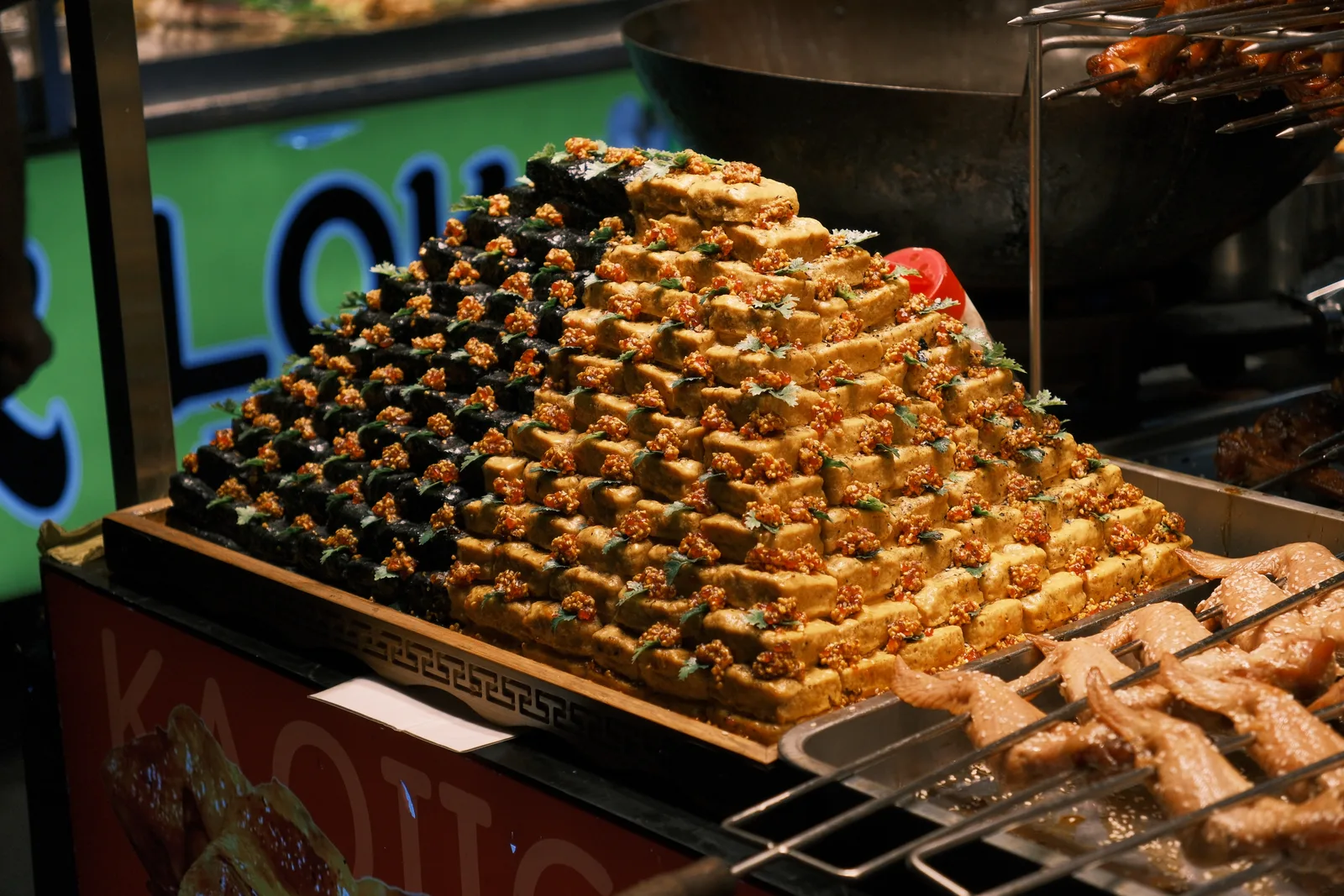
| Regional specialty | Stinky tofu, roujiamo | City-specific fame | Ask before strong aromas |
Cluster siblings: breakfast, noodles and dining etiquette.
What Counts as Street Food in China
Street food is defined by service format more than dish name: cooked to order at a small stall or narrow shopfront, priced for one person, eaten soon after purchase. Some "street famous" dishes now live in indoor shops with seats—still culturally "street food" if the recipe and price point remain snack-oriented.
Municipal governments periodically regulate vendor locations, especially in central districts. Beijing has moved some informal vendors indoors or into designated zones; travelers should expect variation year to year. Night markets in tourist cities may be curated for visitors—still useful tasting, not identical to every local commute snack.
*Freshly cooked jianbing-style wraps with egg, sesame and crisp fillings.*
Regional Street Food Personalities
Beijing — Jianbing, lamb skewers near nightlife zones, candied haw (tanghulu) in winter, doujiang-youtiao morning pairs. Hutong density matters: residential lanes differ from Qianmen tourist strips. Dedicated city guide: Beijing street food.
Chengdu and Chongqing — Chili-forward snacks, rabbit head and duck neck (adventurous), noodles in small bowls, hotpot-adjacent street bites.
Xi'an — Muslim quarter roujiamo (meat-in-bread), biangbiang and cold noodles spilling from shop doors.
Guangzhou — Cheung fun counters, double-skin milk dessert shops, seafood stalls in coastal districts.
Shanghai — Shengjian bao (pan-fried buns), scallion-oil bing, soup dumplings at snack price points in older neighborhoods.
Each city rewards local research over a generic "top ten China street foods" list—see Beijing food for capital planning.
Street Food vs Restaurant vs Home Cooking
| Layer | Role |
|---|---|
| Home | Daily meals; family recipes |
| Canteen / fast casual | Office lunch; chains |
| Sit-down restaurant | Shared dishes; banquets |
| Street / snack | Quick, portable, often one item focus |
Street food rarely replaces a full shared-dish dinner—it supplements breakfast, afternoon hunger and late-night social eating.
Hygiene, Safety and Choosing Stalls
Practical heuristics (not guarantees):
- High turnover — busy stall at peak meal time
- Cook-to-order — skewers grilled fresh; avoid long-sitting buffets in heat
- Clean water context — soup shops with steady boil
- Shellfish and summer — extra caution in hot weather
Travelers with severe allergies should treat street food as high-risk for cross-contact; packaged snacks from supermarkets are safer fallback.
Night Markets and Tourist Streets
Night markets cluster lighting, variety and social atmosphere—excellent for first exposure but sometimes inflated prices near scenic sites. Wangfujing-style "exotic skewer" displays are spectacle as much as cuisine; locals may eat elsewhere.
Photography etiquette: vendors are working; ask before close-up video. Crowds pickpocket—secure bags.
Street Food and Festivals
Holiday periods add seasonal stalls—tanghulu in winter, mooncake samples around Mid-Autumn, zongzi before Dragon Boat Festival. Deeper festival context: Chinese New Year foods.
Halal, Vegetarian and Dietary Filters
Muslim quarters in Xi'an, Lanzhou and Yinchuan offer halal skewers and bread without pork—still ask about marinades. Buddhist temple vicinity shops may sell vegetarian mock-meat snacks; not universal nationwide. See Halal & Muslim Food in China.
Street Food in Beijing for Travelers
Beijing street eating spans morning jianbing, lunch noodle counters and evening skewers. Tourist hutongs concentrate vendors; residential districts show everyday pricing. For curated context—what to try, how to order, hutong routing—use Beijing street food alongside this national overview.
Combine with Chinese breakfast for morning formats and Chinese noodles when soup bowls dominate.
How Street Food Fits a Trip Plan
| Trip style | Street food role |
|---|---|
| Short layover | One iconic snack + sit-down meal |
| Week in one city | Rotate breakfast stall, lunch shop, night market |
| Food-focused tour | Pair market walk with cooking class |
DragonTrail Beijing food experience can integrate market stops with translation—optional, not mandatory for independent snacking.
Price, Payment and Queuing
Street snacks typically cost ¥5–25 per item in mainland cities (2026 ballpark—verify locally). Mobile pay (WeChat Pay, Alipay) dominates; cash still works in some elderly-run stalls. Peak queues reward deciding before reaching counter—jianbing customization (extra egg, no cilantro) speeds the line if decided early.
Seasonal Street Food
Summer — grilled skewers, cold noodles, fruit cups, bubble tea adjacent to snack strips.
Winter — tanghulu (candied haw), roasted sweet potato, lamb soup counters, steam-heavy buns.
Seasonal rhythm overlaps Festival & New Year Foods when holiday ingredients flood markets.
From Street Snack to Sit-Down Shop
Many famous "street" brands graduate indoors—shaobing shops with seats, noodle counters with air conditioning, skewer chains with printed menus. The cultural label sticks even when the stall is gone. Travelers should judge by food format and price, not only by sidewalk presence.
Media vs Everyday Street Food
Social media amplifies photogenic items—cheese pulls, exaggerated portion sizes, neon night-market aesthetics. Local commute snacks may be plainer—mantou, tea egg, simple bing. Both are valid street food; do not assume viral lists match neighborhood habit.
Connecting to the Wider Cluster
After street tasting, sit-down meals use Dining Etiquette in China. Wheat and rice snack logic ties to Chinese Noodles and Chinese Breakfast. Northwest skewers link Xinjiang & Northwest Food.
Language and Ordering at Stalls
Point-and-pay works; useful phrases: 一个 (one), 不要辣 (not spicy), 打包 (takeaway). Photo menus on walls help when Chinese-only. Tourist strips near Beijing street food may label English—residential stalls rarely do.
Street Food and Dining Etiquette Boundary
Standing at a griddle is not rude—it is the format. Graduating to a stool noodle shop introduces shared condiment jars and communal chili pots—use clean spoon when provided. Full banquet rules activate only at sit-down shared-dish restaurants—see Dining Etiquette.
Smell-forward items—stinky tofu, strong lamb—signal authenticity to some locals and barrier to others; sample small portions before committing to full skewer sets on first visit.
For capital-specific vendor geography and hutong routing, prioritize Beijing street food alongside this national overview—Beijing is where many international visitors first encounter Chinese street snacks in a walkable hutong context.
FAQ
Is Chinese street food safe for tourists?
Many travelers eat street food daily without issue; choose busy cook-to-order stalls and use usual travel caution with water and shellfish.
What is the most famous Chinese street food?
No single winner—jianbing in the north, roujiamo in Xi'an, stinky tofu in Changsha and tanghulu in Beijing are among widely cited names.
Are night markets the same as street food?
Night markets are a venue format aggregating street-style vendors; daytime hutong stalls belong to the same cultural layer.
Can vegetarians eat Chinese street food?
Limited but possible—jianbing without egg or meat, roasted sweet potato, some tofu snacks; confirm sauces for oyster or chicken stock.
Where is the best street food in Beijing?
Mix residential hutong mornings with researched evening zones—see Beijing street food.
Do street vendors speak English?
Rarely outside core tourist strips; point-and-pay or translation apps help.
How does street food relate to dining etiquette?
Eat standing or at stool counters without formal banquet rules; shared-plate etiquette applies if you graduate to sit-down snack shops—see Dining Etiquette.
Is street food cheap?
Usually yes compared with sit-down restaurants; tourist-zone pricing can match restaurant levels for famous items.
Continue with Chinese Food
- Chinese Food guide
- Chinese Breakfast
- Chinese Noodles
- Festival & New Year Foods
- Dining Etiquette in China
City guides
Sources & Review
- Municipal vendor regulation summaries — Beijing and major city commerce bureaus
- Regional snack heritage — provincial intangible cultural heritage lists where published
- Chinese characters verified
- Author: DragonTrail editorial
- Last reviewed: August 2026