
| Item | Detail |
|---|---|
| Chinese | 川菜 (chuāncài) |
| Core region | Sichuan Province; influences in Chongqing and upper Yangtze cities |
| Signature sensations | Chilli heat, huājiāo numbing, fermented bean pastes, layered aromatics |
| Common techniques | Stir-frying, dry-frying, braising, steaming, pickling, smoking |
| Staples | Rice, wheat noodles, pickles, preserved vegetables |
| Famous examples | Mapo tofu, kung pao chicken, twice-cooked pork, hotpot |
| Important qualification | Not every Sichuan dish is intensely spicy |
What Sichuan Cuisine Is
Sichuan cooking is one of the Eight Great Cuisines (八大菜系) in widely taught Chinese culinary classification. Within Sichuan Province, Chengdu and other cities each maintain restaurant lineages, street-food cultures and home-cooking patterns that share techniques but differ in emphasis. Neighboring Chongqing—a centrally administered municipality since 1997—has a closely related culinary tradition; Chongqing hotpot, for example, is strongly associated with its own urban food identity while remaining part of the broader Sichuan flavour world.
Travelers should treat "Sichuan" as a regional label, not a guarantee that every dish on a menu will be fiery. Many classic Sichuan preparations use no chilli at all, relying instead on sweet-sour balance, sesame, garlic or gentle steaming.
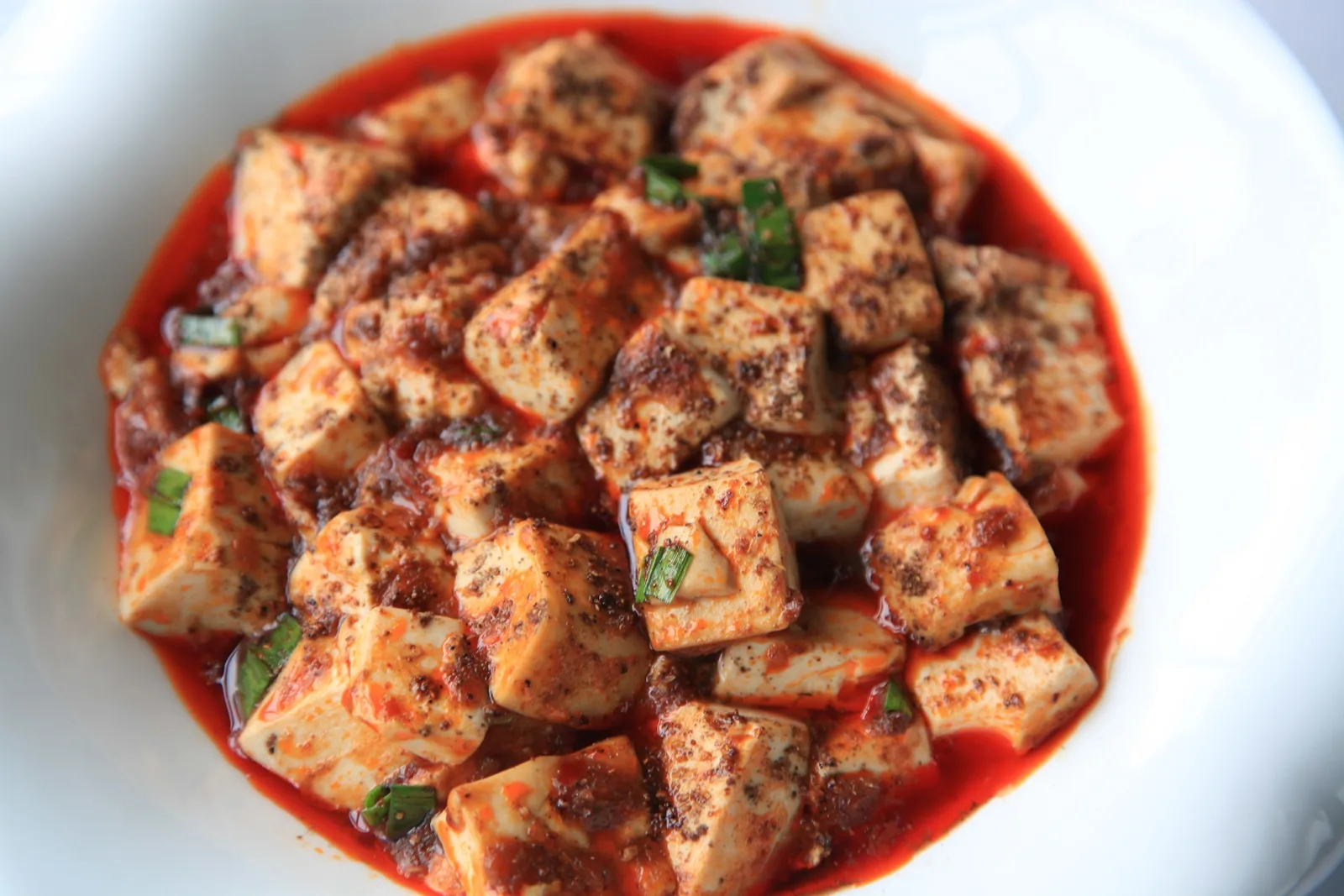
*Mapo tofu (麻婆豆腐) — a widely recognised Sichuan dish illustrating chilli, bean paste and Sichuan pepper in sauce. DragonTrail editorial image.*
Flavour Systems: Beyond "Spicy"
Sichuan menus are often described through compound flavours (复合味) rather than one-dimensional heat. Useful vocabulary for reading dishes:
| Flavour label | Chinese | What travelers often notice |
|---|---|---|
| Málà | 麻辣 | Chilli heat plus huājiāo numbing |
| Yúxiāng | 鱼香 | "Fish-fragrant" garlic–ginger–chilli sauce (often without fish) |
| Guōbā | 锅巴 | Crisp rice or starch layer with sauced topping |
| Guīhuā | 怪味 | "Strange flavour" — sweet, salty, nutty, aromatic blend |
| Suān tián | 酸甜 | Sweet and sour finishing |
Sichuan pepper is not black pepper. It produces a tingling, numbing sensation (麻) that interacts with chilli heat (辣). Quality varies; old or poorly stored huājiāo tastes dusty rather than bright.
See Chinese Ingredients for soy sauces, vinegars and fermented pastes that anchor many Sichuan sauces.
Key Ingredients and Seasonings
| Ingredient | Role in Sichuan cooking |
|---|---|
| Doubanjiang (豆瓣酱) | Fermented broad-bean and chilli paste — backbone of many sauces |
| Chilli (fresh, dried, oil) | Heat layer; chilli oil (红油) as condiment and finish |
| Sichuan pepper (花椒) | Numbing aroma; may appear as whole, ground or infused oil |
| Black vinegar | Sharp accent in some cold dishes and noodles |
| Pickled mustard tuber (榨菜) | Salty crunch in stir-fries and breakfast noodles |
| Garlic, ginger, scallion | Aromatics in nearly every wok dish |
Preservation matters in Sichuan history: pickles, smoked meats and fermented vegetables appear in home and restaurant cooking, not only as snacks. These connect to wider Chinese Cooking Techniques including curing and smoking.
Signature Dishes Travelers Recognise
The following are orientation examples, not a ranked "best of Sichuan" list:
| Dish | Chinese | What it illustrates |
|---|---|---|
| Mapo tofu | 麻婆豆腐 | Tofu in málà sauce with doubanjiang |
| Kung pao chicken | 宫保鸡丁 | Stir-fry with dried chilli and peanuts |
| Twice-cooked pork | 回锅肉 | Boiled then wok-fried pork with leeks |
| Shui zhu yu | 水煮鱼 | Fish in chilli-oil broth — banquet and casual variants |
| Dan dan noodles | 担担面 | Wheat noodles with spiced minced pork sauce |
| Fuqi feipian | 夫妻肺片 | Cold sliced beef/offal in chilli dressing |
| Sichuan hotpot | 四川火锅 | Communal broth; split spicy/mild pots common |
Mapo tofu and kung pao chicken appear on Chinese menus worldwide; in Sichuan they may taste sharper, oilier or more huājiāo-forward than diaspora adaptations. Compare with Hunan Cuisine, which often emphasises fresh chilli and smoke rather than huājiāo numbing.
Cooking Techniques
Sichuan restaurant kitchens are known for high-heat wok work and precise sauce timing:
- Stir-fry (炒) — quick, aromatic dishes such as kung pao chicken.
- Dry-fry (干煸) — ingredients wok-cooked until surface moisture reduces, then sauced.
- Red-braise (红烧) — soy, sugar and spice slow finish; overlaps other regions but local variants differ.
- Steaming (蒸) — fish, pork belly and dumplings in less spicy repertoires.
- Cold dressings (凉拌) — vegetables and meats with chilli oil and vinegar.
Hotpot is a communal technique as much as a dish: diners cook raw ingredients in shared broth. Chongqing-style broths tend toward heavier chilli and beef tallow; Chengdu tables may prefer milder soup bases alongside a spicy side. Technique overview: Chinese Cooking Techniques.
Sichuan vs Hunan vs Chongqing
| Sichuan | Hunan | Chongqing (city tradition) | |
|---|---|---|---|
| Numbing pepper | Central (huājiāo) | Less central | Strong in hotpot culture |
| Chilli style | Dried, oil, paste layers | Fresh, smoked, pickled emphasis | Often very intense in hotpot |
| Fermented pastes | Doubanjiang hallmark | Fermented black beans, pickles | Overlaps Sichuan pantry |
| English confusion | "All spicy" stereotype | Less known abroad | Sometimes grouped with Sichuan |
Both Sichuan and Hunan appear in the Eight Great Cuisines framework on the Chinese Food hub. Neither province eats chilli at every meal.
Where Travelers Encounter Sichuan Food
- Chengdu and Chongqing — street snacks, hotpot districts, teahouse adjacency.
- Beijing and Shanghai — Sichuan restaurants are common; quality spans tourist chains to specialist kitchens.
- International Chinatowns — often Sichuan-heavy menus; may simplify huājiāo or reduce spice for local customers.
Beijing visitors comparing hotpot forms should read Beijing hot pot — copper-pot mutton is a different tradition from Sichuan málà hotpot, though both are communal broth meals.
Home Cooking, Snacks and Street Food
Beyond restaurant classics, Sichuan everyday eating includes noodle shops, cold snack stalls and breakfast markets:
| Snack / street item | Chinese | Notes |
|---|---|---|
| Dan dan noodles | 担担面 | Sesame–chilli sauce over wheat noodles |
| Chao shou | 抄手 | Wontons in chilli-oil or clear soup |
| Lai tang yuan | 赖汤圆 | Sweet glutinous rice balls — not spicy |
| Bobo chicken | 钵钵鸡 | Cold skewers in fragrant chilli oil |
| Fuqi feipian | 夫妻肺片 | Cold dressed beef and offal |
These items show that Sichuan snack culture is not only málà hotpot. Sweet tang yuan and plain congee appear on the same streets as chilli-oil wontons.
Banquet and Restaurant Lineages
Formal Sichuan banquets combine cold platters, soup, stir-fries, steamed fish and rice or noodle finales—similar structural logic to other Chinese regional banquets but with local sauce vocabulary. Restaurant brands from Chengdu have expanded nationally; chain consistency varies. A hotel "Sichuan set menu" may tone down huājiāo for mixed-diet tables.
Imperial and official food history in Sichuan includes Shanghai–Sichuan chef migration in the twentieth century, spreading dishes like kung pao chicken well beyond the province. That diffusion explains why diaspora menus often label dishes "Sichuan" even when recipes simplify heat or omit Sichuan pepper entirely.
Practical Notes for Diners
- Spice level: Ask whether a dish is *bù là* (不辣, not spicy) or *wēi là* (微辣, mild). "Sichuan" on an English menu does not always mean authentic heat.
- Hotpot ordering: Broth first, then thin-sliced meats, vegetables, tofu and starch. Sauce bars vary—taste before loading sesame paste.
- Dietary needs: Tofu and vegetable dishes exist, but stocks and sauces may contain animal fat or MSG; confirm ingredients. Halal Sichuan-style restaurants exist in some cities but are not the default for the cuisine—see Halal & Muslim Food in China.
- Meal structure: Shared dishes with rice are typical; noodle meals may be individually portioned. Chinese Dining Etiquette covers sharing norms.
For communal broth meals in Sichuan, see Chinese Hot Pot and Sichuan Hot Pot.
FAQ
Is all Sichuan food extremely spicy?
No. Sichuan cuisine includes mild, sweet-sour and steamed dishes. Málà is famous but not universal.
What is Sichuan pepper?
Sichuan pepper (花椒, huājiāo) produces a numbing, citrus-like sensation distinct from black pepper. It pairs with chilli in many—but not all—Sichuan dishes.
What is the difference between Sichuan and Hunan food?
Sichuan often layers huājiāo numbing with dried chilli and fermented pastes. Hunan more often emphasises fresh chilli, smoking and sour notes. See Hunan Cuisine.
Is Chongqing food the same as Sichuan food?
Chongqing shares Sichuan pantry and technique but has strong hotpot and urban snack identities. Treat it as related, not identical.
What should a first-time visitor order in Sichuan?
A non-spicy steamed or stir-fried dish alongside one moderate málà classic (e.g. mapo tofu) lets you calibrate heat. Hotpot suits groups with time.
Is mapo tofu always vegetarian?
Traditional recipes often include minced pork; vegetarian versions exist—confirm ingredients.
How does Sichuan hotpot differ from Beijing mutton hotpot?
Sichuan hotpot typically uses chilli-forward or split broths and varied dipping sauces. Beijing instant-boiled mutton uses clearer broth and thin mutton slices in copper pots.
Where does Sichuan cuisine sit in Chinese food overall?
It is one of the Eight Great Cuisines—see the Chinese Food guide for regional comparison and staples.
Continue with Chinese Food
- Chinese Food guide
- Hunan Cuisine
- Chinese Ingredients
- Chinese Cooking Techniques
- Chinese Dining Etiquette
Related regional guides
Sources & Review
- UNESCO — Traditional tea-processing and associated practices (context for eight-cuisine educational framing)
- China National Cultural Heritage / culinary heritage nomination materials (2026 cycle)
- Fuchsia Dunlop, *Land of Plenty* — scholarly-practitioner introduction to Sichuan pantry and technique
- Sichuan Provincial government cultural tourism materials on Chengdu culinary heritage
- Talhelm et al., *Science* (2014) — staple geography context only; not psychological claims
- Chinese characters verified
- Author: DragonTrail editorial
- Last reviewed: August 2026