
| Check | Why it matters | Traveler note |
|---|---|---|
| Venue claim (清真 / qīngzhēn) | Signals Muslim-operated framing | Strong orientation, not automatic certification |
| Broth base | Stock may include pork bone or mixed animal fat | Ask what the soup is built from |
| Cooking fat | Beef tallow vs lard vs vegetable oil | Fat choice can break or support a claim |
| Meat selection | Lamb/beef vs pork or mixed kitchen | Lamb alone does not prove halal |
| Sauces & utensils | Shared bars and pots can mix products | Confirm sauce bar and pot dedication |
| Related pages | Halal & Muslim Food in China | Wider Hui / Uyghur context |
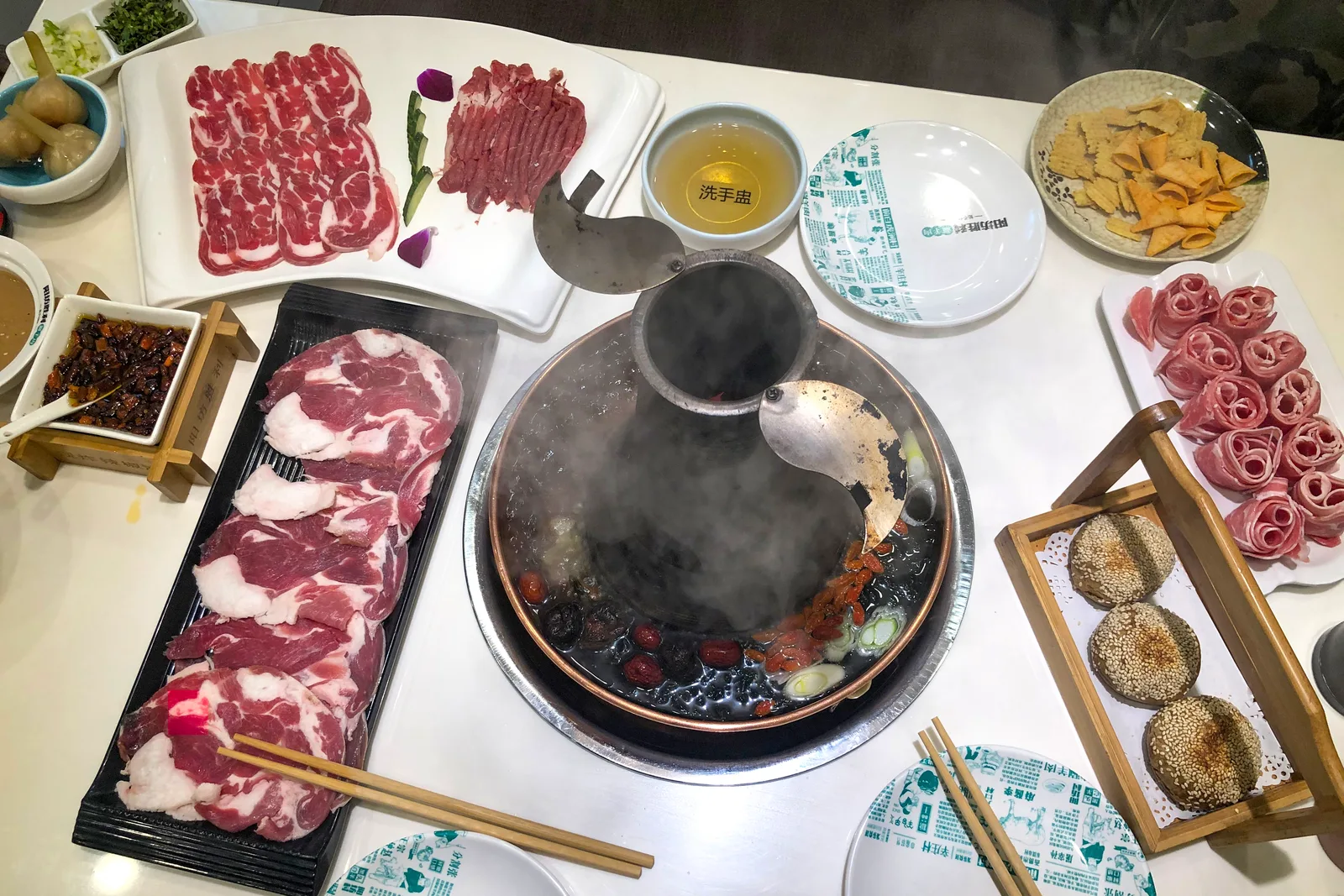
*Thinly sliced meat cooks quickly in a traditional copper chimney hotpot.*
What 清真 (Qīngzhēn) Means for Hot Pot
清真 (qīngzhēn)—often glossed as “pure and true”—is the Chinese label most travelers see on Muslim-oriented restaurants, packaged foods and canteens. In everyday travel use it generally signals pork avoidance and an intention to follow Muslim slaughter and kitchen norms, but enforcement, certification bodies and traveler expectations differ from Malaysia, Gulf states or Western halal boards.
For hot pot specifically, a qīngzhēn sign is a useful starting filter—not a kitchen audit you can complete from the dining room. When observance is essential, ask how meat is sourced, whether pork is present anywhere in the kitchen, what fat is used in the broth, and whether alcohol is served on the same premises. DragonTrail does not certify halal compliance. For the national framing of Hui, Uyghur and qīngzhēn dining, see Halal & Muslim Food in China.
Halal Hot Pot Is Not One Regional Style
Chinese hot pot already spans many formats—Beijing copper-pot mutton, Sichuan mala broths, Shanghai seafood-leaning tables, and more—see the Chinese Hot Pot hub. Halal practice can sit on top of any of those formats when a venue deliberately runs a Muslim kitchen. There is no single “halal hot pot taste” the way there is a recognizable mala or clear-broth profile.
What travelers usually mean in practice:
- A 清真-labelled hot pot restaurant (often Hui-operated) serving beef or lamb in a dedicated kitchen.
- A hotel or tour-group kitchen set up for Muslim guests with a controlled pot and ingredients.
- A general restaurant where someone hopes lamb or “no pork on the plate” is enough—this last case is the riskiest assumption.
Treat “halal hot pot” as a verification checklist, not a cuisine name on a national map.
What to Verify Before You Sit Down
Use the following checks together. Passing one item does not replace the others.
1. Venue claim
Look for 清真 signage, ask staff whether the restaurant is Muslim-operated, and—if needed—ask whether they serve pork or alcohol. Signage is orientation; standards vary by city and by shop.
2. Broth
Hot pot broth is often built on bone stock, spice oil and fat. A clear or “mild” broth can still be made with pork bone, mixed meat stock or kitchen drippings. Ask what the soup base contains. See Hot Pot Broths & Soup Bases for how broth families are built in general Chinese hot pot.
3. Fat and oil
Sichuan-style and Chongqing-style pots frequently use beef tallow (牛油); other kitchens may use vegetable oil—or, in non-halal kitchens, lard. Confirm the cooking fat when the venue claim matters.
4. Meat
Lamb and beef are common on Muslim menus, but ordering lamb at a non-清真 restaurant does not make the meal halal. Shared knives, shared marinade trays and shared pot water can all undermine the choice. Prefer a venue that claims qīngzhēn status over “I will just order mutton.”
5. Sauces
Self-serve sauce bars may include sesame paste, fermented sauces, chilli oil and house mixes. Some dips or pastes can include seafood extracts, alcohol-based seasonings or shared utensils that have touched pork dishes. Ask which sauces are safe for your requirements, or request a sealed / dedicated set when available.
6. Utensils and the pot
Shared-pot dining means one broth for the table. If another diner’s non-halal ingredients go into the same pot, cross-contact is immediate. Dedicated utensils, a dedicated pot section, or a private table with only confirmed ingredients reduce risk—confirm what the venue can actually provide.
7. Cross-contact
Cross-contact can happen through shared woks, shared oil, shared serving tongs, pork on neighboring tables’ sauce spoons, and staff moving between kitchens. Strict observers should prefer dedicated 清真 venues or hotels experienced with Muslim tour groups rather than improvising at a general hot pot chain.
Lamb Alone Is Not a Guarantee
Beijing’s classic instant-boiled mutton tradition centers on thin-sliced lamb in a copper pot—see Beijing Hot Pot. That regional identity explains why travelers often associate “mutton hot pot” with Muslim dining, but mutton as an ingredient is not the same as a halal kitchen. Many copper-pot restaurants serve excellent lamb without claiming 清真 status; some Muslim restaurants serve hot pot in other formats entirely.
Practical rule: judge the venue and kitchen practice first, the meat second. A qīngzhēn restaurant serving beef in a tomato broth can be a better match than a non-labelled mutton specialist with mixed kitchen equipment—depending on your requirements and what staff can confirm.
Practical Ordering Notes
- Prefer restaurants that display 清真 and can answer broth/fat questions in plain language.
- If traveling with a mixed group, ask whether a dedicated pot or private room can keep ingredients separate.
- Bring a short written card in Chinese stating no pork, no lard and the need for Muslim-slaughtered meat if your Chinese is limited—outcomes still vary by venue.
- For wider Muslim food geography (Hui quarters, Xinjiang formats, noodle shops), use Halal & Muslim Food in China rather than treating hot pot pages as a national dining map.
Common Misconceptions
- "Any lamb hot pot is halal." Lamb is an ingredient; 清真 is a kitchen and sourcing claim—confirm both.
- "Clear broth is automatically safe." Clear broth can still be pork-bone or mixed-meat stock.
- "Halal hot pot is a Sichuan style." Halal practice can appear in many cities and formats; it is not a regional broth family.
- "A photo of mutton proves the restaurant." Imagery of Beijing-style mutton pots shows a meal type, not certification.
FAQ
What does 清真 (qīngzhēn) mean for hot pot travelers?
清真 (qīngzhēn) is the common Chinese label for Muslim-oriented food businesses. For hot pot it is a useful venue filter suggesting pork avoidance and Muslim kitchen intention—but it is not the same as an internationally audited certification you can verify from the dining room alone.
Is there one regional “halal hot pot” style in China?
No. Halal hot pot is a dietary and kitchen-practice question applied to various hot pot formats—Beijing mutton pots, mild broths, hotel setups and dedicated 清真 restaurants—not a single regional taste profile.
Does ordering lamb make hot pot halal?
No. Lamb alone does not prove Muslim slaughter, dedicated utensils or a pork-free kitchen. Prefer a 清真-claiming venue and confirm broth, fat and cross-contact practices.
What should I ask about the broth?
Ask whether the soup base uses pork bone, mixed meat stock, beef or lamb stock, or vegetable stock, and which cooking fat (beef tallow, vegetable oil, lard) is used. See Hot Pot Broths & Soup Bases.
Can I share a pot with diners eating pork?
Shared-pot dining mixes everything in one broth. If pork or non-halal ingredients go into the same pot, cross-contact is immediate—request a dedicated pot or dine only with confirmed ingredients.
Is Beijing mutton hot pot always 清真?
No. Beijing’s copper-pot mutton tradition is a regional style centered on lamb; many excellent mutton restaurants do not claim 清真 status. Confirm venue claims separately—see Beijing Hot Pot.
Where can I read about Muslim food beyond hot pot?
Start with Halal & Muslim Food in China for Hui, Uyghur and qīngzhēn context nationwide, and the Chinese Hot Pot hub for regional pot formats.
Does DragonTrail certify restaurants as halal?
No. DragonTrail provides traveler orientation only. Strict observers should use community referrals, mosque-adjacent districts, hotel kitchens experienced with Muslim groups, or direct confirmation with each venue.
Continue with Chinese Hot Pot
Dietary context
Sources & Review
- DragonTrail Halal & Muslim Food in China — 清真 / Hui / Uyghur framing
- Beijing municipal traveler/food context for copper-pot mutton as a regional format (not a halal proof)
- Chinese characters verified
- Author: DragonTrail editorial
- Last reviewed: August 2026