
| Context | Typical format | Etiquette emphasis |
|---|---|---|
| Family home | Shared dishes + rice | Host offers; guest accepts modestly |
| Neighborhood restaurant | Round table, lazy Susan | Share toward elders or guests |
| Business banquet | Formal seating order | Toasts, face-giving, host pays |
| Fast casual / noodles | Individual bowl | Minimal ceremony |
| Hot pot | Communal pot | Shared broth; personal dipping bowl |
| Street snack | Standing / stool | Practical, not ceremonial |
Related guides: street food, breakfast, festival foods.
Shared Dishes, Not Course-by-Course
Mainstream Chinese restaurant meals center shared plates on a rotating tray or table center—each diner has rice bowl, chopsticks and small plate. Individuals take portions with communal chopsticks or serving spoons where provided; eating directly from a central dish without serving step is poor form in formal settings.
Western appetizer-main-dessert sequencing is weak; cold dishes (凉菜) may arrive first, then hot stir-fries, then soup or starch, but kitchen timing is simultaneous burst more than synchronized courses.
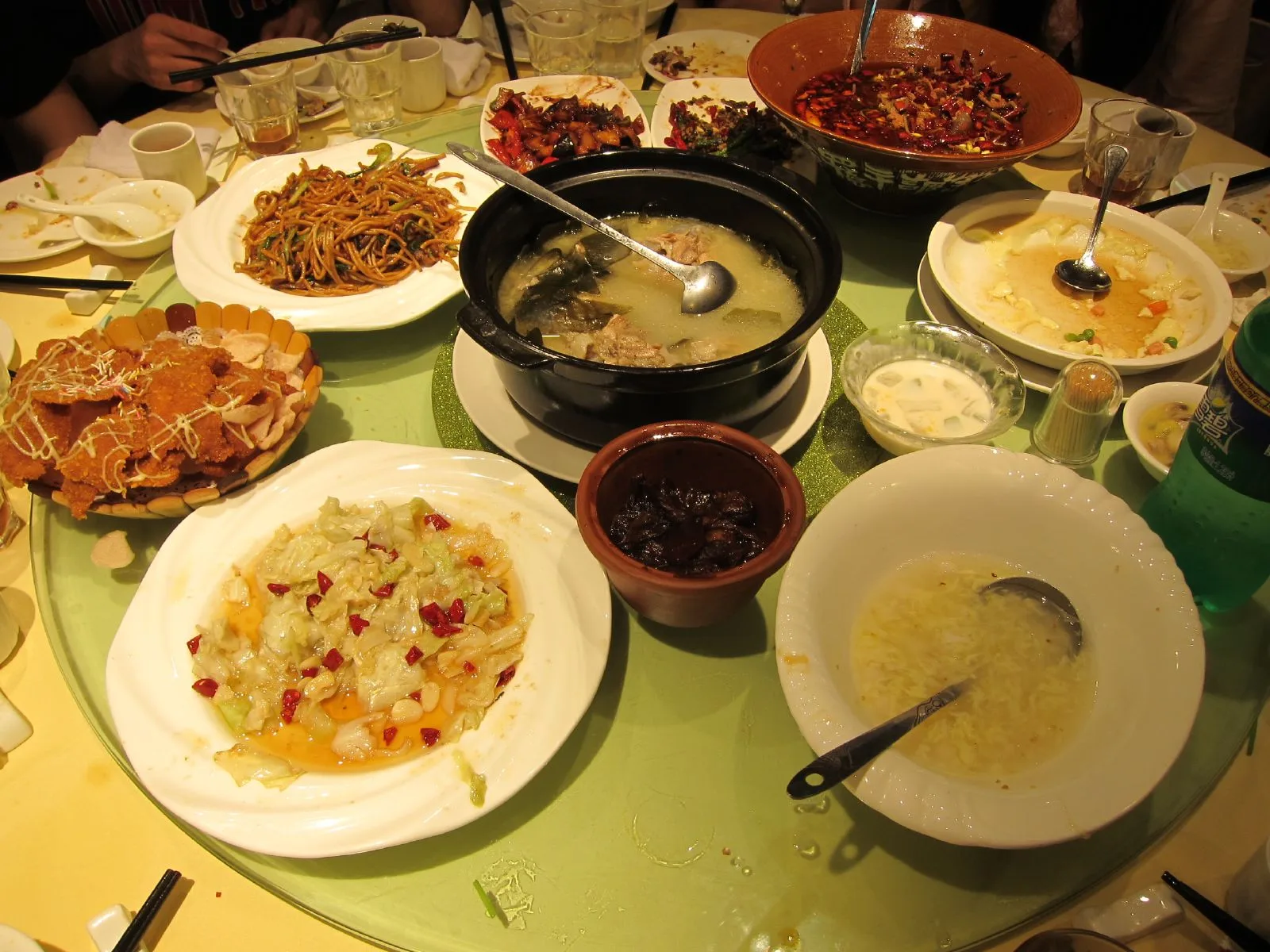
*A Chinese banquet meal served as shared dishes around a rotating centre tray.*
Seating and Face
Banquets assign seat facing door or eldest / honored guest positions—subtle hierarchy. Travelers on hosted tours need not memorize geometry; follow staff placement. Face (面子)—social dignity—shows in who toasts whom first and who pays.
Chopsticks: Practical Do's
- Rest chopsticks flat on holder or bowl rim—not vertical in rice (funeral association).
- Avoid passing food chopstick-to-chopstick—use serving utensils or plate transfer.
- Tapping bowl for service reads as beggar folklore—raise hand or catch waiter eye instead.
- Double-dip in shared sauce bowls—use separate spoon or pour portion.
Plastic-wrapped chopstick sets in casual shops are normal; skill beats perfection—locals appreciate effort.
Toasting and Alcohol
Business and festival meals feature toasts (干杯 gānbēi — "dry cup" — or lighter 随意 suíyì). Baidu liquor, beer and wine appear by generation and region. Declining alcohol is increasingly acceptable with polite reason; tea or soda substitute toasts happen in mixed groups.
Host initiates first toast to guest; returning toast shows respect.
Who Pays the Bill
Host pays is default for invitations—fighting for bill (抢单) is performative friendship among peers. Guests offering once is polite; prolonged wrestling is cultural theater in some groups. Mobile pay settled by inviter at counter.
Splitting AA (AA制) grows among young urban friends; not assumed at formal host-guest meals.
Rice and Pace
Rice bowl stays partially filled—adding rice signals still eating. Some hosts delay rice serving until main dishes tasted—regional and generational. Leaving clean plate vs leaving slight food varies; finishing shared dish compliments cook.
Hot Pot and Specialty Formats
Hot pot etiquette: cook items in shared broth; use personal dipping sauce station; long cooking items go early, leafy greens late. Separate 公筷 (public chopsticks) where provided post-COVID habit reinforcement.
Peking duck and dim sum have venue-specific flow—see Beijing food for roast-duck carving sequence.
Invitations and Home Meals
Accept reasonable hospitality—small tastes honor host. Compliment specific dish sincerely. Offer to help carry dishes if informal family setting. Gift fruit or regional specialty on first home visit is classic; not mandatory for tourist-hosted dinners.
Festival and Banquet Peaks
Spring Festival reunion dinners amplify formality—fish symbolism, toast rounds, elder seating. Food symbols explained in Chinese New Year foods; etiquette layer is patience and participation without over-drinking pressure.
Street Food and Casual Context
Street food and breakfast counters skip banquet rules—queue, pay, eat. Noise and standing are normal.
Travelers With Dietary Needs
State restrictions clearly—不要猪肉 (no pork), 素食 (vegetarian), 花生过敏 (peanut allergy). Halal restaurants follow Muslim kitchen norms; still confirm soup bases. See Halal & Muslim Food in China.
Regional Variation
| Region | Noticeable habit |
|---|---|
| Cantonese | Tea pour for others before self; dim sum shared steamer etiquette |
| Northern | Heartier portions; less tea ceremony in average restaurant |
| Business coast cities | Faster bill pay; international mixed etiquette |
No single video titled "Chinese etiquette" captures all—observe table leader.
Lazy Susan and Serving Order
Rotating trays (转盘) require slow, steady turns—do not spin while someone serves or photographs. Place shared dish back with handle accessible. When serving elders or guests, stand briefly or use both hands on serving utensils in formal settings.
Children and Family Tables
Families tolerate noise and movement more than Western fine dining—children share dishes with parents early. High chairs exist in chains; hutong shops may use booster stools or lap seating. Pack snacks for picky eaters but encourage small tastes of shared plates when appropriate.
Business Meal Layer
Business banquets add name-card exchange, seat-toasting order and baijiu rounds—foreign partners should designate one drink delegate if team abstains. Gift-giving at meal start (regional) differs from bill payment at end—follow local colleague guidance.
Mobile Phones and Photography
Photographing dishes is common among younger diners; flash during formal toasts annoys. Live streaming at neighboring tables happens—ignore unless invited. Silence phones during elder toast speeches in conservative company banquets.
Comparing Etiquette Across Cluster Pages
Casual layers: Chinese Street Food, Chinese Breakfast, Chinese Noodles individual bowls. Festival peak: Festival & New Year Foods. Regional cuisine pages (Cantonese, Sichuan, etc.) add dish-specific notes on the Chinese Food hub.
Tipping and Service Charge
Mainland China restaurants generally do not expect tipping—service charge appears rarely except some hotels and tourist venues. Hong Kong and Macau differ. Pay at counter or table QR; leave no guilt tip on mainland casual meals.
Takeaway and Doggy Bags
打包 (dǎbāo, takeaway) is normal for leftover shared dishes—staff provide plastic containers. Waste-reduction norms vary; asking to pack is not shameful at family restaurants. Street snacks are already portable.
Invitations: Guest Role Summary
When invited as honored guest, expect host to order generously, toast first round, and pay. Compliment specific dishes; try every plate at least once if dietary rules allow. Reciprocate with thank-you message or small gift next day—not mandatory tip at table.
Noise and pace — Chinese banquet restaurants are lively; conversation volume exceeds many Western fine-dining norms. That energy is feature, not failure of manners.
Waiting staff — Call 服务员 (fúwùyuán) or make eye contact; snapping fingers is rude. QR ordering at table is common in chains—follow on-screen flow for add-on dishes.
FAQ
What is proper Chinese dining etiquette for foreigners?
Be polite, accept reasonable hospitality, use serving utensils for shared dishes, and follow your host's cues—no single national gesture code applies everywhere.
Is it rude to stick chopsticks upright in rice?
Yes in mainstream Han etiquette—resembles incense at funerals; lay chopsticks flat instead.
Who pays at a Chinese restaurant?
The inviter/host usually pays; peers may perform friendly bill fight; AA among young friends is growing but not default for guest-host meals.
Do I need to finish all the food?
Finishing a shared dish compliments the cook; leaving a little rice can signal fullness—context varies; follow host pace.
How do toasts work?
Host opens; guests return; 干杯 means drain cup—lighter 随意 allows sipping; decline alcohol politely if needed.
Are individual noodle bowls shared?
No—noodle and dumpling bowls are typically individual portions; shared-plate rule applies to round-table dishes.
How does etiquette differ for street food?
Minimal—pay, eat, go; no seating hierarchy.
Where can I practice etiquette in Beijing?
Hosted Beijing food experience or banquet restaurant with guide—see Beijing food.
Continue with Chinese Food
City guide
Sources & Review
- Banquet seating and toast customs — regional etiquette summaries
- Post-2020 communal chopstick guidance — restaurant association recommendations
- Chinese characters verified
- Author: DragonTrail editorial
- Last reviewed: August 2026