
| Context | Chinese | What to expect | Traveler note |
|---|---|---|---|
| Buddhist vegetarian | 斋菜 / 素菜 | Temple or specialist restaurants; avoids meat, often allium rules | Rules vary by venue—ask |
| Plain vegetable dishes | 素菜 / 时蔬 | Stir-fried greens, cold plates | May use lard, oyster sauce or stock |
| Tofu dishes | 豆腐 | Mapo tofu, home-style tofu, cold tofu | Often include minced pork or shrimp paste |
| Mock meat | 素鸡 / 素鸭 | Gluten or soy shaped like meat | Usually vegetarian; check egg/dairy |
| Modern vegan cafés | 纯素 / Vegan (English) | Urban shops; oat milk, plant burgers | Mostly tier-1 cities |
| Festival fasting | 吃素 | Temporary vegetarian observance | Not universal among Buddhists |
Plant-forward eating is possible in China with planning; effortless vegan everywhere is not the baseline.
*A set meal served with rice, noodles and several vegetable dishes.*
What “Vegetarian” Means in Practice
Chinese labels vary:
- 素菜 (sùcài)—vegetable dishes; may still use animal stock.
- 斋菜 (zhāicài)—Buddhist-style vegetarian; often stricter, sometimes excluding garlic, leek, onion (五荤).
- 纯素 (chún sù)—vegan in modern marketing usage; verify eggs and dairy.
English “vegetarian” at a hotel breakfast may mean one tofu option beside bacon—clarify in Chinese when possible.
Buddhist Vegetarian Restaurants
Major cities and temple towns host Buddhist vegetarian restaurants—sometimes near active temples. They aim to avoid meat and often allium aromatics; presentation can mimic banquet meats using gluten, tofu skin and mushrooms.
Still ask about egg, dairy and honey—strictness varies. Temple cafeterias may serve simpler bowls than city banquet zhāicài shops.
Everyday Restaurant Reality
In a typical shared-dish restaurant:
- Green vegetables (炒时蔬) sound safe but may be stir-fried in lard or topped with dried shrimp.
- Mapo tofu often includes minced pork unless marked otherwise.
- Egg appears in fried rice, noodles and some doughs.
- Oyster sauce seasons many Cantonese stir-fries.
Useful phrases to show staff (verify pronunciation locally):
- 我不吃肉 — I do not eat meat.
- 我吃素 — I eat vegetarian (may be interpreted as Buddhist-style).
- 不要猪油 / 不要鸡汤 — No lard / no chicken stock—specify clearly.
DragonTrail does not guarantee translation outcomes—written allergy cards help in some hotels; street stalls may have limited flexibility.
Hidden Animal Ingredients
Common non-obvious sources—orientation only, not a complete allergen checklist:
| Ingredient | Where it hides |
|---|---|
| Chicken or pork stock | Soups, hotpot broth, “vegetable” congee |
| Oyster sauce | Greens, tofu, fried rice |
| Shrimp paste or dried shrimp | Chilli pastes, curry bases, fried greens |
| Lard | Pastry, wok seasoning, some baozi |
| Fish sauce | Southeast-influenced sauces |
| Meat floss | Congee toppings, bakery |
| Gelatin | Desserts—less common in traditional shops |
Deep pantry context: Ingredients, Sauces & Flavours.
Vegan Travel: Harder but Feasible in Cities
Vegan (no animal products at all) requires more diligence than lacto-ovo vegetarian:
- Confirm no egg in noodles and dumpling wrappers.
- Confirm no dairy—less traditional but appears in modern desserts.
- Avoid oyster sauce, shrimp paste, fish sauce, honey in dressings.
- Ask about cooking oil—some kitchens use lard for wok seasoning.
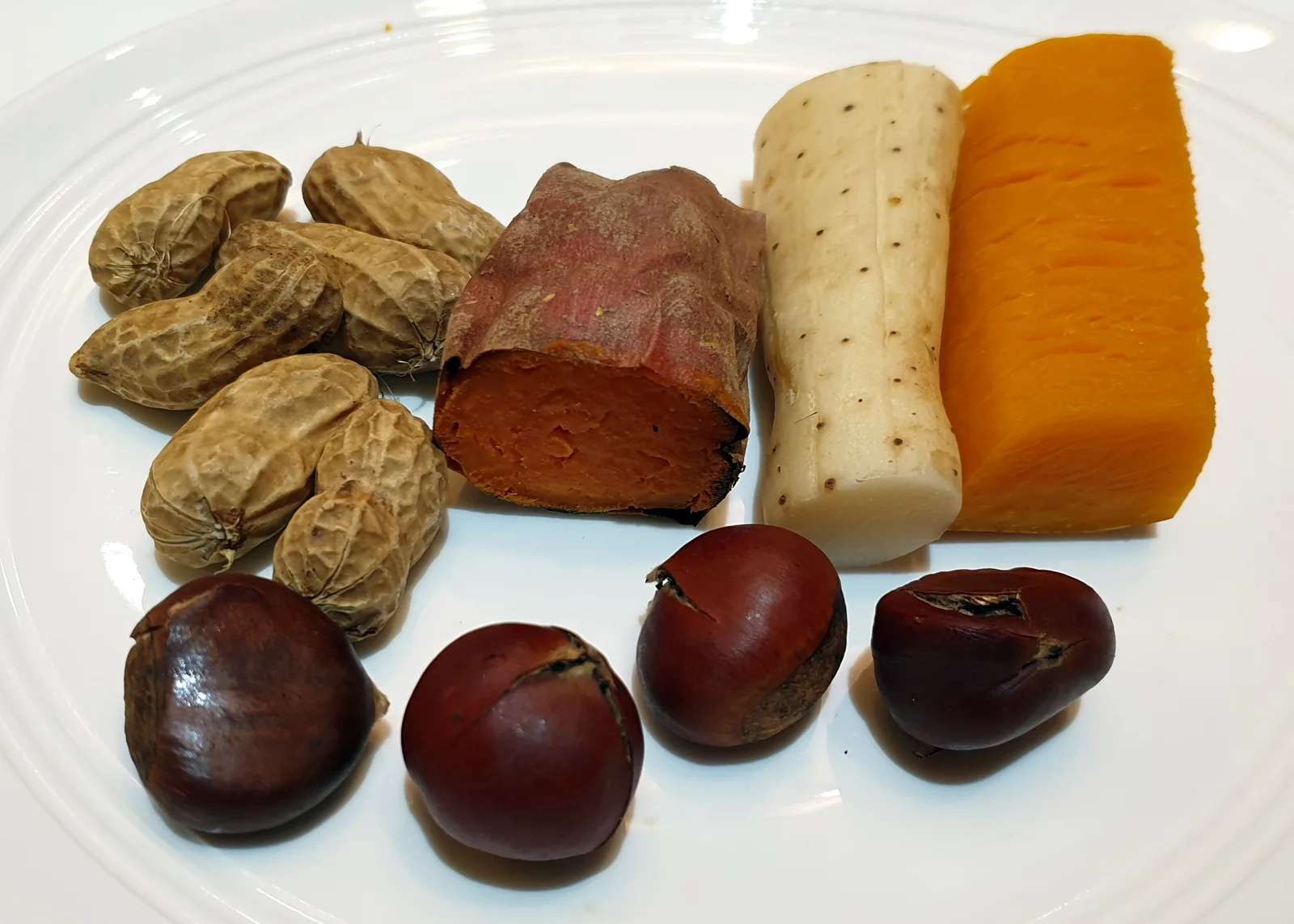
Shanghai, Beijing, Chengdu, Guangzhou, Hangzhou and other large cities have vegan cafés and grocery corners; smaller towns may offer only accidental vegan snacks (plain steamed sweet potato, peanuts, fruit).
Regional Notes
| Region guide | Vegetarian angle |
|---|---|
| Cantonese Cuisine | Buddhist zhāicài in Guangzhou; watch oyster sauce on greens |
| Sichuan Cuisine | Tofu-heavy menu; chilli oils may use animal fat |
| Yunnan Cuisine | Mushroom diversity; ham appears in many “vegetable” dishes |
| Xinjiang & Northwest | Lamb-forward; vegetarian options thinner outside cities |
Street Food and Snacks
Often accidentally vegetarian options:
- Roasted sweet potato (烤红薯)
- Corn on the cob
- Plain mantou (confirm no lard)
- Some jianbing without ham—ask about sauce and crisp wafer
Night-market hygiene varies—see Chinese Street Food.
Hotpot and Communal Meals
Vegetarian hotpot bases exist in tier-1 cities—confirm dedicated pot without shared tallow broth. Dipping sauces with sesame paste, oyster sauce or fermented tofu need separate checks.
Halal Overlap
Halal (清真) food avoids pork but is not vegetarian—lamb and beef dominate. Muslim travelers seeking halal should use the halal guide, not this page—Halal & Muslim Food in China.
Meal Planning Tips
- Front-load communication when seated—not after food is cooking.
- Order explicit tofu or mushroom dishes plus a plain green vegetable with sauce on the side.
- Seek Buddhist vegetarian restaurants for lowest-friction group meals.
- Use apps and hotel concierge in Chinese for specialist shops—English menus lag outside tourist cores.
- Carry backup snacks for long travel days—availability is uneven.
For named dishes that are often vegetarian-adjacent, see Famous Chinese Dishes—still verify each kitchen.
Tier-1 City Practical Notes
| City | Vegetarian / vegan angle |
|---|---|
| Beijing | Niujie Buddhist shops; growing vegan cafés near hutong tour zones |
| Shanghai | International vegan brunch; supermarket plant-milk corners |
| Chengdu | Tofu-heavy Sichuan; confirm pork in mapo and stock |
| Guangzhou | Strong zhāicài tradition; watch oyster sauce on greens |
| Hangzhou | Temple-area vegetarian; West Lake tourist restaurants need asking |
Hotel international breakfast buffets may label items in English while sharing kitchen lines with bacon—cross-contact varies by property class.
Group Dining and Banquets
Banquet tables rotate pre-set courses—limited ability to swap lard-based vegetables mid-service. For mixed-diet groups, book a Buddhist vegetarian restaurant or order a dedicated vegetable set menu (素菜套餐) in advance rather than relying on last-minute substitutions.
Shared chopsticks and serving spoons reduce cross-contact from meat dishes to vegetable plates—see Dining Etiquette.
Eggs, Dairy and “Invisible” Animal Products
Lacto-ovo vegetarian travelers still face:
- Egg wrappers on noodles and dumplings.
- Milk powder in soft breads and modern desserts.
- Honey in dressings labelled “sweet.”
Vegan travelers should treat bakery and dessert cases as high-risk unless labelled 纯素.
Apps, Translation Cards and Staff Communication
Translation apps sometimes render 素菜 as “vegetables” on a menu section header—not “vegetarian restaurant.” Prepare a short Chinese card listing avoided items (pork, chicken stock, oyster sauce, egg, dairy) if staff English is limited.
Repeat the request when ordering each dish in shared-meal settings—kitchens batch-cook sauces; one clarified order does not automatically apply to the whole table’s refills.
Tea, Alcohol and Meal Pairing
Vegetarian travelers are unaffected by wine pairing culture at banquets, but tea and soft drinks remain default. Some Buddhist zhāicài venues avoid alcohol on premises entirely—respect house rules when dining with mixed groups.
International hotel chains in China increasingly label vegetarian breakfast items—still verify shared griddle use for eggs and bacon beside the vegetable station.
Soy, Gluten and Mock-Meat Labels
Buddhist mock meats often use seitan (面筋) or tofu skin—high-protein but not suitable for all gluten-sensitive travelers. Soy sauce appears in most savoury dishes; coconut aminos substitutes are rare outside expat grocers. Plan snacks accordingly on multi-day rail trips.
Fruit, Snacks and Convenience Stores
Fresh fruit stalls and convenience stores offer low-friction options—plain nuts, roasted sweet potato, soy milk (confirm dairy-free if vegan). Instant noodles often contain meat powder in the seasoning sachet even when the block looks plain—read packaging or choose known vegetarian brands when available.
Pair this guide with Chinese Breakfast and Street Food for daypart-specific plant-forward options—morning jianbing and night-market skewers each carry different risk profiles for hidden lard and meat floss.
What DragonTrail Does Not Do
This page does not certify restaurants, diagnose allergies or guarantee kitchen separation. For medical conditions, consult a qualified health professional and communicate directly with venues.
For broth fat and cross-contact checks at hot pot tables, see Vegetarian & Vegan Hot Pot.
FAQ
Is China easy for vegetarians?
Possible with planning—Buddhist restaurants and city options help; default shared restaurants use animal stock and sauces widely.
Is mapo tofu vegetarian?
Traditional recipes often include minced pork—order explicit vegetarian versions (素麻婆豆腐) and confirm.
Do Buddhist vegetarians eat garlic?
Many zhāicài venues avoid allium; others are less strict—ask the restaurant.
Can vegans travel in China?
Yes in major cities with preparation; rural and standard banquet contexts require extra vigilance.
Are dumplings vegetarian?
Some are—many contain pork or egg in wrapper or filling; confirm before ordering.
What about fake meat dishes?
素鸡 / 素鸭 are often plant-based but may use egg or dairy—check ingredients.
Where are hidden animal products listed?
See Ingredients, Sauces & Flavours—still not a substitute for asking staff.
Continue with Chinese Food
- Chinese Food guide
- Halal & Muslim Food in China
- Ingredients, Sauces & Flavours
- Chinese Street Food
- Dining Etiquette in China
Regional cuisine guides
- Cantonese Cuisine
- Sichuan Cuisine
- Yunnan Cuisine
Experience food in Beijing
Sources & Review
- Buddhist vegetarian restaurant practice literature (allium rules vary by school)
- UNESCO — Chinese cuisine nomination (2026 evaluation cycle)
- Chinese characters verified
- Author: DragonTrail editorial
- Last reviewed: August 2026