
| Item | Detail |
|---|---|
| Chinese | 粤菜 / 粵菜 (Yuècài) |
| Core region | Guangdong; strong Hong Kong and Macau restaurant lineages |
| Flavour tendency | Fresh, balanced; sweetness and umami without masking ingredients |
| Signature techniques | Steaming, roasting, stir-frying, double-boiling soups |
| Staples | Rice, rice noodles, congee; wheat items in specific snacks |
| Famous examples | Char siu, steamed fish, wonton noodles, dim sum |
| Important qualification | Guangdong contains Chaoshan, Hakka and other local traditions |
What Cantonese Cuisine Is
Cantonese cooking is one of the Eight Great Cuisines and the style many Westerners first encounter through dim sum restaurants, roast-meat windows and Cantonese diaspora cooking. Within Guangdong, Guangzhou (Canton), Shenzhen, Shunde, Chaoshan (Teochew) and Hakka areas each maintain distinct food identities. Saying "Cantonese" without qualification usually points to Pearl River Delta urban restaurant culture—but travelers should not assume one menu describes the whole province.
The cuisine's reputation for freshness reflects geography: access to seafood, subtropical produce and rapid urban restaurant competition. That does not mean Cantonese food is always "bland"; roasted meats, fermented black beans, preserved vegetables and master stocks can deliver deep savoury character.
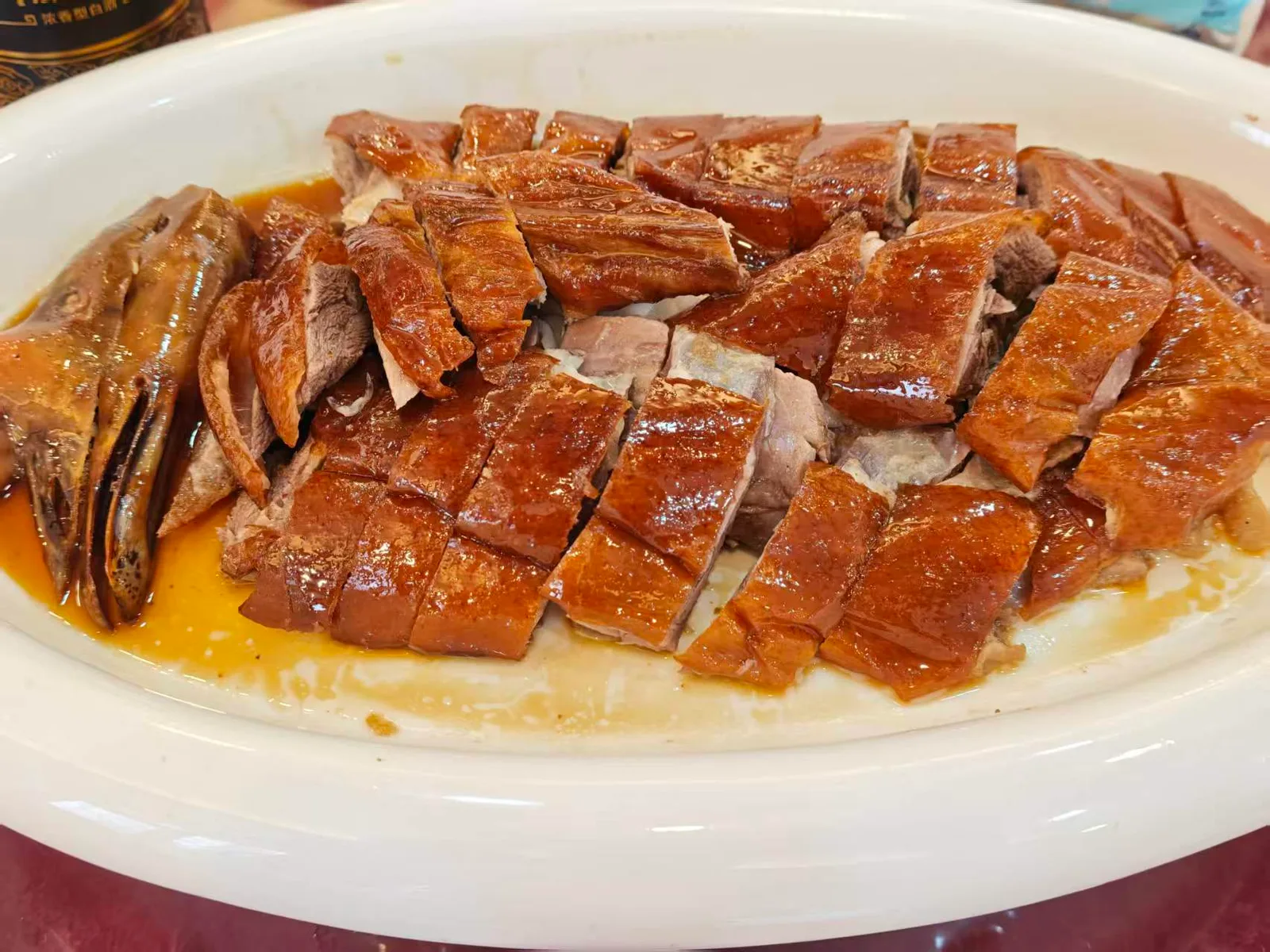
*Cantonese roast goose (烧鹅) — roasting tradition with lacquered skin. DragonTrail editorial image.*
Flavour Philosophy and Seasoning
Cantonese chefs often describe success as highlighting the ingredient (突出本味) rather than covering it with heavy spice. Common patterns:
| Pattern | Examples |
|---|---|
| Light soy, ginger, scallion | Steamed fish, poached chicken |
| Master stock (卤水) | Repeated braising liquid for meats and offal |
| Fermented black beans (豆豉) | Steamed spare ribs, clams |
| Oyster sauce | Greens and stir-fries |
| White pepper | Soups and congee |
| Rock sugar in roasts | Lacquered skins on duck and goose |
Chilli appears but rarely dominates the way it does in Sichuan Cuisine or Hunan Cuisine. See Chinese Ingredients for soy types, rice wines and aromatics used across Guangdong kitchens.
Key Ingredients
| Ingredient | Cantonese role |
|---|---|
| Live/fresh seafood | Steamed fish, shellfish, typhoon-shelter styles |
| Rice | Steamed rice, fried rice, rice rolls (cheung fun) |
| Quality poultry | White-cut chicken, roast duck and goose |
| Dried seafood | Soups, stocks, festival dishes |
| Vegetables | Quick stir-fries, blanched greens with oyster sauce |
| Rice wine and ginger | De-fishiness in steaming |
Wet markets remain central to Cantonese home and restaurant culture: morning shopping for same-day cooking is still normative in many Guangdong cities.
Signature Dishes and Categories
| Dish | Chinese | Notes |
|---|---|---|
| Char siu | 叉烧 | Barbecue pork with maltose glaze |
| Roast goose / duck | 烧鹅 / 烧鸭 | Siu mei (烧味) roasting window culture |
| Steamed fish | 清蒸鱼 | Whole fish, ginger–soy finish, timing-critical |
| White-cut chicken | 白切鸡 | Poached chicken with ginger-scallion oil |
| Wonton noodles | 云吞面 | Egg noodles, shrimp wontons, clear broth |
| Congee | 粥 | Breakfast and late-night comfort food |
| Claypot rice | 煲仔饭 | Crisp rice base with toppings |
| Sweet soups (tong sui) | 糖水 | Dessert soups—not always served with dim sum |
Roast meats belong to siu mei specialist shops; steaming belongs to home-style and banquet kitchens. Neither category replaces the other.
Deep dive on bite-sized brunch tradition: Dim Sum.
Cooking Techniques
| Technique | Chinese | Traveler-facing example |
|---|---|---|
| Steaming | 蒸 | Dim sum har gow, steamed fish |
| Roasting | 烧 | Char siu, roast goose |
| Stir-frying | 炒 | Beef ho fun, morning glory |
| Double-boiling | 炖 / 隔水炖 | Slow soups in sealed pots |
| Poaching | 白切 | White-cut chicken |
| Deep-frying | 炸 | Some dim sum and snacks |
Cantonese stock-making and soup sequencing (老火汤) are meal anchors—often served before mains in family dining. Technique context: Chinese Cooking Techniques.
Dim Sum, Dumplings and Distinct Traditions
Dim sum (点心) is Cantonese small-plate brunch/tea culture—steamed, baked and fried bites served with tea. It overlaps with dumpling forms but is not identical to northern jiaozi culture.
| Dim sum | Chinese dumplings (jiaozi) | |
|---|---|---|
| Meal role | Shared small plates with tea | Staple or festival parcel, often wheat-focused |
| Region | Cantonese heartland | Strong northern associations; nationwide |
| DragonTrail page | Dim Sum | Chinese Dumplings |
Order etiquette, cart service and tea refills: Chinese Dining Etiquette.
Cantonese Subtraditions Within Guangdong
| Tradition | Association | Distinctive notes |
|---|---|---|
| Guangzhou urban | Provincial capital | Banquet, dim sum, siu mei |
| Shunde | Foshan area | Chef lineage, delicate steaming |
| Chaoshan (Teochew) | Eastern Guangdong | Beef hotpot, marinades, kung fu tea |
| Hakka | Scattered in Guangdong | Stuffed tofu, salt-baked chicken, preserved foods |
These are related but not interchangeable. A Chaoshan beef hotpot restaurant is not a dim sum house.
Where Travelers Encounter Cantonese Food
- Guangzhou, Shenzhen, Hong Kong — dim sum halls, roast-meat queues, seafood restaurants.
- Beijing and other northern cities — Cantonese restaurants for banquets and seafood; quality varies.
- International Chinatowns — often Cantonese-dominated; dishes may adapt to local produce.
Beijing's signature roast duck (Peking duck) is a northern capital tradition, not Cantonese roast goose—similar technique family, different lineage and service.
Seafood and Wet-Market Culture
Cantonese urban dining retains strong same-day seafood logic: choose live fish, crab or shellfish from tanks; pay by weight; specify steaming or typhoon-shelter (避风塘) frying. Typhoon-shelter style—garlic, chilli and fermented black bean on fried shellfish—shows that Cantonese cooking is not chilli-free, only different in chilli philosophy from Sichuan or Hunan defaults.
Dried seafood (干海味) underpins slow soups and festival dishes. Travelers see dried scallop, abalone and mushrooms in market aisles—not everyday backpacker ingredients, but central to Cantonese New Year cooking.
Cha Chaan Teng and Modern Guangdong
Hong Kong cha chaan teng (茶餐厅) café hybrids serve milk tea, pineapple bun, macaroni soup and fusion plates—twentieth-century urban food, not classical banquet cuisine. Shenzhen's migrant population mixes Cantonese base with nationwide regional restaurants.
Understanding Cantonese food today means accepting layered modernity: Michelin dim sum lounges beside wet-market noodle stalls; Shunde chef schools beside fast rice boxes. None of these alone defines 粤菜.
Practical Notes for Diners
- Seafood timing: Steamed whole fish is often priced per jin (500 g); confirm weight and preparation time.
- Morning dim sum: Popular shops queue on weekends; arrive early or reserve where available.
- Roast to go: Siu mei shops sell by weight for takeaway; rice boxes are a fast lunch format.
- Dietary needs: Vegetarian Buddhist restaurants (斋菜) exist in Guangdong cities; standard Cantonese menus are not vegetarian by default. Halal Cantonese-style restaurants appear in some urban areas—do not assume halal unless verified. See Halal & Muslim Food in China.
FAQ
Is Cantonese food always mild?
No. It tends toward balance and ingredient clarity, but roasted meats, fermented seasonings and peppery soups can be robust. It is not uniformly "light."
What is the difference between dim sum and dumplings?
Dim sum is Cantonese small-plate tea meal culture. Jiaozi/dumplings are a broader wheat-parcel tradition with strong northern roots. See Dim Sum and Chinese Dumplings.
Is Cantonese cuisine the same as Hong Kong food?
Hong Kong developed deep Cantonese restaurant culture with local adaptations, cha chaan teng café hybrids and international influences—not a separate "eighth cuisine" but not identical to Guangzhou either.
What is char siu?
Char siu (叉烧) is Cantonese barbecue pork with a sweet-savoury glaze, sold in roast-meat shops and rice boxes.
How do I order steamed fish?
Choose live or fresh fish by weight; specify steaming with ginger and soy. Timing matters—expect 15–25 minutes after ordering in busy kitchens.
Does Cantonese food use much chilli?
Less than Sichuan or Hunan as a default, but chilli oil and pepper appear in specific dishes and regional subtraditions.
Where does Cantonese cuisine fit in the Chinese Food guide?
It is one of the Eight Great Cuisines on the Chinese Food hub, with a dedicated Dim Sum child guide.
Is roast goose a Cantonese dish?
Yes—roast goose (烧鹅) is a flagship siu mei item in Cantonese roasting tradition, distinct from Beijing Peking duck service.
Continue with Chinese Food
Related regional guides
Sources & Review
- UNESCO — China intangible cultural heritage state page
- Guangdong Provincial Department of Culture and Tourism — published materials on Cantonese culinary heritage
- Hong Kong Tourism Board — culinary culture overview (non-recipe, institutional framing)
- Sidney Cheung, academic work on Cantonese food culture and diaspora (peer-reviewed gastronomy literature)
- Chinese Culinary Association educational materials on Eight Great Cuisines (classification framework, not exhaustive census)
- Chinese characters verified
- Author: DragonTrail editorial
- Last reviewed: August 2026