
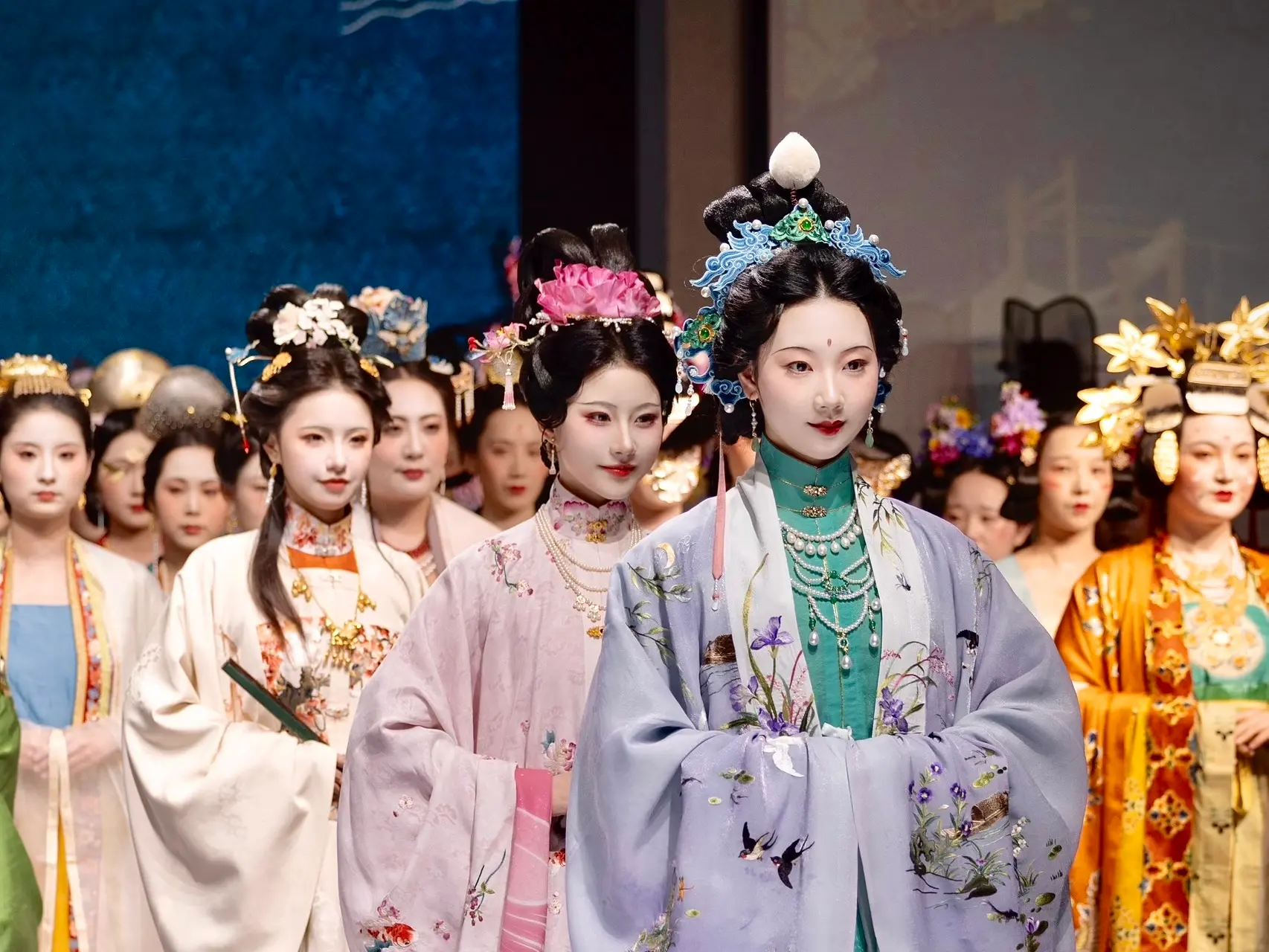
*Modern Hanfu presented with layered fabrics, embroidery, jewellery and elaborate hairstyling.*
Traditional Chinese Clothing at a Glance
“Traditional Chinese clothing” is an umbrella phrase, not the name of one garment. China has many historical periods, regional traditions and ethnic clothing systems. This article focuses primarily on clothing associated with the Han Chinese historical tradition plus the later qipao/cheongsam, because those are the terms international readers most often encounter. It does not treat all Chinese clothing as Hanfu, and it does not claim one single national costume for every community in China.
| Term | Short orientation |
|---|---|
| Hanfu | Historical clothing traditions associated with the Han Chinese; styles changed substantially between dynasties |
| Qipao / Cheongsam | Women’s dress that developed into its recognizable modern form mainly during the 20th century, with connections to Qing/Manchu dress |
| Changshan / Changpao | Long gown associated particularly with men’s dress in the late Qing and Republican periods |
| Tangzhuang | A modern Chinese-style jacket; despite its English name, it should not be presented as simply “clothing from the Tang dynasty” |
| Ethnic dress | China also has many non-Han clothing traditions that should not be collapsed into Hanfu |
The key distinction: Hanfu is not a synonym for every traditional Chinese outfit, and qipao is not simply a form of Hanfu.
Hanfu, Qipao and Other Chinese Dress Styles
Hanfu
Hanfu literally refers to clothing associated with Han Chinese traditions. It is not one fixed costume. Construction, silhouette, layering and accessories evolved across periods, so Tang, Song and Ming forms can look quite different from one another even when all are described as Hanfu in modern English.
Modern Hanfu revival frequently reconstructs or adapts Tang, Song and Ming forms for wear today. Cross-collar garments closing to the right are recognizable in many traditions, but that detail is not a universal rule for every Hanfu garment ever made. Common structural vocabulary includes pieces such as *ru*, *qun*, *paofu*, *ao* and *beizi*—useful labels for later deep-dives rather than a complete catalog here.
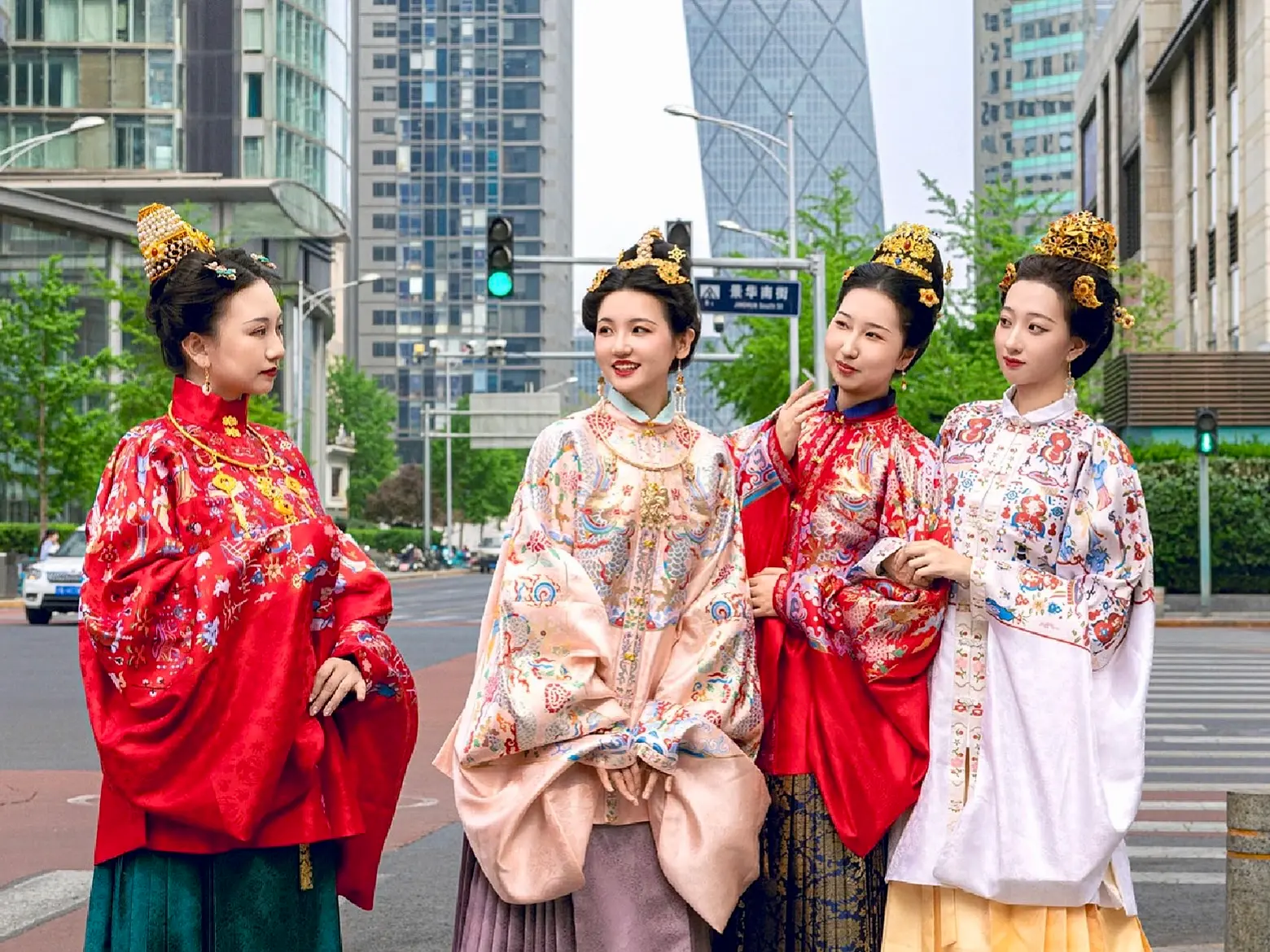
*Modern Hanfu ensembles inspired by Ming-period silhouettes and decorative styles.*
Qipao and Cheongsam
In modern English usage, qipao and cheongsam generally refer to the same garment family. “Cheongsam” derives from the Cantonese pronunciation of 長衫, while “qipao” reflects Mandarin terminology. The recognizable modern women’s qipao developed especially during the Republican era; Shanghai was crucial to its 1920s–30s evolution as tailoring became progressively more fitted and absorbed contemporary fashion influences.
Qipao has historical connections to Manchu/Qing clothing, but it should not be described as unchanged Qing court dress. It is also distinct from historical Hanfu. Calling qipao “another type of Hanfu” collapses two different clothing traditions.
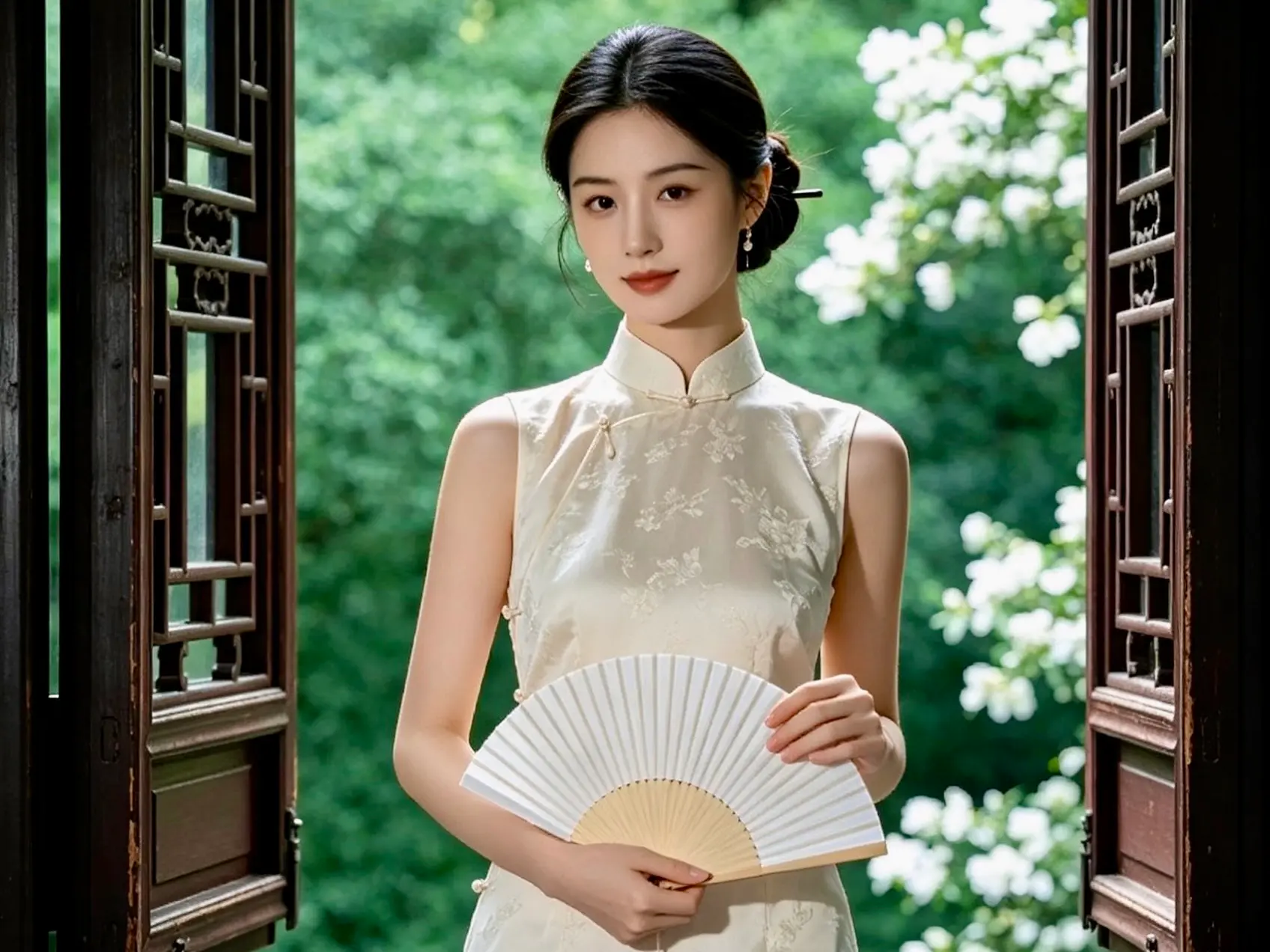
*A sleeveless ivory qipao with a high collar and understated floral embroidery.*
Changshan and other later Chinese styles
Changshan (also called *changpao* in some contexts) is a long gown associated particularly with men’s dress in the late Qing and Republican periods. Tangzhuang is a modern Chinese-style jacket popular in contemporary formal and festive wear; its English name should not be read as “clothing from the Tang dynasty.” Chinese wedding clothing can draw on several traditions, including historical-style Hanfu, qipao/cheongsam and regional customs.
Style comparison
| Hanfu | Qipao / Cheongsam | Changshan | Tangzhuang | |
|---|---|---|---|---|
| Main period association | Multi-dynasty Han Chinese traditions (forms vary by era) | Modern form especially Republican era / 20th century | Late Qing–Republican men’s long gown | Modern Chinese-style jacket |
| Typical form | Layered robes, jackets and skirts; many silhouettes | Fitted one-piece women’s dress with standing collar | Long men’s gown | Jacket with Chinese-style closures |
| Men / women | Both, with gendered and ritual variants | Primarily women’s dress in modern usage | Primarily men’s | Both in modern fashion contexts |
| Defining visual cues | Period-specific collars, sleeves, layering | Standing collar, side/diagonal closure, fitted cut | Long vertical gown silhouette | Jacket length, frog buttons / Chinese detailing |
| Hanfu? | Yes (umbrella for Han historical traditions) | No | No | No |
| Common modern use | Revival wear, events, photography | Formal wear, weddings, fashion, portraits | Occasional formal/historical reference | Festive and formal modern wear |
These rows are orientation aids. Exact dating, workshop practice and regional custom can complicate any single cell.
Chinese Clothing Through the Dynasties
Chinese clothing did not progress through a neat sequence of single “dynasty costumes.” Court rank, gender, occupation, region, ethnicity, ritual use and period all affected clothing. Nevertheless, major periods developed recognizable silhouettes and conventions.
Han through Tang
Han and earlier traditions
Early imperial and pre-imperial clothing already shows layered garments, distinctive collars and status-sensitive materials. Surviving textiles, tomb finds and later pictorial evidence are incomplete, so this page treats early periods as a foundation rather than a fully recoverablewardrobe catalog.
Tang dynasty
Tang clothing is visually diverse. Cosmopolitan exchange, court fashion and gendered silhouettes produced a wide range of sleeves, hems and accessories. A single painting can illustrate elite women’s dress of a particular moment without representing all Tang clothing.
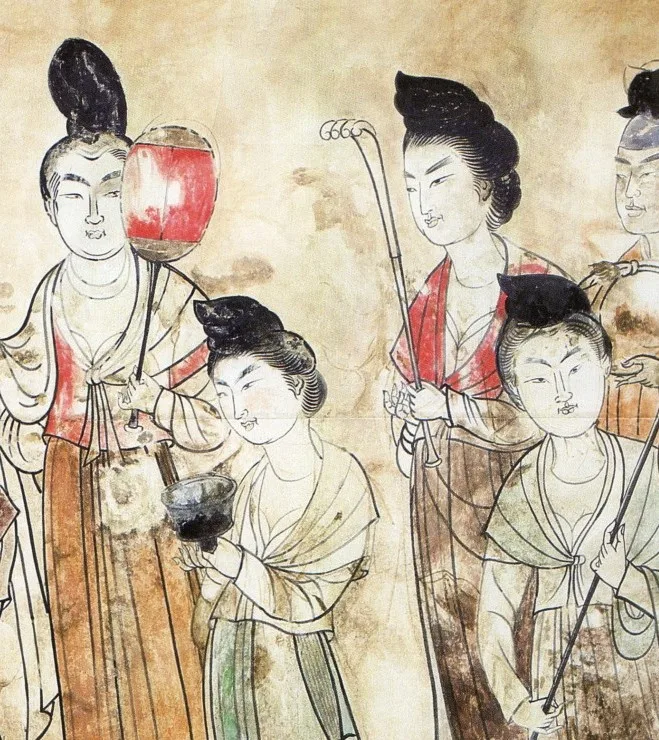
*Women in historical dress play musical instruments in a traditional Chinese painting.*
Song and Ming
Song
Song silhouettes often emphasize layered jackets and skirts with comparatively restrained visual mass in many elite depictions. Changes in sleeve width, collar treatment and outer garments continue the longer story of Han clothing systems adapting to taste and status.
Ming
Ming forms are especially prominent in modern Hanfu reconstruction because many reconstructed ceremonial and everyday silhouettes draw on Ming patterns of jackets, robes and skirts. That popularity reflects reconstruction practice today—not a claim that Ming dress was the only “correct” Hanfu.
Qing to Republican China
The Qing period introduced Manchu influence and dress regulation within a multi-ethnic empire. Han and Manchu clothing traditions were not identical, and the historical transition is more complicated than a simple story that “Hanfu disappeared completely in 1644.” Everyday clothing, ritual clothing and regional practice continued to vary. Later urban fashion, especially in treaty-port cities, reshaped what people wore in public life. The modern women’s qipao emerged and transformed through Republican-era Shanghai fashion rather than arriving fully formed as “ancient dress thousands of years old,” and it should not be equated with a single unchanging Qing court garment.
How to Recognize Traditional Chinese Clothing
When you look at a garment—or a photograph of one—start with structure before guessing dynasty.
Collars and front closures
Look for crossed collars, right-over-left closures where relevant, standing collars, diagonal qipao fronts and *pankou* (frog-button) closures. Not every item uses all of these. A standing collar with a diagonal front is a strong cue toward modern qipao/cheongsam; a crossed collar with layered jacket-and-skirt construction often points toward Hanfu-family forms—while still requiring period context. Round-neck or other openings also appear historically, so collar shape is a clue, not a complete identification system.
Robes, jackets and skirts
Many historical Han systems combine upper and lower garments: jackets or robes over skirts, with additional layers for season and rank. One-piece fitted dresses are more characteristic of later qipao fashion. Robes, jackets and skirts can also appear in men’s and women’s wardrobes with different cuts. When you see a photograph, ask whether you are looking at a coordinated set of pieces or a single tailored dress—that distinction alone separates many Hanfu looks from modern qipao.
Sleeves and silhouette
Broad flowing sleeves appear in some historical Hanfu, while other periods and forms use narrower sleeves. Later qipao silhouettes are often closely fitted through the body, sometimes with side slits that change how the garment moves when walking. Avoid the cliché that “Hanfu always has huge sleeves.” Sleeve volume, waist emphasis and hem length should be read together.
Fabrics, embroidery and rank
Silk is the most famous luxury fiber, but cotton and other materials also matter. Embroidery, woven patterns, color and ornament can signal status, occasion or workshop taste. Color symbolism is historically real and also frequently overstated in tourist summaries—avoid absolute claims such as “only emperors could wear yellow” without period-specific qualification. Fabric sheen and embroidery density help you read formality, but they do not by themselves prove dynasty or ethnicity.
Traditional Chinese Clothing Today
The Hanfu revival
Since the early 21st century, Hanfu has seen a visible revival among younger wearers. Historical reconstruction and fashion-oriented interpretations coexist. Social events, festivals, photography and tourism all amplify the look. Visitors increasingly encounter Hanfu rental and photo studios in Chinese cities. Modern Hanfu is not automatically museum-accurate; treat it as living dress practice with varying fidelity.
Qipao as living dress
Qipao remains living dress: formal wear, weddings, cultural events, tailored fashion and contemporary reinterpretation. Shanghai’s historical association remains strong, and qipao/cheongsam shops and tailoring remain relevant for travelers who want to buy or commission a piece.
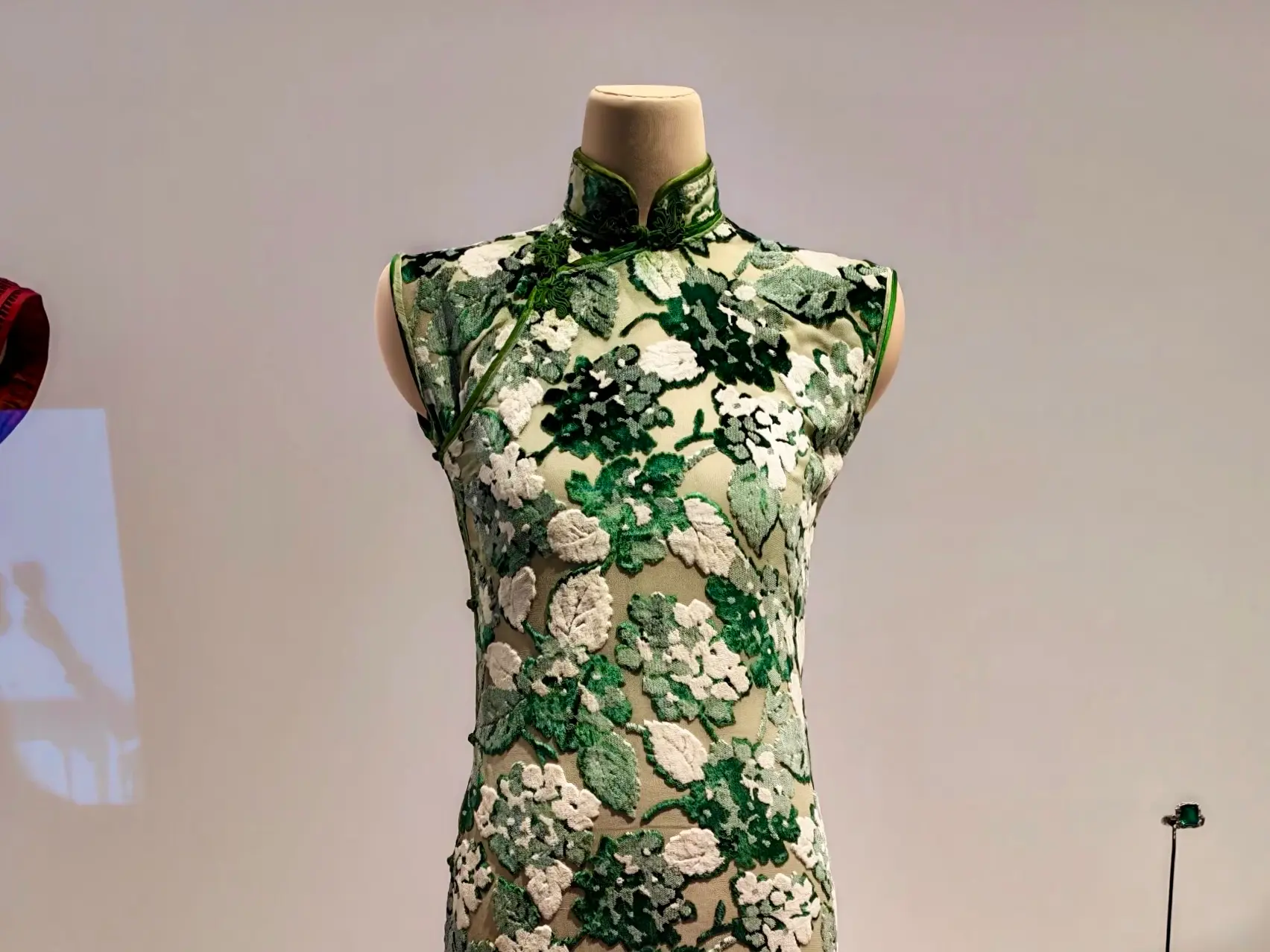
*Qipao / cheongsam on museum display.*
Wearing Chinese clothing as a visitor
Visitors to Beijing can rent Hanfu for several hours, arrange styling and makeup, and combine it with photography around historically appropriate settings. Qipao is more naturally connected to shopping, tailoring and portrait photography than to a generic costume-rental product.
Choose Hanfu if the goal is historical-style dress, photography matters, or you want dynasty-inspired styling.
Choose Qipao if you want a fitted 20th-century Chinese dress, buying or tailoring is the goal, or you want something potentially usable again after the trip.
Explore Chinese Clothing in More Detail
Continue with the dedicated clothing guides for deeper comparisons. Architecture, gardens and related material culture remain useful context for how dress was worn and photographed.
| Guide | Why it helps |
|---|---|
| Hanfu | History, meaning and features of the Han Chinese clothing system |
| Types of Hanfu | Dynasty-style navigation without treating each era as one costume |
| Hanfu for Men | Men’s robes, court dress and role-based variation |
| Hanfu vs Qipao | How the two traditions differ historically and visually |
| Qipao / Cheongsam | Qing ancestry, Republican-era change and modern form |
| Qipao Styles | Fit, length, fabric, decoration and occasion axes |
| Qipao vs Cheongsam | Terminology and linguistic history in detail |
| Hanfu Rental & Photoshoot in Beijing | How visitor rental and photography sessions typically work |
| Where to Buy Qipao in Beijing | Ready-made vs custom shopping decisions |
| Chinese Architecture | Palaces and halls that often frame clothing photography |
| Chinese Gardens | Garden settings frequently used for portraits |
| Beijing Hanfu Experience | Live rental, styling and photoshoot inquiry path |
Traditional Chinese Clothing FAQ
What is traditional Chinese clothing called?
There is no single universal garment name. Hanfu refers to historical clothing traditions of the Han Chinese, while qipao/cheongsam, changshan, Tangzhuang and many ethnic clothing traditions are different categories.
Is Hanfu the same as traditional Chinese clothing?
No. Hanfu is one major category within Chinese clothing history, but it is not a synonym for every traditional garment worn across China. Non-Han ethnic dress systems and later styles such as qipao belong to other categories.
Is qipao the same as cheongsam?
In modern English, qipao and cheongsam usually refer to the same women's dress. Their linguistic and historical origins differ, but there is no consistent modern design rule separating them.
Is qipao a type of Hanfu?
No. They belong to different historical clothing traditions. Qipao’s recognizable modern form is strongly associated with twentieth-century fashion, especially Republican-era development, while Hanfu names multi-period Han Chinese clothing systems.
What did people wear in ancient China?
Clothing varied enormously by dynasty, status, region, gender and occasion. There was no single ancient outfit shared by everyone.
What is the difference between Hanfu and Qipao?
Hanfu is an umbrella for historical Han Chinese clothing traditions with many dynastic forms. Qipao/cheongsam is a later women’s dress tradition whose modern fitted silhouette is especially associated with twentieth-century urban fashion. They are not interchangeable.
Can tourists wear Hanfu in China?
Yes. Rental, makeup, styling and photography are widely available in major destinations. Visitors should treat the clothing and historical settings respectfully.
Where can visitors experience traditional Chinese clothing in Beijing?
Beijing offers Hanfu rental and photoshoot studios, while qipao is more often a shopping or tailoring path. See the next section for practical next steps.
Experience Chinese Clothing in Beijing
Hanfu experience and photography
For visitors who want to wear the clothing rather than only read about it, Beijing has Hanfu rental studios offering costume selection, styling, hair and makeup, and photography. This pairs naturally with imperial and traditional architectural settings.
Plan a Hanfu experience in Beijing
Qipao shopping and tailoring
Qipao works better as a shopping or tailoring experience than a generic costume-rental product. A visitor may want help comparing ready-made and custom pieces, fabrics, fit, workmanship and shop options.