
Hanfu and qipao can both be described broadly as traditional Chinese clothing, but they are not the same garment tradition. This page compares them so you can tell them apart visually, understand their different histories, and decide which fits a Beijing visit. Start with the parent Traditional Chinese Clothing hub, or go deeper on Hanfu, Types of Hanfu, and Hanfu for Men.
Hanfu and qipao are different traditions of Chinese clothing. Hanfu is an umbrella term for historical clothing systems associated with the Han Chinese and includes many robes, jackets, skirts, trousers and accessories that changed across centuries. Qipao, also commonly called cheongsam, is a women's one-piece dress whose recognizable modern form developed mainly during the 20th century from earlier Manchu/Qing dress traditions and Republican-era fashion.
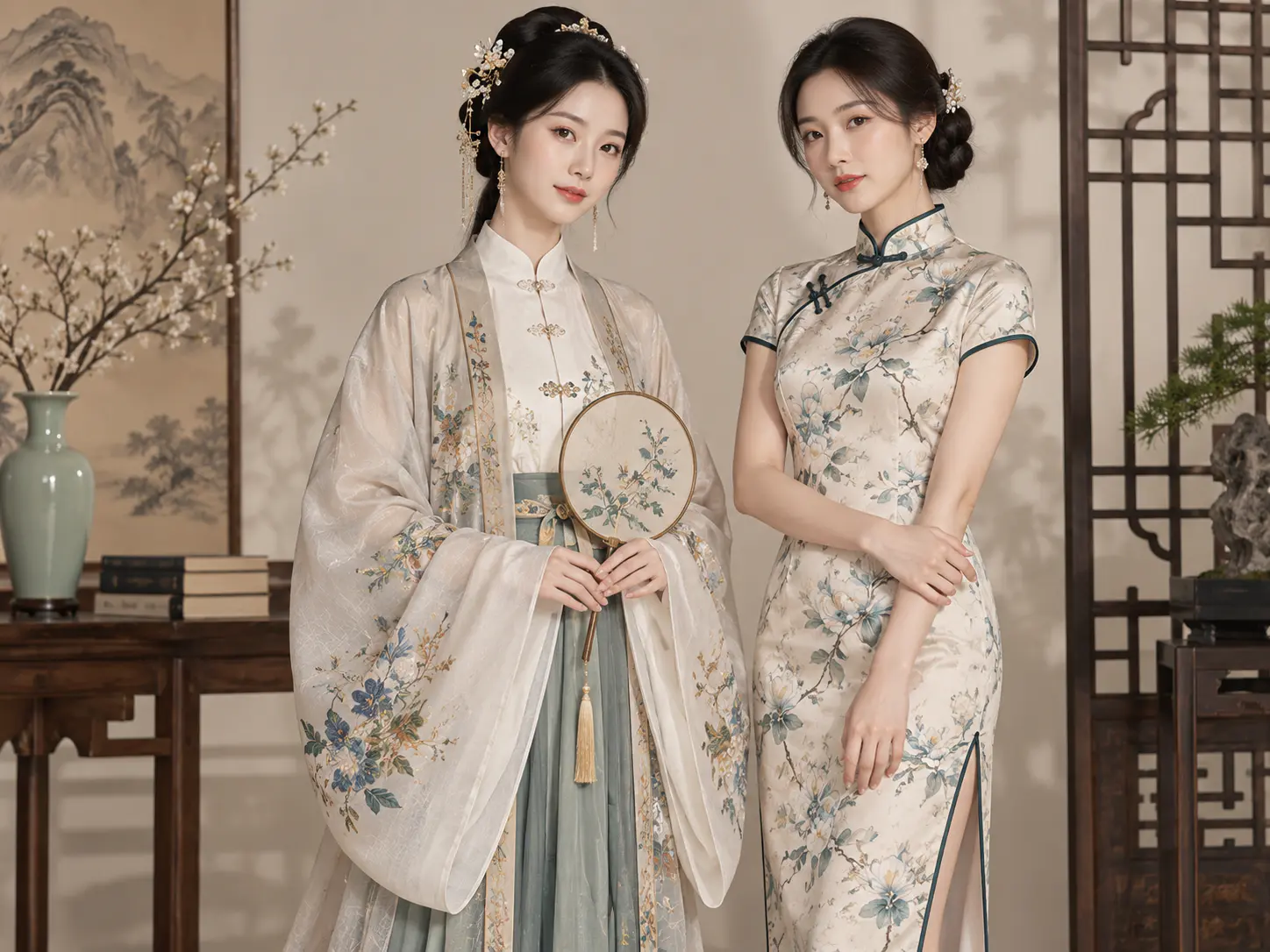
*Left: modern Ming-inspired Hanfu (Wikimedia Commons, CC BY-SA 4.0). Right: qipao / cheongsam (Wikimedia Commons, CC0). Two independently sourced images placed side by side for comparison—not a single staged photograph.*
Hanfu vs Qipao at a Glance
The simplest difference is that Hanfu is a broad historical clothing system, while qipao is a specific type of women's one-piece dress.
| Feature | Hanfu | Qipao / Cheongsam |
|---|---|---|
| What is it? | Broad historical clothing system | Specific women's dress |
| Main cultural association | Historical Han Chinese clothing | Manchu/Qing roots + modern Chinese fashion development |
| Historical span | Many centuries and dynasties | Recognizable modern form mainly 20th century |
| One garment? | No | Usually yes — one-piece dress |
| Worn by | Men and women | Primarily women |
| Typical construction | Robes or separate layered garments | One-piece fitted or straight dress |
| Common collar | Cross, round, parallel-front and others | Standing collar common |
| Front closure | Varies | Often asymmetric/diagonal |
| Fastenings | Ties, belts and other systems | Pankou/frog closures often important |
| Silhouette | Highly variable | Usually vertically continuous; often fitted in modern forms |
| Modern use | Festivals, fashion, ceremonies, photoshoots | Formal wear, weddings, fashion, tailoring, photography |
| Best Beijing experience | Rental + styling + photography | Shopping + tailoring + photography |
Is Qipao a type of Hanfu?
No. Qipao is not generally classified as Hanfu.
Hanfu refers to historical clothing systems associated with the Han Chinese. Qipao developed from a different clothing lineage, connected to Manchu/Qing dress and transformed substantially in the Republican period, especially in Shanghai. Both belong to Chinese clothing history; one is not a subtype of the other.
What Hanfu and Qipao Actually Are
Hanfu
Hanfu is an umbrella term, not one fixed outfit. Contemporary reference material from the Academy of Contemporary China and World Studies describes Hanfu as an attire system that can include clothes, headwear, hairstyles, ornaments, shoes and accessories—not a single robe.
Forms changed extensively across periods. Travelers encounter robes, *ru* + *qun* combinations, *ao* + *qun*, round-collar robes, long outer garments, and distinct men's and women's clothing. The familiar jiaoling youren (cross-collar, closing toward the wearer's right) is important in many examples, but it is not universal across all Hanfu.
Modern English often flattens Hanfu into one flowing silhouette. Historically, Tang, Song and Ming forms can look very different while still falling under the same broad label.
Read the complete Hanfu guide →
Qipao
Qipao is a particular dress category, not a clothing system comparable in scope to Hanfu.
Institutional framing from the Hong Kong Palace Museum describes the qipao as evolving from Manchu court dress in Beijing and moving into civilian life after the Qing dynasty, later becoming fashionable in Shanghai in the early 20th century. Shanghai Intangible Cultural Heritage material notes that qipao was fashionable in Shanghai in the 1920s, and that in the 1930s Shanghai tailors incorporated Western tailoring techniques—fitted busts, cinched waists, shoulder seams and cuffed sleeves—that helped create the Shanghai-style qipao.
That is not the same claim as “Westerners invented the qipao.” Modern qipao evolved through Chinese dress traditions plus changing urban fashion and tailoring methods.
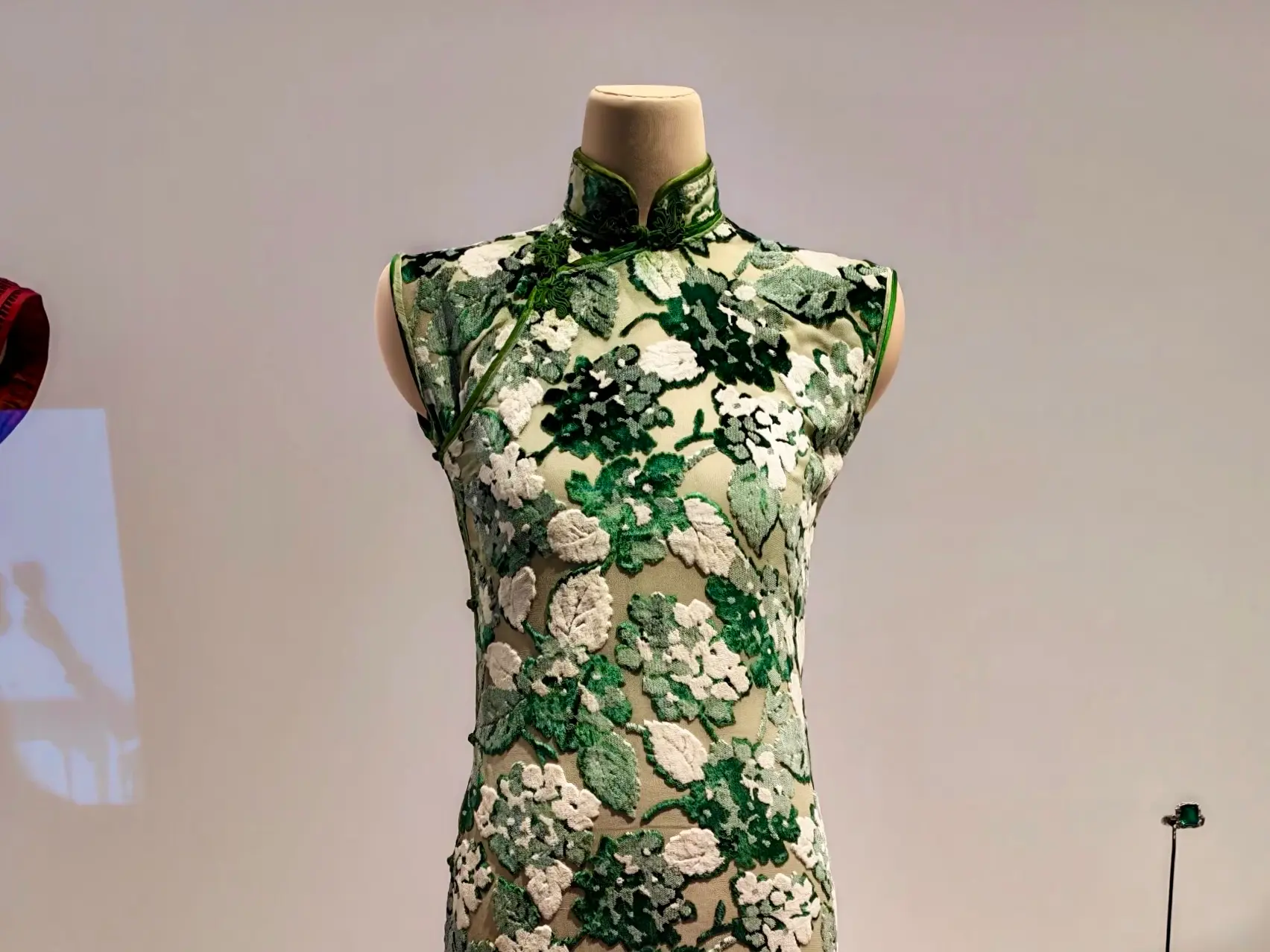
*Qipao, also commonly called cheongsam. Its modern form is strongly associated with 20th-century Chinese fashion. Wikimedia Commons, CC0.*
Is Cheongsam different from Qipao?
In modern English, qipao and cheongsam usually refer to the same women's dress. “Qipao” reflects Mandarin terminology, while “cheongsam” became especially established through Cantonese/Hong Kong usage. The Hong Kong Conservation Office describes qipao as generally referred to as cheongsam in Hong Kong, meaning “long dress.” For the terminology in detail, see Qipao vs Cheongsam.
How Hanfu and Qipao Look Different
Overall silhouette
Hanfu silhouette varies greatly: flowing robes, jacket + skirt, high-waisted skirts, long outer garments, structured Ming layering, men's robes and more. There is no single Hanfu silhouette.
Qipao usually reads as one continuous dress with a relatively narrow vertical line. Waist shaping ranges from loose to highly fitted depending on period. Side slits are frequent in many modern examples. Early qipao could be significantly looser and straighter than later body-fitting forms—do not treat a tightly fitted mid-century look as timeless.
Collar
Hanfu may use cross collar, round collar, parallel front and other forms. Qipao often features a standing collar, though collar height and construction changed historically. Not every qipao has the same high collar.
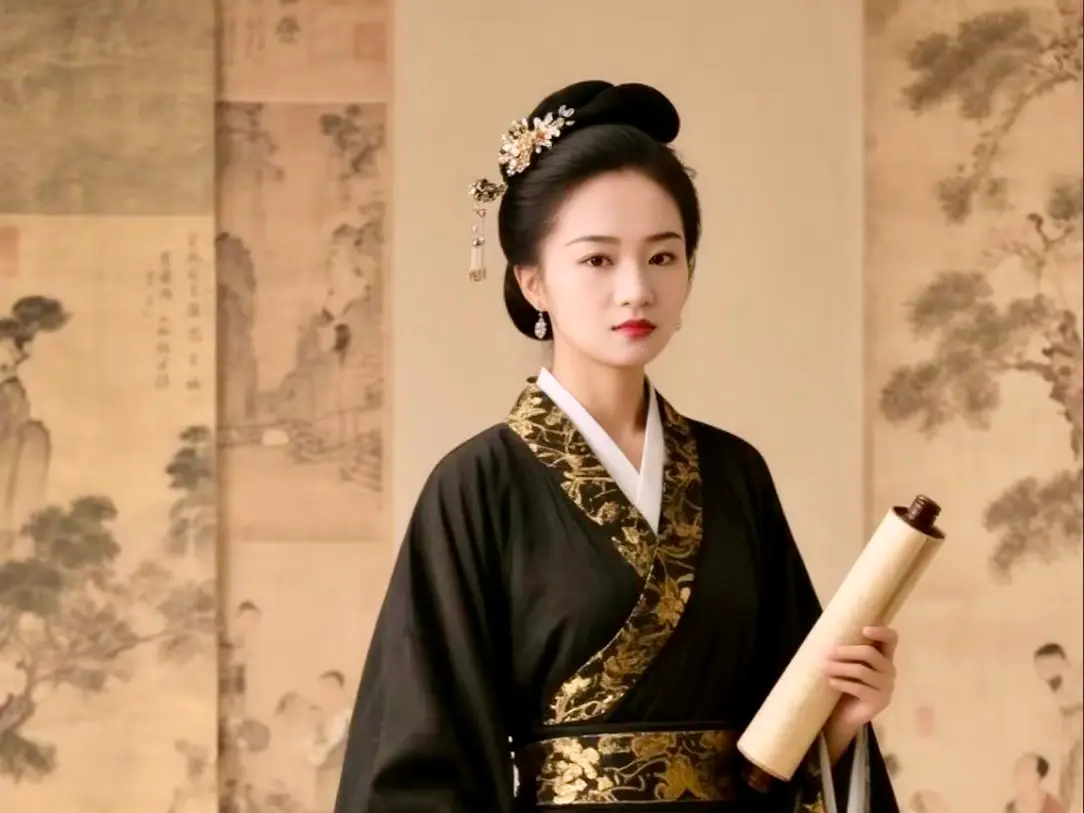
*Cross-collar Hanfu detail. Cross collars and layering are common Hanfu cues—not a rule for every historical garment. Wikimedia Commons, CC BY-SA 4.0.*
Front opening
Hanfu front openings vary; cross-collar garments often form a Y-shaped neckline. Qipao often uses an asymmetric or diagonal front with decorative fastening. That diagonal opening is one of the strongest quick visual clues for modern qipao.
Fastenings
Hanfu frequently uses ties, sashes or belts depending on garment. Qipao is strongly associated with pankou (decorative knotted buttons / frog closures). Shanghai ICH material identifies knotted-button making among traditional cheongsam techniques. Pankou are not exclusive to qipao, but they are a common qipao cue.
Layers
Hanfu is often visibly layered. Qipao typically presents as one principal dress. For non-experts, this is often the easiest distinction.
Sleeves
Hanfu sleeve width ranges from narrow to extremely wide. Qipao sleeves can be long, elbow-length, short or sleeveless depending on design. Do not simplify this to “Hanfu = wide sleeves; qipao = short sleeves.”
Skirt and hem
Hanfu may include a separate skirt, robe hem, trousers or layered lower garments. Qipao's lower section is part of the same one-piece dress; modern examples frequently use side slits.
| Look at... | Hanfu clue | Qipao clue |
|---|---|---|
| Neck | Cross/round/other varied forms | Standing collar common |
| Upper + lower body | Often layered/separate | Usually one continuous dress |
| Waist | Depends heavily on period | Often tailored/fitted in later forms |
| Front | Multiple structures | Diagonal/asymmetric opening common |
| Fastening | Ties/belts common | Pankou common |
| Hem | Skirts, robes, trousers | One-piece dress hem |
| Men | Extensive male Hanfu tradition | Women's qipao is primary modern meaning |
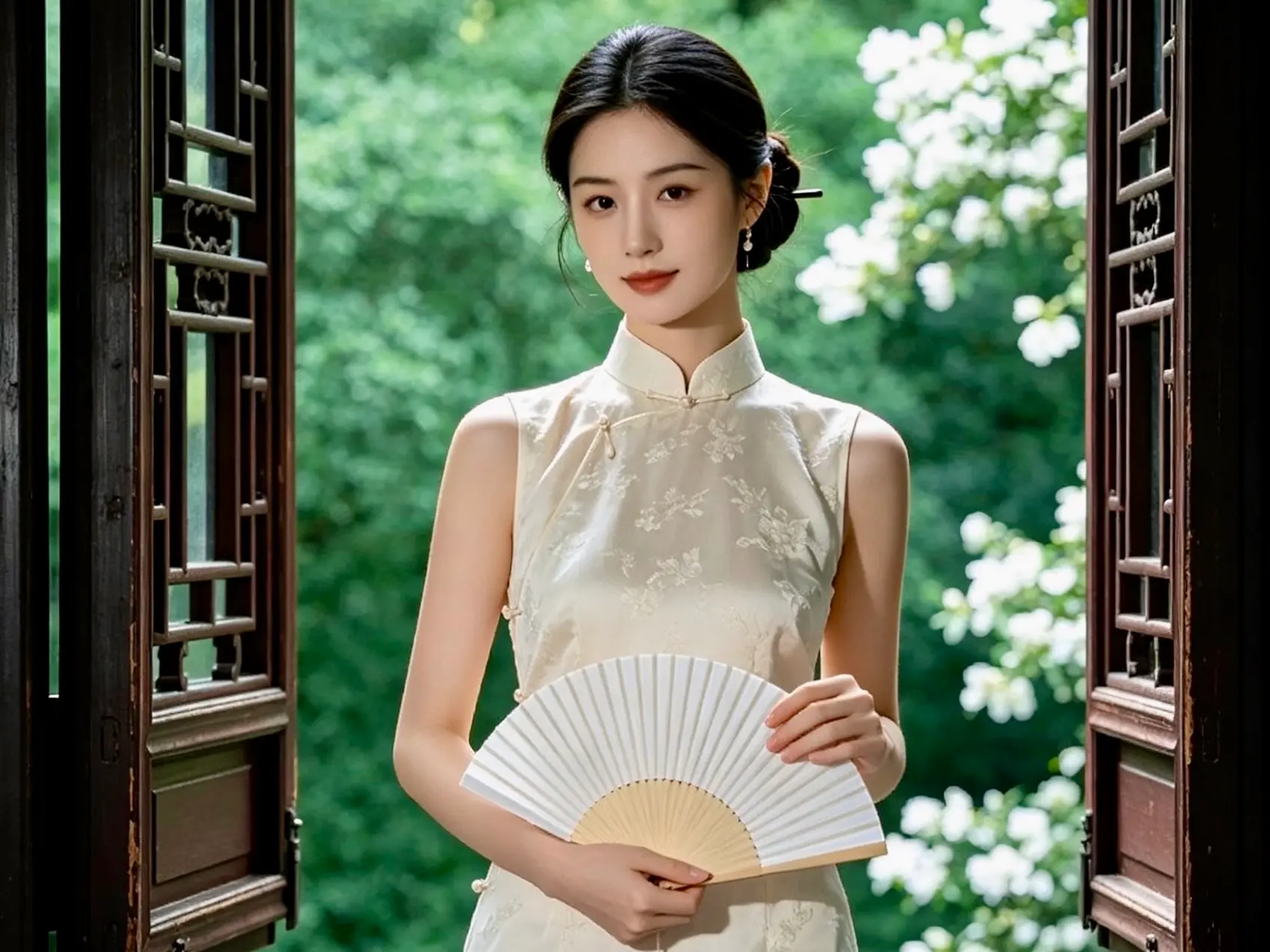
*1930s Chinese qipao in black silk gauze (RISD Museum source via Wikimedia Commons, CC0). Useful for one-piece structure and period silhouette; kept modest in size.*
History: Ancient Hanfu vs Modern Qipao
“Ancient vs modern” is a useful shorthand, but not every Hanfu garment is ancient and not every qipao look is contemporary.
Hanfu developed over many historical periods
Hanfu forms associated with Han, Tang, Song and Ming periods already look very different from one another. Treat dynasty names as families of silhouettes, not single costumes.
For the period-by-period comparison, see Types of Hanfu: Styles Through the Chinese Dynasties.
Qipao's Qing and Manchu background
Qipao has historical roots connected to Manchu dress during the Qing period. Hong Kong government and museum framing notes that the term qipao originally referred to long gowns worn by Manchu women under the Qing. That ancestry matters—but the modern qipao is not simply an unchanged Qing Manchu robe. Forms changed substantially later, and origin scholarship still contains nuances.
Republican-era transformation
After the Qing period, dress changed rapidly. By the 1920s, early modern qipao became fashionable. During the 1930s, Shanghai became especially influential: tailoring increasingly shaped to the body, Western-derived construction methods were incorporated, many fashionable forms became longer or slimmer, and side slits and modern construction evolved. This is what makes the familiar modern qipao fundamentally different from pre-Qing Hanfu traditions.
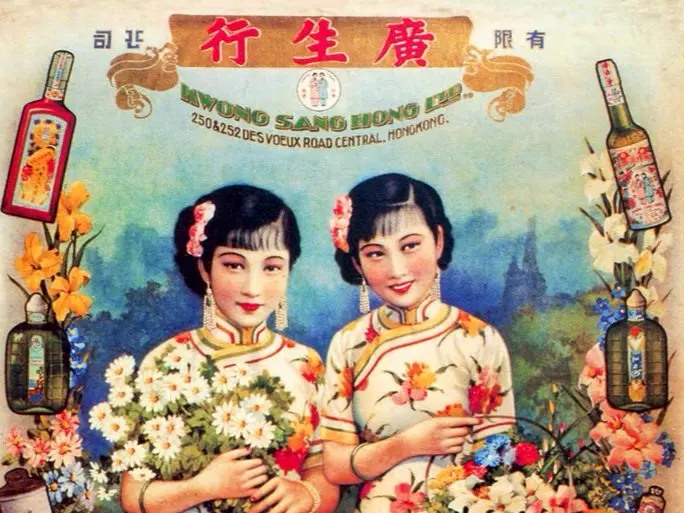
*1930s Shanghai advertisement showing contemporary qipao styling. The period is central to the development of the modern Shanghai-style cheongsam. Wikimedia Commons (Public Domain in China per file page).*
Why they are historically different
Hanfu developed as a large family of clothing systems over many pre-Qing historical periods associated with Han Chinese dress. Qipao emerged from a different historical lineage linked to Manchu/Qing gown traditions and was transformed into modern urban women's fashion during the Republican era. The two can influence modern Chinese fashion simultaneously, but one should not be classified as a subtype of the other.
Compact timeline
* Han → Tang → Song → Ming — Hanfu styles continue to change substantially * Qing — Manchu court/gown traditions provide important qipao ancestry * 1910s–1920s — early Republican clothing transformation * 1920s–1930s Shanghai — modern qipao develops rapidly * Today — Hanfu revival and modern qipao both coexist
Hanfu and Qipao Today
Modern Hanfu
Since the early 21st century, Hanfu revival has grown through historical reconstruction, historically inspired fashion, festivals, cultural events, rental studios and photography. Some enthusiasts also wear Hanfu-derived garments in daily life. Accuracy varies widely by maker and styling package.
Modern Qipao
Qipao today appears in formalwear, weddings, cultural events, fashion, portrait photography, custom tailoring and contemporary reinterpretation. Visitors often buy rather than rent because fit matters substantially, tailoring is central to the garment, and a well-made qipao can function as reusable formal clothing.
New Chinese style
Modern Chinese fashion increasingly blends historical references. Outfits can combine Hanfu-inspired shapes, qipao collars, pankou, embroidery and Western-derived tailoring. Not every modern Chinese-style outfit fits neatly into either Hanfu or qipao.
Which Should You Choose?
Choose Hanfu if...
* you want a historical or dynasty-inspired look * you want layered garments * you want a Tang, Song or Ming visual direction * photography is the main goal * you want elaborate hair/accessory styling * men and women in the group both want period-inspired clothing * you are comfortable renting rather than purchasing
Hanfu is not “more authentic” than qipao—it is a different tradition and use case.
Choose Qipao if...
* you want a fitted one-piece dress * you prefer 20th-century Chinese styling * you want something tailored to your body * you are interested in silk, fabric and craftsmanship * buying something to take home matters * wedding or formalwear use is possible * you want Shanghai/Republican-era visual character
For photography
Hanfu usually offers larger silhouette variety, sleeves and layers in motion, dynasty-specific styling and stronger historical-scene compatibility.
Qipao usually offers a simpler silhouette, a tailoring-focused look, strong early-20th-century association and flexible portrait, street or interior settings.
Neither automatically photographs “better.”
For shopping
Hanfu is often easier as a rental for short-stay visitors unless you specifically want to buy. Qipao is particularly suited to ready-made shopping, measurement, tailoring, fabric selection and custom orders.
| Your goal | Better starting point |
|---|---|
| Dynasty-style photoshoot | Hanfu |
| Men's traditional clothing experience | Hanfu |
| Tang/Song/Ming styling | Hanfu |
| One-piece formal dress | Qipao |
| Custom tailoring | Qipao |
| Wedding/formal garment | Often Qipao |
| Group costume experience | Hanfu |
| Buy a wearable souvenir garment | Often Qipao |
| Historical reconstruction interest | Hanfu |
Hanfu vs Qipao FAQ
Is Hanfu the same as Qipao?
No. Hanfu is a broad historical clothing system associated with Han Chinese dress across many periods. Qipao is a later women's one-piece dress tradition with a different historical lineage.
Is Qipao a type of Hanfu?
No. Qipao is not generally classified as Hanfu. It connects to Manchu/Qing gown traditions and was transformed in Republican-era urban fashion, especially in Shanghai.
Which is older, Hanfu or Qipao?
Hanfu refers to clothing traditions spanning much earlier periods of Chinese history. The recognizable modern qipao developed mainly in the 20th century, though it has historical roots connected to Qing/Manchu dress.
Is Cheongsam the same as Qipao?
Generally yes in contemporary English usage. “Qipao” reflects Mandarin terminology; “cheongsam” is especially established through Cantonese/Hong Kong usage.
What is the visual difference between Hanfu and Qipao?
Hanfu often uses layered or separate garments and has many different silhouettes; qipao is typically a one-piece dress with a standing collar and asymmetric front fastening. Use “typically/often”—exceptions exist.
Can men wear Qipao?
The modern word qipao usually refers to the women's dress. Hong Kong and related contexts have a separate tradition of men's cheongsam/changshan, which should not be conflated with the modern women's qipao. Men seeking period-inspired clothing usually start with Hanfu for men.
Which is more traditional, Hanfu or Qipao?
Both belong to Chinese clothing history, but to different periods and traditions. Hanfu covers earlier Han Chinese clothing systems; qipao is a later dress tradition shaped by Qing/Manchu ancestry and 20th-century urban fashion. Neither claim to be the single “more traditional” Chinese outfit is useful.
Which is better for tourists to wear in China?
Neither is universally better. Choose Hanfu for a historical-style experience or photoshoot; choose qipao for a fitted dress, tailoring, formalwear or portraiture.
Wear Hanfu or Shop for Qipao in Beijing
These are two different visitor pathways—not one generic “traditional clothing tour.”
Hanfu experience in Beijing
A typical visitor Hanfu experience may include outfit and dynasty/style selection, hair styling, makeup, accessories, photography and a historic architectural setting. Say whether you want historically informed reconstruction or a photo-first costume.
Plan a Hanfu experience in Beijing
Qipao shopping and tailoring in Beijing
A qipao shopping or tailoring experience can help with ready-made vs custom, fabric, fit, collar height, sleeve length, pankou, embroidery, hem length and alteration timelines. Fit and craftsmanship are central—this is more than a quick souvenir stop.