
There is no single qipao style. A cheongsam can be long or short, loose or fitted, silk or cotton, understated or heavily embroidered — and a modern wedding qipao may look very different from a 1930s Shanghai dress. The useful way to compare qipao is by silhouette, construction, fabric and occasion rather than treating every label as a separate garment type.
Start with the parent Qipao / Cheongsam: History, Meaning & Design for history and construction. For naming, see Qipao vs Cheongsam: Are They the Same?. For how qipao differs from Hanfu, see Hanfu vs Qipao. The wider map is on Traditional Chinese Clothing.
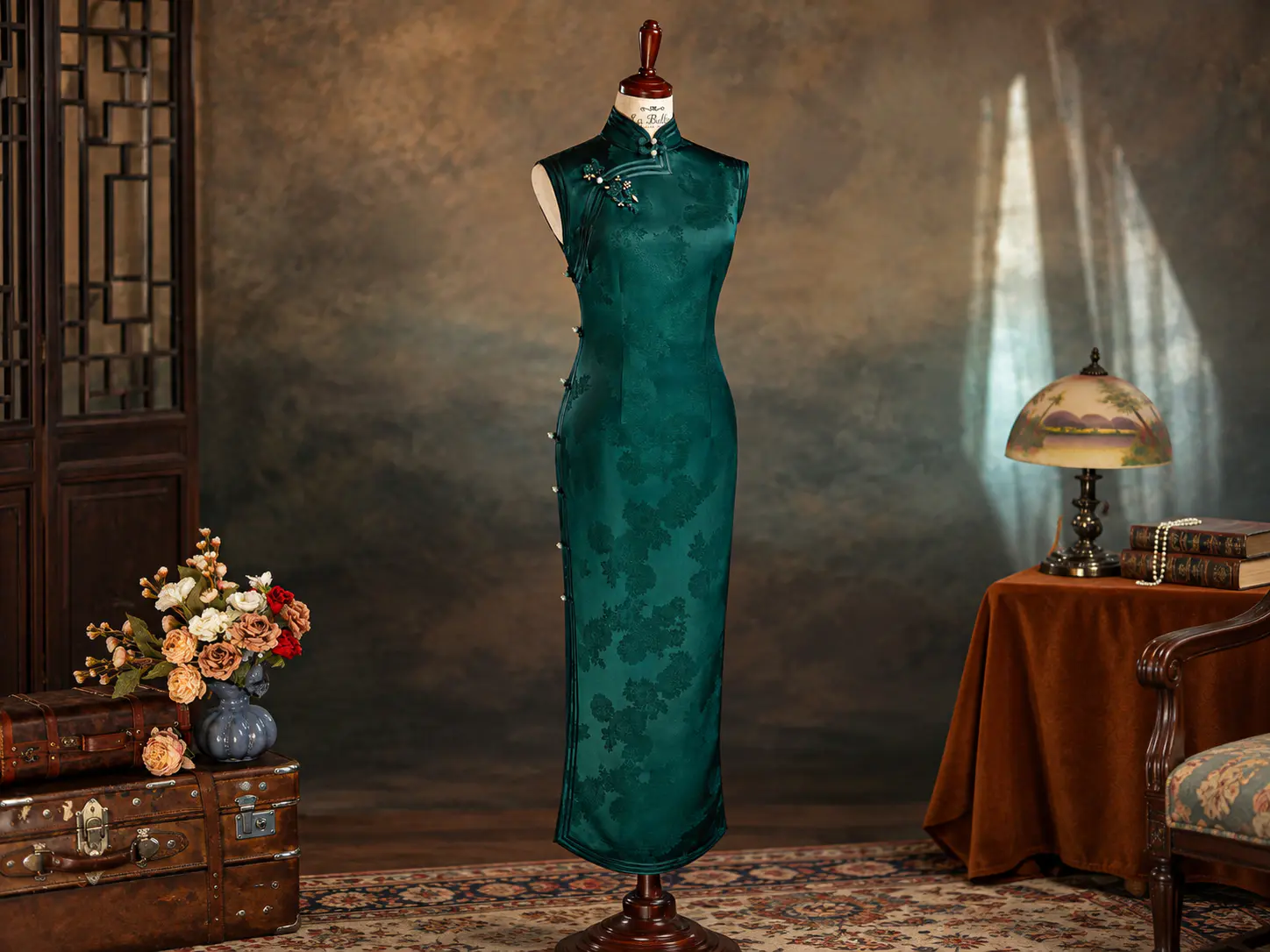
*A contemporary qipao displayed in Beijing. Modern qipao can retain characteristic collar and placket features while varying substantially in color, fabric and decoration. Photograph by N509FZ, Wikimedia Commons, CC BY-SA 4.0.*
Qipao Styles at a Glance
Qipao styles are best understood across several dimensions. “Traditional” and “modern” describe design direction; “silk” describes material; “wedding” describes use. These categories overlap rather than compete.
“Traditional,” “modern,” “silk,” and “wedding” are not mutually exclusive qipao types. A single dress can simultaneously be modern, silk, red, long and a wedding qipao. Those words name different axes of the same garment.
Main style framework
| Dimension | Main options | What changes |
|---|---|---|
| Design | Heritage, classic, modern | Construction and styling |
| Fit | Straight, shaped, fitted | Body contour |
| Length | Long, midi, knee, short | Overall proportion |
| Sleeve | Long to sleeveless | Formality and season |
| Fabric | Silk, brocade, gauze, cotton, modern blends | Texture and drape |
| Decoration | Minimal, piping, pankou, embroidery | Visual complexity |
| Occasion | Everyday, formal, wedding, photography | Styling priorities |
A quick visual rule
Do not identify a Qipao style from one feature alone.
For example:
* red does not automatically mean wedding * silk does not automatically mean traditional * short does not automatically mean modern * fitted does not automatically mean cheongsam rather than qipao * embroidery does not automatically mean handmade
Evaluate the complete combination of design direction, silhouette, length, sleeve, fabric, decoration and occasion.
Traditional and Classic Qipao Styles
“Traditional” is a useful shopping and style label, but there is no one frozen historical Qipao template. Early modern forms, classic Shanghai-style dresses and mid-century Hong Kong cheongsam are related recognitions within a changing fashion language—not identical patterns.
What “traditional Qipao” usually means today
Sellers and wearers may use traditional qipao for garments that retain a stronger set of heritage features, such as:
* standing collar * asymmetric / diagonal opening * pankou (frog closures) * piping * longer hem * Chinese silk or brocade * restrained historical proportions * traditional tailoring techniques
“Traditional” is a modern descriptive category, not one precisely dated historical pattern. It is not a universal standard that every historic dress matched.
1920s Qipao
Full chronology belongs on the parent Qipao guide. For style comparison, the important visual distinction is that early modern qipao could be:
* loose * relatively straight * longer * wider through the torso * broader in the sleeve
Early modern qipao could be looser and straighter than the fitted 1930s Shanghai silhouette now familiar internationally.
1930s Shanghai-style Qipao
This is the classic global image of haipai / Shanghai-style qipao. Features often associated with later Shanghai qipao include increasing waist shaping, fitted bust, shoulder seams, altered sleeve construction, changing hem lengths, side slits and urban fashion fabrics. Shanghai’s official heritage material documents experimentation with three-dimensional / Western tailoring methods.
Use “classic Shanghai-style” rather than claiming it is the only traditional Qipao.
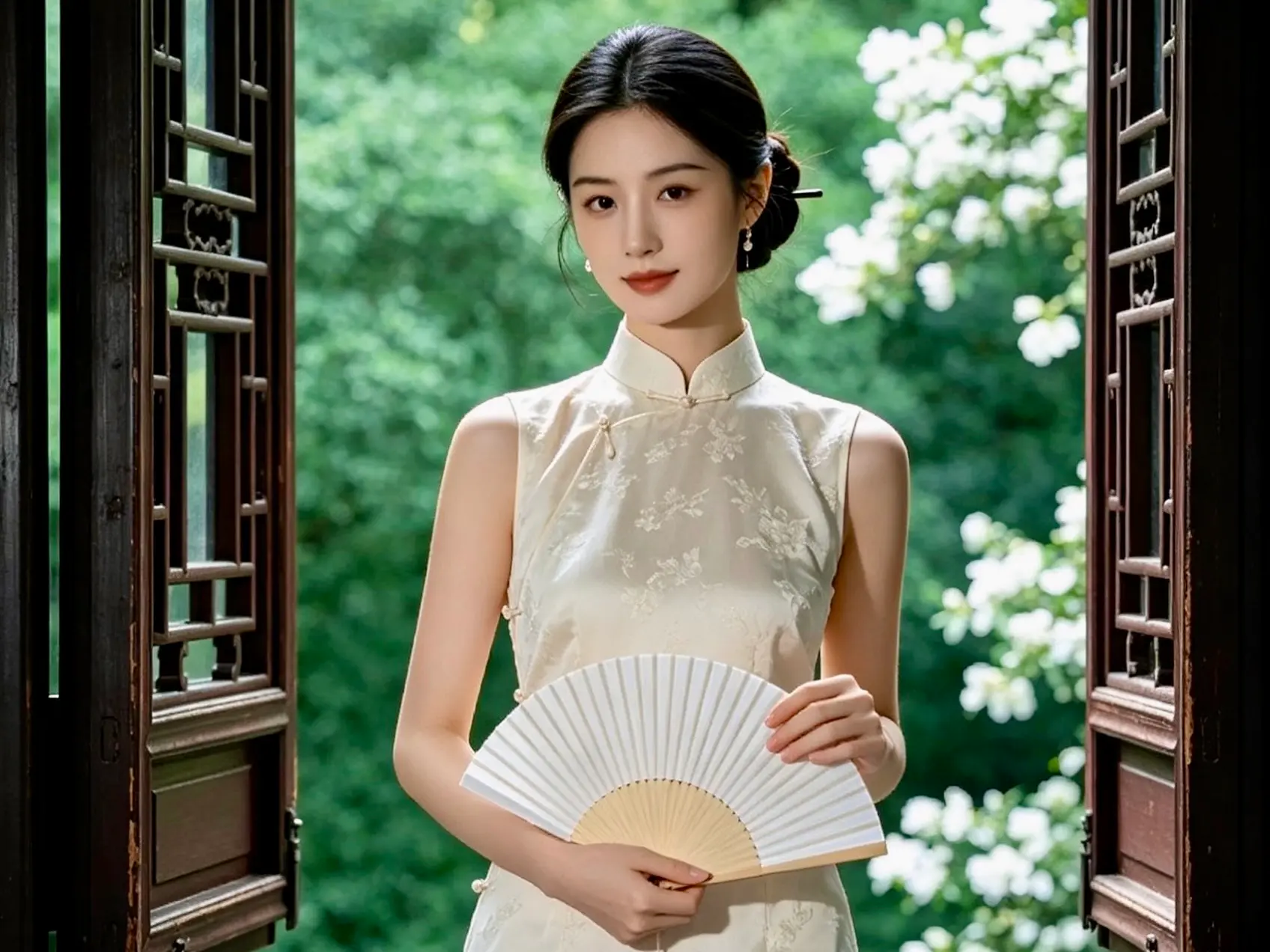
*1930s qipao made from black silk gauze. Historic examples show that fabric, silhouette and construction varied even within the period now associated with the classic Shanghai qipao. RISD Museum source via Wikimedia Commons, CC0.*
1950s–60s Hong Kong Cheongsam
Hong Kong Memory material shows that 1950s–60s cheongsam often used more three-dimensional tailoring, shorter hemlines, slim waist, bust and waist darts, narrower hem and a fitted silhouette, sometimes in monochrome or abstract-pattern fabrics. Some examples minimized traditional decoration and used press studs, zippers or simplified finishing.
“Classic cheongsam” does not necessarily mean maximum embroidery or ornate pankou.
Long Qipao
Long qipao can feel more formal, historical/classic or evening-oriented—but length alone does not make a dress traditional. Possible lengths include ankle, near ankle and mid-calf. Avoid rigid definitions; proportion, shoes and occasion matter as much as absolute hem measurement.
Short and midi Qipao
Shorter hems existed historically as fashions changed and are also widely used in contemporary design. Do not equate short qipao with “Westernized,” and do not treat short qipao as modern-only. Length is one design variable among many.
Modern Qipao Styles
Modern qipao is a living design language. Official Shanghai coverage in recent years has documented contemporary qipao using shorter commuter cuts, wrinkle-resistant acetate, detachable frog-button elements, stretchy Lycra, modified standing collars, contemporary asymmetry, and traditional Chinese silks mixed with new structural ideas.
Modern fitted Qipao
Modern fitted qipao may emphasize cleaner body shaping, modern darts, stretch fabric, simplified lining, hidden zippers and restrained decorative elements. Do not define modernity only through tighter fit—fabric, collar height, fastening and hem can all signal contemporary design while fit stays moderate.
Contemporary minimalist Qipao
Possible features include monochrome fabric, limited piping, simplified pankou, hidden closures, short or midi hem, clean tailoring and a subtle standing collar. This can work for dinner, an office/formal event, contemporary portrait work or a reusable travel purchase.
Modern asymmetric Qipao
Modern designers may reinterpret the diagonal placket, collar, seam direction, hem, sleeve or side panels. Distinguish Qipao-inspired fashion from a garment clearly constructed as qipao. Do not classify every dress with a standing collar as Qipao.
Casual and commuter Qipao
Designers increasingly adapt Qipao for movement, sitting, work, travel and easier care. Materials can include cotton, linen blends, acetate and stretch fabrics. This category matters for shoppers who want something they can actually reuse beyond one portrait session.
Modern fusion Qipao
Modern garments may combine qipao vocabulary with Western dress construction, lace, tartan, contemporary prints, new fabrics or modern sleeve shapes. Describe those construction changes specifically rather than vague “East meets West” language.
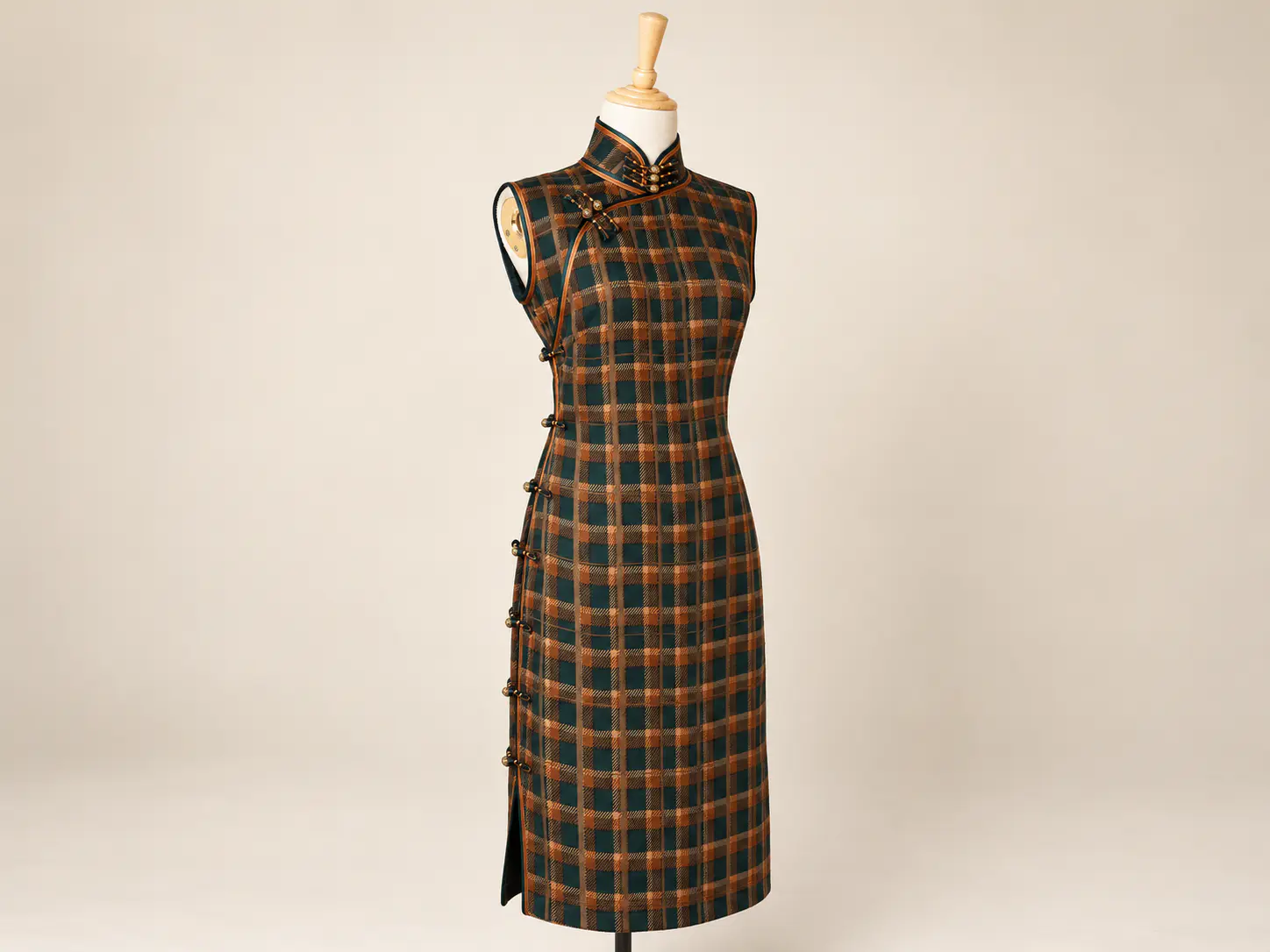
*A contemporary cheongsam in tartan fabric, demonstrating that Qipao design is defined by more than the textile alone. Tartan is not a traditional Chinese fabric; the silhouette and construction carry the qipao/cheongsam vocabulary. Wikimedia Commons, CC BY-SA 4.0.*
Silk, Brocade and Other Qipao Fabrics
Silk Qipao is a material category, not a single Qipao style. A silk dress may be traditional-inspired, modern, wedding-oriented or everyday.
Silk Qipao
Silk is common in high-quality and formal Qipao because of drape, surface, sheen, embroidery compatibility and a wide range of woven structures. That does not mean all authentic Qipao must be silk.
Different silks behave differently
Avoid collapsing everything into “silk.” Examples used in historic and contemporary work include silk satin, silk charmeuse, brocade, jacquard silk, silk gauze, Xiangyunsha / gambiered Guangdong gauze and Songjin brocade. They are not interchangeable.
Different textiles affect structure, sheen, breathability, weight, embroidery behavior, drape and price. Current official Shanghai custom-Qipao coverage confirms active use of materials including heavy silk, patterned brocade and Xiangyunsha in bespoke work.
Brocade Qipao
Brocade gives a more structured, decorative visual effect. It is often suitable for formal occasions, wedding clothing, evening wear and colder seasons depending on weight. Brocade does not automatically mean traditional; contemporary qipao also uses brocade. Do not assume every brocade is silk without checking composition.
Silk gauze and lighter fabrics
The 1930s RISD black silk-gauze example shows how lightweight silk can produce a very different silhouette from heavy brocade. That contrast is a useful shopping distinction for warm-weather and formal dresses alike.
Cotton and linen
Cotton and linen suit warmer weather, casual use, easier daywear and more understated styling. They are not lower-quality by definition. Fabric quality and construction are separate issues from fiber category.
Modern fabrics
Acetate, wool blends, stretch fabrics, Lycra and synthetic blends appear in contemporary qipao. They can improve ease of movement, wrinkle resistance, care and comfort. Synthetic fabric is not automatically “inauthentic.”
Fabric decision table
| Fabric | Visual character | Practical notes | Common use |
|---|---|---|---|
| Silk satin | Smooth, luminous | Can show fit/seams clearly | Formal |
| Brocade | Structured, patterned | Heavier | Formal/wedding |
| Silk gauze | Light, softer | More delicate | Warm-weather/formal |
| Xiangyunsha | Distinctive textured finish | Specialist material | Heritage/custom |
| Cotton/linen | Matte, relaxed | More casual | Daywear |
| Modern blends | Wide range | Often easier care | Contemporary |
Wedding Qipao
A wedding Qipao is defined primarily by occasion and use—not by one fixed construction type. Qipao is also not the only Chinese bridal garment.
What is a wedding Qipao?
A wedding Qipao is a qipao designed or selected for wedding-related wear. It may be used for ceremony, tea ceremony, reception, banquet, a second look, engagement photos or pre-wedding portraiture, depending on the couple and regional/customary context. There is no single fixed wedding protocol.
Red wedding Qipao
Red is strongly associated with Chinese wedding dress, but not every Chinese bride traditionally must wear red. Customs vary by region, family, generation, ceremony and personal taste. Red wedding qipao commonly combines silk or brocade, gold embroidery, floral motifs, decorative pankou and richer piping. Assign specific symbolic meanings only where supported; red can also appear in formal, festive and fashion contexts outside weddings.
White wedding Qipao
Contemporary brides may choose a white qipao that combines Qipao silhouette, standing collar, asymmetric opening, modern bridal textile, lace, embroidery or Western bridal styling. This is a modern fusion option, not proof that white was historically the standard Chinese wedding Qipao color.
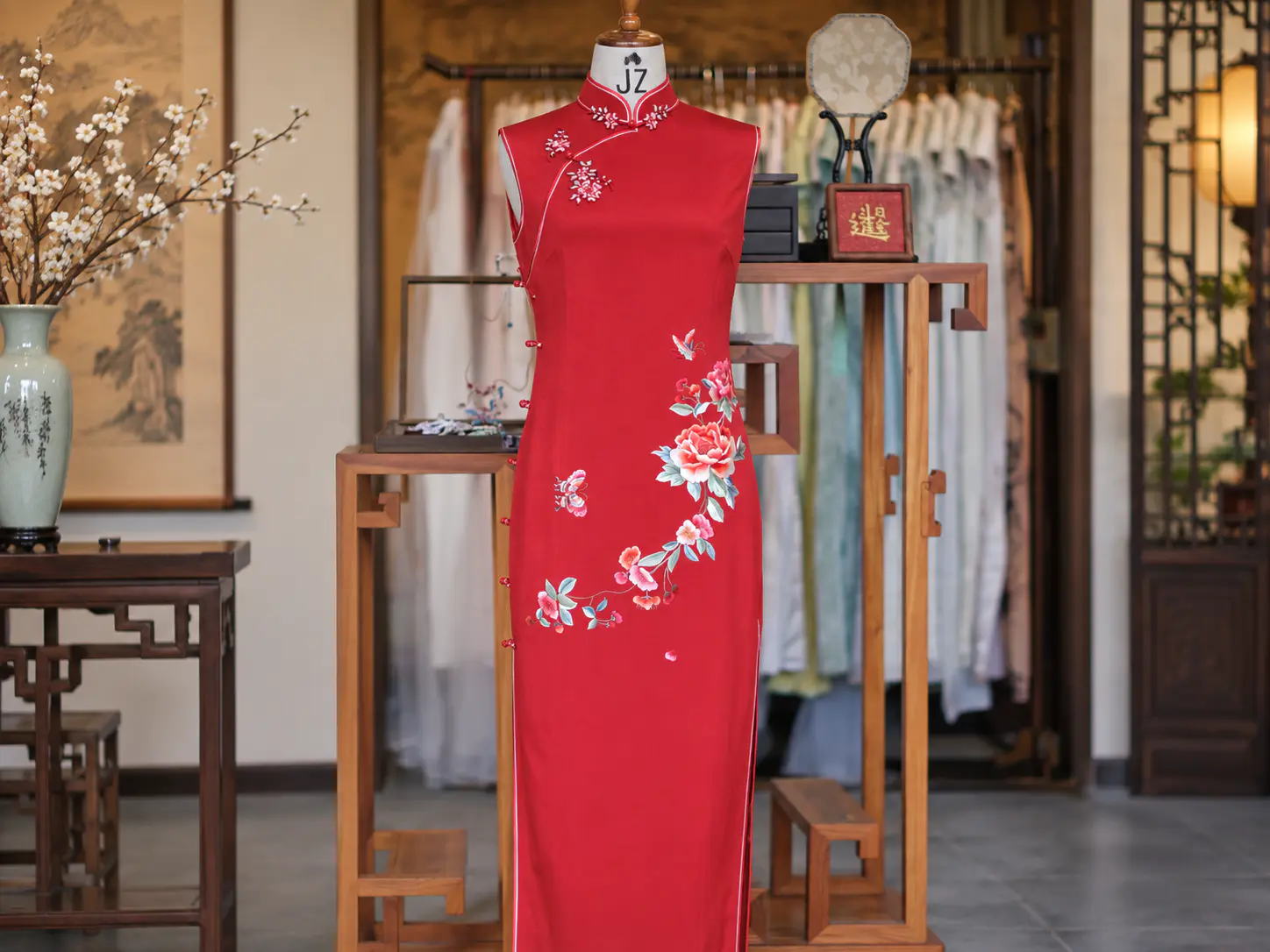
*White bridal qipao at a Beijing wedding exhibition, showing how contemporary bridal design can combine Qipao structure with modern wedding aesthetics. Neighboring bridal garments are not automatically Qipao. Photograph by N509FZ, Wikimedia Commons, CC BY-SA 4.0.*
Wedding Qipao vs Qun Kwa / Kwan Kwa
Hong Kong heritage material identifies kwan kwa / qun kwa as a different traditional bridal outfit: an upper kwa jacket plus a lower skirt / kwan, often with dense embroidered decoration.
Qun kwa is not simply another name for wedding Qipao.
| Wedding Qipao | Qun Kwa / Kwan Kwa | |
|---|---|---|
| Structure | One-piece dress | Two-piece bridal outfit (jacket + skirt) |
| Construction | Qipao construction | Distinct clothing tradition |
| Typical cues | Standing collar / asymmetric closure often present | Jacket-and-skirt pairing |
| Style range | Traditional-inspired or modern | Its own bridal vocabulary |
Keep the distinction clear; do not copy Qun Kwa embroidery terminology onto Qipao indiscriminately.
Embroidered wedding Qipao
Discuss embroidery density, placement, gold/silver thread and floral or auspicious imagery as design choices on a one-piece dress. Dense jacket-and-skirt bridal embroidery belongs to a different garment tradition.
Wedding Qipao fit
A bridal dress must allow sitting, walking, eating, tea-ceremony movement if applicable, photographs and long wear. Maximum tightness is not automatically desirable. Focus on movement and tailoring rather than body-type judgments.
Ready-made vs custom wedding Qipao
Ready-made is useful when travel time is short, sizing works and alterations are minor.
Custom is useful when fit is critical, fabric choice matters, embroidery is customized, collar/sleeve/length must be adjusted, and the wedding schedule allows fittings. Do not promise rapid bespoke turnaround.
How to Choose a Qipao Style
Use a decision framework, not a fashion personality quiz.
Start with the occasion
Everyday / reusable travel purchase: comfort, moderate fit, easier-care fabric, versatile color, modest decoration.
Formal dinner / event: fabric quality, clean tailoring, longer or midi proportions, stronger collar/pankou detail.
Wedding: fitting time, movement, ceremony requirements, photography, fabric/embroidery, alteration schedule.
Photoshoot: visual silhouette, location, color contrast, full-length appearance, movement.
Then choose silhouette
Straighter cut — less body-contoured; visually closer to some earlier Qipao forms; can feel comfortable and architectural.
Shaped classic cut — moderate waist shaping; classic 20th-century look.
Strongly fitted cut — more contemporary/body-contoured; needs more precise fitting; check comfort and mobility carefully.
Do not label any body type as suitable or unsuitable.
Choose length
Base length on occasion, height/proportion, movement, shoes, climate and desired historical reference. There is no universal “correct” qipao length.
Choose collar height
A higher collar gives a stronger classic visual identity and may feel restrictive for some wearers. A lower or modified collar is often easier for comfort and can feel more contemporary. Fit around the neck matters more than simply maximizing height.
Choose sleeves
Long, three-quarter, short, cap and sleeveless options all appear in historic and contemporary work. Match climate and occasion. Do not assign strict period dates unless verified.
Choose fabric last, not first
A beautiful textile does not compensate for poor fit. Recommended order:
- use case
- silhouette
- fit
- length
- collar/sleeve
- fabric
- decoration
Main decision table
| If you want... | Strong starting point |
|---|---|
| Classic Shanghai look | Long or midi shaped Qipao |
| Understated formal dress | Minimal modern Qipao |
| Traditional craft emphasis | Heritage-oriented silk Qipao |
| Reusable summer garment | Cotton/linen or light silk |
| Dramatic formal look | Brocade or embroidered Qipao |
| Chinese wedding look | Red bridal Qipao |
| Modern bridal fusion | White/ivory Qipao |
| Easy travel purchase | Ready-made contemporary Qipao |
| Exact fit/custom details | Bespoke Qipao |
These are starting points, not “best” answers for every wearer.
Qipao Styles FAQ
What are the main Qipao styles?
There is no single definitive list. Qipao can be categorized by period/design direction, silhouette, length, sleeve, fabric and occasion. Traditional, modern, silk and wedding Qipao overlap rather than forming mutually exclusive types.
What is a traditional Qipao?
Usually a modern Qipao that retains more heritage design elements such as standing collar, asymmetric placket, pankou, piping and traditional-style fabrics or construction. It is not one exact historical pattern.
What is a modern Qipao?
A contemporary reinterpretation that may modify fit, length, fabric, neckline, fastening, sleeve and construction while retaining recognizable qipao design language.
Are all Qipao made of silk?
No. Silk is important and common, especially in formal and bespoke Qipao, but cotton, linen, wool and modern fabrics are also used.
What type of silk is used for Qipao?
There is no single silk. Examples can include satin, brocade, jacquard, gauze and Xiangyunsha depending on design.
What is the best Qipao for a wedding?
There is no absolute answer. A red silk/brocade or embroidered Qipao is a common starting point for a Chinese bridal look, while contemporary brides may also choose white or other modern Qipao. Fit, ceremony, personal preference and regional/family customs matter.
Is a wedding Qipao the same as Qun Kwa?
No. Qipao is typically a one-piece dress. Qun Kwa / Kwan Kwa is a separate two-piece bridal outfit consisting of a jacket and skirt.
Should Qipao be tight?
No. Fit has changed historically, and both straight and shaped qipao exist. A well-fitted dress should allow comfortable movement rather than simply being as tight as possible.
Should I buy a long or short Qipao?
Base the choice on use, desired style, movement, climate and formality—not an arbitrary rule.
Shop for a Qipao in Beijing
Once you understand style dimensions, the practical next step is shopping or tailoring. This page is not a full Beijing shop directory; it is the bridge from style choice to purchase decisions.
Ready-made vs bespoke
Ready-made advantages: immediate availability, easier for short visits, predictable finished result, usually easier to compare several styles. Potential issue: standard sizing may not align with Qipao’s close-fit points.
Bespoke advantages: fabric selection, collar adjustment, sleeve customization, length, slit, pankou, embroidery and precise pattern. It requires more time, measurement and potentially fittings.
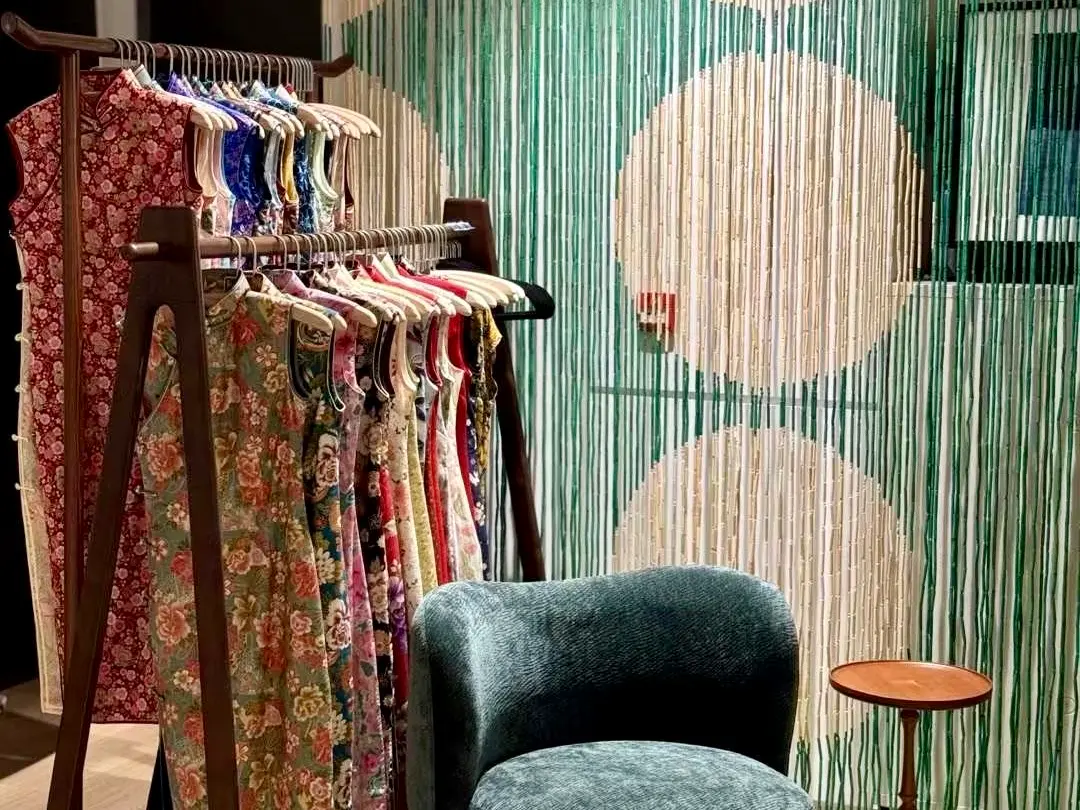
*Floral cheongsam garments displayed inside a tailor shop.*
What to decide before visiting a shop
Identify:
- occasion
- traditional vs modern direction
- preferred length
- preferred sleeve
- color
- fabric preference
- ready-made vs custom
- travel departure date
- approximate budget
What to inspect in person
* collar lies cleanly * neck remains comfortable * shoulder area lies correctly * bust/waist/hip do not pull badly * diagonal placket sits flat * side seams remain vertical * wearer can sit comfortably * slit placement works when walking * pankou are secure * piping is even * pattern alignment is sensible * lining/inside seams are clean
Beijing style vs Shanghai style
Do not invent a rigid geographic binary. Current custom-tailoring material itself shows brands blending softer Shanghai-style lines with more structured Beijing design references. These labels can be useful shop/style language but are not fixed technical standards. Evaluate the individual garment rather than assuming city label determines construction.