
This page compares major Hanfu style families by historical period. For the broader definition of Hanfu as a clothing system—not one fixed robe—start with Hanfu: Traditional Chinese Clothing — History, Meaning & Features. For how Hanfu sits beside qipao/cheongsam and other dress categories, see the parent Traditional Chinese Clothing hub.
Hanfu did not have one fixed appearance. Clothing associated with the Han Chinese changed repeatedly across centuries, producing very different silhouettes in the Han, Tang, Song and Ming periods. Dynasty labels are a useful modern navigation framework—not proof that one uniform costume was worn by everyone throughout each era. Court clothing differed from ordinary dress; formal clothing differed from daily wear; men’s and women’s clothing differed; regions and neighboring cultures influenced one another; and fashion also changed *within* individual dynasties.
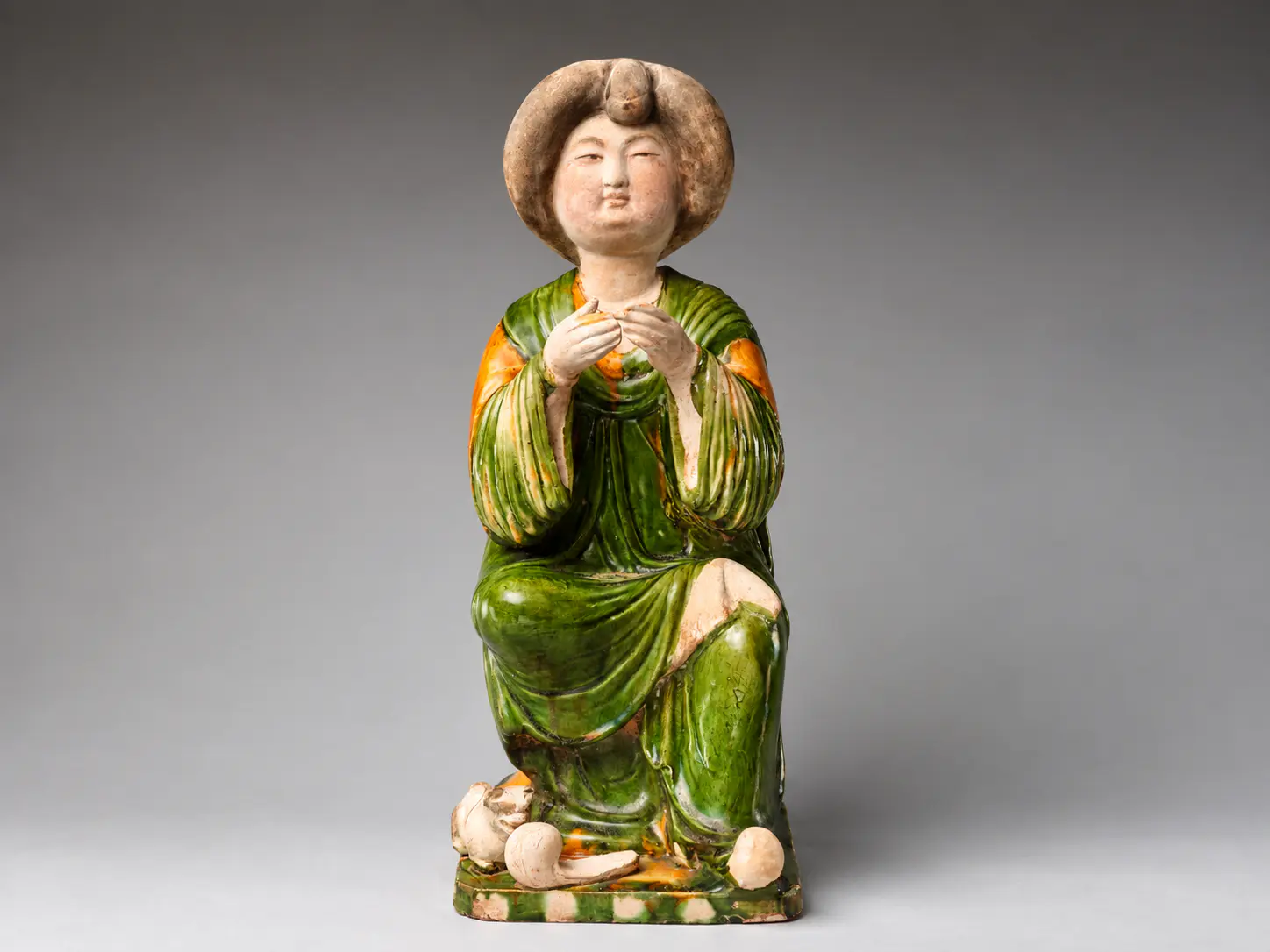
*A painted ceramic court-lady figure showing the rounded hairstyle and colourful dress associated with Tang-period imagery.*
Hanfu Styles at a Glance
The main Hanfu styles seen in modern historical reconstruction are usually grouped by period: Han, Wei–Jin and Northern/Southern Dynasties, Sui–Tang, Song and Ming. These labels describe families of historical clothing rather than single standardized costumes.
| Period | Approx. dates | Strong visual cue | Common reconstructed forms | Overall impression |
|---|---|---|---|---|
| Han | 206 BCE–220 CE | Wrapped/cross-collar constructions; long vertical silhouettes | Shenyi-style robes; ru + qun combinations | Long, wrapped, layered |
| Wei–Jin / Northern & Southern Dynasties | 220–589 | Layered robes; flowing elite imagery; cross-cultural influence | Robes and layered upper/lower sets | Varied; often flattened into one modern “Wei–Jin” look |
| Tang | 618–907 | High-waisted skirts in some women’s fashions; round-collar robes in court/male dress; cosmopolitan textile cues | Qixiong ruqun-style sets; daxiushan; yuanlingpao; pibo | Especially diverse across nearly three centuries |
| Song | 960–1279 | Layered women’s silhouettes; beizi outer garments; waist-level skirts in many reconstructions | Beizi; ruqun combinations; scholar/official robes | Layered; often visually narrower than high-Tang stereotypes |
| Ming | 1368–1644 | Structured layering; longer jackets; ao + skirt; mamianqun-associated silhouettes | Aoqun; mamianqun; formal robes; rank-coded dress | Structured, richly layered in many reconstructions |
Qing clothing is not listed here as another simple Hanfu dynasty row. Early Qing clothing and hairstyle policies, Manchu and Han dress systems, and later urban fashion make that transition a separate problem—not a sixth checkbox on this table.
How to Read Hanfu Styles
Before period sections, compare the same structural features every time. One clue alone rarely identifies a dynasty.
Collar and neckline
Look for cross-collar constructions (jiaoling youren and related forms), parallel-front openings (duijin), round collars (yuanling), and later standing or other collar treatments. Collar form is a strong clue; it does not determine dynasty by itself.
Waistline and skirt position
Note whether skirts sit near the natural waist, higher on the torso, or—in some reconstructed Tang women’s looks—near the chest (qixiong styling). High skirt position is a familiar modern Tang cue, not proof that every Tang woman wore the same outfit.
Sleeve shape
Compare narrow, moderate, wide and long ceremonial sleeves. Wide sleeves are not synonymous with Hanfu. Sleeve volume tracks function and formality as much as period.
Layering
Identify short jacket + skirt, one-piece robes, long outer layers, sleeveless or short outer pieces, scarves such as pibo, and formal overlays. Layer count and length change the silhouette even when fabric color stays similar.
Men’s vs women’s clothing
Internet dynasty charts often over-represent women’s reconstructed looks. Men’s Hanfu also varied by period and included robes, round-collar garments, cross-collar robes, official clothing, scholar/literati dress and practical garments. This page includes male court examples where museum objects make the clothing readable; a fuller men’s guide belongs elsewhere.
Han to Tang: Early and Medieval Hanfu
Han Dynasty Hanfu
Western and Eastern Han together span approximately 206 BCE–220 CE. Surviving evidence includes tomb figurines, murals, excavated textiles and written records. Broad orientations—not universal templates—include wrapped robes, layered upper/lower garments, cross-collar constructions, belts/sashes and long vertical silhouettes.
Shenyi and robe traditions
Long robe traditions, including forms discussed today under shenyi and related robe vocabulary, appear in Han-period clothing discussions. Treat any single modern reconstruction as one reading of evidence, not “standard Han dress.”
Ru and qun
Separate upper garments (ru) and skirts (qun) also appear as a structural option. The combination is useful vocabulary; it is not the only Han silhouette.
Men’s clothing
Men’s Han clothing likewise used robes, layered garments and sash closures, with status and occasion shaping formality. Tomb and pictorial sources over-represent elite contexts.
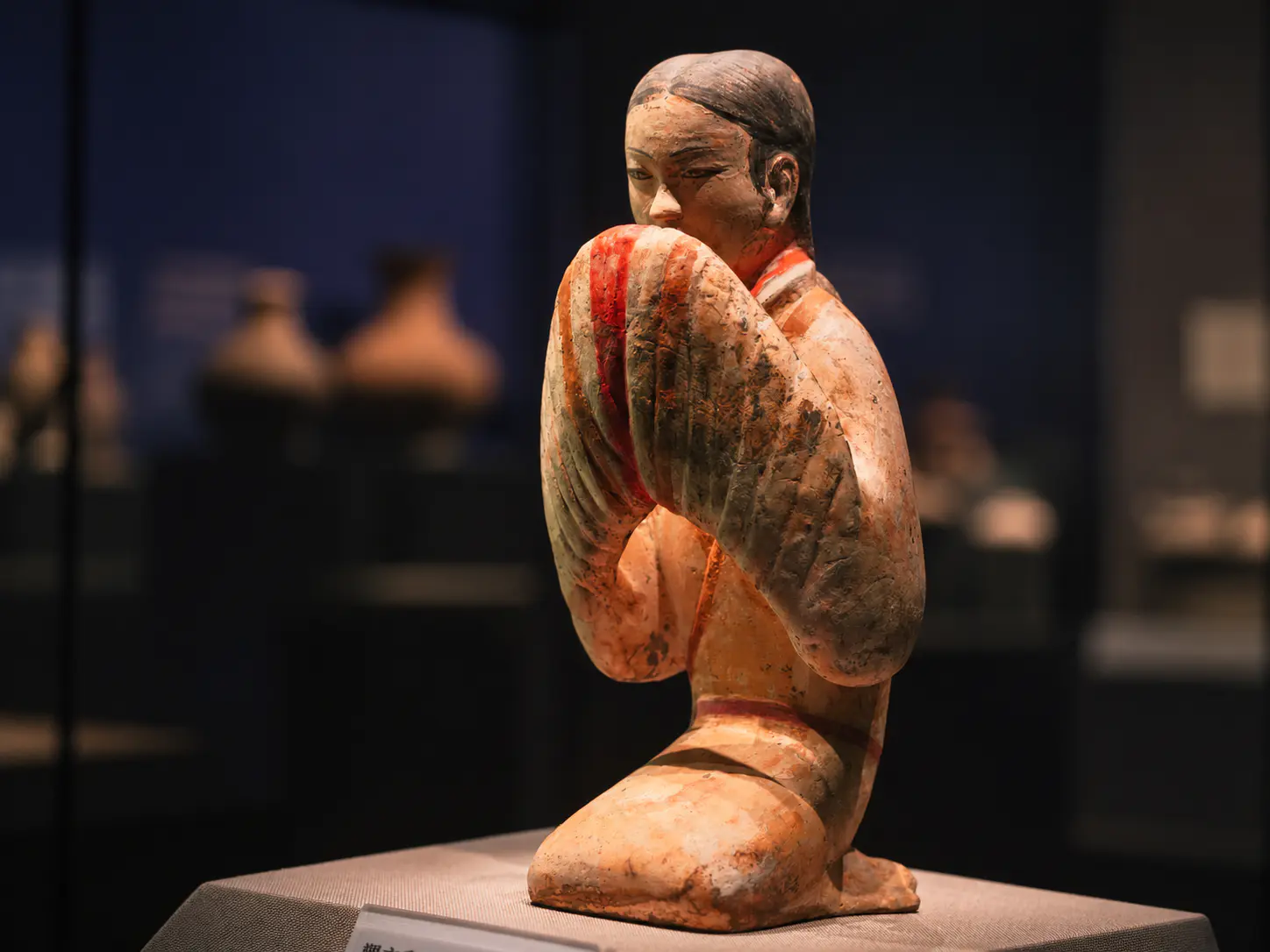
*The layered garment and painted surface of an ancient Chinese earthenware figure.*
Wei, Jin and Northern/Southern Dynasties
From roughly 220–589, political fragmentation and substantial cultural exchange accompanied clothing change. Layered robes, shifting proportions and elite/literati imagery appear in surviving visual culture, but the period is too long to compress into one “loose scholar robe” stereotype. Modern Hanfu communities often use Wei–Jin style as a single aesthetic label; that can flatten several centuries into one contemporary look. Treat the label as shorthand for a visual family, not a precise archaeological category.
Tang Dynasty Hanfu
The Tang dynasty (618–907) lasted nearly three centuries. Chang’an’s cosmopolitan setting, international exchange, varied textiles and colors, and shifting court fashions produced especially visible diversity. Court and elite clothing is overrepresented in surviving ceramics and paintings. Do not reduce Tang clothing to one chest-high skirt.
Qixiong ruqun and high-waisted skirts
The chest-high skirt silhouette commonly called qixiong ruqun is one of the most recognizable modern Tang-inspired Hanfu looks. Approximate structure: an upper garment, a skirt tied high on the torso/chest area, sometimes a short outer layer, and often a pibo scarf in modern presentations. It represents one reconstructed style associated with *part* of Tang women’s fashion—not the standard dress of all Tang women.
Daxiushan
Daxiushan refers to broad-sleeved outer garments associated particularly with elite or formal women’s styling in modern Tang reconstructions. Treat them as formal/visual markers, not everyday clothing for everyone.
Pibo
Pibo is the long decorative scarf seen in many paintings and reconstructions. It is a strong photographic cue in modern Tang-inspired sets, not a mandatory Tang garment.
Round-collar robes
Yuanlingpao (round-collar robes) mattered in Tang court and male dress contexts. Museum civil-official figures preserve long, wide-sleeved court garments and period headgear—useful for court dress, not a claim about every man’s daily clothing.
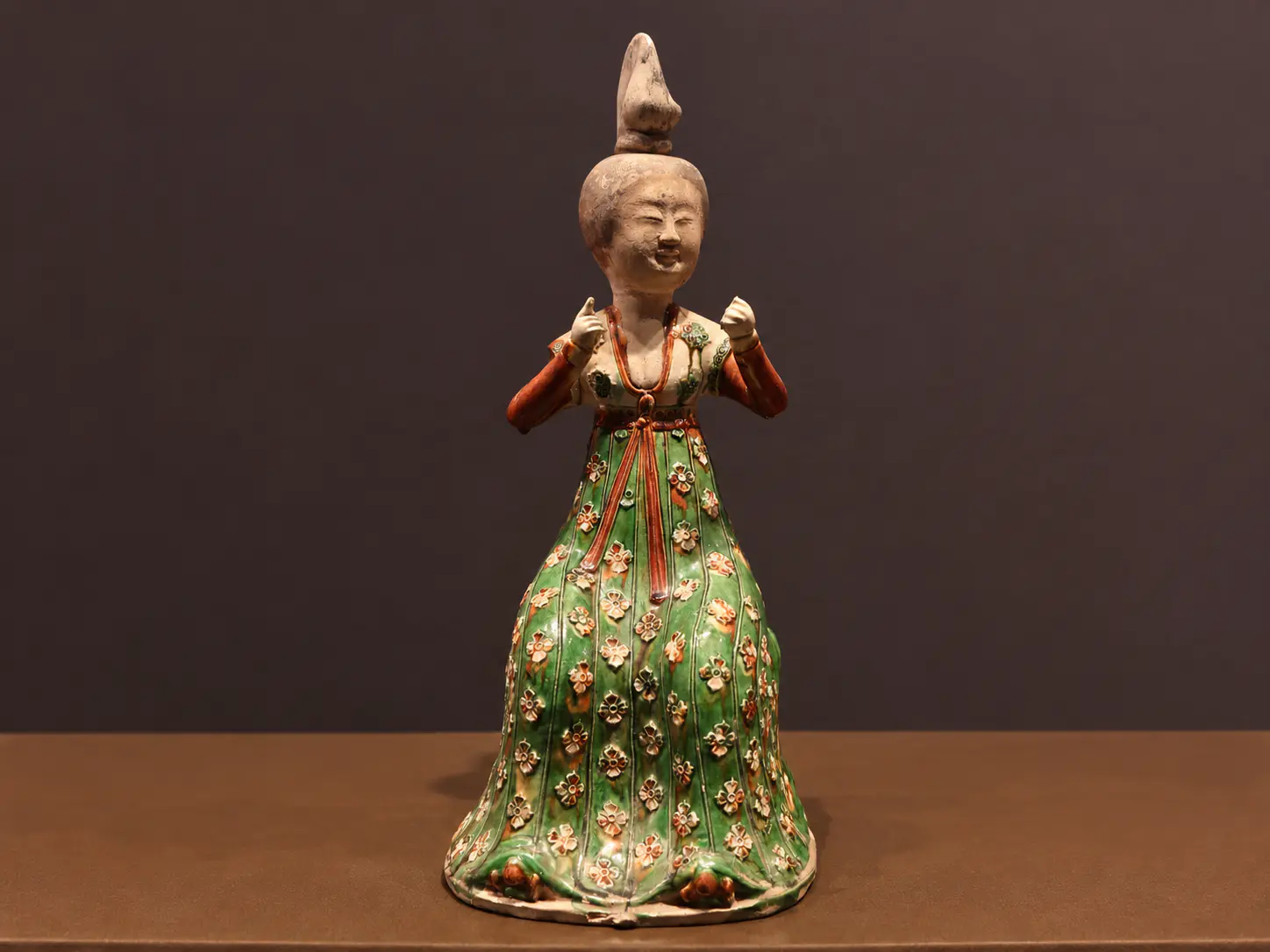
*A painted ceramic figure representing the dress of a Tang-period court lady.*
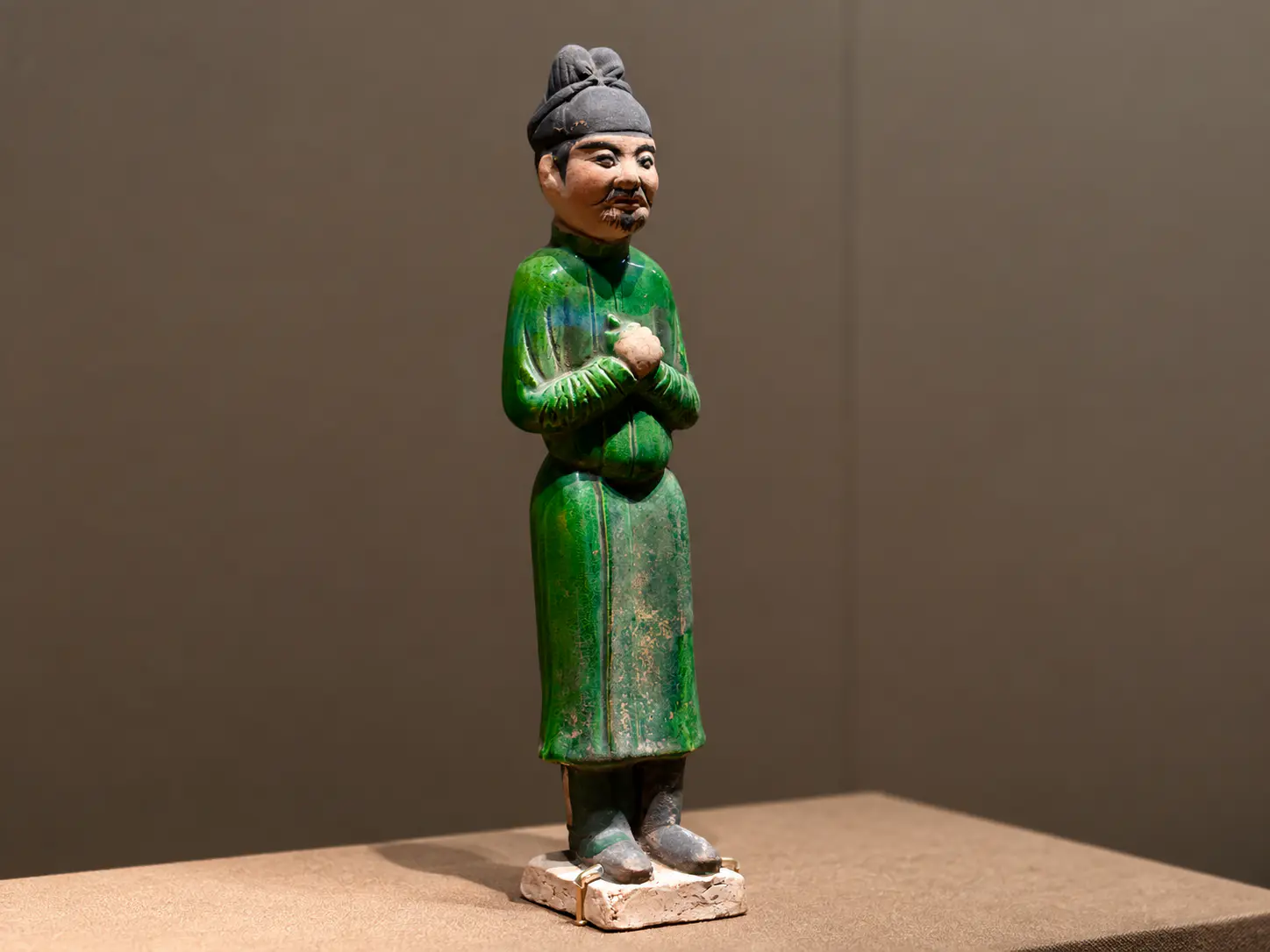
*Civil official, Tang dynasty, ca. late 7th–first half of 8th century. Earthenware with sancai glaze and pigments. The Metropolitan Museum of Art, Public Domain / Open Access (11.83.2). The Met notes typical Tang court dress of a long, wide-sleeved tunic over a long gown with period official headgear. Court dress, not everyday men’s clothing.*
Song to Ming: Later Hanfu Styles
Song Dynasty Hanfu
The Song dynasty (960–1279) left paintings, tomb art, ceramics and written sources that show substantial variation. Modern reconstruction cues often include layered upper garments, waist-level skirts in many women’s looks, longer straight outer garments, beizi, and relatively narrower silhouettes compared with exaggerated high-Tang stereotypes. These are common reconstruction cues, not universal Song rules—and “minimalist Song” is a modern aesthetic shortcut, not a historical absolute.
Beizi
Beizi is a long, straight outer garment strongly associated with Song-era reconstruction. Related long outer layers also appear in other periods; do not treat beizi as Song-only in absolute terms.
Ruqun combinations
Upper/lower combinations continue as a structural option. Definitions are the same as above; Song reconstructions often place skirts nearer the natural waist than high-Tang qixiong looks.
Men’s Song clothing
Men’s Song clothing includes robes, scholar and official dress, distinctive headwear, and different formal vs informal contexts. Surviving paintings and tomb materials over-represent literate and elite worlds.
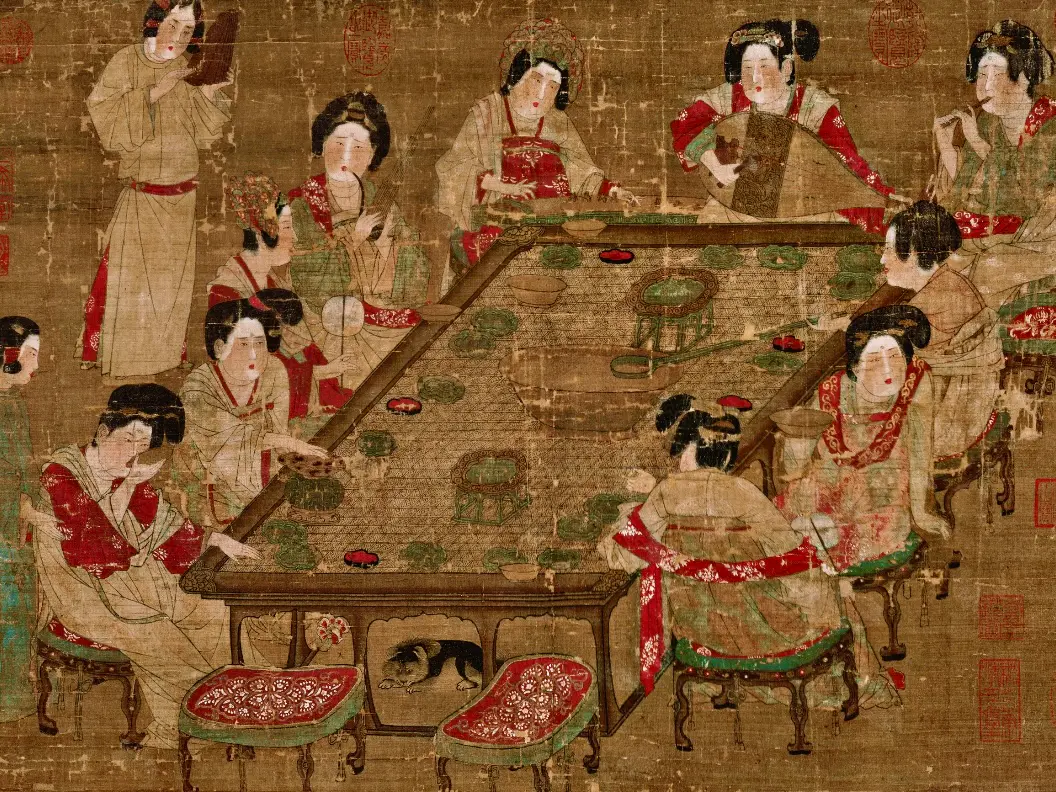
*Palace women in layered garments gather around a long table in a Chinese handscroll.*
What about the Yuan Dynasty?
The Yuan dynasty (1271–1368) was ruled by the Mongol Yuan court and contained multiple clothing traditions and populations. Han Chinese continued to live and dress during Yuan; Mongol and other cultural influences were important; clothing history does not reset cleanly when dynasties change. Modern Hanfu taxonomy often jumps from Song to Ming because “Yuan Hanfu” is a more complicated classification problem than a simple next row on a dynasty chart. This page therefore treats Yuan as a transition and coexistence period, not as an uncomplicated Hanfu style label.
Ming Dynasty Hanfu
The Ming dynasty (1368–1644) matters for modern reconstruction because relatively rich visual and material evidence survives. Discussed forms include layered garments, ao and skirt combinations, robes, formal dress, rank-specific clothing, evolving women’s skirts, long outer garments, and men’s robes and official dress. Not all Ming clothing looks heavy or formal.
Aoqun
Aoqun pairs an ao (jacket/upper garment) with a qun (skirt). In many modern Ming-inspired women’s outfits, longer jackets and natural-to-mid waist skirts help distinguish the look from high-waisted Tang reconstructions.
Mamianqun
The mamianqun, commonly translated as horse-face skirt, became an especially important skirt form associated with Ming and continued/evolved later. Not every pleated Chinese skirt is a mamianqun, and the form should not be narrated as appearing suddenly in 1368.
Long jackets and layered silhouettes
Longer jackets and structured skirt systems change overall proportion compared with many Tang reconstructions: more vertical jacket coverage, different waist emphasis, and denser visible layering in formal looks.
Men’s robes and official dress
Men’s Ming dress includes robes, headwear, rank/status markers and—where relevant—rank badges on formal clothing. Keep this concise; a dedicated men’s Hanfu page can carry fuller taxonomy.
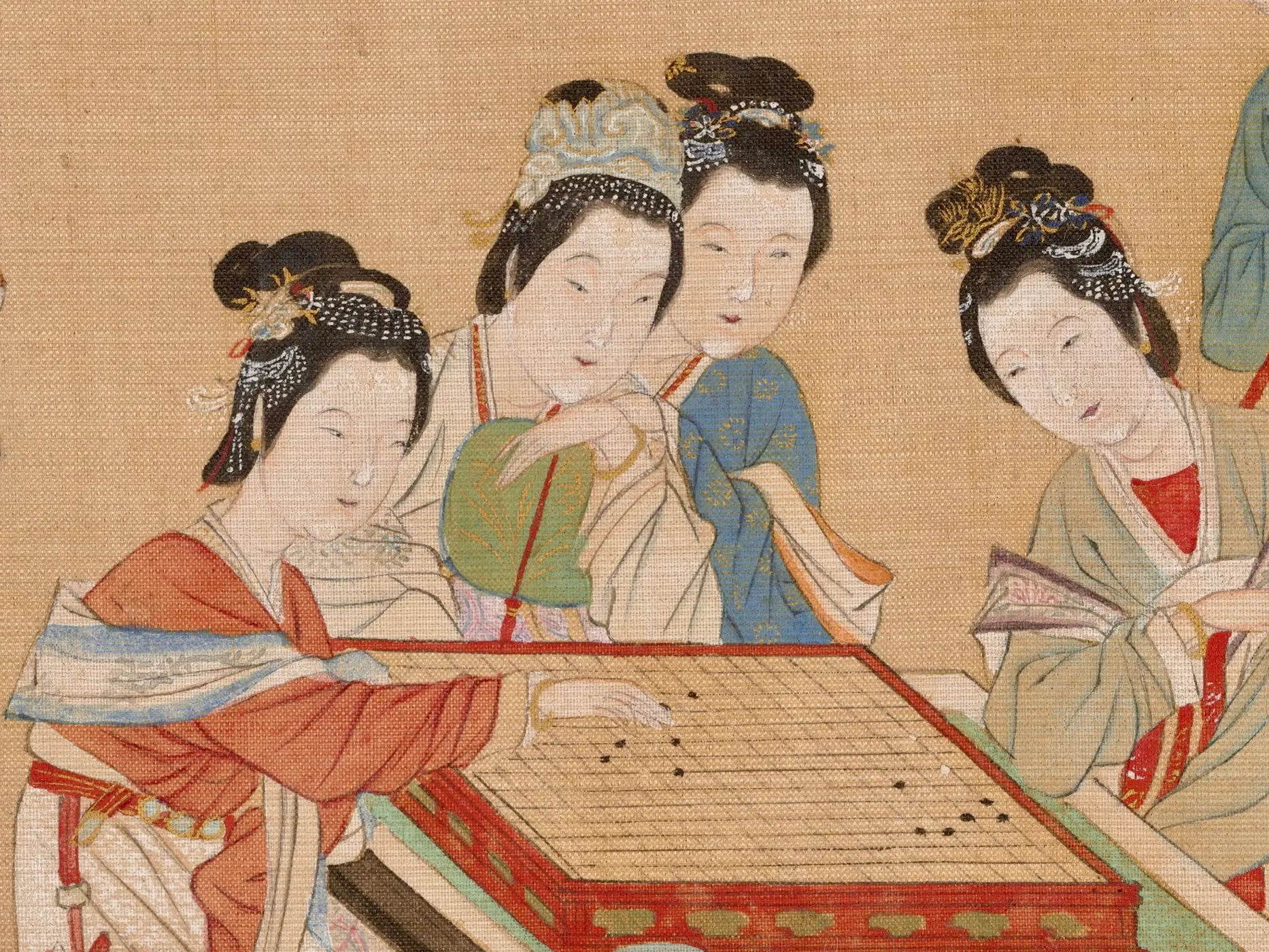
*Layered garments and hairstyles depicted in a traditional Chinese painting of courtly women.*
Hanfu Dynasty Styles Compared
| Feature | Han | Wei–Jin / N–S Dynasties | Tang | Song | Ming |
|---|---|---|---|---|---|
| Approximate period | 206 BCE–220 CE | 220–589 | 618–907 | 960–1279 | 1368–1644 |
| Overall silhouette | Long, wrapped | Layered, variable | Highly diverse | Layered, often narrower cues | Structured layering |
| Women’s common reconstruction cues | Robes; ruqun | Flowing layered robes | High-waist sets; pibo; daxiushan | Beizi; waist-level skirts | Aoqun; mamianqun-associated skirts |
| Men’s common reconstruction cues | Robes, sashes | Robes, elite dress | Yuanlingpao / court robes | Scholar/official robes | Robes, rank dress |
| Waistline | Often mid/natural cues | Variable | High in some women’s looks | Often natural/waist | Jacket + skirt balance |
| Collar forms | Cross-collar common | Cross and other openings | Cross + round collars | Cross, parallel, layered | Cross, parallel, formal openings |
| Sleeve range | Narrow to long | Variable | Narrow to very wide | Moderate to long | Moderate to formal wide |
| Typical layering | Robe or upper/lower | Multi-robe layering | Jacket/skirt/scarf/outer | Outer beizi + layers | Longer jackets + skirts |
| Recognizable garments | Shenyi; ruqun | Period robes | Qixiong ruqun; yuanlingpao | Beizi; ruqun | Aoqun; mamianqun |
| Historical evidence often used | Tomb figures, textiles | Paintings, tombs | Sancai figures, murals | Paintings, tombs | Paintings, portraits, objects |
| Common modern misconception | “One Han dynasty costume” | “Only loose scholar robes” | “All Tang = chest-high skirt” | “Song = always plain/minimal” | “Only mamianqun / always heavy” |
How to tell Tang, Song and Ming Hanfu apart
| If you see… | Often presented as… | Caution |
|---|---|---|
| Very high women’s skirt + short upper garment + flowing scarf | Tang-inspired | Does not identify every Tang outfit |
| Long straight outer garment + natural-waist layered skirt | Song-inspired | Beizi-like layers appear outside Song too |
| Longer jacket + structured skirt / mamianqun-style silhouette | Ming-inspired | Not every Ming look uses mamianqun |
Quick visual rule
Do not identify dynasty by one feature alone. Use a combination of: (1) collar, (2) waistline, (3) garment length, (4) skirt structure, (5) sleeve shape, (6) layering, and (7) headwear/accessories.
Historical Evidence and Modern Reconstruction
Where our knowledge comes from
Reconstruction can draw on excavated garments, textiles, tomb figurines, murals, paintings, sculptures, written regulations, archaeological reports, period literature and surviving craftsmanship. Each source has limits. A ceramic figurine can show silhouette and approximate layer arrangement but may not reveal exact construction, textile weight or hidden seams. A painting may show detail yet be idealized, later copied, or depict an earlier story—as with the Met’s 12th-century *In the Palace* copy of a 10th-century Southern Tang subject.
Historical reconstruction
Some modern makers and researchers attempt close restoration from artifacts. University and specialist institutes—such as work reported around the Xi’an Polytechnic University Hanfu Research Institute—describe using Tang figurines, murals, historical textiles, color references and archaeological material. Reconstruction quality still varies by project.
Historically inspired Hanfu
Historically inspired clothing keeps a historical silhouette while adapting textiles, colors, closures, proportions or practical construction. That is not automatically “fake”; it is different from strict reconstruction.
Fantasy / guzhuang
Historical-drama or fantasy clothing (guzhuang) may mix dynasties, invent silhouettes, use theatrical fabrics and modern styling. It can look Chinese-inspired without being historically reconstructive Hanfu.
Rental-studio Hanfu
Studios often optimize for visual impact, photography, quick dressing, size range and durability. An outfit advertised as “Tang” may range from research-based reconstruction to historically inspired dress to a loosely themed costume. Ask which point on that spectrum you want before booking.
Types of Hanfu FAQ
What are the main types of Hanfu?
Hanfu can be classified by historical period (Han, Tang, Song, Ming and others), by garment structure (robes, ruqun, aoqun, outer layers), by gender/use, and by formality. There is no single definitive list that covers every historical garment.
What is Tang dynasty Hanfu?
Tang clothing was highly diverse across 618–907. Familiar modern reconstructions include high-waisted women’s skirt combinations and round-collar court robes, but those are examples—not the whole Tang wardrobe.
What is Song dynasty Hanfu?
Song-period reconstructions often emphasize layered women’s clothing, waist-level skirts and long outer garments such as beizi, alongside men’s scholar and official robes. Surviving sources show substantial variation.
What is Ming dynasty Hanfu?
Ming reconstructions commonly feature longer jackets with skirts (aoqun), mamianqun-associated silhouettes, layered formal dress and men’s robes with status markers. Not all Ming clothing looks the same.
Which dynasty has the most beautiful Hanfu?
There is no historical “best.” Modern reconstructed aesthetics differ: Tang-inspired looks are often chosen for bold color and high-waisted drama; Song-inspired looks for restrained layering; Ming-inspired looks for structured jackets and skirts. Preference is photographic and stylistic, not a ranking of dynasties.
Is qixiong ruqun always Tang dynasty?
No. High chest-tied skirt combinations are strongly associated with *some* Tang women’s fashion in modern reconstruction, but they are not a universal Tang rule and should not label every similar modern outfit as historically exact Tang dress.
Is mamianqun Hanfu?
Mamianqun belongs within later historical Chinese dress systems and is especially associated with Ming development and later evolution. It is part of the broader Han clothing tradition discussion, but terminology and dating should not be oversimplified, and not every pleated skirt is a mamianqun.
How can I tell which dynasty a Hanfu outfit represents?
Combine collar, waistline, garment length, skirt structure, sleeve shape, layering and accessories. Treat studio labels as starting points, then check whether the silhouette matches a period family—or a fantasy mix.
Choose a Hanfu Style in Beijing
Visitors choosing Hanfu for photography usually do not need full garment glossaries. Choose by desired visual character, then ask how historically informed the studio’s versions are.
Tang-inspired Hanfu
A fit if you want stronger color, high-waisted women’s silhouettes, elaborate hair and visually dramatic photographs. Availability does not guarantee research-grade accuracy.
Song-inspired Hanfu
A fit if you prefer lighter visual layering, restrained styling, elegant long outer garments and a softer photographic look.
Ming-inspired Hanfu
A fit if you prefer structured layering, longer jackets, skirts and a more formal visual character. Ming-inspired clothing can photograph well near Ming-era Beijing architecture, but clothing at the Forbidden City today is not automatically historically matched to palace dress.
Historically accurate vs photo-first
Some visitors mainly want beautiful photographs. Others specifically want an outfit reasonably consistent with a historical period. Those are different requests; tell the studio which one you mean.