
The country's architectural heritage includes imperial palaces, ritual complexes, Buddhist timber halls, Daoist mountain temples, defensive walls, historic cities, earthen communal houses, courtyard villages and classical gardens.
For a first-time visitor, the Forbidden City is probably the clearest introduction to monumental traditional Chinese architecture. But it represents only one branch of a much larger architectural tradition.
A useful way to understand famous Chinese architecture is therefore to ask not simply which buildings are famous, but what each surviving site demonstrates.
The examples in this guide range from the imperial planning of Beijing to the historic timber buildings of Shanxi, the fortified communal houses of Fujian and the carefully composed gardens of Suzhou.
Together, they show why Chinese architecture cannot be reduced to one roof shape, one dynasty or one architectural style.
Famous Chinese Architecture at a Glance
| Example | Location | Architectural tradition | Best for understanding |
|---|---|---|---|
| Forbidden City | Beijing | Imperial palace | Axes, courtyards, hierarchy |
| Temple of Heaven | Beijing | Imperial ritual | Cosmology, ceremonial planning |
| Summer Palace | Beijing | Imperial garden | Landscape + architecture |
| Foguang Temple | Shanxi | Buddhist timber | Tang timber architecture |
| Wooden Pagoda of Yingxian | Shanxi | Buddhist pagoda | Liao timber construction |
| Wudang Mountains | Hubei | Daoist architecture | Buildings integrated with mountains |
| Potala Palace | Lhasa | Tibetan palace/religious | Tibetan monumental architecture |
| Great Wall | Northern China | Military architecture | Defensive engineering and landscape |
| Pingyao | Shanxi | Historic urban architecture | Ming–Qing city planning |
| Qin Emperor Mausoleum | Shaanxi | Funerary architecture | Imperial burial planning |
| Xidi & Hongcun | Anhui | Huizhou settlements | Regional houses and villages |
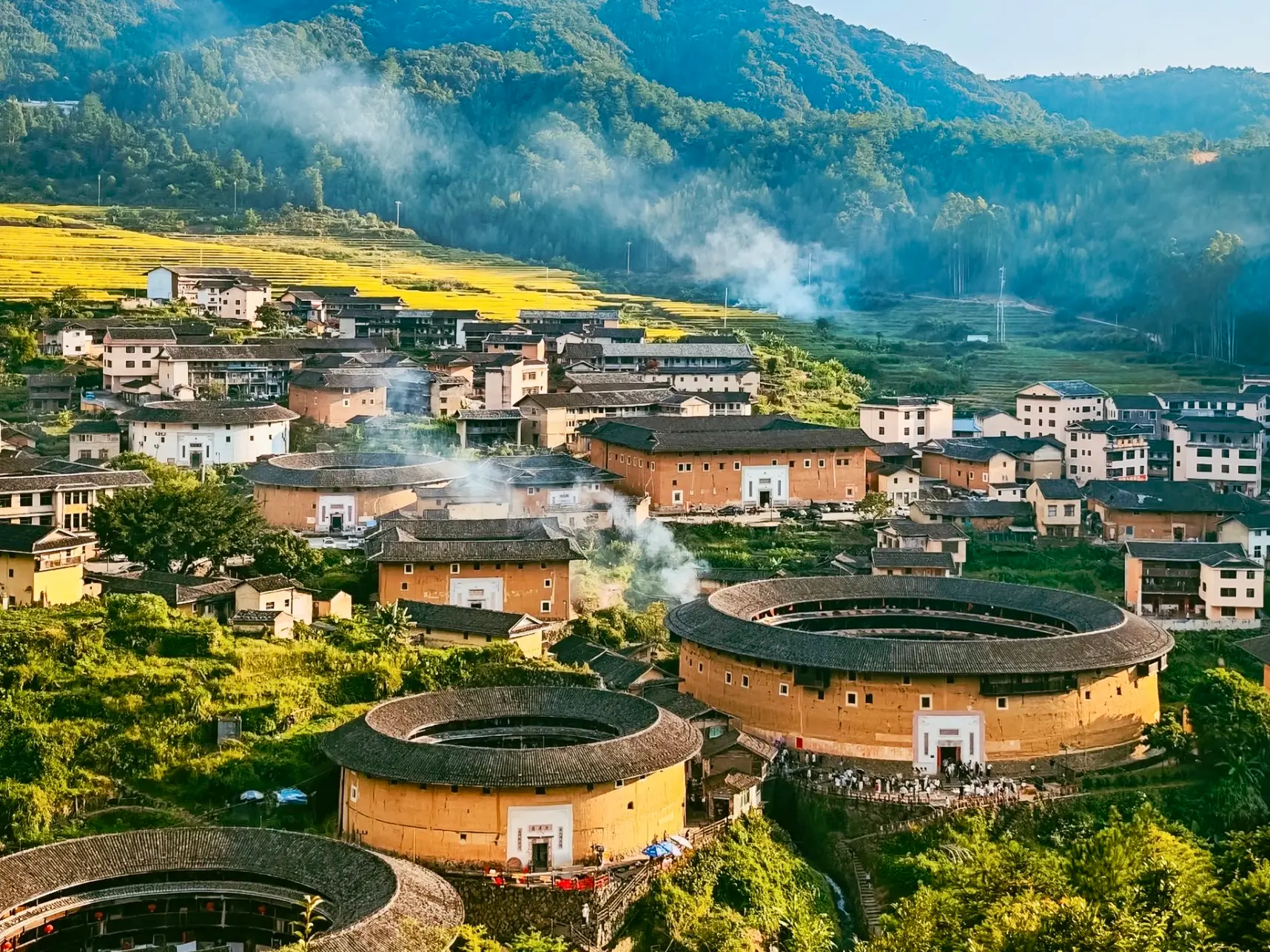
| Fujian Tulou | Fujian | Communal earthen housing | Clan housing and defence |
| Classical Gardens of Suzhou | Jiangsu | Scholar gardens | Architecture + miniature landscape |
These examples were chosen to represent different architectural traditions rather than to create a subjective ranking of China's "best" buildings.
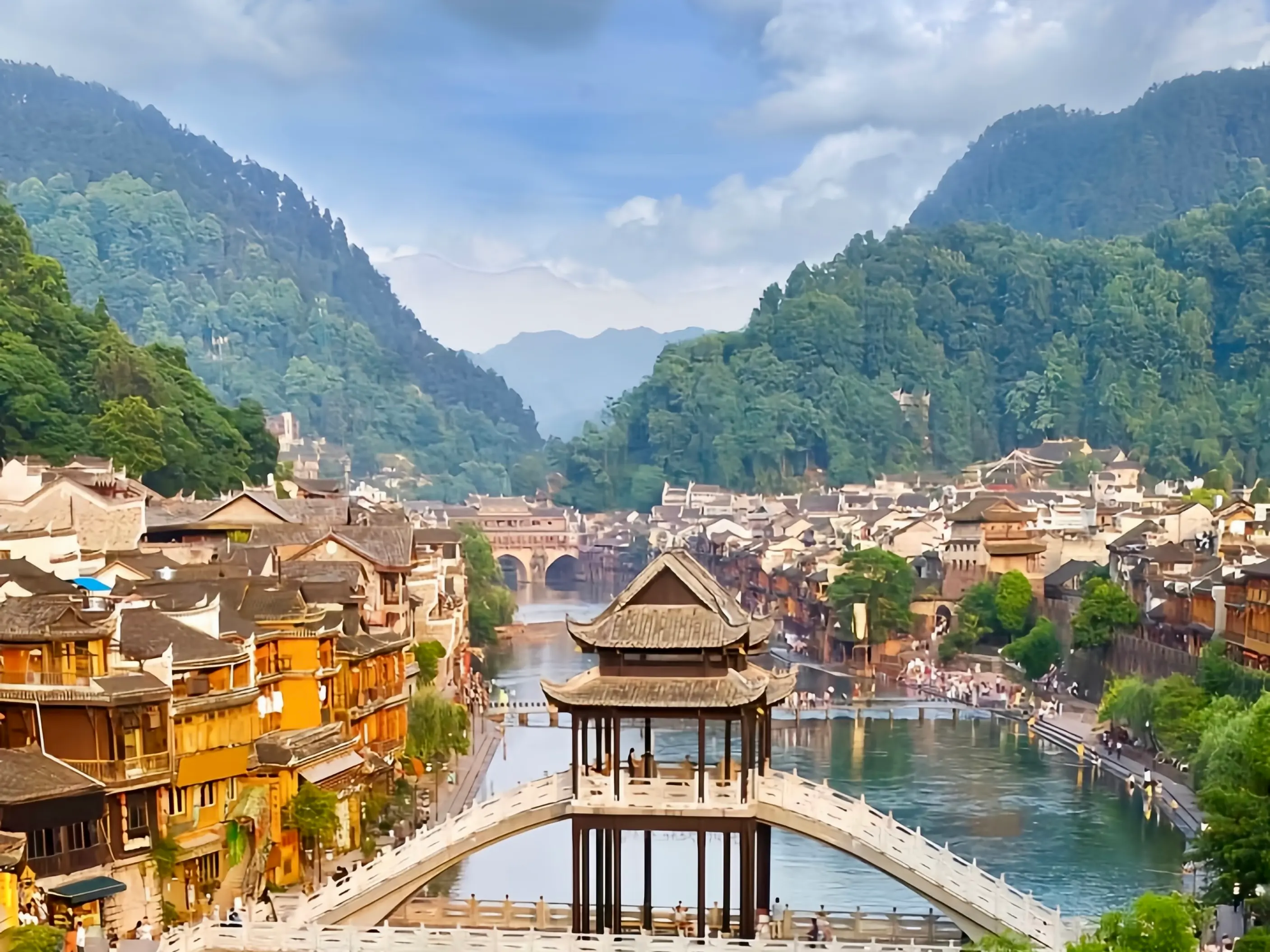
Imperial and Ceremonial Architecture
Some of China's most recognizable architecture was created for emperors, state ritual and imperial landscapes.
Beijing contains three exceptionally useful examples within one city: the Forbidden City, Temple of Heaven and Summer Palace.
They are often grouped together as "imperial architecture," but their architectural purposes are very different.
Forbidden City — Beijing
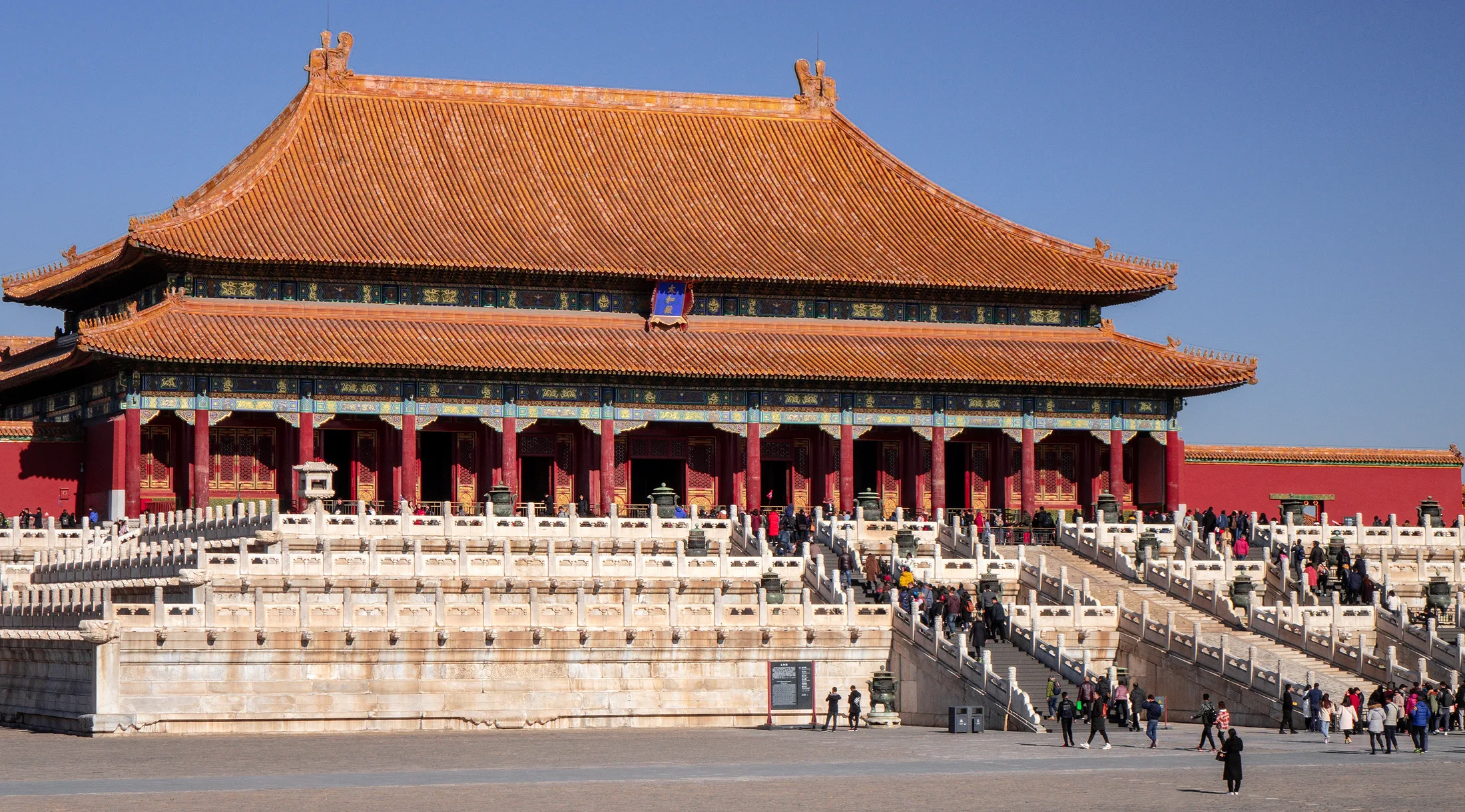
The Forbidden City (故宫) is the clearest surviving example of monumental Chinese palace architecture.
Constructed under the Ming Yongle emperor between 1406 and 1420, it subsequently served as the imperial palace of both the Ming and Qing dynasties.
UNESCO describes the Beijing palace as a supreme model in the development of ancient Chinese palaces.
Its architecture is organized not around one isolated landmark building but around a vast system of:
- gates
- courtyards
- ceremonial halls
- residential compounds
- gardens
- axial routes
- secondary buildings
The importance of individual buildings is communicated through position, scale, platform height, roof form and decoration.
What it demonstrates
Use the Forbidden City to understand:
- axial planning
- bilateral symmetry
- courtyard sequences
- timber palace halls
- architectural hierarchy
- imperial roof forms
- glazed tiles
- ceremonial space
The most useful architectural comparison is between the huge ceremonial halls of the Outer Court and the smaller, more enclosed residential spaces farther north.
What to look for
Do not photograph only the Hall of Supreme Harmony.
Look at:
- the relationship between gates and courtyards
- the central Imperial Way
- platform heights
- differences in roof forms
- repeated timber bays
- secondary buildings placed beside the main axis
Read more: Forbidden City architecture
For roof hierarchy, eave count and glazed tiles in more depth, see Chinese roofs and eaves.
Temple of Heaven — Beijing
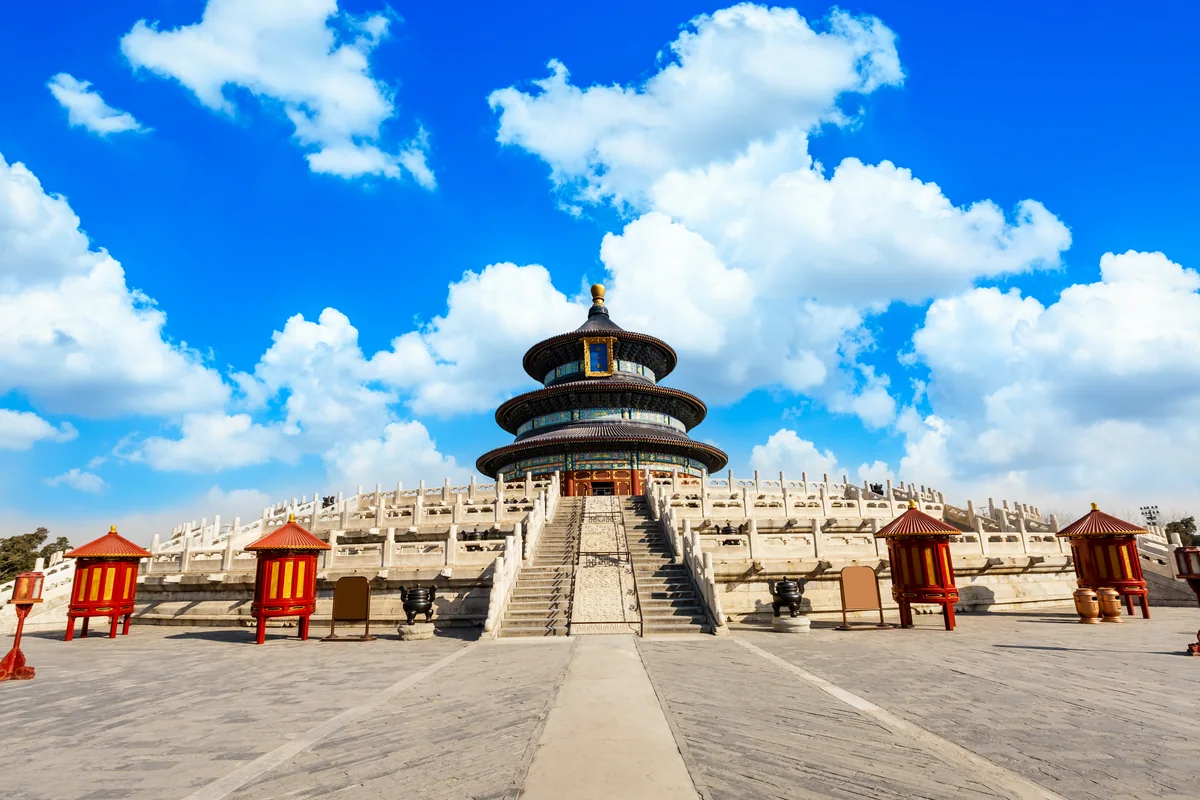
The Temple of Heaven (天坛) demonstrates a very different side of imperial architecture.
Founded in the first half of the 15th century, it was created for imperial rituals connected with Heaven and agricultural prosperity.
UNESCO describes the complex as a masterpiece of architecture and landscape design whose layout and individual buildings express the relationship between Heaven and Earth and the emperor's role within that ritual system.
Its most recognizable structure is the Hall of Prayer for Good Harvests, with its circular plan and three-tiered blue tiled roof.
But the architecture should be understood as an ensemble including:
- the Hall of Prayer for Good Harvests
- Imperial Vault of Heaven
- Circular Mound Altar
- ceremonial pathways
- gates
- landscape
What it demonstrates
Use the Temple of Heaven to understand:
- ritual architecture
- circular and square geometry
- symbolic planning
- ceremonial movement
- architecture integrated with landscape
- blue glazed roofing
It is especially useful because it immediately disproves the idea that major Chinese imperial architecture always looks like the Forbidden City.
What to look for
Compare:
Forbidden City → palace administration and residence → strong halls and courtyards → dominant yellow roofscape
with:
Temple of Heaven → ritual architecture → unusual circular forms → blue roofscape → larger relationship with open ceremonial landscape
Read more: Temple of Heaven architecture
Summer Palace — Beijing
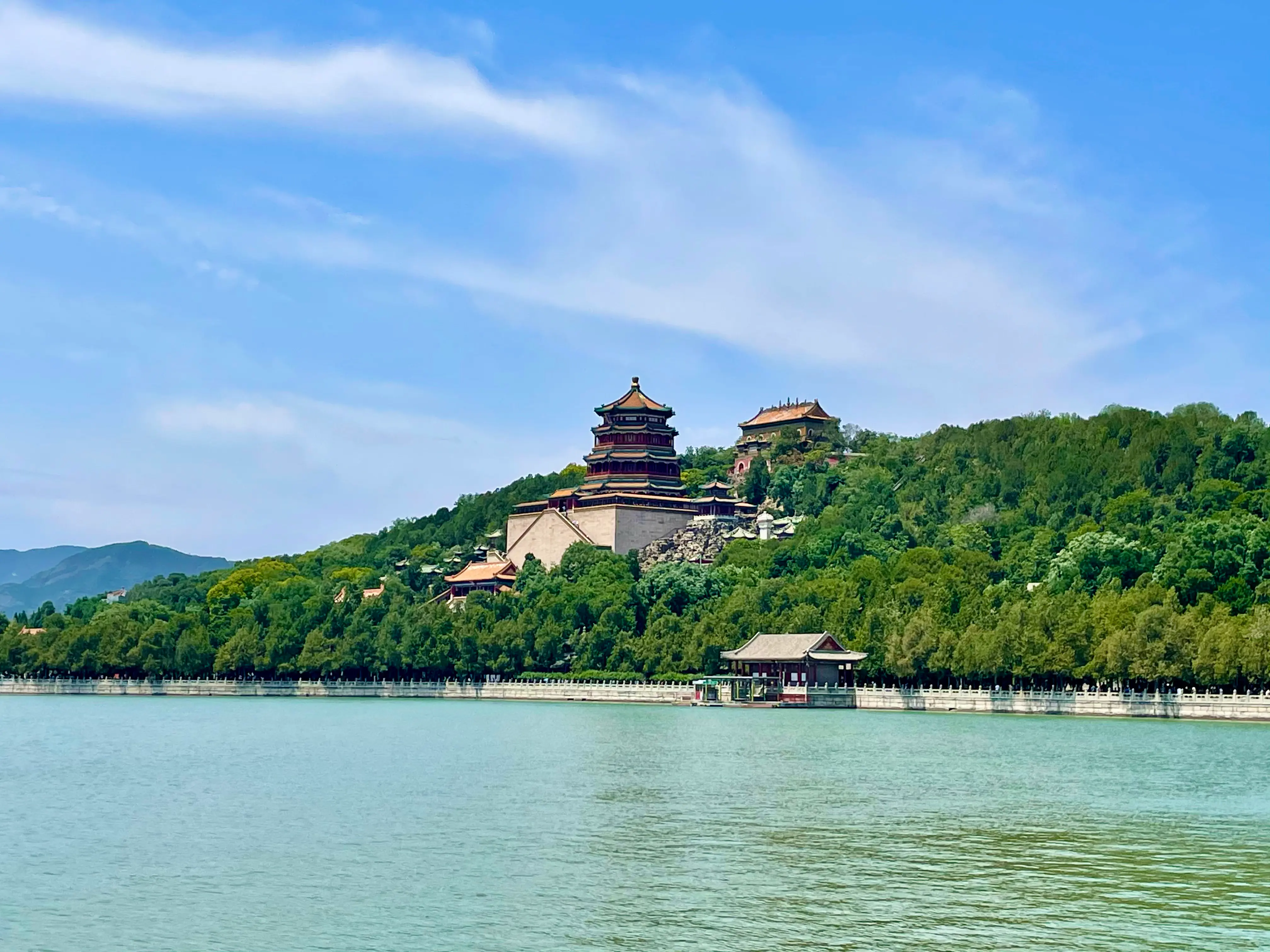
The Summer Palace (颐和园) represents imperial architecture operating within a designed landscape rather than a rigid ceremonial palace sequence.
Its present form is based on an imperial garden first created in 1750. The site was heavily damaged in 1860 and later reconstructed on its earlier foundations.
UNESCO describes the Summer Palace as a masterpiece of Chinese landscape garden design in which hills and open water are combined with:
- pavilions
- halls
- temples
- palaces
- bridges
to form one architectural and landscape ensemble.
What it demonstrates
Use the Summer Palace to understand:
- imperial garden architecture
- architecture responding to terrain
- pavilions and corridors
- buildings framing water views
- palace and temple architecture inside a landscape
- architecture as part of movement through scenery
This is fundamentally different from reading the Forbidden City's monumental central axis.
What to look for
Pay attention to how buildings change when the route moves:
- beside Kunming Lake
- through the Long Corridor
- toward Longevity Hill
- into more enclosed courtyards
- onto bridges and waterside structures
Read more: Summer Palace architecture and Summer Palace garden design.
Sacred Architecture and Timber Masterpieces
Chinese religious architecture includes Buddhist, Daoist and other traditions spread across radically different landscapes and historical periods.
Some sites are particularly valuable because they preserve timber architecture much older than Beijing's surviving Ming-Qing palace buildings.
Foguang Temple at Mount Wutai — Shanxi
Mount Wutai (五台山) is one of China's major Buddhist sacred mountains.
Its monastery landscape records more than a millennium of Buddhist architectural development.
The most important architectural building for this page is the East Main Hall of Foguang Temple (佛光寺).
UNESCO identifies it as the highest-ranking surviving timber building from the Tang dynasty.
This makes it exceptionally important because complete early wooden buildings are rare.
What it demonstrates
Foguang Temple helps explain:
- Tang-dynasty timber architecture
- Buddhist hall planning
- early bracket and roof systems
- structural proportions different from later Ming-Qing buildings
- the long development of Chinese wooden architecture
It is one of the most important surviving Tang-dynasty timber examples, not a claim that it is simply "China's oldest wooden building."
Wooden Pagoda of Yingxian — Shanxi
The Wooden Pagoda of Yingxian, formally the Sakyamuni Pagoda of Fogong Temple (应县木塔 / 佛宫寺释迦塔), is one of China's most remarkable historic timber structures.
It was completed in 1056 during the Liao dynasty.
China's UNESCO Tentative List documentation describes it as the world's oldest and tallest surviving multi-storey wooden structure.
Important:
The Wooden Pagoda of Yingxian is currently on China's UNESCO Tentative List. It is not an inscribed UNESCO World Heritage Site.
What it demonstrates
Use the pagoda to understand:
- multi-storey timber construction
- Buddhist pagoda architecture
- octagonal planning
- structural bracket systems
- vertical Chinese architecture
It is especially valuable because it corrects the assumption that traditional Chinese architecture consists only of low courtyard buildings.
Wudang Mountains — Hubei
The Ancient Building Complex in the Wudang Mountains (武当山) represents one of China's great Daoist architectural landscapes.
UNESCO notes that surviving buildings represent architectural and artistic achievements spanning the Yuan, Ming and Qing periods, with earlier Daoist traditions on the mountain reaching back further.
The complex includes palaces, temples, shrines, gates and other structures distributed through steep mountain terrain.
What they demonstrate
Wudang is especially useful for understanding:
- Daoist religious architecture
- imperial patronage of sacred landscapes
- temples responding to dramatic terrain
- architecture distributed across a mountain rather than concentrated in one urban compound
- the relationship between sacred geography and buildings
Landscape relationships matter more here than generic claims about every building following one formula.
Potala Palace — Lhasa
The Potala Palace demonstrates why "Chinese architecture" cannot be reduced to the timber palace traditions of eastern China.
Rising from Red Mountain in Lhasa, its monumental White and Red Palaces are central to the architectural heritage of Tibet.
UNESCO describes the Potala ensemble as a major expression of Tibetan Buddhist architecture, integrating monumental architecture with its mountain setting.
The World Heritage property also includes Jokhang Temple and Norbulingka.
What it demonstrates
Use the Potala Palace to understand:
- Tibetan monumental architecture
- stone and rammed-earth construction
- palace and religious functions combined
- massive wall forms
- architecture integrated with high-altitude landscape
Tibetan architecture is not simply a regional version of Beijing-style Chinese timber architecture. Including the Potala shows China's architectural diversity.
Walls, Cities and Monumental Planning
Famous Chinese architecture is not limited to individual buildings.
Walls, street networks, cities and burial complexes can reveal architecture at much larger scales.
Great Wall of China
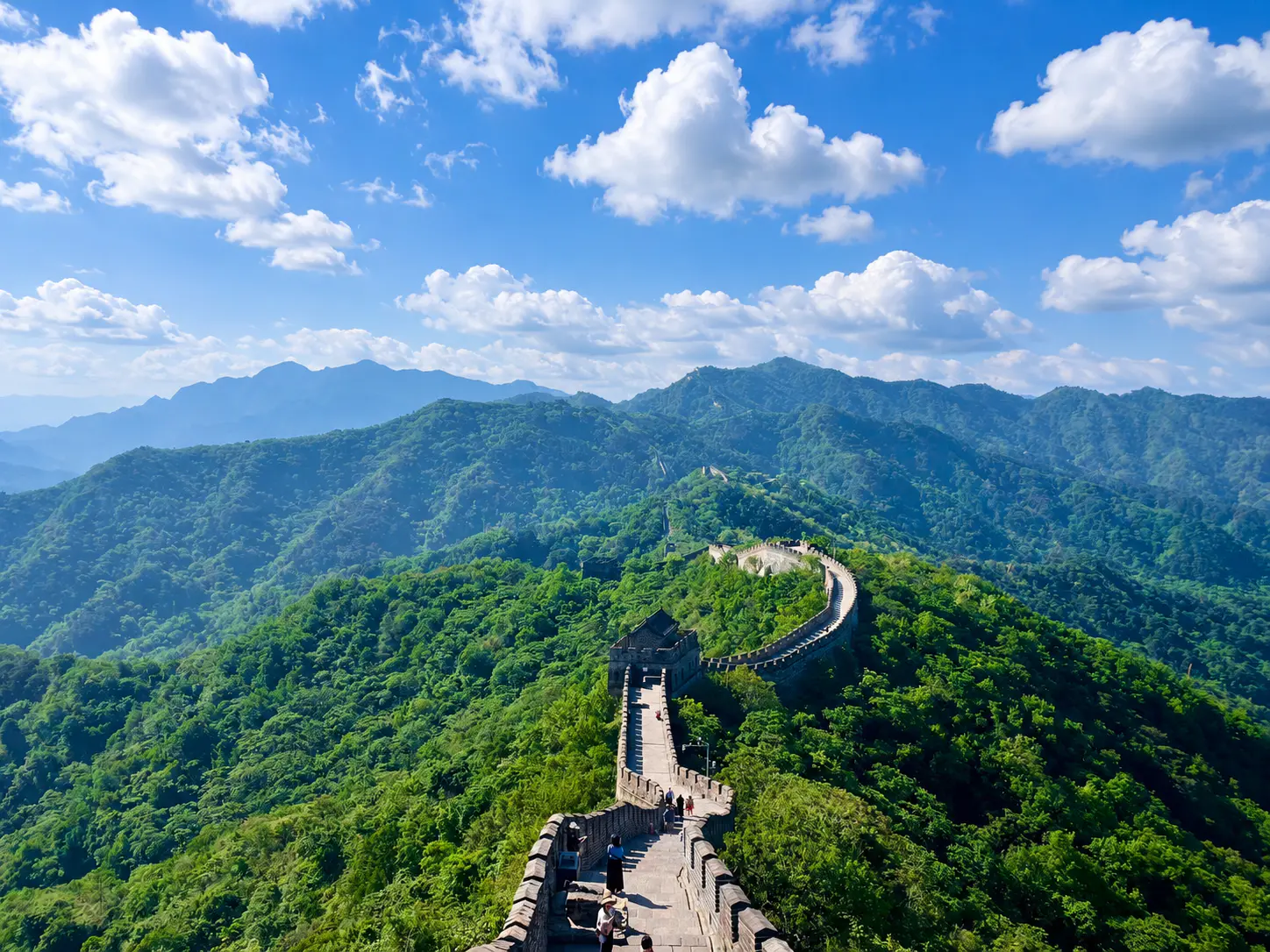
The Great Wall is one of the world's most recognizable works of defensive architecture.
It was created through multiple periods rather than as one construction project.
UNESCO describes Great Wall building as extending from the 3rd century BCE to the 17th century CE and gives the whole system a total length of more than 20,000 kilometres.
The surviving system includes:
- walls
- paths
- watchtowers
- fortresses
- passes
- shelters
and construction adapted to extremely different landscapes.
What it demonstrates
Use the Great Wall to understand:
- military architecture
- defensive networks
- watchtower systems
- architecture responding to terrain
- changing building materials
- infrastructure built across very large distances
It is architecture at territorial scale rather than a conventional building.
What to look for near Beijing
For travelers near Beijing, Mutianyu is a clear place to see:
- walls following mountain ridges
- frequent watchtowers
- battlements
- gates
- changes in elevation
- defensive sightlines
Read more: Mutianyu Great Wall guide and the broader Great Wall guide.
Ancient City of Pingyao — Shanxi
Pingyao Ancient City (平遥古城) is an exceptionally well-preserved traditional Chinese walled city whose surviving urban fabric reflects centuries of imperial town planning.
UNESCO describes it as an exceptionally well-preserved traditional Han Chinese city whose urban fabric documents the evolution of architectural styles and town planning over approximately five centuries of Imperial China.
The historic city retains:
- walls
- streets and lanes
- shops
- residences
- temples
- financial institutions
within a coherent urban structure.
What it demonstrates
Use Pingyao to understand:
- Ming-Qing city planning
- defensive city walls
- street networks
- courtyard residences
- commercial architecture
- architecture shaped by urban economic life
This is different from studying an isolated palace.
At Pingyao, the city itself is the architectural object.
Mausoleum of the First Qin Emperor — Xi'an
The Mausoleum of the First Qin Emperor belongs to a very different architectural tradition: imperial funerary planning.
Construction began in the 3rd century BCE.
The famous Terracotta Army represents only part of a much larger mausoleum landscape.
UNESCO describes the property as an extensive architectural ensemble whose layout echoes the planning of the Qin capital.
What it demonstrates
Use the mausoleum to understand:
- ancient Chinese funerary architecture
- monumental burial planning
- enclosed ceremonial landscapes
- the relationship between imperial political order and tomb design
The architectural subject is the mausoleum complex and its spatial organization, not the Terracotta Army treated as if it were a single building.
Traditional Villages and Vernacular Architecture
Imperial monuments dominate travel imagery, but China's regional residential architecture is equally important.
Two examples reveal especially clearly how local society, materials and landscape can produce radically different architectural forms.
Xidi and Hongcun — Anhui
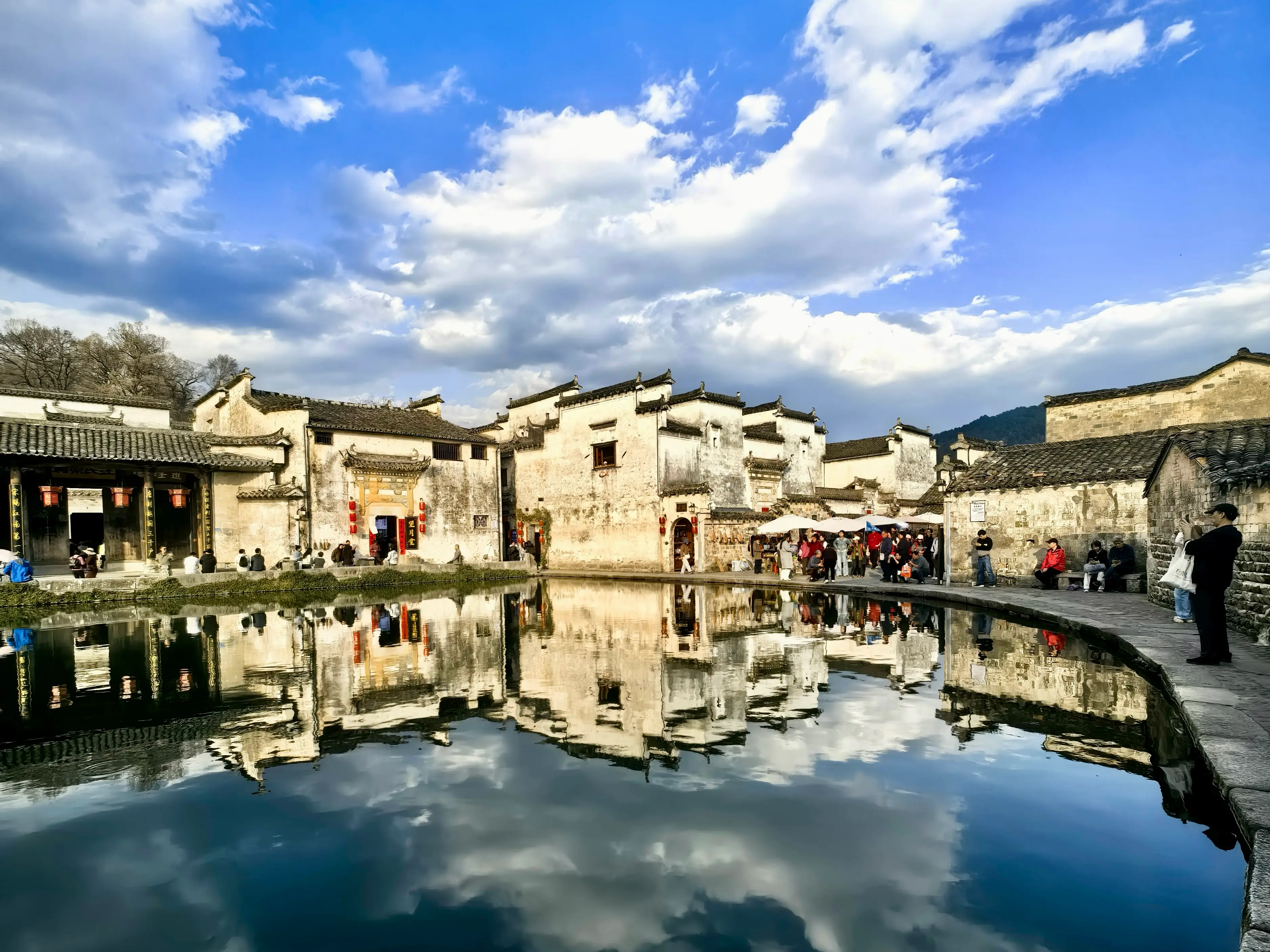
The villages of Xidi (西递) and Hongcun (宏村) in southern Anhui preserve outstanding examples of traditional regional settlements.
UNESCO emphasizes their:
- street plans
- residential architecture
- decoration
- construction techniques
- integrated water systems
- relationship with surrounding landscape
Their architecture differs visually from Beijing's monumental imperial tradition.
Characteristic impressions include:
- white exterior walls
- dark tiled roofs
- narrow lanes
- enclosed residential compounds
- elaborate carving and interior decoration
- carefully organized waterways
What they demonstrate
Use Xidi and Hongcun to understand:
- Huizhou regional architecture
- traditional village planning
- merchant and clan residences
- narrow urban-scale passages
- residential courtyards
- architecture integrated with water systems
White walls and dark tiles are visual markers, not a complete architectural definition of Huizhou architecture.
Fujian Tulou — Fujian
Fujian Tulou (福建土楼) are large communal earthen dwellings built around inward-facing courtyards in southeastern China.
UNESCO's World Heritage property contains 46 major examples.
Tulou are large earthen communal buildings, commonly circular or square, built around open central courtyards.
Many accommodated large extended clans.
Their architecture combines:
- massive earthen outer walls
- inward-facing accommodation
- central courtyards
- limited exterior openings at lower levels
- tiled roofs and projecting eaves
- communal organization
- defensive considerations
What they demonstrate
Use Fujian Tulou to understand:
- earthen architecture
- communal clan housing
- defensive residential design
- inward-facing spatial organization
- architecture adapted to regional social conditions
The relationship between tulou and local cultural groups is more complex than the common simplification that all tulou are Hakka buildings.
Gardens and Landscape Architecture
Chinese architecture also operates at an intimate scale where halls, pavilions, corridors, windows and walls are used to frame and sequence landscape.
The classical gardens of Suzhou provide the most important example.
Classical Gardens of Suzhou — Jiangsu
The Classical Gardens of Suzhou represent one of the highest achievements of Chinese garden design.
UNESCO's World Heritage property includes nine gardens developed from the 11th through the 19th centuries.
Rather than attempting to reproduce nature at full scale, these gardens create concentrated miniature landscapes using elements such as:
- water
- rocks
- plants
- pavilions
- halls
- walls
- windows
- corridors
- carefully constructed views
The architecture works with the landscape rather than operating independently from it.
What they demonstrate
Use Suzhou's gardens to understand:
- Chinese scholar gardens
- architecture framing landscape
- pavilions as viewing devices
- covered corridors
- changing visual sequences
- small spaces made to feel spatially complex
- integration of literature, art and architecture
Examples within the UNESCO property include:
- Humble Administrator's Garden
- Lingering Garden
- Master-of-Nets Garden
- Canglang Pavilion
Comparing Imperial and Scholar Gardens
The Summer Palace and the Classical Gardens of Suzhou are both major examples of Chinese garden architecture, but they should not be presented as the same tradition at different sizes.
A useful comparison:
| Comparison | Summer Palace | Suzhou classical gardens |
|---|---|---|
| Context | Imperial | Primarily private/scholar tradition |
| Scale | Large landscape | Compact enclosed gardens |
| Landscape | Hill + major lake | Miniature constructed landscapes |
| Architecture | Palaces, temples, corridors, pavilions | Halls, pavilions, walls, corridors |
| Experience | Monumental landscape sequence | Intimate changing views |
Choosing Which Chinese Architecture to See
Travelers do not need to visit every site on this list to understand Chinese architecture.
The useful question is which architectural traditions matter most for a particular trip.
Best introduction for first-time visitors
For most first-time visitors:
Forbidden City + Temple of Heaven + Summer Palace
provides the strongest concentrated introduction.
Together they show:
- imperial palace architecture
- ritual architecture
- roofs and courtyards
- formal planning
- landscape architecture
All three are in Beijing.
If time allows, add:
Mutianyu Great Wall
for military architecture.
This creates an exceptionally broad architectural introduction without leaving Beijing.
Best for ancient timber architecture
For readers interested specifically in historical wood construction:
- Foguang Temple / Mount Wutai
- Wooden Pagoda of Yingxian
- historic temple architecture in Shanxi
Shanxi is especially important because of the survival of early timber buildings.
Best for traditional houses and villages
Prioritize:
- Beijing siheyuan
- Pingyao
- Xidi and Hongcun
- Fujian Tulou
These show radically different forms of residential and settlement architecture.
Best for landscape and garden design
Prioritize:
- Summer Palace
- Classical Gardens of Suzhou
The first represents imperial landscape architecture.
The second is essential for understanding the classical scholar-garden tradition.
Best architecture route from Beijing
For travelers staying primarily in Beijing, do not suggest that they need a nationwide architecture tour.
A strong Beijing sequence is:
Day 1
Forbidden City → imperial planning and palace hierarchy
Jingshan → understand the palace and Central Axis from above
Day 2
Temple of Heaven → ritual planning
Hutongs / siheyuan → residential scale
Day 3
Mutianyu Great Wall → military architecture
Summer Palace → imperial landscape design
This naturally connects national architectural examples back into Beijing's strongest visitor itineraries.
Famous Chinese Architecture FAQ
What is the most famous example of Chinese architecture?
The Forbidden City in Beijing is probably the most internationally recognizable surviving example of traditional Chinese palace architecture. It is particularly important for understanding axial planning, courtyards, timber halls, roof hierarchy and imperial ceremonial space.
The Great Wall is even more globally recognizable as a Chinese landmark, but it represents military architecture rather than palace architecture.
What are some examples of ancient Chinese architecture?
Important examples include the Forbidden City, Temple of Heaven, Foguang Temple at Mount Wutai, Wooden Pagoda of Yingxian, Great Wall, Pingyao, Wudang Mountains, Xidi and Hongcun, and the Mausoleum of the First Qin Emperor.
They represent different periods and architectural traditions, so no single example should be treated as a model for all ancient Chinese architecture.
What is the oldest Chinese architecture still standing?
There is no safe single answer covering every category of Chinese architecture.
Ancient remains include much earlier masonry, tomb, gate and archaeological structures, while surviving complete timber buildings are generally younger because wood is vulnerable to fire, decay, rebuilding and repair.
For timber architecture, Foguang Temple's East Main Hall at Mount Wutai is one of the most important surviving Tang-dynasty examples.
Is the Great Wall considered architecture?
Yes.
The Great Wall is a large system of military architecture and engineering, incorporating walls, passes, watchtowers, fortifications, routes and other defensive structures adapted to the landscape.
UNESCO explicitly recognizes its architectural significance.
What is the best place to see traditional Chinese architecture?
For first-time travelers, Beijing offers the strongest concentration because the Forbidden City, Temple of Heaven, Summer Palace, historic hutongs and nearby Great Wall can all be experienced from one base.
For earlier timber architecture, Shanxi is particularly important.
For Huizhou houses, visit southern Anhui.
For Tulou, visit Fujian.
For classical scholar gardens, visit Suzhou.
Which Chinese buildings are UNESCO World Heritage Sites?
Many major Chinese architectural sites form part of UNESCO World Heritage properties, including:
- Forbidden City
- Temple of Heaven
- Summer Palace
- Great Wall
- Mount Wutai
- Wudang Mountains
- Potala Palace
- Pingyao
- Xidi and Hongcun
- Fujian Tulou
- Classical Gardens of Suzhou
- Mausoleum of the First Qin Emperor
Important qualification:
The Wooden Pagoda of Yingxian is on China's UNESCO Tentative List, not currently an inscribed World Heritage property.
Is the Forbidden City the largest ancient palace complex in China?
The Forbidden City is China's most important surviving monumental imperial palace complex and one of the world's largest surviving historic palace ensembles.
Its architectural importance does not depend on an unsourced superlative about absolute size.